• العربية
  • پښتو
  • فارسی
Brand
  • Afghanistan
  • Sport
  • Markets
  • Afghanistan
  • Sport
  • Markets
  • Theme
  • Language
    • العربية
    • پښتو
    • فارسی
  • Afghanistan
  • Sport
  • Markets
All rights reserved for Volant Media UK Limited
volant media logo

Afghans Would Help Iran If US Attacks, Says Taliban

Feb 16, 2026, 08:35 GMT+0

The Taliban’s chief spokesperson, Zabihullah Mujahid, said in an interview with the Islamic Republic of Iran’s Pashto-language radio service that Afghans would be prepared to cooperate with the Iranian people if the United States were to attack Iran.
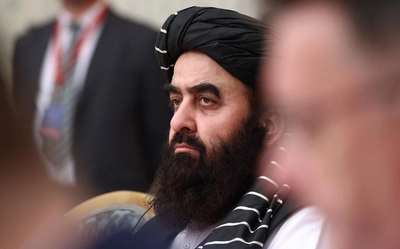
Part of the interview was published on Sunday, 15 February, on the Pashto-language website of Iran’s state radio.

Speaking in a cautious tone, Mujahid said the Taliban does not support war but could assist the Iranian nation in dealing with the consequences of such an attack.

The Pashto website quoted him as saying that Iran had also emerged victorious during a previous US attack and would succeed again.

He appeared to be referring to a 12-day aerial confrontation between Israel and Iran, in which the United States also participated in what it described as “Operation Midnight Hammer”. During the operation, the US targeted several nuclear facilities in Iran.

Iran’s Pashto radio also quoted Mujahid as saying that the Islamic Republic’s success stemmed from the capabilities of its political system, adding that Iran has the right to defend itself.

Although Tehran has not formally recognised the Taliban as Afghanistan’s official government, it has maintained contact and engagement with the group.

Most Viewed

Afghan Families Selling Children As Poverty Deepens, Reports BBC
1

Afghan Families Selling Children As Poverty Deepens, Reports BBC

2

Gold Mine Tensions Escalate As Taliban Arrest Commanders’ Relatives

3

UK Envoy Discusses Women’s Participation In Afghanistan With Taliban Ambassador

4

Pakistani Defence Minister Warns Taliban Against Ties With Pakistan’s Enemies

5

Central Asian Security Hinges On Stability In Afghanistan, Says Kyrgyz President

•
•
•

More Stories

UN Seeks $216 Million To Support Returning Afghan Migrants

Feb 14, 2026, 13:52 GMT+0

The UN High Commissioner for Refugees (UNHCR) says more than 5.4 million Afghan migrants have returned from neighbouring countries since late 2023, warning that the scale of returns is placing severe pressure on humanitarian assistance.

The agency said it requires $216 million to support returnees and internally displaced people, but only 8 percent of the needed funding has been secured so far.

According to UNHCR figures, more than 150,000 Afghan migrants have returned from neighbouring states since the beginning of this year. The organisation warned that aid efforts, amid the arrival of thousands of people each day, are under severe strain and beyond existing capacity.

UNHCR representative Arafat Jamal told a press conference in Geneva on Friday that the speed and scale of the returns have pushed Afghanistan deeper into crisis. Afghanistan is already facing worsening hunger, intensified by mass deportations from Iran and Pakistan, declining foreign aid and continuing economic turmoil.

Jamal said the return of millions of people equivalent to about 12 percent of Afghanistan’s population has pushed the humanitarian response system to the brink.

A recent World Bank report found that rapid population growth driven by returns contributed to a 4 percent decline in per capita GDP in 2025. A new UNHCR survey also found that more than half of returning families lacked identity documents, while over 90 percent were living on less than $5 a day.

The survey showed that 5 percent of returnees plan to leave Afghanistan again, and more than 10 percent reported that a relative or community member had already departed again after returning.

The United Nations said that, given the severe humanitarian situation and the rapidly growing population, urgent additional support will be needed in 2026 to expand aid programmes and invest in reintegration efforts.

Water-Rights Talks With Taliban Continue, Says Iran

Feb 14, 2026, 11:06 GMT+0

Iran’s vice president and head of the Department of Environment, Shina Ansari, said negotiations with the Taliban on water rights are continuing, adding that understandings reached so far have been verbal.

Speaking to the Islamic Republic News Agency, Ansari said the minimum water allocation to Iran under the 1973 agreement on the Hamoun wetlands must be ensured, and that Tehran is seriously pursuing implementation of the arrangement.

She stressed that Iran’s water share should be delivered in a structured and reliable manner.

Ansari said Iran’s Sistan and Baluchestan province, near the Afghan border, is currently facing water shortages because of insufficient supply, affecting people’s livelihoods.

Two Taliban Fighters Killed In Badakhshan Attack, Says Anti-Taliban Group

Feb 14, 2026, 09:35 GMT+0

The Afghanistan Freedom Front says its forces carried out an attack on a Taliban watchtower in Baharak district of Badakhshan province on Friday evening, killing two Taliban members.

In a statement posted on X, the group said its fighters targeted “a watchtower at the entrance to the border brigade of the Taliban’s 219th division stationed in the Qalatak area of Baharak district, Badakhshan province.” The group added that none of its fighters were harmed in the attack.

Local sources earlier confirmed to Afghanistan International that an explosion had occurred in the area. According to the sources, Taliban forces blocked roads leading to their base following the incident.

Taliban officials have not yet commented on the claim.

World Radio Day Highlights Media Restrictions In Taliban-Run Afghanistan

Feb 13, 2026, 16:13 GMT+0

Journalist support organisations marked World Radio Day by raising concern over increasing Taliban restrictions on media in Afghanistan, as the Taliban’s Ministry of Information and Culture urged broadcasters to comply with its policies.

Khabib Ghufran, spokesperson for the Taliban’s Ministry of Information and Culture, said on Friday, February 13, that 228 radio stations were currently operating across Afghanistan. He added that the Taliban had issued licences to 40 stations over the past four years.

The Afghanistan Journalists Center said in a statement that during the same period the Taliban had imposed at least 24 decrees and directives restricting media activity, including measures that directly affect radio broadcasting.

According to the organisation, the restrictions include banning women from working in state media, enforcing gender segregation in workplaces, prohibiting interviews between men and women, imposing dress codes for female journalists and limiting women’s participation in press conferences.

The group said Taliban authorities had repeatedly detained and imprisoned media managers and journalists for failing to comply with the regulations, adding that at least two local women-run radio stations had been threatened over the past year.

The Afghan Journalists Support Organization also said journalists and media outlets in Afghanistan face serious challenges in providing information, noting that pressure on reporters and restrictions on media activity have made professional reporting difficult and limited public access to information.

Meanwhile, the Afghanistan Free Journalists Union expressed concern about the future of radio broadcasting in the country, saying nearly 3,000 people currently work in radio stations nationwide.

The union added that more than half of radio employees do not receive regular monthly salaries, raising concerns about the sustainability of radio operations in Afghanistan.

Taliban Criticises UN Sanctions Extension, Calls For Policy Shift

Feb 13, 2026, 15:24 GMT+0

Taliban spokesperson Zabihullah Mujahid has urged Western countries to reconsider their sanctions policy after the UN Security Council extended the mandate of the sanctions monitoring team related to the Taliban, describing the move as ineffective.

In an audio message to the media, Mujahid referred to what he described as improving security and development in Afghanistan and said continued sanctions were incompatible with progress in the country. He also expressed appreciation for the positions taken by China and Russia at the Security Council and called on Western states to pursue what he described as constructive engagement with Afghanistan.

On Thursday, February 12, the UN Security Council unanimously extended the mandate of the sanctions monitoring team for another year. Under the resolution, sanctions imposed under the 1988 regime against the Taliban will remain in place.

The measures include asset freezes, travel bans and an arms embargo on individuals and entities associated with the Taliban. Travel-ban exemptions for some Taliban leaders were not renewed. The draft resolution was prepared by the United States, and the monitoring team supports the committee responsible for overseeing the implementation of sanctions related to Afghanistan.

The Taliban have repeatedly described international sanctions as an obstacle to Afghanistan’s economic growth and have called for them to be lifted.

Western countries say the continuation of sanctions is linked to concerns about human rights, the formation of an inclusive government and the Taliban’s counterterrorism commitments.