• العربية
  • پښتو
  • فارسی
Brand
  • Afghanistan
  • Sport
  • Markets
  • Afghanistan
  • Sport
  • Markets
  • Theme
  • Language
    • العربية
    • پښتو
    • فارسی
  • Afghanistan
  • Sport
  • Markets
All rights reserved for Volant Media UK Limited
volant media logo

Dissident Taliban Commander Returns To Darwaz After Renewing Loyalty

Jul 11, 2026, 12:33 GMT+1

Hurriyat, a Taliban-affiliated media outlet, reported on Saturday that dissident Taliban commander Juma Khan Fateh had returned to Darwaz after pledging loyalty to the Taliban administration.

He had travelled to Faizabad for talks under guarantees provided by Taliban army chief Fasihuddin Fitrat.

No details of the talks or any agreement between the two sides have been released. However, Hurriyat Radio quoted Badakhshan Taliban governor Mohammad Ismail Ghaznavi as describing Fateh as a “committed and loyal” member of the Taliban who would remain with the group.

A video published by Hurriyat shows Fateh boarding a helicopter and bidding farewell to armed Taliban members. This came a day after the outlet dismissed reports of his transfer to Badakhshan’s provincial capital as “rumours” and “baseless”.

Fateh recently travelled to Faizabad under guarantees from Taliban army chief Fasihuddin Fitrat to discuss his disputes with the Taliban leadership. Sources say the disagreements centred on local appointments, efforts to disarm fighters loyal to him and the management of Badakhshan’s gold mines.

The Taliban’s order to prevent illegal gold mining has directly affected Fateh’s economic interests. The group has also sought to disarm his loyalists who do not hold official positions within the Taliban structure.

Taliban leader Hibatullah Akhundzada had previously removed Fateh from his post as deputy governor of Zabul and planned to appoint him to a government position outside Badakhshan.

However, according to information obtained by Afghanistan International, Fateh rejected those proposals and refused to accept a post outside Badakhshan.

Sources said one of the positions offered to him was to head a Taliban intelligence department in Kabul, but Fateh also declined that role.

Most Viewed

Taliban Resume Herat Crackdown, Detain More Women
1

Taliban Resume Herat Crackdown, Detain More Women

2

Taliban Have Made Afghanistan a Regional Terrorism Hub, Says US Think Tank

3

Former Afghan Lawmaker Abdul Zahir Qadeer Extradited To US

4

'Escape From Kabul' Awarded 2026 Orwell Prize

5

Taliban-Affiliated Media Confirm Juma Khan Fateh's Transfer To Faizabad

•
•
•

More Stories

Anti-Taliban Figures Would Outpoll Taliban, Says NRF Leader

Jul 11, 2026, 11:20 GMT+1
Anti-Taliban Figures Would Outpoll Taliban, Says NRF Leader
100%

National Resistance Front leader Ahmad Massoud rejected claims of divisions among the Taliban’s opponents, saying they remained united around shared principles and values. He also argued that anti-Taliban figures would outperform the Taliban in free elections.

Speaking during an online event marking the 10th anniversary of the death of former jihadi commander Sayed Hussain Anwari, Massoud said narratives portraying the Taliban’s opponents as divided and fragmented were part of an effort to spread hopelessness among the Afghan people and the international community.

The National Resistance Front leader urged anti-Taliban groups and movements to remain alert to what he described as divisive narratives. He said: “We are not fragmented. We are united, cohesive and committed to shared principles and values.”

Referring to the public support enjoyed by several anti-Taliban figures, Massoud said that if free and genuine elections were held and people were able to vote freely, the Taliban would not be able to defeat established political figures with broad public backing.

He cited former Afghan vice-president Abdul Rashid Dostum as an example, saying: “Is it possible for Marshal Dostum to stand in an election and for a Taliban candidate to receive more votes than him? That is impossible.”

Responding to claims that there is no alternative to the Taliban administration, Massoud said the alternative was not an individual but a national and lawful political process.

According to him, that process would include the formation of a transitional government, the drafting of a constitution, the convening of a Loya Jirga and the holding of free elections to establish a legitimate government accepted by all Afghan citizens.

Afghanistan has faced deep political, security and social crises over the past five years. During this period, anti-Taliban groups and political figures living in exile have repeatedly called for the creation of an alternative political structure and a vision for Afghanistan’s future political system through conferences and political initiatives.

However, those efforts have yet to produce a broad, unified and influential coalition or any practical political alternative to the Taliban.

Former Afghan Lawmaker Abdul Zahir Qadeer Extradited To US

Jul 11, 2026, 10:16 GMT+1
Former Afghan Lawmaker Abdul Zahir Qadeer Extradited To US
100%

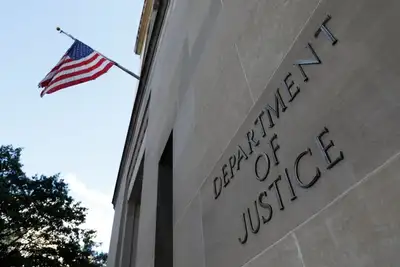
The US Justice Department said on Friday that former Afghan deputy parliament speaker Abdul Zahir Qadeer had been extradited from Kenya to the United States on drug trafficking and firearms charges.

He faces a minimum sentence of 10 years and up to life imprisonment if convicted.

US authorities said the 52-year-old former Afghan general appeared before a federal court in Manhattan on Friday and was ordered to remain in custody pending trial.

Qadeer was arrested at a hotel in Nairobi, Kenya’s capital, on 15 April 2025. Kenya’s High Court approved his extradition in April this year.

He has been charged in a New York court with drug trafficking and firearms offences.

Qadir had previously said he travelled to Kenya for business purposes.

US Attorney Jay Clayton described Qadeer as an “international narcotics and military-grade weapons trafficker”.

According to Clayton, Qadeer is accused of attempting to traffic large quantities of narcotics and military weapons, including heavy machine guns and RPG launchers. He allegedly sold a two-kilograms test shipment of drugs to a buyer in South Africa.

The prosecutor said the buyer was, in fact, cooperating with the US Drug Enforcement Administration.

Acting US Attorney General Todd Blanche said in a statement that, while presenting himself as an Afghan political leader, Qadeer had allegedly led a criminal network involved in trafficking dangerous and addictive narcotics.

Qadeer has denied all the allegations, saying he has no criminal record, is a law-abiding citizen and currently leads several civil society, academic and political organisations in Afghanistan.

The Taliban had previously said it would seriously examine the case involving the former Afghan official and would take any necessary action if required.

Taliban-Affiliated Media Confirm Juma Khan Fateh's Transfer To Faizabad

Jul 11, 2026, 09:27 GMT+1
Taliban-Affiliated Media Confirm Juma Khan Fateh's Transfer To Faizabad
100%

Hurriyat Radio, a Taliban-affiliated outlet, confirmed on Friday that dissident Taliban commander Juma Khan Fateh had been transferred to Faizabad. It quoted Fateh as saying he remained committed to the cause he had fought for over many years.

Earlier, sources told Afghanistan International that a Taliban delegation had taken Fateh to Faizabad on Friday as part of efforts to resolve tensions in Badakhshan. According to the sources, Fateh agreed to the move after receiving what they described as “guarantees” from Taliban army chief Fasihuddin Fitrat.

Hurriyat Radio also reported on Friday that Fateh’s arrival in Badakhshan’s provincial capital had disproved what it described as media rumours that he had opposed the Taliban administration.

The Taliban-affiliated outlet described Fateh as a renowned guerrilla fighter against US forces and an important mujahideen commander in northern Afghanistan.

Tensions between Fateh and the Taliban leadership have intensified in recent weeks over efforts to disarm his loyalists, reduce his influence in Badakhshan, administrative appointments and control of the province’s gold mines.

Although previous Taliban efforts to resolve the dispute through negotiations failed, local sources earlier told Afghanistan International that Taliban army chief Fasihuddin Fitrat had travelled to Nusay district in Badakhshan for talks with Fateh.

Taliban Have Made Afghanistan a Regional Terrorism Hub, Says US Think Tank

Jul 10, 2026, 17:14 GMT+1
Taliban Have Made Afghanistan a Regional Terrorism Hub, Says US Think Tank
100%

The Council on Foreign Relations has warned in its latest report that terrorism and extremism under Taliban rule continue to pose a serious threat to the security of neighbouring countries and regional stability.

According to the Centre for Preventive Action’s Global Conflict Tracker, published on July 6, 2026, the Taliban continues to enforce absolute control over Afghanistan through its strict interpretation of Sharia law. The report says terrorist groups, including al-Qaeda, have turned Afghanistan into a base for recruiting, training and deploying militants beyond the country’s borders.

The Council on Foreign Relations also said the Taliban’s ban on girls’ secondary education remains in place, alongside restrictions requiring women to travel with a male guardian and cover their faces in public. According to the report, Afghans continue to face a serious threat from terrorist attacks under Taliban rule.

Rising Tensions With Pakistan

A key section of the report focuses on deteriorating relations between Afghanistan and Pakistan. It says Pakistan has effectively entered into “open war” with the Taliban following air strikes on Taliban military facilities. According to the report, the confrontation marks the most direct military clash between the two sides since the Taliban returned to power in 2021.

Islamabad says the strikes were a response to attacks by the Pakistani Taliban aka Tehreek-e-Taliban Pakistan (TTP), which Pakistani officials accuse of operating from Afghan territory. The report notes that 2025 was Pakistan’s deadliest year in more than a decade, with conflict-related deaths rising by 74% to more than 3,400.

The report says the conflict intensified in February and March 2026. It states that Pakistan carried out extensive air strikes in Nangarhar and Paktika provinces and that, on March 16, a Pakistani air strike on a hospital in Kabul killed at least 269 civilians. It adds that China has attempted to mediate between the two sides through talks in Urumqi, but no formal agreement has yet been reached.

Terrorist Threats and Humanitarian Crisis

The report also highlights the continued activities of ISIS-K, saying the group remains capable of carrying out attacks both within the region and beyond, including the Moscow shooting attack in March 2024. It also identifies Baloch militant groups as an ongoing security threat to Pakistan.

The Council on Foreign Relations warns that Afghanistan continues to face one of the world’s largest humanitarian crises. In 2025, nearly 23 million people, almost half the population, required humanitarian assistance, while more than 28% of the population suffered from malnutrition.

Taliban Resume Herat Crackdown, Detain More Women

Jul 10, 2026, 16:18 GMT+1
Taliban Resume Herat Crackdown, Detain More Women
100%

The Taliban on Friday, July 10, again detained several women on Herat for allegedly failing to comply with the group’s dress code. Sources said two Taliban morality police patrol vehicles took several women to an undisclosed location.

Sources told Afghanistan International that at least two patrol vehicles belonging to the Taliban’s Ministry for the Propagation of Virtue and Prevention of Vice were present on Herat’s 64-Metre Road, where several women were detained.

According to the sources, the vehicles were filled with detained women, although the exact number remains unclear.

Among many residents of Herat, 64-Metre Road is also known as Juma Bazaar, where new and second-hand household goods are auctioned every Friday.

Images obtained by Afghanistan International show two Taliban vehicles transporting a number of women from the area.

The wave of arrests of women in Herat began in mid-June.

Residents of Jebrail township took to the streets on Tuesday, June 9, to protest the detentions. Demonstrators chanted “Education, Work, Freedom” and “Woman, Life, Freedom”.

Taliban forces dispersed the protest by opening fire and beating demonstrators.

At least two teenage boys were killed, and more than 20 people were injured.

Several protesters were also detained.

Three days later, on Friday, June 12, a group of Herat residents gathered outside the Taliban governor’s office. Protesters again called for an end to the detention of women and demanded the right to education and work.

Before the protest began, the Taliban deployed hundreds of armed personnel and military vehicles across the city. Taliban forces fired on the crowd, dispersed the demonstrators and detained several participants.

The detention of women and the suppression of protests in Herat prompted demonstrations in nearly 30 cities worldwide. Afghans and supporters of women’s rights gathered in parts of Europe, Canada, the United States, Australia and other countries.

Chanting “Education, Work, Freedom”, demonstrators called for an end to the detention of women, a halt to the crackdown on protesters and urged governments not to normalise relations with the Taliban.