• العربية
  • پښتو
  • فارسی
Brand
  • Afghanistan
  • Sport
  • Analysis
  • Markets
  • Afghanistan
  • Sport
  • Analysis
  • Markets
  • Theme
  • Language
    • العربية
    • پښتو
    • فارسی
  • Afghanistan
  • Sport
  • Analysis
  • Markets
All rights reserved for Volant Media UK Limited
volant media logo
ANALYSIS

The Beginning of the End of Taliban 2.0 in Afghanistan

Ahmad Zia Saraj

Ex-DG of National Directorate of Security

Aug 7, 2026, 13:26 GMT+1

The recent attack by the Afghanistan Freedom Front (AFF), in which its forces took control of parts of Zebak district in Badakhshan, has challenged the perception of the Taliban as an invincible military force.

The operation followed the temporary seizure of Yaftal district on 17 July 2026 by Sepaheyan-e-Maihan (“Soldiers of the Motherland”), a newly emerged local armed group.

For the first time in almost five years since the Taliban returned to power, an opposition group—in this case, the AFF—not only captured territory from the Taliban but also held it while successfully repelling multiple.

As the Taliban approach five years of totalitarian rule, it has become increasingly evident that insurgency was far easier than providing effective and acceptable governance. They have failed in this regard while forcing people to accept their own interpretation of religion and way of life. The central question has always been whether such a system is sustainable. Although some may offer counterarguments, this article examines several key factors that support the argument that the Taliban's current model of governance is becoming increasingly unsustainable.

Internal Challenges

Contrary to the perception that the Taliban is a cohesive and unified movement, it is, in reality, a collection of smaller local forces led by regional commanders whose primary loyalty often lies with their own personal interests. The case of Jumma Fatih in Badakhshan demonstrated not only that a local commander's agenda could outweigh the orders of the so-called Supreme Leader, but also the Taliban leadership's inability to enforce its authority. Although Taliban leaders in Kandahar and Kabul explored various options to suppress this rebellion, they failed to achieve their objectives. Eventually, they resorted to negotiations and conceded to the local commander's demands.

Jumma Fatih represents only a relatively minor challenge compared with other, more influential commanders across the country who continue to support the regime only as long as their personal interests remain aligned with it. In reality, the Taliban functions as a coalition of various factions held together by a series of mutually beneficial arrangements.

Commanders such as Mawlawi Nooruddin, Qari Salahuddin, Makhdom Alem, and Mawlawi Najib of Raghestan are examples of influential figures who expected greater recognition and bigger share in power. Before the collapse of the former government, these commanders frequently complained about the concentration of power among senior Taliban leaders from Kandahar. Following the Taliban's return to power, these frustrations evolved into quieter but persistent grievances after they failed to receive the senior appointments they had anticipated.

Many of these commanders remain dissatisfied with the concentration of authority in Kandahar. Like Jumma Fatih, they could eventually challenge the leadership by disregarding orders from Haibatullah Akhundzada or by joining forces with other dissatisfied factions to form a coalition seeking to alter the status quo, if their personal interests are challenged.

These internal divisions are not limited to local commanders in Northern Afghanistan. There is also growing resentment among influential Pashtun commanders from the Ghilzai tribe, including members of the Haqqani network. Although the situation appears calm on the surface, resentment continues to build beneath it. Shir Mohammad Abbas Stanekzai has been the most outspoken representative of this camp, but he is far from alone. The Haqqanis have repeatedly said the leadership in Kandahar is testing their patience but this could run out soon. Many commanders in this camp are just waiting for an opportunity to capitalize on these divisions.

The Haqqanis were already frustrated before the take over of power in August, 2021. Having been appointed as the first deputy of the group after the appointment of Haibatullah as leader, the Haqqanis always struggled to raise their voice and have a meaningful impact over decision making. They were clearly outnumbered in the supreme leadership council by the Greater Kandahar members who would always act united and deny agendas raised by Sarajuddin Haqqani and a few others outside of the camp of Greater Kandahar.

Meanwhile AFF announced surge in operations against Taliban in Nuristan, Kunar and Takhar. In May AFF hit Taliban convoy in Soroubi District inside Kabul, hit a Taliban check post in Kapisa and in June attacked at Taliban camp in Waygal District, Nuristan, inflicting heavy casualties. There are activities conducted by smaller groups also in Kapisa, Kabul, Kandahar, Ghazni & Zabul. Taliban sent reinforcement of around 1000 men from other provinces to Badakhshan in order to control deteriorating security situation. Taliban started weapon confiscation drive in Badakhshan and other Northern provinces in first week of July from the locals. Taliban even shuffled four senior military appointments in northern Afghanistan, primarily affecting Badakhshan province. Trusted commanders from Balkh and Jowzjan were brought into Badakhshan. All above measures indicate towards Taliban desperation. They believe threat is real and fear that development in North have potential to spiral outside of North Afghanistan which could collapse their rule.

Growing Regional Tensions

Multiple credible international reports indicate that Afghanistan under Taliban rule has become a safe haven for regional and international terrorist organizations that use Afghan territory to recruit fighters, conduct training, and plan attacks beyond Afghanistan's borders. The presence of groups such as Al-Qaeda, Tehreek-e-Taliban Pakistan (TTP), the East Turkistan Islamic Movement (ETIM), the Islamic Movement of Uzbekistan (IMU), and Jamaat Ansarullah of Tajikistan poses significant security concerns for neighbouring countries.

Although neighbouring states publicly appear to pursue different strategies, the issue remains a serious concern for their national security establishments.

Pakistan is undoubtedly the country most immediately affected by attacks carried out by the TTP from Afghan territory. Over time, however, other neighbouring countries may also face similar security challenges. The Taliban's policy of harbouring organizations regarded as security threats by neighbouring states is likely to deepen its international isolation and increase the likelihood that affected countries will eventually take action to address these threats. One sign of that isolation is that the European Union special Envoy for Afghanistan recently stated that Pakistan has a right to respond to Terrorist threats originating from Afghanistan.

Such policies expose Afghanistan and its people to consequences that majority of the Afghans would prefer to avoid. It is just the policy of an illegitimate group who do not represent Afghan people, yet it is the innocent people who pay the price as result of the actions taken by the affected states.

Nonetheless, support provided by the Taliban to the TTP and other militant organizations appears to extend beyond the actions of individual local commanders, despite occasional Taliban claims to the contrary. The appointment of Mullah Mohammadzai, the former shadow governor of Kandahar and Ghazni provinces, by Haibatullah to oversee these groups and report directly to him suggests a far more centralized policy. Pursuing such a strategy may ultimately shorten the regime's lifespan while bringing additional hardship to the Afghan people. The selection of MohammadZai to oversee the TTP has also been a deliberate action because he seems to have a deep resentment towards Pakistan, hence desperate to revenge. He belongs to the camp of late Akhtar Mansour’s friends who believe Pakistan assisted the United States in targeting Akhtar Mansour as he was on his way from Iran to Baluchistan province of Pakistan.

Political Miscalculation

There is little indication that the current Taliban leadership is prepared to abandon its support for the TTP.

The unsuccessful talks held in Türkiye , Saudi Arabia, China, and Qatar between Pakistani and Taliban delegations exposed what appears to have been a significant political miscalculation by the Taliban in addressing Pakistan's concerns.

The Taliban attempted to employ the same negotiating tactics they had used during the Doha negotiations with the United States. At that time, the United States was under growing domestic political pressure and determined to end its military involvement in Afghanistan. By prolonging negotiations, the Taliban gained leverage because Washington was operating under strict political and time constraints.

Pakistan, however, faces an entirely different situation. Unlike the United States, Pakistan is not leaving the region, nor is it constrained by a fixed deadline. Consequently, the Taliban's strategy of delaying negotiations is unlikely to produce similar results against a country that has had enough experience in bringing Regime changes in Afghanistan.

The manner of the US withdrawal may also have contributed to a degree of overconfidence within the Taliban leadership. However, the circumstances surrounding the American withdrawal were shaped by a unique combination of domestic political pressures and broader strategic considerations that do not necessarily apply to Pakistan, China, Uzbekistan or Tajikistan.

Growing Poverty, Unemployment, and Public Anger

On the surface, Afghanistan's economy has remained afloat through continued international humanitarian assistance, cash transfers made by the United States government, and an estimated $1.6 billion in annual remittances sent by Afghans living abroad to support their families.

Beneath this surface, however, unemployment remains widespread, dependence on humanitarian assistance continues to grow, major economic corridors remain disrupted, and long-term economic prospects remain bleak.

These economic hardships, combined with growing public anger over restrictions on girls' education and women's employment, create conditions that may encourage some individuals to organize spontaneous activities against Taliban or join armed resistance, including existing and newly emerging groups. There is no doubt that people always thought twice to raise their voice against a brutal regime that respects no law and their forces are allowed to resort to extrajudicial killing at will. However, when they realize that poverty will eventually kill them, unless they do something to liberate themselves, then all the fear evaporates.

Shortage of Operational Military Equipment

The increased activity of opposition groups will also place significant strain on the Taliban's heavy weapons and military equipment. Most of the helicopters and transport aircraft inherited from the former Afghan government require major overhauls before they can be fully operational. Budget shortages in critical sectors have left much of this equipment obsolete and increasingly difficult to maintain.

Moreover, many of the light weapons left behind by the former government have been looted from military depots, sold on the black market, or smuggled out of Afghanistan. The Taliban mistakenly believed that, following the signing of the memorandum of understanding with Russian government in May 2026, they would receive free assistance to repair heavy equipment and overhaul outdated aircraft. They soon discovered, however, that they would need to finance these costly repairs themselves.

According to several credible reports, their already limited fleet of helicopters and transport aircraft may have to be grounded within the next year due to a lack of resources and maintenance capacity.

Conclusion

The Afghanistan Freedom Front has broken the psychological barrier by demonstrating that it is possible not only to capture territory from the Taliban but also to hold it against repeated counterattacks. This effort could be reinforced by the entry of the National Resistance Front (NRF) and other like-minded groups on the battlefield.

Five years of suppression by Taliban Regime nearing completion. Corruption, nepotism and plundering of resources on the rise. Smuggling of gold, gemstones and Narco is rampant. Kandahari Taliban has established hegemony over all lucrative resources in Northern provinces having dislodged local land owners and local Taliban. The Taliban could have pursued a more inclusive and broadly accepted political settlement, potentially bringing an end to Afghanistan's long cycle of conflict. Instead, they chose to centralize power with all important appointments being held mainly by Kandahari Taliban and exclude large segments of the population.

The central argument is not that the Taliban's greatest vulnerability lies solely in military defeat. Rather, it lies in the gradual erosion of the political, economic, social, and regional foundations upon which Taliban 2.0 has built its rule. If these trends continue, they may ultimately prove more consequential than any single battlefield setback.

As financial resources continue to diminish, sustaining even a small fleet of aircraft and maintaining other heavy military equipment will become increasingly difficult. At the same time, the growing activities of opposition groups fighting to liberate the country from a tyrannical regime that has denied the rights of more than half of Afghanistan's population will present the Taliban with an unprecedented challenge. Unlike Taliban 1.0, this time they will have no place to hide.

Both AFF and Sepahian-e-Maihan had a good ice breaking session, but this will draw far larger numbers and groups to the ground in a bid to overthrow this brutal regime, restore justice and long-lasting peace and finally given the chance to people to live a decent life.

Most Viewed

Five Years of Taliban Rule: Consolidation Without Consent
1
ANALYSIS

Five Years of Taliban Rule: Consolidation Without Consent

2

Taliban Police Chief In Panjshir Warns Opponents Of Severe Consequences

3

Terrorist Groups In Afghanistan Pose Serious Regional Threat, Says China

4

Double Standards Weaken Global Fight Against Terrorism, Says Russia

5

Pakistan’s UN Envoy Urges Action Against Growing Terrorist Threat From Afghanistan

•
•
•

More Stories

Over 50 Experts Seek Recognition Of Taliban ‘Gender Apartheid’ As International Crime

Aug 7, 2026, 11:21 GMT+1
100%

More than 50 leading international law and human rights experts have called for gender apartheid to be recognised as a crime under international law, with a focus on the situation of Afghan women.

The appeal is contained in the “International Declaration on Gender Apartheid and Its Destructive Consequences”, which is due to be launched on August 13.

The authors of the document said its aim was to support Afghan women and girls in their struggle against what they described as the Taliban’s systematic repression and to strengthen efforts to criminalise gender apartheid under international law.

According to the organisers, the declaration is the result of 18 months of consultations among international lawyers and Afghan women’s rights advocates.

More than 50 prominent figures have signed it, including Nobel laureates, former international court judges, former United Nations officials, and human rights activists from Afghanistan and South Africa.

The declaration calls on the international community to explicitly include the prohibition of gender apartheid in the proposed Convention on Crimes Against Humanity and to use existing mechanisms of international law to confront it.

The signatories said that although all Afghans face political, security, economic and humanitarian crises under Taliban rule, women and girls bear the greatest burden.

They said the Taliban had created a system based on gender discrimination by barring girls from education, restricting women’s employment and participation in public life, and imposing wide-ranging limitations on their freedoms.

The declaration also cites the detention of dozens of women in Herat over alleged violations of dress regulations and the suppression of subsequent protests as examples of the continuation of these policies.

The signatories also criticised efforts by some international actors to normalise relations with the Taliban.

They called for accountability for those responsible for what they described as “gender apartheid” and for reparations for victims.

The declaration is scheduled to be launched virtually on August 13, hosted by the University of Michigan Law School.

Women’s rights activists, legal experts and international figures are expected to speak at the event.

Iran Blocks Fatemiyoun From Taking Military Action Against Taliban

Aug 6, 2026, 17:12 GMT+1
100%

A Fatemiyoun Division commander told Afghanistan International that Tehran’s warm relations with the Taliban had fuelled growing discontent within the militia’s ranks.

The source said recent remarks by Iran’s deputy ambassador in Kabul, who stated that Tehran did not regard fighting the Taliban as “resistance”, had angered many Fatemiyoun members because they considered resistance against the group necessary.

Mashkoor Kabuli, a cleric close to both the Islamic Republic and the National Resistance Front, said this was not merely one person’s view.

He said all Fatemiyoun members cared deeply about Afghanistan but had been threatened and placed under pressure.

Seyed Hassan Mortazavi, Iran’s deputy ambassador in Kabul, recently said the Islamic Republic did not support any political or military group opposing the Taliban.

He said Tehran did not regard armed conflict against the Taliban administration as “resistance”.

Mortazavi added that an “Islamic government” had been established in Afghanistan and urged all parties to resolve the crisis through dialogue.

Taliban spokesman Zabihullah Mujahid welcomed the Iranian diplomat’s remarks, but the comments have intensified dissatisfaction among Fatemiyoun fighters.

A Fatemiyoun commander told Afghanistan International that after the Taliban returned to power in 2021, militia members sought to join the fight against the group, but the Islamic Revolutionary Guard Corps told them to wait.

The commander said the IRGC had promised Fatemiyoun members that they would eventually become a powerful military and political force in Afghanistan, similar to Hezbollah in Lebanon. He said the promise was never fulfilled.

According to the commander, Iran’s warm relations with the Taliban, the exclusion of Shias and Hazaras from Afghanistan’s power structure, discrimination against Afghans in Iran and the Fatemiyoun’s heavy losses in Iran-backed regional wars had caused fighters to lose faith in cooperation with the IRGC.

The source, who requested anonymity for security reasons, said many Fatemiyoun members were seeking opportunities to join anti-Taliban groups.

He said that if an opposition front provided the necessary logistical support, Fatemiyoun fighters would join it.

How Iran Prevents Military Activity Against the Taliban

Fatemiyoun members are not the only ones dissatisfied with Iran’s close relations with the Taliban. Members of armed anti-Taliban fronts have also complained about Tehran’s ties with the group.

Interviews with several sources close to Taliban opposition groups indicate that although Iran hosts some opposition leaders, it has not allowed them to conduct military activities.

A senior official from Afghanistan’s former Defence Ministry confirmed to Afghanistan International on Thursday that Iranian authorities had detained and questioned several former Afghan security and defence personnel in recent months.

He said Tehran possessed biometric records, including fingerprints, of former security personnel and had imposed restrictions at border crossings to ensure they did not return to Afghanistan to fight the Taliban.

Iranian officials have not commented on the allegation.

Informed sources previously told Afghanistan International that Iranian authorities had pressured members of the National Resistance Front to halt attacks against the Taliban.

According to those sources, Iranian officials had even warned that firing on the Taliban would be considered equivalent to firing on Iran.

A source close to Mohammad Ismail Khan, a former jihadi commander and prominent figure within the National Resistance Front, said Iran’s domestic and external vulnerabilities could partly explain its efforts to prevent armed activity by Taliban opponents.

He said Iran’s recent conflict with the United States, security and economic pressures, and concerns about opening a new front along its eastern border had made Tehran more cautious.

He added that Iran’s fatigue with developments in Afghanistan had also influenced this policy.

The source said Iran had invested heavily in Afghanistan politically and militarily over the past three decades but had failed to gain the level of influence it expected.

He said Iran supported various figures and groups during the anti-Soviet jihad, the civil war and resistance against the Taliban.

However, after the formation of the former Afghan government, several figures who had received Iranian support distanced themselves from Tehran and moved closer to the United States.

He said some members of the former Northern Alliance had even avoided meeting Iranian officials and diplomats after coming to power because they feared a negative US response.

In his view, that experience had made Tehran reluctant to invest again in forces opposing the Taliban.

Hostility Towards the US as Common Ground

The source close to Ismail Khan said the IRGC, and the office of Taliban leader Hibatullah Akhundzada viewed the United States and Israel as common enemies, temporarily bringing the two sides closer together.

He said Iran had sought to preserve that relationship since the Taliban’s return to power and avoid entering a conflict with an uncertain outcome.

Iranian officials may also have concluded that the Taliban is unlikely to be removed from power easily in the near future, he added.

For that reason, Tehran does not want to support a force incapable of overthrowing the Taliban.

However, he said that if Ismail Khan considered military action in Afghanistan necessary, external pressure would not prevent him from acting.

Kabuli: Iranian Deputy Ambassador Has Strayed From Policy

Zakaria Mashkoor Kabuli, a senior member of the National Resistance Front’s leadership council, said the Iranian deputy ambassador’s comments should not be regarded as the Islamic Republic’s final policy.

He said a distinction should be made between Iran’s official policy and the personal views of individuals serving within its diplomatic apparatus.

According to Kabuli, Mortazavi is a deputy ambassador and does not hold authority to determine Iran’s broader Afghanistan policy.

He said major security and military decisions were made by Iran’s leadership and the Supreme National Security Council.

Kabuli, who is close to Ahmad Massoud, said Iran supported Ahmad Shah Massoud and other Taliban opponents during the group’s first period in power.

He described this policy as part of Qassem Soleimani’s approach and what he called the “school of resistance”.

The senior National Resistance Front member also claimed that Ali Khamenei had established a 10-point framework for Iran’s approach towards Afghanistan and the Taliban.

According to him, the situation of Afghan Shias, the seizure of their land and the forced displacement of Shia families were among the issues covered by that framework.

He said the Iranian deputy ambassador’s recent position had angered some Fatemiyoun members.

Kabuli said they questioned how defending Iran and other regional countries could be considered resistance while fighting the Taliban in Afghanistan was not.

During the 1990s, Iran was one of the Northern Alliance’s principal supporters in its war against the Taliban.

The killing of eight Iranian diplomats and one journalist after the Taliban captured Mazar-e-Sharif in 1998 brought the two sides close to war.

Iran deployed thousands of troops along the Afghan border at the time and increased its support for forces loyal to Ahmad Shah Massoud, Mohammad Ismail Khan, Abdul Rashid Dostum and Shia groups opposed to the Taliban.

Nearly three decades later, Tehran’s policy appears to have changed.

A Relationship Based on Security Interests

A source close to the National Resistance Front in Iran said relations between Tehran and the Taliban were now based on an unwritten security understanding.

He said Iranian officials had repeatedly asked the Taliban to prevent groups opposing the Islamic Republic, particularly armed Sunni and Baloch groups, from operating in Afghanistan.

In return, he said, the Taliban asked Iran to prevent its opponents from operating on Iranian soil.

The source claimed that this security exchange was a principal reason for restrictions imposed on anti-Taliban fronts in Iran.

He said many anti-Taliban commanders had expected attacks against the group to begin in the first years after its return to power, potentially from Mashhad towards Herat or other areas of western Afghanistan.

However, Iran’s lack of action disappointed them, and some commanders returned to Afghanistan.

Iran Hosts Opponents but Does Not Arm Them

Iran did not completely sever its ties with Taliban opponents after the group returned to power.

Ahmad Massoud, Mohammad Ismail Khan and several former government political leaders have repeatedly travelled to or lived in Iran.

In January 2022, Iran hosted the first known meeting between Taliban Foreign Minister Amir Khan Muttaqi, Ahmad Massoud and Mohammad Ismail Khan.

During the meeting, the Taliban urged its opponents to return to Afghanistan and abandon armed activity.

A source close to Ismail Khan said Iran had so far used Taliban opponents as a political instrument.

Hosting these figures allows Tehran to preserve channels of communication with Taliban opponents if disputes arise over water, borders, migration or security, he said.

However, Iran has not allowed these groups to turn its territory into a base for war against the Taliban.

A source close to anti-Taliban groups in Mashhad said the IRGC regarded them as part of Afghanistan’s former political order, which had aligned itself with the United States.

He said Iran viewed the resistance groups’ close relations with Washington, particularly during the 20 years of the republic, as part of their dark record.

An analysis by the Middle East Institute concluded that Iran’s policy towards the Taliban was based more on pragmatism than ideological alignment.

It identified the threat from Islamic State Khorasan Province (IS-K) border security, Helmand River water rights, migration, trade and competition with other countries as principal factors shaping the relationship.

The institute concluded that anti-Taliban fronts were currently incapable of presenting a serious threat to the Taliban’s rule.

Military support for those groups could damage Tehran’s relations with the Taliban without changing the balance of power in Afghanistan.

Trade and Border Security Take Priority Over War

Despite their religious and political differences, the Taliban and Iran also share several interests.

Both regard Islamic State Khorasan Province as an enemy.

Iran is concerned about IS-K attacks on Shia communities and sites in Afghanistan and inside Iran, while the Taliban considers the group its main armed rival.

Border security, preventing drug trafficking, controlling the movement of migrants and maintaining trade are also important to Tehran.

Afghanistan is an important market for Iranian goods, fuel and energy.

Transit routes, Chabahar port and the Khaf-Herat railway have also increased Afghanistan’s importance in Iran’s economic planning.

A former member of Afghanistan’s parliament said Tehran did not want to endanger these interests by supporting a new war.

Unlike during its first period in power, the Taliban has also sought to maintain diplomatic and economic relations with Iran, address Tehran’s concerns regarding IS-K and border security and avoid a broader confrontation with the Islamic Republic.

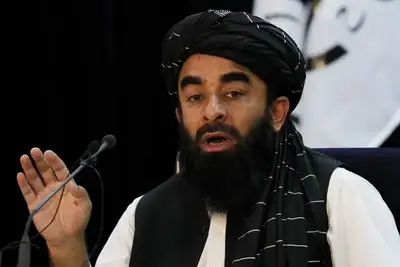
Double Standards Weaken Global Fight Against Terrorism, Says Russia

Aug 6, 2026, 13:30 GMT+1
100%

Russia’s UN envoy warned that expanding terrorist activity, the movement of foreign fighters and terrorists’ use of emerging technologies pose a threat to global security.

The UN Security Council met on Wednesday, 5 August, to discuss threats to international peace and security caused by terrorism.

Vasily Nebenzya, Russia’s ambassador to the United Nations, said many foreign fighters were moving back to their countries of origin or to other conflict zones after gaining combat experience in the Middle East.

He said the international community should make greater efforts to prevent their movement and activities.

Although the Russian representative did not directly mention Afghanistan, much of his speech reflected security concerns surrounding the country.

Russia has repeatedly expressed concern in recent years about the threat posed by Islamic State Khorasan Province, the presence of foreign fighters and the impact of instability in Afghanistan on Central Asia.

Nebenzya also warned that terrorists were using emerging technologies, including artificial intelligence, cryptocurrencies and drones.

He said these tools had increased terrorist groups’ ability to recruit members, raise funds and carry out attacks.

In another part of his remarks, Nebenzya said double standards and selective approaches to counterterrorism were among the main factors contributing to the spread of terrorist threats worldwide.

He stressed that counterterrorism efforts should not be influenced by political objectives and that international cooperation should be conducted without discrimination.

The Russian representative also highlighted expanding counterterrorism cooperation through the United Nations, the Shanghai Cooperation Organisation, the Collective Security Treaty Organisation and other regional mechanisms.

He said Moscow was working to strengthen the capacity of Central Asian countries to confront terrorist threats.

The Security Council meeting came as representatives of several countries and UN counterterrorism bodies also expressed concern about threats posed by Islamic State and other extremist groups.

Russia is the only country to have formally recognised the Taliban administration.

Moscow has expanded its political, diplomatic, economic and security relations with the Taliban in recent years, while continuing to warn about IS-K activity and the risk of instability spreading from Afghanistan into Central Asia.

Pakistan’s UN Envoy Urges Action Against Growing Terrorist Threat From Afghanistan

Aug 6, 2026, 12:30 GMT+1
100%

Pakistan’s UN envoy Asim Iftikhar urged member states to confront what he called the growing terrorist threat from Afghanistan, saying multiple groups had expanded their operations since the Taliban’s return.

Speaking at the Security Council on Wednesday, 5 August, Iftikhar said the situation in Afghanistan was deeply concerning.

He claimed that safe havens were currently available in Afghanistan to groups including Tehreek-e-Taliban Pakistan, the Balochistan Liberation Army, Islamic State Khorasan Province, the East Turkistan Islamic Movement and al-Qaeda.

The UN Security Council meeting was held under the title “Threats to International Peace and Security Caused by Terrorist Acts”.

Pakistan’s representative said many of these groups recruited and trained members inside Afghanistan and planned terrorist attacks in Pakistan with complete impunity.

He also alleged that some of the groups received financial support from Pakistan’s eastern neighbour, referring to India.

Iftikhar said the Security Council should hold the Taliban accountable for its commitment not to allow Afghan territory to be used by terrorist groups for cross-border attacks.

He added that foreign sponsors of terrorist groups should also be held accountable for supporting, financing and arming them.

The senior Pakistani diplomat said a UN monitoring team report had made clear that, although sustained counterterrorism efforts had weakened Islamic State’s capabilities, the terrorist threat continued to expand in Africa, the Middle East and Afghanistan.

He proposed that a comprehensive international response to terrorism should address all its forms and manifestations, including state terrorism.

Pakistan’s representative said international efforts and Pakistani counterterrorism operations had dealt setbacks to IS-K, but the group’s activities in Afghanistan remained a serious concern.

He stressed that no country could confront the threat of cross-border terrorism alone and called for stronger international cooperation against the growing activities of terrorist groups.

Iftikhar also expressed concern over terrorists’ use of emerging technologies, including drones, intelligence tools, social media and artificial intelligence.

He said stronger border management, greater capacity for law-enforcement agencies and improved cooperation among member states remained essential to counter transnational terrorist threats.

Terrorist Groups In Afghanistan Pose Serious Regional Threat, Says China

Aug 6, 2026, 11:09 GMT+1
100%

China’s UN envoy, Sun Lei, said terrorist groups based in Afghanistan remain a serious threat to the country and its neighbours, warning that IS-K is strengthening its motivation and ability to carry out cross-border attacks.

The UN Security Council meeting was held under the title “Threats to International Peace and Security Caused by Terrorist Acts”.

Sun Lei, chargé d’affaires of China’s permanent mission to the United Nations, addressed the meeting.

He said China urged Afghanistan’s authorities, referring to the Taliban, to honour their counterterrorism commitments and take decisive action against all terrorist groups based in the country.

These include individuals and entities listed by the Security Council committee established under Resolution 1267.

Sun said such action was necessary to prevent Afghanistan from once again becoming a safe haven for terrorism.

The Chinese diplomat added that the international community should help Afghanistan revive its economy and improve people’s livelihoods in order to address the root causes of terrorism.

He said China supported cooperation between Central Asian countries, regional organisations such as the Shanghai Cooperation Organisation and Afghanistan in jointly confronting cross-border terrorist threats.

Sun said terrorist groups were increasingly using the internet, artificial intelligence, drones and other emerging technologies for incitement, recruitment, financing and attacks.

He said this was creating new challenges for global counterterrorism efforts.

China supported efforts by the United Nations and the international community to strengthen governance of emerging technologies and improve risk-assessment systems and regulatory frameworks, he said.

Sun called for preventing what China describes as the three forces, violent terrorism, ethnic separatism and religious extremism, from exploiting these technologies to expand their influence.

He said developing countries should receive greater support through technology transfers, equipment, technical assistance, training and intelligence sharing to strengthen their counterterrorism capabilities.

The Chinese representative said the Security Council should make full use of the sanctions mechanisms established under Resolutions 1267 and 2713.

He also called for the Balochistan Liberation Army and its Majeed Brigade wing to be added to the sanctions list as soon as possible to support international counterterrorism efforts.

Sun said a recent suicide attack in Pakistan had killed and wounded civilians.

He strongly condemned the attack and urged the international community to support Pakistan’s counterterrorism efforts.

Terrorism Threat Remains Serious

China’s representative said the threat of international terrorism remained complex and severe.

He said terrorist attacks were continuing, terrorist organisations were steadily improving their operational capabilities and exploiting regional conflicts to expand their influence.

This posed a serious threat to international peace and security, he added.

Sun said the international community should uphold a new security concept based on common, comprehensive, cooperative and sustainable security.

He called for a zero-tolerance approach to terrorism, warned against politicising or instrumentalising counterterrorism, and urged greater solidarity and cooperation to improve the effectiveness of global efforts.