Securing Water Rights From Afghanistan Is Strategic Priority, Says Iran

Iranian Foreign Ministry spokesman Esmail Baghaei says Tehran’s water rights remain a top priority and a constant, vital and strategic issue in relations with the Taliban.
Iranian Foreign Ministry spokesman Esmail Baghaei says Tehran’s water rights remain a top priority and a constant, vital and strategic issue in relations with the Taliban.
Speaking at a press conference on Monday, 10 August, Baghaei said the issue of water was not merely technical for Iran but was decisive and remained permanently on the country’s diplomatic agenda.
He said Tehran had placed the pursuit of Iran’s water rights from Afghanistan among its highest strategic priorities and that the issue was raised in all negotiations, meetings and diplomatic contacts with the Taliban.
Baghaei also reported tangible progress in Iran receiving its water share during the latest water year.
He said technical and political consultations between the two sides were continuing to ensure the full implementation of water-related commitments but provided no further details on the reported progress.
The dispute over water from the Helmand River has been one of the main challenges between Afghanistan and Iran in recent years.
Iranian officials have repeatedly called for the full implementation of the water treaty, while Taliban officials have cited water shortages and drought as key reasons for reduced flows towards Iran.
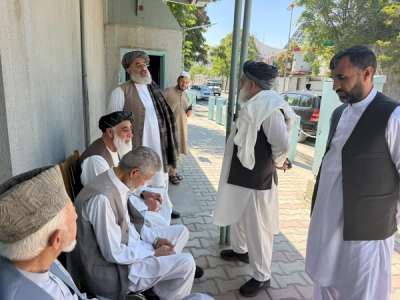
Darul Ifta at Darul Uloom Karachi has said women may pursue education, including medicine, under Islamic conditions, in response to a request from an Afghan refugee woman about female education in Afghanistan.
The fatwa was issued in response to a request by Bibi Durani, an Afghan refugee woman living in Haripur, Pakistan.
On 17 May, she asked Darul Uloom Karachi to provide its Islamic legal opinion on the continuation of education for Afghan women, particularly in medicine and nursing.
Durani provided Afghanistan International with the text of her request and Darul Uloom Karachi’s response on Sunday.
The fatwa has also been widely circulated on Pakistani social media. Among those who reposted it on X was the spokesman for Pakistan’s president.
The Taliban has banned women and girls from attending universities and medical institutes.
The decision has raised widespread concerns about the future of healthcare for women in Afghanistan, which has one of the world’s highest maternal mortality rates and where women already face limited access to health services.
In her request, Durani wrote that many Afghan women and girls in Pakistan study at medical colleges, nursing centres and other educational institutions while observing hijab.
Referring to the deportation of Afghan migrants from Pakistan, she said families were concerned about the future of their daughters’ education after returning to Afghanistan.
The request said: “Our demand is that women’s education should also continue in Afghanistan within the framework of Islamic hijab and a separate education system.”
The Afghan woman asked scholars at Darul Uloom Karachi to issue a written fatwa on women’s education, particularly in medicine, nursing and teaching.
In response, Darul Ifta at Darul Uloom Karachi said women’s education in fields such as medicine was permissible provided Islamic conditions were observed.
The fatwa said educational institutions for women should be separate from those for men and there should be no mixing of male and female students.
It also said women should observe Islamic hijab while travelling to and from educational institutions.
Darul Uloom Karachi said women should preferably be taught by female teachers.
If female teachers are unavailable, righteous and trustworthy men may teach women from behind a screen while observing Islamic requirements, according to the fatwa.
The ruling also stressed the observance of hijab and other Islamic rules during education and later in the workplace.
The Taliban says conditions are not suitable for women and girls to receive education in Afghanistan.
A Taliban spokesman has also said the group has concerns about the reaction of parts of Afghan society to women’s education.
Afghanistan is now the only country in the world where girls and women are barred from secondary and higher education.
Anti-Taliban fronts say they carried out at least 15 attacks on Taliban positions across nine Afghan provinces over the past week, claiming that around 30 Taliban members were killed.
Experts say growing public support for opposition forces and a decline in the Taliban’s social base are among the factors contributing to the expansion of these attacks.
The attacks were reported in Badakhshan, Kunduz, Baghlan, Kabul, Faryab, Ghor, Herat, Kandahar and Helmand.
The Taliban has not responded to the attacks and continues to claim that full security has been established across Afghanistan.
The Afghanistan Freedom Front, the United Front of Afghanistan and the National Resistance Front have separately claimed responsibility for attacks in different parts of the country.
The groups have also claimed that several Taliban members were killed during the operations.
The Afghanistan Freedom Front has claimed responsibility for several attacks in different provinces over the past 10 days.
It says at least 12 Taliban members were killed in those attacks.
The United Front of Afghanistan has claimed responsibility for eight attacks on Taliban positions in several provinces over the past week.
The group says at least 14 Taliban members were killed in those operations.
The National Resistance Front of Afghanistan has also claimed responsibility for two attacks in Herat and Badakhshan during the same period, saying three Taliban members were killed.
The Taliban has not commented on these claims.
The attacks come as some experts believe military pressure on the Taliban has increased more than at any previous point.
Bismillah Taban, a security affairs analyst, told Afghanistan International that opposition forces had gained greater access to resources and social support and had been able to attract broader public backing.
He said Afghans had grown increasingly frustrated with the current situation and that the Taliban had lost a significant part of its social support base.
Earlier, the US military publication Military reported that resistance groups in Afghanistan had stepped up attacks across different parts of the country as the fifth anniversary of the Taliban’s return to power approached.
The Guardian and Zan Times have documented 231 cases of alleged femicide across 10 Afghan provinces since August 2021, reporting a rise in killings of women and fatal violence under Taliban rule.
The investigation stresses that the figure does not represent the total number of women killed across Afghanistan, but only cases that journalists were able to document and examine in the 10 provinces.
Of the cases recorded, 53 deaths were officially classified as suicides. However, in several of those cases, relatives or witnesses said the women had been subjected to domestic violence.
The highest numbers were recorded in Jawzjan, with 36 cases, followed by Herat with 32, Badakhshan with 28 and Ghazni with 26. The victims ranged in age from 5 to 65.
According to the investigation, published on Friday, 7 August, 165 of the victims were housewives without an independent income, which the report said limited their ability to escape domestic violence or pursue legal action.
Most of the recorded killings took place in the victims’ homes.
Of the 231 cases, reports of a suspect being arrested were found in only 58. In some cases, suspects were released shortly after being detained.
The Guardian and Zan Times also investigated the death of 33-year-old Liza Shams.
She was taken to hospital on 1 February 2026 after being severely beaten and died about an hour later.
Liza’s father said her jaw had been broken and that extensive signs of beating were visible on her face and body. Medical records also showed multiple fractures to her facial bones.
However, a forensic report listed the probable cause of death as ingestion of rat poison, and no post-mortem examination was carried out at the family’s request.
Liza’s father believes she was murdered and accuses her husband of killing her.
The Guardian also examined the case of 33-year-old Freshta Emady, an employee of a United Nations organisation in Kabul.
Freshta was found dead in her home on 31 May. Her husband told Taliban police that she had died by suicide because of mental health problems, but her family and friends rejected that account and accused him of killing her.
Five people who knew Freshta told reporters that after marrying at the age of 17, she had endured about 15 years of violence and controlling behaviour from her husband.
One colleague said Freshta had repeatedly complained that her husband strangled her and threatened “I’ll cut your throat.”.
The Guardian said no comprehensive official statistics on killings of women are published in Afghanistan.
The Attorney General’s Office, which previously collected information on such cases, was abolished in 2023.
The report also highlighted legal and institutional changes following the Taliban’s return to power, saying they had weakened legal protections for women.
It said the Ministry of Women’s Affairs, the specialised prosecutor’s office dealing with violence against women and the network of women’s shelters were dismantled, while around 250 female judges were removed from their posts.
According to the report, women under Afghanistan’s current judicial system are unable to directly pursue many of their own legal cases.
As a result, even mothers cannot independently take legal action in cases involving their daughters.
Zan Times journalists collected 174 cases from local media reports and directly documented another 57 cases as part of the investigation.
According to the report, journalists were unable to speak to many victims’ families because fear prevented them from cooperating. In several provinces, reporters were also threatened after attempting to contact families.
The investigation said that in some cases, relatives or witnesses reported that women had died as a result of domestic violence, while official records classified their deaths as suicides.
The Guardian stressed that the 231 documented cases do not represent the actual number of women killed in Afghanistan.
It said the true figure could be higher because of the absence of official statistics, limited access to information and families’ fears about possible repercussions.
The recent attack by the Afghanistan Freedom Front (AFF), in which its forces took control of parts of Zebak district in Badakhshan, has challenged the perception of the Taliban as an invincible military force.
The operation followed the temporary seizure of Yaftal district on 17 July 2026 by Sepaheyan-e-Maihan (“Soldiers of the Motherland”), a newly emerged local armed group.
For the first time in almost five years since the Taliban returned to power, an opposition group—in this case, the AFF—not only captured territory from the Taliban but also held it while successfully repelling multiple.
As the Taliban approach five years of totalitarian rule, it has become increasingly evident that insurgency was far easier than providing effective and acceptable governance. They have failed in this regard while forcing people to accept their own interpretation of religion and way of life. The central question has always been whether such a system is sustainable. Although some may offer counterarguments, this article examines several key factors that support the argument that the Taliban's current model of governance is becoming increasingly unsustainable.
Internal Challenges
Contrary to the perception that the Taliban is a cohesive and unified movement, it is, in reality, a collection of smaller local forces led by regional commanders whose primary loyalty often lies with their own personal interests. The case of Jumma Fatih in Badakhshan demonstrated not only that a local commander's agenda could outweigh the orders of the so-called Supreme Leader, but also the Taliban leadership's inability to enforce its authority. Although Taliban leaders in Kandahar and Kabul explored various options to suppress this rebellion, they failed to achieve their objectives. Eventually, they resorted to negotiations and conceded to the local commander's demands.
Jumma Fatih represents only a relatively minor challenge compared with other, more influential commanders across the country who continue to support the regime only as long as their personal interests remain aligned with it. In reality, the Taliban functions as a coalition of various factions held together by a series of mutually beneficial arrangements.
Commanders such as Mawlawi Nooruddin, Qari Salahuddin, Makhdom Alem, and Mawlawi Najib of Raghestan are examples of influential figures who expected greater recognition and bigger share in power. Before the collapse of the former government, these commanders frequently complained about the concentration of power among senior Taliban leaders from Kandahar. Following the Taliban's return to power, these frustrations evolved into quieter but persistent grievances after they failed to receive the senior appointments they had anticipated.
Many of these commanders remain dissatisfied with the concentration of authority in Kandahar. Like Jumma Fatih, they could eventually challenge the leadership by disregarding orders from Haibatullah Akhundzada or by joining forces with other dissatisfied factions to form a coalition seeking to alter the status quo, if their personal interests are challenged.
These internal divisions are not limited to local commanders in Northern Afghanistan. There is also growing resentment among influential Pashtun commanders from the Ghilzai tribe, including members of the Haqqani network. Although the situation appears calm on the surface, resentment continues to build beneath it. Shir Mohammad Abbas Stanekzai has been the most outspoken representative of this camp, but he is far from alone. The Haqqanis have repeatedly said the leadership in Kandahar is testing their patience but this could run out soon. Many commanders in this camp are just waiting for an opportunity to capitalize on these divisions.
The Haqqanis were already frustrated before the take over of power in August, 2021. Having been appointed as the first deputy of the group after the appointment of Haibatullah as leader, the Haqqanis always struggled to raise their voice and have a meaningful impact over decision making. They were clearly outnumbered in the supreme leadership council by the Greater Kandahar members who would always act united and deny agendas raised by Sarajuddin Haqqani and a few others outside of the camp of Greater Kandahar.
Meanwhile AFF announced surge in operations against Taliban in Nuristan, Kunar and Takhar. In May AFF hit Taliban convoy in Soroubi District inside Kabul, hit a Taliban check post in Kapisa and in June attacked at Taliban camp in Waygal District, Nuristan, inflicting heavy casualties. There are activities conducted by smaller groups also in Kapisa, Kabul, Kandahar, Ghazni & Zabul. Taliban sent reinforcement of around 1000 men from other provinces to Badakhshan in order to control deteriorating security situation. Taliban started weapon confiscation drive in Badakhshan and other Northern provinces in first week of July from the locals. Taliban even shuffled four senior military appointments in northern Afghanistan, primarily affecting Badakhshan province. Trusted commanders from Balkh and Jowzjan were brought into Badakhshan. All above measures indicate towards Taliban desperation. They believe threat is real and fear that development in North have potential to spiral outside of North Afghanistan which could collapse their rule.
Growing Regional Tensions
Multiple credible international reports indicate that Afghanistan under Taliban rule has become a safe haven for regional and international terrorist organizations that use Afghan territory to recruit fighters, conduct training, and plan attacks beyond Afghanistan's borders. The presence of groups such as Al-Qaeda, Tehreek-e-Taliban Pakistan (TTP), the East Turkistan Islamic Movement (ETIM), the Islamic Movement of Uzbekistan (IMU), and Jamaat Ansarullah of Tajikistan poses significant security concerns for neighbouring countries.
Although neighbouring states publicly appear to pursue different strategies, the issue remains a serious concern for their national security establishments.
Pakistan is undoubtedly the country most immediately affected by attacks carried out by the TTP from Afghan territory. Over time, however, other neighbouring countries may also face similar security challenges. The Taliban's policy of harbouring organizations regarded as security threats by neighbouring states is likely to deepen its international isolation and increase the likelihood that affected countries will eventually take action to address these threats. One sign of that isolation is that the European Union special Envoy for Afghanistan recently stated that Pakistan has a right to respond to Terrorist threats originating from Afghanistan.
Such policies expose Afghanistan and its people to consequences that majority of the Afghans would prefer to avoid. It is just the policy of an illegitimate group who do not represent Afghan people, yet it is the innocent people who pay the price as result of the actions taken by the affected states.
Nonetheless, support provided by the Taliban to the TTP and other militant organizations appears to extend beyond the actions of individual local commanders, despite occasional Taliban claims to the contrary. The appointment of Mullah Mohammadzai, the former shadow governor of Kandahar and Ghazni provinces, by Haibatullah to oversee these groups and report directly to him suggests a far more centralized policy. Pursuing such a strategy may ultimately shorten the regime's lifespan while bringing additional hardship to the Afghan people. The selection of MohammadZai to oversee the TTP has also been a deliberate action because he seems to have a deep resentment towards Pakistan, hence desperate to revenge. He belongs to the camp of late Akhtar Mansour’s friends who believe Pakistan assisted the United States in targeting Akhtar Mansour as he was on his way from Iran to Baluchistan province of Pakistan.
Political Miscalculation
There is little indication that the current Taliban leadership is prepared to abandon its support for the TTP.
The unsuccessful talks held in Türkiye , Saudi Arabia, China, and Qatar between Pakistani and Taliban delegations exposed what appears to have been a significant political miscalculation by the Taliban in addressing Pakistan's concerns.
The Taliban attempted to employ the same negotiating tactics they had used during the Doha negotiations with the United States. At that time, the United States was under growing domestic political pressure and determined to end its military involvement in Afghanistan. By prolonging negotiations, the Taliban gained leverage because Washington was operating under strict political and time constraints.
Pakistan, however, faces an entirely different situation. Unlike the United States, Pakistan is not leaving the region, nor is it constrained by a fixed deadline. Consequently, the Taliban's strategy of delaying negotiations is unlikely to produce similar results against a country that has had enough experience in bringing Regime changes in Afghanistan.
The manner of the US withdrawal may also have contributed to a degree of overconfidence within the Taliban leadership. However, the circumstances surrounding the American withdrawal were shaped by a unique combination of domestic political pressures and broader strategic considerations that do not necessarily apply to Pakistan, China, Uzbekistan or Tajikistan.
Growing Poverty, Unemployment, and Public Anger
On the surface, Afghanistan's economy has remained afloat through continued international humanitarian assistance, cash transfers made by the United States government, and an estimated $1.6 billion in annual remittances sent by Afghans living abroad to support their families.
Beneath this surface, however, unemployment remains widespread, dependence on humanitarian assistance continues to grow, major economic corridors remain disrupted, and long-term economic prospects remain bleak.
These economic hardships, combined with growing public anger over restrictions on girls' education and women's employment, create conditions that may encourage some individuals to organize spontaneous activities against Taliban or join armed resistance, including existing and newly emerging groups. There is no doubt that people always thought twice to raise their voice against a brutal regime that respects no law and their forces are allowed to resort to extrajudicial killing at will. However, when they realize that poverty will eventually kill them, unless they do something to liberate themselves, then all the fear evaporates.
Shortage of Operational Military Equipment
The increased activity of opposition groups will also place significant strain on the Taliban's heavy weapons and military equipment. Most of the helicopters and transport aircraft inherited from the former Afghan government require major overhauls before they can be fully operational. Budget shortages in critical sectors have left much of this equipment obsolete and increasingly difficult to maintain.
Moreover, many of the light weapons left behind by the former government have been looted from military depots, sold on the black market, or smuggled out of Afghanistan. The Taliban mistakenly believed that, following the signing of the memorandum of understanding with Russian government in May 2026, they would receive free assistance to repair heavy equipment and overhaul outdated aircraft. They soon discovered, however, that they would need to finance these costly repairs themselves.
According to several credible reports, their already limited fleet of helicopters and transport aircraft may have to be grounded within the next year due to a lack of resources and maintenance capacity.
Conclusion
The Afghanistan Freedom Front has broken the psychological barrier by demonstrating that it is possible not only to capture territory from the Taliban but also to hold it against repeated counterattacks. This effort could be reinforced by the entry of the National Resistance Front (NRF) and other like-minded groups on the battlefield.
Five years of suppression by Taliban Regime nearing completion. Corruption, nepotism and plundering of resources on the rise. Smuggling of gold, gemstones and Narco is rampant. Kandahari Taliban has established hegemony over all lucrative resources in Northern provinces having dislodged local land owners and local Taliban. The Taliban could have pursued a more inclusive and broadly accepted political settlement, potentially bringing an end to Afghanistan's long cycle of conflict. Instead, they chose to centralize power with all important appointments being held mainly by Kandahari Taliban and exclude large segments of the population.
The central argument is not that the Taliban's greatest vulnerability lies solely in military defeat. Rather, it lies in the gradual erosion of the political, economic, social, and regional foundations upon which Taliban 2.0 has built its rule. If these trends continue, they may ultimately prove more consequential than any single battlefield setback.
As financial resources continue to diminish, sustaining even a small fleet of aircraft and maintaining other heavy military equipment will become increasingly difficult. At the same time, the growing activities of opposition groups fighting to liberate the country from a tyrannical regime that has denied the rights of more than half of Afghanistan's population will present the Taliban with an unprecedented challenge. Unlike Taliban 1.0, this time they will have no place to hide.
Both AFF and Sepahian-e-Maihan had a good ice breaking session, but this will draw far larger numbers and groups to the ground in a bid to overthrow this brutal regime, restore justice and long-lasting peace and finally given the chance to people to live a decent life.
More than 50 leading international law and human rights experts have called for gender apartheid to be recognised as a crime under international law, with a focus on the situation of Afghan women.
The appeal is contained in the “International Declaration on Gender Apartheid and Its Destructive Consequences”, which is due to be launched on August 13.
The authors of the document said its aim was to support Afghan women and girls in their struggle against what they described as the Taliban’s systematic repression and to strengthen efforts to criminalise gender apartheid under international law.
According to the organisers, the declaration is the result of 18 months of consultations among international lawyers and Afghan women’s rights advocates.
More than 50 prominent figures have signed it, including Nobel laureates, former international court judges, former United Nations officials, and human rights activists from Afghanistan and South Africa.
The declaration calls on the international community to explicitly include the prohibition of gender apartheid in the proposed Convention on Crimes Against Humanity and to use existing mechanisms of international law to confront it.
The signatories said that although all Afghans face political, security, economic and humanitarian crises under Taliban rule, women and girls bear the greatest burden.
They said the Taliban had created a system based on gender discrimination by barring girls from education, restricting women’s employment and participation in public life, and imposing wide-ranging limitations on their freedoms.
The declaration also cites the detention of dozens of women in Herat over alleged violations of dress regulations and the suppression of subsequent protests as examples of the continuation of these policies.
The signatories also criticised efforts by some international actors to normalise relations with the Taliban.
They called for accountability for those responsible for what they described as “gender apartheid” and for reparations for victims.
The declaration is scheduled to be launched virtually on August 13, hosted by the University of Michigan Law School.
Women’s rights activists, legal experts and international figures are expected to speak at the event.