Taliban Attack Triggered Clash In Badakhshan, Says AFF

The Afghanistan Freedom Front says its forces clashed with the Taliban in Zebak district of Badakhshan on Sunday night, 30 August, after Taliban fighters attacked one of its positions.
The Afghanistan Freedom Front says its forces clashed with the Taliban in Zebak district of Badakhshan on Sunday night, 30 August, after Taliban fighters attacked one of its positions.
In a statement issued on Monday, the front said its commandos launched a counterattack and pushed back the Taliban forces.
The Afghanistan Freedom Front said the clash lasted for about half an hour. Local sources also confirmed to Afghanistan International that fighting had taken place between the front and the Taliban in Zebak.
The Taliban has not yet commented on the incident.
The Freedom Front said two wounded Taliban members were taken to Zebak district hospital after the fighting ended.
In recent weeks, the Afghanistan Freedom Front has repeatedly reported clashes with the Taliban in Zebak district of Badakhshan.
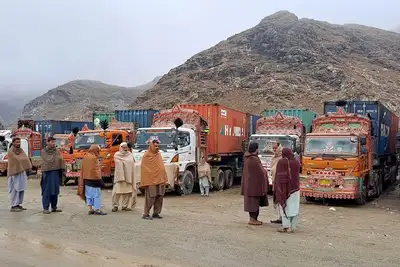
The Shanghai Cooperation Organisation summit opened in Bishkek on Monday, 31 August, with Afghanistan-related concerns over security, terrorism and drug trafficking expected to feature. The Taliban was again not invited.
Afghanistan has held formal observer status in the Shanghai Cooperation Organisation since 2012, but the Taliban has not attended any of the organisation’s annual leaders’ summits since returning to power.
The main summit of SCO leaders will take place on Tuesday. On the first day, member states are mainly holding bilateral and multilateral meetings.
Leaders attending include Chinese President Xi Jinping, Russian President Vladimir Putin, Indian Prime Minister Narendra Modi, Iranian President Masoud Pezeshkian and Pakistani Prime Minister Shehbaz Sharif, alongside the leaders of Kazakhstan, Kyrgyzstan, Tajikistan, Uzbekistan and Belarus.
UN Secretary-General António Guterres and Turkish President Recep Tayyip Erdoğan are also attending. Turkiye is not a full SCO member and holds the status of a dialogue partner.
Several bilateral meetings have been scheduled on the sidelines, including talks between Putin and the leaders of China, India, Iran and Turkiye. Economic and trade cooperation, energy, transport and regional connectivity are also expected to be discussed alongside security issues.
At the end of the summit, leaders are expected to adopt the Bishkek Declaration marking the 25th anniversary of the Shanghai Cooperation Organisation and Kyrgyzstan will hand over the organisation’s rotating presidency to Pakistan.
Concerns over the activities of terrorist groups, particularly Islamic State, in Afghanistan have long featured in SCO discussions.
Member states, especially Afghanistan’s neighbours, view the activities of terrorist groups in the country as a threat to regional security, and the issue is expected to be raised as part of the summit’s security discussions.
Afghanistan’s security was also discussed at an SCO foreign ministers’ meeting on 24 July. Pakistani Foreign Minister Ishaq Dar described terrorism originating from Afghanistan as one of his country’s most serious security challenges, while Iranian Foreign Minister Abbas Araghchi called for a stable Afghanistan free of terrorism. The Taliban administration was also not represented at that meeting.
The Shanghai Cooperation Organisation was established in 2001 and now has 10 full members. China and Russia have increasingly used the organisation to promote a multipolar vision of the international system, although the SCO officially says it is not an alliance directed against other countries.
Nearly two weeks after Juma Khan Fateh, a Taliban dissident commander, surrendered and one phase of tensions in Badakhshan ended, the province is entering a new period of deeper internal Taliban divisions and defiance of orders from Kandahar.
As Taliban leader Hibatullah Akhundzada appoints a new governor and police chief to contain the unrest, evidence suggests the list of dissatisfied local Taliban figures in Badakhshan is growing.
The Taliban leadership’s “monopolistic” policies, the marginalisation of Tajik and Badakhshani figures, and what critics describe as the unchecked looting of gold mines by outsiders have pushed some younger Taliban commanders in the province to the limit.
Discontent among Badakhshani Taliban members initially emerged through sharp criticism on social media. It later developed into open armed confrontation after Mahfuzullah, the former intelligence chief in Baharak, attacked the intelligence directorate and Juma Khan Fateh subsequently clashed with Taliban forces in Nusay district in August.
Recent investigations by Afghanistan International, along with interviews with several dissenting commanders in Jurm and Warduj districts, regarded as major strongholds of Badakhshani Taliban members, reveal new dimensions of the crisis.
On 25 August, Hibatullah appointed Rahmatullah Najib as governor of Badakhshan and Ahmad Shah Dindost as the provincial police chief.
Critics say the appointment of Pashtun officials and figures close to Hibatullah to key posts in Badakhshan has further marginalised local Taliban members. Sources say even the latest provincial reshuffle has failed to ease tensions because the most important positions remain in the hands of figures trusted by Kandahar, while local Taliban members are given largely symbolic roles.
Dissenting commanders say the deliberate exclusion of Tajik figures and the allocation of Badakhshan’s gold reserves to companies from Kandahar and Helmand have not only pushed them away from the governing structure but also seriously weakened their standing among local communities.
One of the first figures to openly oppose the Taliban’s Pashtun governor around three years ago was Salahuddin Salar, deputy head of intelligence at the Taliban Defence Ministry.
Over time, the protests widened. Juma Khan Fateh eventually entered armed clashes with Taliban forces and killed several fighters from Kandahar and Helmand. He later surrendered to Qari Fasihuddin and is now in Kabul awaiting trial before a military court. The outcome of the case could influence the direction of the wider unrest.
The Taliban has launched an extensive campaign to gather complaints and evidence against Fateh, apparently seeking to build a serious case against the dissident commander.
Salahuddin Salar
Salahuddin Salar, a resident of the Khastak area of Jurm district, has repeatedly criticised Taliban leadership policies on Facebook and has even described pledging allegiance to an “unseen emir” as a mistake.
Sources say his close relationship with Qari Fasihuddin has so far protected him from direct prosecution. However, Salar’s continued criticism and the Taliban’s silence have led some local Taliban members to speculate that he may have connections with the group’s intelligence apparatus and leadership.
Sayad Khastaki
Sayad Khastaki, a Taliban police recruitment commander in Badakhshan, is another figure who has criticised the group’s policies.
Following the clashes involving Juma Khan Fateh, he wrote: “The blood of our mujahideen had one value before the victory, but now they kill us and brand us as rebels.”
Khastaki was arrested several months ago by the Taliban police chief and removed from his post. Sources say, however, that he later returned to work and resumed his duties despite orders from Badakhshan police officials.
Qari Mahfuz
Qari Mahfuz, the former intelligence chief of Baharak district and a figure close to Helmand Governor Amanuddin Mansoor, became involved in a verbal dispute with Pashtun Taliban members in Faizabad.
On 1 August, he attacked the Taliban intelligence directorate with a PK machine gun before fleeing the area. Sources say he has since been dismissed from his position.
Mahfuzullah Qutiba
Mahfuzullah Qutiba, a resident of Jurm district, has also expressed dissatisfaction with Taliban leadership policies, particularly those concerning Badakhshan, and has occasionally voiced his criticism on Facebook.
After Abdul Matin Rahimzai, the Pashtun head of Badakhshan’s mines department and an ally of the Taliban leader, was dismissed, Qutiba posted a photograph of him and wrote that some people come to Badakhshan claiming they want to serve and develop the province, but instead “play the role of thieves and then flee”.
Discontent within the ranks of the Badakhshani Taliban is not limited to a handful of figures. The protests are gradually spreading to a broader group of local commanders.
Figures including Dr Ibrahim Baharaki and Jahan Khan Noori, the Taliban police chief of Yaftal district, have also repeatedly voiced objections to the central leadership’s policies at public gatherings.
Their main grievances include the exclusion of Badakhshani Taliban members from decision-making in the province, the large presence of non-local forces, and the extraction and alleged looting of Badakhshan’s gold reserves by companies from Kandahar and Helmand, a process they believe is transferring the province’s wealth outside Badakhshan.
Available findings suggest that many of the commanders now at the forefront of opposition to Kandahar’s policies are close to, or under the influence of, Qari Fasihuddin, the Taliban army chief of staff, and Mawlawi Amanuddin, the governor of Helmand.
Taliban Foreign Minister Amir Khan Muttaqi told the Financial Times that he would fully welcome US investment in Afghanistan, including in mining, infrastructure, agriculture and trade.
The Financial Times reported on Monday, 31 August, that the Taliban hopes such proposals and diplomatic efforts could help pave the way for the lifting of international sanctions and the release of frozen Afghan assets.
Muttaqi told the British newspaper: “Relations between Afghanistan and the United States should not be assessed through the lens of the past 20 years of war, but rather on the basis of future co-operation, Our economic policy is open.”
However, he did not say whether the proposal had been presented directly to the White House.
Geological assessments conducted by the United States and the former Afghan government indicate that Afghanistan has untapped mineral reserves worth at least $1 trillion, including copper, iron ore, niobium, cobalt, gold and lithium.
Since returning to power in 2021, the Taliban has signed mining contracts worth more than $7 billion, including for gold, precious stones and chromite, with countries such as China and Iran.
UN experts have warned that any move to normalise relations with the Taliban should not take place without tangible progress on human rights, particularly the rights of women and girls.
Criticising sanctions, Muttaqi said they had failed to achieve their objectives. He added: “No individual, government or institution should use the assets of the Afghan people as a tool of political pressure.”
US President Donald Trump has so far shown little willingness to establish relations with the Taliban and has previously called for the return of Bagram Air Base, a demand rejected by Muttaqi, who said all military and civilian facilities were national assets of Afghanistan.
The Taliban foreign minister also urged Washington to reopen its embassy in Kabul, saying security at the site had been ensured.
In a separate interview with Japan’s Kyodo News, he also called on Washington to abandon what he described as a confrontational approach towards the Taliban administration.
Muttaqi said the Taliban administration wants to normalise relations with the United States.
Taliban Foreign Minister Amir Khan Muttaqi says the group’s government wants to normalise relations with the United States and has urged Washington to abandon what he described as a confrontational approach towards the Taliban.
He said the two sides could shape their relationship based on mutual respect and shared interests.
In the interview with Japan’s Kyodo News, published on Saturday, 29 August, Muttaqi said the Taliban was currently seeking to expand relations with other countries and regarded formal recognition of its government as the next issue, rather than an immediate priority.
He urged the United States to reconsider its policy towards Afghanistan considering what he described as the reality of Taliban rule.
Russia remains the only country to have formally recognised the Taliban government. Western countries say the ban on girls’ education, restrictions on women’s employment and other human rights violations remain major obstacles to normalising relations with the Taliban.
Regional countries have also expanded contacts and cooperation with the Taliban without formally recognising its government. However, the Taliban has strengthened diplomatic ties with several of them and taken control of some Afghan embassies and consulates.
Asked about the future of girls’ education, Muttaqi did not provide a specific timetable for their return to secondary schools or universities.
In another part of the interview, Muttaqi described Afghanistan’s relations with Japan as historic and close and urged the Japanese government to facilitate the reopening of the Afghan embassy in Tokyo. He said the embassy suspended operations in February following a dispute over the acceptance of new Taliban diplomats.
The Taliban foreign minister has previously also called on the United States, in an interview with The New York Times, to invest in Afghanistan’s mines, dams and roads.
Explanation of Military Cooperation With Russia
Muttaqi said an agreement on military and technical cooperation signed between the Taliban and Russia in June was intended to support the repair and maintenance of Russian-made weapons.
He stressed that the cooperation was not directed against any specific country.
Asked about Russia’s war in Ukraine, Muttaqi declined to comment.
In another part of the interview, the Taliban foreign minister said the group’s government supported dialogue to resolve its disputes with Pakistan.
Three anti-Taliban fronts carried out at least 50 attacks across Afghanistan over the past month. The Freedom Front, United Front and National Resistance Front claim the attacks left dozens dead and wounded.
Attacks by anti-Taliban fronts increased sharply in August, ahead of the fifth anniversary of the fall of Afghanistan. Their military strategy also shifted significantly during the month from guerrilla attacks towards more conventional front-line fighting.
A new phase of armed opposition began after the newly established Sepahiyan-e Mihan Front briefly took control of Yaftal district in Badakhshan on 17 July. Opposition fronts then intensified attacks against the Taliban from early August.
Afghanistan Freedom Front
Following heavy fighting between the Taliban and opposition forces in Zebak district of Badakhshan, Daoud Naji, head of the Afghanistan Freedom Front’s political committee, said on 24 July that the conflict had entered a new phase. He announced the start of front-line fighting between Freedom Front forces and the Taliban in Zebak.
Naji said that the decisive battle for liberation has entered a new phase; a battle whose end will be freedom and whose true winners will be the people of Afghanistan.
Between 23 July and 22 August, the Afghanistan Freedom Front claimed responsibility for 21 attacks against the Taliban in eight provinces. Its main focus over the past month was Zebak district in Badakhshan, but it also reported attacks in Baghlan, Kabul, Kandahar, Nangarhar, Faryab, Nuristan and Panjshir.
On Friday, 28 August, the Freedom Front said it had expanded its armed operations against the Taliban to eight provinces during the previous Afghan month and carried out at least 21 guerrilla and front-line operations. It claimed that at least 65 Taliban members were killed and about 90 others wounded.
United Front of Afghanistan
After announcing the start of its military operations against the Taliban, the United Front of Afghanistan carried out its first reported attack in Kandahar on 1 August.
By 20 August, the group had reported on X around 20 attacks against the Taliban in Kandahar, Helmand, Badghis, Ghor, Faryab and several other parts of Afghanistan. According to the group, dozens of Taliban fighters were killed.
During this period, the United Front also released videos that it said showed the bodies of Taliban forces in different areas.
The group, led by Sami Sadat, a former commander of Afghanistan’s special forces, announced on 1 August that it had begun military operations against the Taliban and other terrorist groups in Afghanistan.
National Resistance Front
Between 29 July and 29 August, the National Resistance Front reported nine attacks against the Taliban in different provinces. The group claimed that dozens of Taliban members were killed or wounded.
According to statements issued by the NRF during this period, its forces carried out attacks in Badakhshan, Kunduz, Herat and Baghlan.
On 13 August, the NRF said its forces killed Habib-ur-Rahman Mansour, the Taliban-appointed mayor of Faizabad, and his guards in a targeted attack.
In response, the Taliban killed Hasib Panjshiri, a senior NRF commander, and several of his companions in a clash in northern Salang on 20 August.
The recent increase in attacks by anti-Taliban groups comes as Taliban officials continue to insist that security has been established across Afghanistan.
Afghanistan International previously reported that anti-Taliban groups carried out at least 15 attacks on Taliban positions in nine provinces within one week. Analysts have cited growing public support for opposition forces and criticism of Taliban rule as factors behind the expansion of these attacks.
Another notable development is that attacks previously dominated by guerrilla tactics have increasingly shifted towards direct front-line confrontation. Badakhshan, particularly the districts of Zebak, Yaftal, Kishm and Yamgan, has become one of the main centres of the fighting.
The increase in opposition attacks comes as the Taliban, since returning to power in 2021, has repeatedly claimed to have established security throughout Afghanistan. Anti-Taliban fronts, however, say they will continue their armed campaign and have expanded operations to several provinces in recent months.
The Taliban has not officially commented on many of the attacks or claims made by opposition groups and has not confirmed the casualty figures they have reported.