• العربية
  • پښتو
  • فارسی
Brand
  • Afghanistan
  • Sport
  • Analysis
  • Markets
  • Afghanistan
  • Sport
  • Analysis
  • Markets
  • Theme
  • Language
    • العربية
    • پښتو
    • فارسی
  • Afghanistan
  • Sport
  • Analysis
  • Markets
All rights reserved for Volant Media UK Limited
volant media logo

National Resistance Front Names New Commander To Replace Hasib Panjshiri

Sep 4, 2026, 14:15 GMT+1

The National Resistance Front of Afghanistan has appointed Commander Mukhtar Shoresh, a close associate of Hasib Panjshiri, as his successor following Panjshiri’s recent killing by the Taliban.

In a statement on Friday, 4 September, the NRF thanked national and political figures, leaders and members of the public who honoured Panjshiri’s memory by sending condolences, holding memorial ceremonies and expressing sympathy.

The front wished Commander Mukhtar success in his new role and said it was confident he would continue Panjshiri’s path and the cause of the freedom and dignity of the people of Afghanistan with perseverance, loyalty and commitment.

The NRF stressed that the position of the martyred Hasib will not remain vacant, adding: The path of the martyrs continues, and the flag of resistance will never fall.

Hasib Panjshiri was a senior field commander of the National Resistance Front, led by Ahmad Massoud. Before the fall of the former republic, he served in special units of Afghanistan’s National Directorate of Security and joined the armed resistance against the Taliban after the group returned to power in August 2021.

The NRF confirmed Panjshiri’s death on Thursday, 20 August. Taliban sources said he was killed during an operation in northern Salang. NRF sources also told Afghanistan International that Hasib and seven of his men were ambushed by the Taliban while travelling through the Salang area.

Over the past five years, Hasib Panjshiri had been one of the NRF’s best-known commanders operating inside Afghanistan. Images and videos showing him in mountainous areas and during clashes with Taliban forces had frequently been published.

Most Viewed

China’s Mediation Cannot Succeed Without Taliban Policy Change, Says Pakistan
1

China’s Mediation Cannot Succeed Without Taliban Policy Change, Says Pakistan

2

Taliban Holds Security Meeting To Assess Situation Across Afghanistan

3

Taliban Interference Disrupts Humanitarian Operations In Afghanistan, Says UN

4

Canada Warns Citizens Against Travel To Afghanistan

5

15 TTP Members Killed While Crossing From Afghanistan, Says Pakistan

•
•
•

More Stories

Peshawar Conference Urges Immediate Reopening Of Afghan-Pakistani Border Routes

Sep 4, 2026, 10:17 GMT+1
100%

Dozens of experts and political activists at a conference in Peshawar called for the immediate reopening of Afghanistan-Pakistan border crossings, saying trade should be separated from political and security tensions.

The one-day conference, titled “Beyond Pakistan-Afghanistan Conflict: Advancing Regional Peace and Mutual Understanding”, was held on Thursday by the University of Peshawar’s Centre for Area Studies in cooperation with Aspire KP.

Former senator and Pakistani politician Mushahid Hussain, Afrasiab Khattak and Arbab Shuja were among the prominent participants.

The conference discussed security, border and trade issues, as well as ways to reduce tensions between Afghanistan and Pakistan.

Arbab Shuja, head of Aspire KP, told Afghanistan International that although there were problems between Afghanistan and Pakistan, solutions had to be found to end the current situation. He said that despite the extensive ties between the peoples of the two countries, Afghanistan and Pakistan still did not understand each other well and needed more dialogue to resolve misunderstandings.

Shuja said security, border and trade issues should be addressed through dialogue and that both sides should work towards greater mutual understanding and lasting solutions.

“We cannot change our neighbour,” he said, adding that Afghanistan and Pakistan should focus on finding ways to cooperate and coexist peacefully rather than trying to change each other.

The head of Aspire KP also stressed China’s role in reducing tensions between Kabul and Islamabad, saying Beijing could play an important role in bringing the two sides closer and mediating their disputes because of its relations with both countries.

His remarks come as China’s special envoy for Afghanistan is in Pakistan for talks with Pakistani officials on Afghanistan and regional issues.

Pakistan’s Foreign Ministry says Chinese mediation is important for improving relations with the Taliban, but such efforts will not succeed unless the Taliban changes its approach towards Pakistani militants.

The ministry has called on the Taliban to take practical and visible action to prevent attacks by Pakistani militants.

Trade Should Not Be a Victim of Security Disputes

Shuja said the prolonged closure of trade crossings and continuing tensions had seriously harmed people on both sides of the Durand Line, with ordinary people and traders suffering the greatest losses.

He stressed that trade should be separated from security issues and that security disputes should not be resolved at the expense of people’s livelihoods. He said trade routes should be reopened as soon as possible.

Relations between Pakistan and the Taliban administration have become severely strained in recent months. Border clashes have closed major trade crossings, including Torkham and Spin Boldak, effectively bringing trade between the two countries to a halt.

In response to the tensions, the Taliban administration has banned imports of some Pakistani goods, including medicines, and has turned to India to meet part of its needs.

Canada Warns Citizens Against Travel To Afghanistan

Sep 3, 2026, 14:28 GMT+1
100%

The Canadian government has issued a strong warning urging its citizens not to travel to Afghanistan, saying the security situation remains highly volatile and dangerous.

In its latest travel advisory, Canada said people already in Afghanistan should exercise caution if they need to move to a safer location and should review their personal security plans.

The Canadian government also warned that foreign nationals and people with links to Western countries face risks of kidnapping and violence by terrorist groups, as well as a heightened risk of arbitrary detention by Taliban authorities.

It said the risk is particularly high for people who had links to the former Afghan government or who are seen as having violated Taliban rules.

According to the advisory, Taliban authorities may accuse foreign nationals, including dual Afghan and foreign citizens, of espionage.

Humanitarian workers and journalists are among those whose activities and movements may be monitored, the advisory said.

Canada warned that people who come under suspicion from Taliban authorities may have their passports confiscated and could be arbitrarily detained for extended periods.

The advisory also said Canadian citizens have previously been detained in Afghanistan and, in some cases, denied access to Canadian consular officials, family members or lawyers.

In another section, the Canadian government said the terrorist threat remains present across Afghanistan, including Kabul and other major cities, and that attacks could occur at any time.

The advisory said terrorist groups remain active in Afghanistan and may target foreigners, security and defence personnel, NGO workers, journalists and media staff, health workers and other civilians.

Canada also warned that criminal groups carrying out kidnappings for ransom may sell hostages to terrorist organisations, potentially leaving victims in captivity for years.

According to the advisory, terrorist and criminal groups may establish fake checkpoints and roadblocks to carry out robberies, kidnappings or other violent attacks.

The Canadian government also warned against travel to tourist and remote areas of Afghanistan, saying that even organised tours run by reputable companies do not eliminate the risks.

Warning About the Situation of Women

Canada’s travel advisory includes a separate section on women, saying they face particular risks of harassment and abuse, including at the hands of the Taliban.

The Canadian government stressed that its embassy in Afghanistan remains suspended and that Ottawa’s ability to provide consular services and other assistance to Canadian citizens in the country is extremely limited.

Taliban Interference Disrupts Humanitarian Operations In Afghanistan, Says UN

Sep 3, 2026, 13:35 GMT+1
100%

The UN Office for the Coordination of Humanitarian Affairs says it recorded at least 30 incidents of Taliban interference with humanitarian activities in the past month, including the detention of two aid workers in Herat.

In a report issued on Thursday, 3 September, OCHA said it recorded 16 incidents involving restrictions on humanitarian access in July, 12 cases of violence against staff or interference with aid organisations’ assets and facilities, and two restrictions on aid workers’ movement.

OCHA said most of the incidents occurred in southern and western Afghanistan.

Of the 16 cases involving interference in humanitarian activities, four concerned delays or difficulties in signing memorandums of understanding, while three involved interferences in the selection of aid recipients. The report added that the Taliban interfered with the implementation of humanitarian programmes on three occasions.

According to the report, the Taliban asked humanitarian organisations for staff lists and other sensitive information in two cases. OCHA also recorded interference in staff recruitment, requirements for female employees to be accompanied by a mahram, restrictions on the participation of female aid workers and obstruction of access for people seeking assistance.

The United Nations said Taliban restrictions involving memorandums of understanding had negatively affected humanitarian activities in Balkh, Faryab, Jowzjan and Kandahar.

OCHA said discussions with Taliban officials were continuing in several cases in an effort to resolve the problems.

The UN office also reported 11 gender-based restrictions imposed by the Taliban in July. According to OCHA, these measures affected both humanitarian operations and vulnerable communities.

The United Nations said last month that Taliban interference and restrictions on humanitarian activities in June had risen by 50 per cent compared with the previous month. It said at least 21 humanitarian activities were suspended as a result, disrupting aid delivery in affected areas.

The report said the Taliban had initially authorised women in Uruzgan to take part in data collection but withdrew the permission before the process began. OCHA said Uruzgan was the only province covered by the initiative, and permission for women’s participation was revoked at the last moment.

According to the report, 18 incidents resulted in the temporary suspension of humanitarian programmes, while two led to the temporary closure of aid offices.

OCHA said 11 of the incidents had been resolved by the end of July, while 19 remained unresolved.

Regionally, southern Afghanistan recorded the highest number of incidents, with nine, followed by the west with eight, the east with four and the north with three. The central and north-eastern regions each recorded two incidents.

OCHA said the figures showed continuing challenges to humanitarian access, including Taliban interference, restrictions on women’s participation, programme approvals, staff movement and the safety of aid workers.

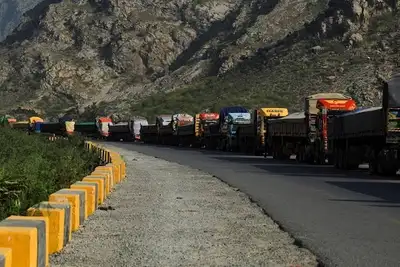
Taliban Holds Security Meeting To Assess Situation Across Afghanistan

Sep 3, 2026, 09:46 GMT+1
100%

The Taliban’s Security and Clearance Affairs Commission says it held a meeting chaired by Defence Minister Mullah Yaqoob Mujahid to assess Afghanistan’s security situation, which the group described as reassuring.

In a statement issued on Wednesday, 2 September, the commission said reports from provincial security and clearance commissions across Afghanistan were also reviewed, and the overall security situation was considered satisfactory and reassuring.

The meeting also stressed coordination between the Taliban’s security and civilian institutions to improve operations and the delivery of services.

The Taliban’s Security and Clearance Affairs Commission is responsible for assessing the security situation and reviewing the performance of the group’s forces in different provinces.

Despite Taliban claims that nationwide security has been established, international reports and figures indicate that security threats, particularly the activities of opposition groups and terrorist attacks, remain serious challenges in Afghanistan.

Taliban spokesperson Zabihullah Mujahid said at a press conference on Wednesday that the group’s Defence Ministry had carried out 602 independent and joint operations with the Interior Ministry and intelligence agency this year. He claimed the operations had disrupted complex enemy plots and dismantled opposition hideouts and networks.

Mujahid did not provide details about the groups involved, where the operations took place or the nature of the security threats. However, armed groups opposing the Taliban have expanded their attacks across Afghanistan in recent months.

The Afghanistan United Front previously said it had carried out at least 43 operations against the Taliban in 14 provinces over the past month. The group claimed that 74 Taliban members were killed and 35 others wounded.

The Afghanistan Freedom Front has also said it expanded its armed operations against the Taliban to eight provinces during the previous Afghan month and carried out at least 21 guerrilla and front-line operations. It claimed that at least 65 Taliban members were killed and around 90 others wounded.

China’s Mediation Cannot Succeed Without Taliban Policy Change, Says Pakistan

Sep 3, 2026, 08:58 GMT+1
100%

Pakistan’s Foreign Ministry spokesman says Islamabad welcomes China’s role in Afghanistan and its efforts to ease tensions but says Beijing’s mediation will not succeed unless the Taliban changes its relationship with Pakistani insurgent groups.

Tahir Andrabi said Islamabad had so far received no new guarantees or actions from the Taliban showing that Afghan territory would not be used against Pakistan.

Speaking at his weekly press conference, he said any improvement in relations between Pakistan and Afghanistan would depend on actions and assurances from the Taliban.

Referring to a visit to Islamabad by China’s special envoy for Afghanistan, Yue Xiaoyong, Andrabi said he held talks with Pakistan’s special representative for Afghanistan, Mohammad Sadiq, on 31 August and 1 September.

Following border clashes between Pakistan and the Taliban, peace talks between representatives of the two sides were held in Urumqi, China, from 1 to 7 April. Like previous rounds in Doha, Istanbul and Riyadh, however, they ended without a tangible outcome.

Commenting on China’s efforts to revive the Urumqi process, Andrabi said Pakistan had always supported constructive dialogue on Afghanistan and maintained a positive approach. However, he said progress depended on specific and verifiable action by the Taliban government against Tehreek-e-Taliban Pakistan, the Balochistan Liberation Army and other terrorist groups operating from Afghan territory against Pakistan.

Asked about recent Taliban statements on dialogue with Pakistan, Andrabi said Islamabad had seen no new development or fresh guarantee from the Taliban administration since the previous week’s press conference.

He also addressed the Taliban ambassador’s appearance at Pakistan’s National Defence University, saying diplomats regularly attend academic and educational institutions and that the visit should not be interpreted as a sign of any change in political relations between Islamabad and Kabul.

Andrabi said such visits took place within academic and educational frameworks and that no new decision had been made to expand relations with the Taliban government.

The Pakistani Foreign Ministry spokesman again accused the Taliban of enabling anti-Pakistan armed groups to operate. He said Islamabad had evidence showing that Afghanistan-based elements, including Taliban officials, were supporting armed groups active in Pakistan.

He also accused India of supporting these groups, saying Pakistan possessed specific evidence to support the allegation.

Andrabi added that Pakistan’s prime minister and foreign minister had also raised security threats and what Islamabad describes as the external dimensions of terrorism at recent Shanghai Cooperation Organisation meetings.

Pakistan has repeatedly accused the Taliban in recent years of sheltering members of Tehreek-e-Taliban Pakistan and other armed groups. The Taliban rejects the allegations and says it does not allow Afghan territory to be used against other countries.

The latest remarks by Pakistan’s Foreign Ministry spokesman indicate that despite continuing diplomatic contacts and China’s efforts to facilitate dialogue, Islamabad still considers concrete Taliban action against anti-Pakistan armed groups the main condition for improving relations with Kabul.