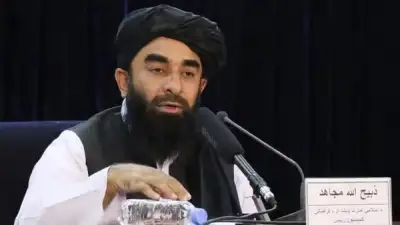
In a statement posted on X on Monday, 12 October, Mujahid said blaming Afghanistan for Pakistan’s failures would lead nowhere.
He said continued baseless accusations and senior Pakistani officials’ focus on negative propaganda against the Afghan Taliban amounted to a failed policy that was damaging diplomatic efforts and the path towards negotiations.
Expressing concern about the impact of Pakistan’s political, security, social and economic challenges on regional stability, Mujahid said Islamabad should take practical steps to address these crises rather than shift blame elsewhere.
He also called on the Pakistani government to respect the rights, freedoms and views of its politicians and citizens.
Mujahid’s remarks came as Pakistan’s Information and Broadcasting Minister Attaullah Tarar took a strongly critical stance towards Kabul on Monday, claiming that more than 20,000 terrorists, including 6,000 members of the Tehreek-e-Taliban Pakistan (TTP), were currently in Afghanistan.
Tarar accused the Taliban of allowing these militants to operate from safe havens and receive military training on Afghan soil. He said Pakistan wanted extremism and militancy to be eliminated from Afghanistan.
He added that counter-terrorism operations along the border and in Khyber Pakhtunkhwa would continue with full force.
Pakistan Prime Minister Shehbaz Sharif had earlier called for practical action against armed groups in Afghanistan during a meeting with UN Secretary-General António Guterres, saying that stopping cross-border attacks was one of Islamabad’s main demands.
State of emergency in Khyber Pakhtunkhwa amid political crisis
The remarks by Taliban and Pakistani officials come amid an escalating security and political crisis in Khyber Pakhtunkhwa, which borders Afghanistan.
On Sunday, Pakistan’s federal government, following approval by President Asif Ali Zardari, declared a state of emergency in Khyber Pakhtunkhwa, imposed direct governor’s rule and removed the powers of the provincial government led by Pakistan Tehreek-e-Insaf (PTI). A governor aligned with Islamabad was appointed.
In a statement, Tarar described the removal of the provincial government as a positive change. Shehbaz Sharif’s government, citing reports from security agencies, accused the provincial administration led by Sohail Afridi of failing to contain insecurity and of accommodating armed groups.
PTI, however, described the move as an attempt to suppress demonstrations by supporters of Imran Khan and as a violation of people’s constitutional rights. The party also reported the detention of Sohail Afridi, the province’s chief minister, and Junaid Akbar, its provincial president.
Authority over the province has been transferred for at least six months to the governor and an 11-member council, a development that comes amid the continuing dispute between Kabul and Islamabad over the TTP and has further heightened tensions.