• العربية
  • پښتو
  • فارسی
BrandBrand
  • Afghanistan
  • Sport
  • Analysis
  • Markets
  • Afghanistan
  • Sport
  • Analysis
  • Markets
  • Theme
  • Language
    • العربية
    • پښتو
    • فارسی
  • Afghanistan
  • Sport
  • Analysis
  • Markets
All rights reserved for Volant Media UK Limited
volant media logo

Commander Arrested By Taliban Was Our Member, Says Afghanistan United Front

Nov 9, 2026, 14:12 GMT+0

The Afghanistan United Front confirmed that Allah Dad Fedayee, a former Afghan police commander arrested by the Taliban, was a member of the group.

In a statement issued on Monday, 9 November, the Afghanistan United Front, led by Sami Sadat, described Fedayee as one of its "prominent, committed and capable" commanders.

Media outlets affiliated with Taliban intelligence had previously claimed that Allah Dad Fedayee was working for the Afghanistan United Front.

However, the front had denied the allegation a day earlier, stating that Fedayee had no connection with the group.

On 28 October, sources told Afghanistan International that Taliban intelligence officers had arrested Fedayee in Kabul.

General Allah Dad Fedayee served as police chief in Maidan Wardak, Baghlan, Nimruz and Laghman provinces under Afghanistan's former government.

On Monday, a media outlet linked to Taliban intelligence also released a video of Fedayee’s alleged forced confession.

Most Viewed

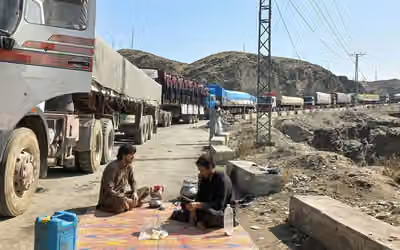
Trade With Afghanistan Will Remain Suspended Until Attacks Stop, Says Pakistan
1

Trade With Afghanistan Will Remain Suspended Until Attacks Stop, Says Pakistan

2

Managing Millions Of Afghan Returnees Is A Major Challenge, Says UN Envoy

3

UN Warns Of Worsening Humanitarian Crisis In Afghanistan As Winter Approaches

4

Former Afghan Police Chief Appears In Confession Video After Reported Taliban Arrest

•
•
•

More Stories

Managing Millions Of Afghan Returnees Is A Major Challenge, Says UN Envoy

Nov 9, 2026, 09:44 GMT+0
100%

Abdul Salam Hanafi, the Taliban's Deputy Prime Minister, discussed the challenges facing Afghan returnees and efforts to support them with Rabab Fatima, head of UNAMA and the UN Secretary-General's Special Representative for Afghanistan.

In a statement issued on Monday, 9 November, the Taliban's Presidential Palace said Fatima had described managing the challenges facing returnees in Afghanistan as a major concern.

According to the statement, Abdul Salam Hanafi said the Taliban were making efforts to address the problems facing more than eight million people who had returned to Afghanistan and were committed to full cooperation in this regard.

He added that relevant organisations should also work together to protect the rights of returnees, create employment opportunities and provide them with shelter.

According to the Taliban, Rabab Fatima expressed hope that efforts to promote Afghanistan's economic development and reconstruction would continue.

UNAMA has not yet commented on the meeting or issued a statement about it. The Taliban have also not released any photographs or videos of the meeting.

Previously, Mawlawi Kabir, the Taliban's Minister of Refugees and Repatriation, had also discussed humanitarian assistance for Afghan returnees with Rabab Fatima.

According to the International Organization for Migration (IOM), approximately 6.5 million Afghans returned to the country from Iran and Pakistan between mid-September 2023 and 31 August 2026. The figure includes both voluntary returnees and those deported from the two countries.

On 30 October 2026, the IOM announced that more than 1.3 million Afghans had returned from Iran and Pakistan during the current calendar year alone.

According to the organisation's figures, more than 6.6 million returns from the two countries have been recorded since September 2023.

The IOM said approximately 2.9 million Afghans returned to the country in 2025 alone.

The large-scale return of Afghans, particularly the deportation of migrants from Iran and Pakistan, has placed considerable pressure on Afghanistan's resources, public services, labour market and shelter facilities.

24 Nations Gather in Samarkand to Combat Terrorist Use of AI

Nov 7, 2026, 17:33 GMT+0
100%

The first Shanghai Plus security experts' meeting was held in Samarkand, bringing together more than 180 representatives from 24 countries and international organisations. Participants warned of terrorist groups misusing AI and digital platforms.

Participants emphasised the need to develop joint strategies to counter security threats in the digital age.

Uzbek President Shavkat Mirziyoyev, in a message to the meeting's participants, stressed the importance of information security, protecting critical infrastructure and strengthening countries' resilience against emerging forms of threats.

According to Mirziyoyev, while digital technologies have created new opportunities for development, they have also introduced new vulnerabilities that require a coordinated regional response.

During the meeting, held on Friday, 6 November, representatives of participating countries shared their national experiences in countering terrorist activities and examined measures to prevent the spread of extremism online.

Discussions focused on how terrorist groups use artificial intelligence, digital platforms and other technological tools for propaganda, recruitment and the coordination of illegal activities.

At the meeting, heads of delegations issued a joint statement agreeing to conduct research into the changing nature of terrorist threats driven by emerging technologies, exchange experiences in preventive measures and organise specialised training programmes.

The Taliban's intelligence chief, who attended the meeting, called on technology companies, including Telegram and TikTok, to cooperate with the Taliban administration in combating ISIS.

Abdul Haq Wasiq claimed that Islamic State Khorasan Province (ISIS-K) uses these companies' platforms for communication, financing and ideological propaganda.

On the same day, another meeting between Central Asian leaders and the King of Jordan was held in Astana, the capital of Kazakhstan.

The meeting, which marked the first Aqaba Process gathering in Central Asia, focused on ensuring security in the field of artificial intelligence, preventing its use for terrorist and extremist purposes, and strengthening regional and international cooperation against threats posed by emerging technologies.

700 Health Centres Closed In Afghanistan In One Year, Says UN

Nov 7, 2026, 11:59 GMT+0
100%

Bruno Lemarquis, the UN Deputy Special Representative for Afghanistan, said more than 700 health facilities, accounting for 40% of the country's primary healthcare centres, have closed between 2025 and 2026 due to cuts in international funding.

Speaking at a press briefing in New York on Friday, 6 November, Lemarquis said the Taliban's restrictions on women and girls had severely limited their access to education, employment, public services and participation in social life.

He said the Taliban's continued restrictions on the fundamental rights of women and girls had further deepened Afghanistan's international isolation.

The UN Deputy Special Representative added that the ban on Afghan female employees entering UN premises, imposed in September 2025, remained in place and had also affected the organisation's operations.

Lemarquis warned that declining international funding had made Afghanistan's humanitarian situation increasingly difficult. According to him, humanitarian assistance funding had fallen from $2 billion in 2023 to $570 million in 2026.

He said that although the number of people requiring assistance was expected to decline next year, the severity of humanitarian needs would increase by approximately 30%.

According to Lemarquis, around 6.7 million people have returned to Afghanistan from neighbouring countries, particularly Iran and Pakistan, since 2023, placing considerable pressure on the economy, public services and host communities.

He stressed that returnees needed identity documents, shelter, employment opportunities and access to essential services.

Addressing the economic situation of farmers, Bruno Lemarquis said reductions in poppy cultivation would not be sustainable without providing alternative livelihood opportunities.

He warned that some farmers might return to poppy cultivation because of insufficient economic support and inadequate income from alternative crops.

The UN Deputy Special Representative also cautioned that rising poverty, weak public services and failures to reintegrate returnees could have consequences beyond Afghanistan's borders, affecting security, regional stability and migration patterns.

He emphasised that the international community must not abandon Afghanistan under the current circumstances and that international assistance should continue.

Taliban Intelligence Seeks Telegram & TikTok's Help In Combating ISIS

Nov 7, 2026, 10:34 GMT+0
100%

The Taliban's intelligence chief, Abdul Haq Wasiq, urged technology companies, including Telegram and TikTok, to cooperate with the Taliban administration against ISIS-K.

He claimed the group uses their platforms for communication, financing and ideological propaganda.

The Taliban's intelligence chief also warned that ISIS-K could use artificial intelligence to learn how to manufacture toxic substances and lethal weapons, potentially bypassing restrictions imposed on the technology.

Wasiq made the remarks during the first Shanghai Plus expert meeting on security issues in Samarkand, Uzbekistan.

Uzbekistan hosted the first Shanghai Plus expert dialogue on security issues under the Shanghai Cooperation Organisation (SCO) in Samarkand on 5 and 6 November.

The meeting brought together 33 delegations from 24 countries and five international organisations to discuss strategies for combating terrorism and extremism, as well as emerging security threats arising from the expansion of artificial intelligence and digital transformation.

The Taliban's intelligence chief said the Taliban, which he described as being on the front line of the fight against ISIS-K, faced serious limitations in countering the group's technological capabilities.

He said major technology companies such as Telegram and TikTok, whose platforms are used by ISIS-K, were not cooperating with the Taliban.

ISIS-K uses Afghanistan as one of its main operational bases and seeks to expand its influence across the region.

Through extensive social media propaganda, recruitment of young people and the establishment of links with affiliated cells in other countries, the group aims to strengthen its operational capabilities.

The group's attacks in Afghanistan and other countries in the region demonstrate that the threat posed by ISIS-K extends beyond Afghanistan's borders and has become a shared security concern for regional countries.

Taliban officials have previously claimed that they have severely weakened ISIS-K through extensive operations against the group.

The remarks come as Alexander Zuev, the UN Assistant Secretary-General for Counter-Terrorism, also claimed at the same meeting that ISIS-K had acquired modern tactical equipment, including drones, and that its members had received the necessary training to use them in operations.

Pakistan Urges International Action Against Terrorist Groups In Afghanistan

Nov 6, 2026, 14:44 GMT+0
100%

Pakistan's Foreign Ministry spokesman said Islamabad is seeking coordinated international efforts to counter terrorist threats originating from Afghanistan.

Speaking at a press briefing on Friday, 6 November, Sajjad Haider Khan said the Taliban administration's misleading narratives did not absolve it of responsibility for preventing Afghan territory from being used to launch attacks against other countries.

The Pakistani Foreign Ministry spokesman said the country's foreign minister had discussed terrorist threats originating from Afghanistan and ways to counter them during a meeting with Dan Jarvis, the UK's Minister of State for Security.

Pakistani Foreign Minister Ishaq Dar met the British official in Islamabad on Friday. According to Pakistan's Foreign Ministry, the two sides discussed bilateral relations and expanding cooperation in security, law enforcement, migration, trade and investment.

British and Pakistani officials described the presence and activities of terrorist groups, including Tehreek-e-Taliban Pakistan (TTP), in Afghanistan as a serious threat to the region. The assessment was made on Wednesday, 4 November, during bilateral counterterrorism talks in Islamabad.

Sajjad Haider Khan also rejected the Taliban administration's claims of civilian casualties resulting from Pakistani airstrikes on Afghan territory, describing them as baseless.

He said that disinformation and misleading narratives neither conceal the threat posed by terrorist networks operating on Afghan soil nor absolve the Taliban administration of its responsibility to prevent Afghan territory from being used to attack Pakistan.

The Taliban administration says civilians, including women and children, have been killed in Pakistani airstrikes. The United Nations has also previously confirmed civilian casualties in these attacks. Pakistan, however, maintains that it targets militant positions and facilities belonging to armed groups.

In recent months, Pakistan has carried out airstrikes in Kandahar, Helmand, Paktia, Paktika, Kunar and Khost provinces. It has also previously bombed Kabul. In one attack on the Afghan capital, hundreds of people were killed at a drug rehabilitation centre.

Relations between Pakistan and the Taliban administration have become severely strained in recent months amid escalating border clashes, airstrikes and mutual accusations.

Pakistan accuses the Taliban administration of allowing anti-Pakistan armed groups to operate from Afghanistan and claims that India supports these groups.

The Taliban administration denies the allegations and, in turn, accuses Pakistan of supporting armed groups opposed to its rule.

Diplomatic efforts and negotiations between the two sides have so far failed to produce an agreement to end the tensions.

Pakistan is now calling for international involvement in countering what it describes as terrorist threats emanating from Afghan territory.

The US Secretary of State has also previously said he understands Pakistan's concerns about security threats.