• العربية
  • پښتو
  • فارسی
BrandBrand
  • Afghanistan
  • Sport
  • Analysis
  • Markets
  • Afghanistan
  • Sport
  • Analysis
  • Markets
  • Theme
  • Language
    • العربية
    • پښتو
    • فارسی
  • Afghanistan
  • Sport
  • Analysis
  • Markets
All rights reserved for Volant Media UK Limited
volant media logo

Political Power Is No One's Personal Property, Say Jamiat-e Islami & NRF

Nov 18, 2026, 15:45 GMT+0

Jamiat-e Islami Afghanistan and the National Resistance Front (NRF) have criticised a gathering held at Kabul University in support of the Taliban leader, saying political power is not the personal property of any individual or group.

The two groups stressed that Afghans must be allowed to determine their country's political system through free elections.

In a joint statement, the two opposition groups accused the Taliban of attempting to legitimise their rule by organising such gatherings.

They said the Taliban were exploiting the standing of Kabul University for political purposes by bringing together religious clerics affiliated with the group.

Jamiat-e Islami and the NRF stressed that political legitimacy derives from the will and consent of the people, arguing that orchestrated gatherings could not confer legitimacy on an administration that disregards citizens' rights.

The two groups also said Afghans were not seeking the distribution of government posts among individuals affiliated with the Taliban. Rather, they said, the Afghan people demanded fundamental rights, freedom, justice and meaningful participation in determining their political future.

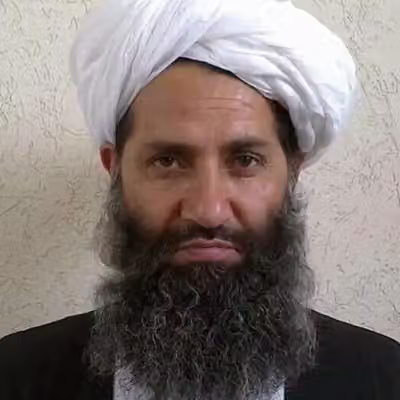
Speaking at a gathering on his decrees at Kabul University on Tuesday, 17 November, Taliban leader Hibatullah Akhundzada urged opponents of the group to return to Afghanistan, saying they could hold positions in the Taliban administration if they met the required qualifications.

The two opposition groups also called on religious scholars not to remain silent over the Taliban's use of religion to justify their policies, urging them to defend the rights of the Afghan people.

Jamiat-e Islami and the NRF vowed to continue their struggle against the monopolisation of power, discrimination and repression until the rights and freedoms of the Afghan people were guaranteed.

Most Viewed

Taliban Leader Defends His Authority & Warns Against Internal Divisions
1

Taliban Leader Defends His Authority & Warns Against Internal Divisions

2

Taliban Leader Offers Government Posts To Opponents For First Time

3

Saudi Company Explores $30 Billion Energy Investment In Pakistan

4

Taliban Leader Seeks To Contain Internal Dissent During Kabul Visit, Say Sources

5

Taliban Interference & Restrictions On Women Disrupt Aid Delivery, Says UN

•
•
•

More Stories

Spain To Host Afghan Women's Summit On Justice & Accountability

Nov 18, 2026, 13:23 GMT+0
100%

Women for Afghanistan (WFA) has announced that the fourth HearUs Summit will take place in Madrid on 22 and 23 November 2026, in partnership with Spain's Ministry of Foreign Affairs.

The summit, themed “Afghan Women's Leadership in Achieving Justice and Peace through Accountability”, will bring together Afghan women leaders, diplomats, United Nations representatives, human rights experts, policymakers and civil society activists.

Spanish Foreign Minister José Manuel Albares is also scheduled to address the gathering.

The organisers describe the summit as the largest gathering of Afghan women leaders and their male allies outside Afghanistan, with some participants joining from inside the country.

The first day will be dedicated to internal dialogue, while the second will feature four high-level panel discussions involving Afghan participants and their international allies.

Discussions will focus on girls' education, women's economic empowerment and resilience, international justice and accountability, women's rights from an Islamic perspective, and women's leadership in efforts to achieve peace in Afghanistan.

The organisers said the gathering aimed to strengthen coordinated efforts to advance justice, ensure accountability and promote women's meaningful participation in shaping Afghanistan's future.

According to Women for Afghanistan, this year's summit will include the launch of the One Million Signatures initiative to mobilise global support for Afghan women and girls.

A ceremony will also honour four young Afghan athletes for their outstanding achievements over the past year.

The organisers said the summit sought to translate international solidarity and political commitments into practical measures and lasting solutions to protect the rights of Afghan women and girls.

Spain, which has hosted previous editions of the summit, remains a major supporter of the initiative and Afghan women's organisations in exile.

Speaking at the Fifth Ministerial Conference on Feminist Foreign Policy in Madrid in June, Spanish Foreign Minister José Manuel Albares reaffirmed his country's support for Afghan women.

“This will always be your home,” Albares said, pledging that his ministry would continue to amplify Afghan women's voices despite the Taliban's efforts to silence them.

Afghanistan's GDP Per Capita Set To Fall For Third Straight Year, Says World Bank

Nov 18, 2026, 11:42 GMT+0
100%

The World Bank has projected that Afghanistan's economy will grow by 3 percent in the 2026 fiscal year, driven largely by a strong agricultural harvest.

However, GDP per capita is expected to decline by 3.3 percent, marking the third consecutive year of falling economic output per person.

In its latest Afghanistan Development Update, the World Bank said the country's population was projected to grow by 6.6 percent, outpacing economic expansion and putting further pressure on living standards.

The report, released on Wednesday, 18 November, found that many Afghan households continued to struggle with limited employment opportunities, rising food prices and worsening water shortages.

In September 2026, casual labourers worked 14 percent fewer days than a year earlier, while the amount of wheat flour they could afford with their weekly earnings fell by 27 percent.

Despite an improved harvest, an estimated 15.9 million people faced acute food insecurity in September and October, according to figures from the Integrated Food Security Phase Classification (IPC) cited by the World Bank.

Domestic revenue increased by 10.2 percent in the first half of the 2026 fiscal year, with higher tax and non-tax revenues compensating for falling customs duties.

However, public investment remains limited, with capital expenditure projected to account for approximately 1.3 percent of GDP in the current fiscal year.

The World Bank said the closure of Afghanistan's border with Pakistan had significantly altered the country's trade routes, with around 97 percent of imports now entering through Central Asia and Iran.

Afghanistan's exports fell by 15.1 percent between April and September 2026 compared with the corresponding period in 2025.

Afghanistan Loses Billions Of Cubic Metres Of Freshwater Annually

The World Bank estimates that Afghanistan has lost an average of 4.9 billion cubic metres of freshwater reserves annually since 2003, with depletion recorded across all 34 provinces.

In Kabul, groundwater extraction is estimated to be nearly four times the natural replenishment rate.

The institution warned that growing water scarcity also threatened rural livelihoods, given that agriculture provides 46 percent of Afghanistan's employment and accounts for 95 percent of its water withdrawals.

Afghanistan's Economic Outlook

The World Bank forecasts economic growth of 3.3 percent in the 2027 fiscal year and 3.5 percent in 2028.

However, even if the projected recovery materialises, GDP per capita in 2028 is expected to remain approximately 7 percent below its 2024 level.

The institution warned that poor harvests, further trade disruptions, additional large-scale returns of Afghan migrants and deeper cuts in international aid could undermine the country's economic prospects.

To improve living standards, the World Bank identified securing trade routes, creating more employment opportunities in provinces hosting large numbers of returnees and restoring access to education and employment for women and girls as key priorities.

It also called for the restoration of essential water and sanitation services, the rehabilitation of irrigation infrastructure and measures to safeguard groundwater reserves and watersheds.

Akhundzada Wants Subordinates, Not Partners In Power, Say Resistance Groups

Nov 18, 2026, 09:24 GMT+0
•
Jamshid Yama Amiri
100%

Political and military opponents of the Taliban have dismissed Hibatullah Akhundzada’s invitation to return to Afghanistan and participate in government.

One opposition figure told Afghanistan International that the Taliban leader was deeply concerned about the group’s situation and that the struggle against the Taliban had only just begun.

Opposition figures said growing public discontent, mounting pressure and the strengthening of resistance groups had alarmed Akhundzada. They argued that his offer of participation was not about sharing power but about appointing opponents as officials within the Taliban administration.

Yasin Zia, leader of the Afghanistan Freedom Front (AFF), told Afghanistan International that Akhundzada’s remarks were a result of his group’s armed resistance against the Taliban.

Zia said opposition figures were not seeking government posts, having already served in various positions under the former government. He said the Taliban leader must agree to the formation of a government in which sovereignty rests with the people and all citizens enjoy equal rights.

‘I Do Not Take Akhundzada’s Invitation Seriously’

Mohammad Mohaqiq, leader of the People’s Islamic Unity Party of Afghanistan, told Afghanistan International that he did not take the Taliban leader’s remarks seriously.

Asked what Akhundzada’s invitation to opponents after five years signified, Mohaqiq said: “I do not know the reason behind it, but I do not take it seriously.”

Fazl Ahmad Manawi, a former justice minister and member of the National Resistance Front (NRF), also told Afghanistan International that Akhundzada was not seeking political partnership with his opponents.

“He does not want partners; he wants government functionaries,” Manawi said.

According to Manawi, the Taliban are facing mounting internal pressure because of their monopolisation of power.

Sharing Government Posts Will Not Satisfy The Public

Meanwhile, Shah Mahmood Miakhel, a former acting defence minister, said government positions were the right of the people rather than favours granted by those in power.

In a post on X, Miakhel dismissed Akhundzada’s remarks as “empty talk”, saying government positions were not gifts for the Taliban to distribute as they pleased. He argued that the people, rather than a small group or a dictator, were the rightful owners of the state and its political system.

Miakhel said that as long as Afghanistan lacked a constitution, public participation in governance could not be secured simply by distributing government posts, as it was the constitution that determined how citizens participated in the political system.

He added that the Taliban appeared to believe that most Afghans opposed the group’s approach to governance and its ideology because they wanted government positions, and that their opposition would end once they were given such posts.

Miakhel rejected this interpretation, saying Afghans wanted their rights guaranteed within a constitutional framework.

He called on the Taliban to pave the way for the establishment of a legitimate, democratic and law-based political system through intra-Afghan dialogue.

An Invitation To Submission And Unquestioning Obedience

Daoud Naji, head of the political office of the Afghanistan Freedom Front, told Afghanistan International that Akhundzada’s speech was not an invitation to political participation but a call for opponents to accept a subordinate role within the Taliban’s governing structure.

“If we examine the speech as a whole, it was an invitation to become either subjects or government functionaries,” Naji said.

He added that public opinion and the aspirations of the Afghan people had no place in the Taliban’s political system.

According to Naji, Akhundzada’s concerns about growing public discontent, the strengthening of resistance groups and internal divisions within the Taliban were evident throughout his speech.

“The Taliban are worried — worried about public discontent, worried about the strengthening of resistance fronts and worried about their own internal divisions. His anxiety was apparent throughout the speech, but the mullah’s solution to these concerns was unquestioning obedience,” he said.

Taliban Concerns Over Domestic And External Crises

Hafiz Mansour, a member of the National Resistance Front led by Ahmad Massoud, also believes that Akhundzada’s remarks stemmed from concerns about the Taliban’s current predicament.

Referring to regional developments, Mansour said the regional consensus in support of the Taliban had fractured, the group’s relations with Pakistan had deteriorated into a crisis, and Islamabad had begun providing military and political support to Taliban opponents.

He described these developments as signs of mounting pressure on the Taliban, saying Akhundzada had become increasingly concerned about the growing threats facing his administration.

Mansour also argued that, in terms of their relations with regional and international powers, Taliban opposition groups now found themselves in a position similar to that occupied by the Taliban several years before their return to power.

Given these circumstances, he said, political groups opposed to the Taliban had no reason to accept subordinate positions within Akhundzada’s administration.

Akhundzada’s Unprecedented Offer To Opponents

On Tuesday, 17 November, the Taliban leader publicly raised the possibility of granting government positions to opponents of the group for the first time. He said the Taliban were prepared to award government posts on the basis of competence and merit.

Addressing his opponents, Akhundzada said he did not regard them as his enemies, claiming that his only enemies were “disbelievers”.

He urged Taliban opponents to return to Afghanistan and live in their own country.

“Do you want a role in government? Do you want government posts? Whatever you want, these will be granted on the basis of competence and ability. If you are qualified, we will give them to you. If someone else is qualified, we will give them to that person,” he said.

Over the past five years, Taliban officials have rejected calls for negotiations with their opponents and the formation of an inclusive government. Instead, they have urged opposition figures to return to Afghanistan as ordinary citizens and comply with the Taliban leader’s orders.

The Taliban’s intelligence agency has also restricted the activities of former President Hamid Karzai and Abdullah Abdullah, two prominent Afghan political figures based in Kabul, and continues to monitor their communications.

This is despite Karzai having repeatedly expressed support for the Taliban and Abdullah having refrained from making public statements on political matters.

ICC Decision Risks Limiting Access To Justice In Afghanistan, Says Human Rights Watch

Nov 18, 2026, 08:04 GMT+0
100%

Human Rights Watch has warned that the International Criminal Court's (ICC) decision to close part of its investigation into Afghanistan risks limiting access to justice for victims of war crimes and crimes against humanity.

In a statement on Tuesday, 17 November, the rights organisation said the ruling could further undermine efforts to hold US forces, former Afghan government forces and other parties to the conflict accountable for alleged atrocities.

On 12 November, the ICC's Pre-Trial Chamber closed part of its Afghanistan investigation, citing a lack of investigative activity and significant obstacles to gathering evidence.

The decision affects investigations into alleged crimes committed by US military and intelligence personnel, former Afghan government forces, the Islamic State's Khorasan Province (ISKP) and Taliban forces before the group's return to power in August 2021. It also affects the line of inquiry into alleged ISKP crimes since 2016.

However, a separate investigation into alleged crimes committed by the Taliban since August 2021 remains active. Arrest warrants issued against four senior Taliban officials over alleged gender persecution also remain in force.

On 13 November, the ICC's Office of the Prosecutor sought to appeal the decision and suspend its implementation.

Human Rights Watch said years of research by the organisation and others had documented war crimes and crimes against humanity committed by the Taliban, ISKP, former Afghan government forces, US military personnel and the Central Intelligence Agency (CIA).

Liz Evenson, international justice director at Human Rights Watch, said victims of serious international crimes committed during Afghanistan's prolonged conflict had long faced significant obstacles to obtaining justice.

She warned that the ICC judges' decision could create further barriers to holding US and former Afghan government forces accountable.

In its 2017 request to open an investigation into Afghanistan, the ICC prosecution cited allegations of torture, cruel treatment, violations of personal dignity, rape and other forms of sexual violence by US military and CIA personnel.

The prosecution alleged that these acts had been carried out under a policy authorised by US officials.

Former Afghan government forces also faced allegations of torture, sexual violence against detainees and civilians, enforced disappearances and extrajudicial executions.

Allegations against the Taliban have included attacks on civilians and civilian infrastructure, killings, persecution on political and gender grounds, and the recruitment and use of children in armed conflict.

The ICC formally authorised an investigation into Afghanistan in March 2020.

Taliban Leader Seeks To Contain Internal Dissent During Kabul Visit, Say Sources

Nov 18, 2026, 06:48 GMT+0
•
Abdulhaq Omeri
100%

Taliban sources told Afghanistan International on Tuesday that the group's leader, Hibatullah Akhundzada, had travelled to Kabul to address internal divisions and was expected to meet Taliban Interior Minister Sirajuddin Haqqani.

According to the sources, the primary purpose of Akhundzada's visit is to contain internal disputes and narrow differences between the Taliban leadership and officials who oppose some of his decrees and decisions.

Well-informed Taliban sources in Kabul told Afghanistan International on Tuesday, 17 November, that Akhundzada had held talks with Deputy Defence Minister Qayyum Zakir and several other Taliban officials.

The discussions focused on easing internal tensions and addressing opposition to the Taliban leader's decisions.

Akhundzada Voices Concern Over Internal Divisions

Speaking at Kabul University on Tuesday, Akhundzada expressed concern over potential divisions and rifts within the Taliban.

Throughout his speech, he repeatedly referred to “discord” and “division”, praying that no “mujahid” would become a source of discord. He also told Taliban officials and members that obedience to the emir was “mandatory”. The Taliban refer to their members as mujahideen.

Akhundzada warned that defying or opposing the leadership's decisions would weaken the administration, stressing that Taliban members must obey his decrees.

His remarks come against a backdrop of persistent disagreements within the Taliban over the implementation of his decrees and the group's approach to governance.

Akhundzada formulates key policies and makes major decisions in Kandahar through his inner circle. As a result, the authority of Kabul-based ministers and officials largely depends on decisions made by the Taliban leadership in Kandahar.

A previous United Nations report also highlighted divisions between the Taliban's Kandahar and Kabul factions. According to the report, the Kandahar faction consists largely of Akhundzada's close religious allies and supporters of his policies, while the Haqqani network and several other influential Taliban officials wield considerable influence in Kabul.

Akhundzada's policies on girls' education and women's employment have also been a source of internal disagreement.

Akhundzada Appears To Respond To Haqqani's Criticism

Speaking at Kabul University on Monday, Sirajuddin Haqqani criticised the Taliban's restrictive approach to governance, saying many people disagreed with Akhundzada's policies.

Haqqani also warned that insisting on personal views when addressing governance challenges would make the entire administration dependent on a single individual.

The Taliban interior minister urged members of the group to focus on fulfilling their responsibilities rather than praising and glorifying Akhundzada.

In an apparent response to Haqqani's criticism, Akhundzada defended his decrees, insisting that the laws enforced under his leadership were derived from Islamic jurisprudence rather than his personal views.