Russia Praises Taliban’s Role In Maintaining Central Asian Security

Zamir Kabulov, Russia’s special presidential envoy for Afghanistan, has said Moscow continues to cooperate with the Taliban on maintaining security in Central Asia.
Zamir Kabulov, Russia’s special presidential envoy for Afghanistan, has said Moscow continues to cooperate with the Taliban on maintaining security in Central Asia.
He praised the Taliban’s contribution to regional security, saying the group was fulfilling its share of responsibility.
Speaking to Russia’s state news agency TASS on Thursday, 26 November, Kabulov said Russia’s security cooperation with Afghanistan had never ceased.
Asked about cooperation with the Taliban on maintaining security in Central Asia, Kabulov said Moscow had never suspended its efforts in this area and expressed gratitude to the Taliban for fulfilling their responsibilities.
He stressed that the Taliban were suppressing Islamic State (ISIS), which he said could pose a threat to Russia and Central Asian countries. Kabulov added that the Taliban authorities were conducting these operations at their own expense.
His remarks follow Russian Deputy Prime Minister Alexey Overchuk’s visit to Kabul on 12 November.
During the visit, Overchuk held talks with senior Taliban officials. He subsequently said Russian companies had signed a substantial package of contracts to supply grain, flour, medicines and military equipment to Afghanistan.
There has also been speculation about the possible expansion of undisclosed security cooperation between Russia and the Taliban. However, neither side has officially commented on any such expansion.
Kabulov added that Taliban delegations could visit Russia in the near future, saying the recent visit by a high-level Russian delegation to Kabul had generated considerable enthusiasm in Afghanistan.
Asked about the prospect of Taliban delegations travelling to Russia, Kabulov said such visits were entirely possible but would depend on the two sides reaching the necessary agreements.
He explained that the prospective visits would aim to secure specific contracts and agreements across various economic sectors.
The Russian envoy added that the high-level delegation’s visit to Kabul had opened up new opportunities and prospects, generating considerable enthusiasm and optimism in Afghanistan.
During his visit to Kabul, Overchuk held talks with the Taliban’s prime minister, deputy prime minister for economic affairs and foreign minister.
Representatives of political groups opposed to the Taliban have called for a political transition, an inclusive system and an elected council to draft a new constitution for Afghanistan.
The third round of talks was held on Wednesday at Spain’s Foreign Ministry and organised by the Women for Afghanistan organisation.
In a statement, the organisation said participants also held a separate informal virtual meeting with members of the UN Security Council, where they shared the outcomes of the talks.
More than 40 representatives of political parties and movements, civil society groups, former ministers and lawmakers, diplomats, academics, researchers, religious scholars and independent civil society activists attended the meeting.
According to the statement, participants reviewed Afghanistan’s political, social and economic situation over the past five years and discussed possible scenarios for the country’s future, as well as opportunities and challenges in light of domestic, regional and international developments.
Participants stressed the urgent need to move beyond the current political deadlock and prepare collectively to manage a political transition.
They said Afghanistan’s future political system should be based on popular sovereignty, citizens’ rights, justice, the rule of law, full and meaningful participation of women, national unity and territorial integrity.
One of the main proposals was the creation of an elected constitutional council tasked with drafting a new constitution for Afghanistan.
Participants said the future constitution should reflect the will of the people and provide the legal foundation for a legitimate, inclusive and democratic political system.
The statement also called for stronger diplomatic engagement with the United Nations, countries around the world and regional actors.
Establishing and strengthening communication channels with democratic forces inside Afghanistan and ensuring that their views and demands are reflected in future political processes were also discussed.
Participants called for women to have a central role in the political transition, institution-building and Afghanistan’s future governance.
Strengthening mutual trust, political convergence and coordinated collective action among political and social groups were also identified as priorities.
Women for Afghanistan said participants stressed that political efforts alone would not be sufficient to overcome the current situation and that other available avenues and options for achieving change should also be considered.
They also called for stronger coordination among political organisations and initiatives to develop a common national framework for managing a political transition and establishing an inclusive system.
This was the third round of political talks organised by Women for Afghanistan, led by Fawzia Koofi, former Afghan MP.
The first round was held in Islamabad on 29 and 30 September 2025, while the second took place in London on 24 and 25 March 2026.
Afghan women who survived domestic violence say Taliban judicial rules, lack of legal support and the absence of safe shelters have made it harder for them to seek justice and obtain divorce.
Lawyers and women’s rights activists also say changes to Afghanistan’s judicial system have created serious obstacles for women seeking to leave abusive marriages.
Zamzama, a 24-year-old woman who has been living at her father’s home for about a year, told Afghanistan International that she married two years ago.
She said the first days of her marriage were normal, but after about a month her husband began beating and abusing her over various issues.
She decided to leave her husband’s home and seek a divorce through the courts. However, when she approached a Taliban court, her husband denied all the allegations and accused her of lying.
Zamzama said female Taliban employees saw the injuries on her body, but instead of seriously investigating the case, they suggested resolving the dispute through a jirga (a traditional assembly of elders). The judge only required her husband to promise not to repeat the violence.
After returning to her husband’s home, she said she was subjected to violence again.
Zamzama said her husband, who used drugs, once beat her nearly to death and that her brother-in-law then sexually assaulted her.
She said both men severely beat her when she resisted, leaving her covered in blood.
Several hours later, Zamzama went to a Taliban security district office and filed a complaint, but her husband again denied the allegations.
She said that despite the visible signs of violence on her body, no one paid proper attention to her complaint.
“Despite all this abuse, and although everything was visible to the Taliban, I still did not receive justice. I have been living at my father’s house for a year,” she told Afghanistan International.
Women Seeking Divorce Left in Limbo
Tamanna, a resident of Mazar-e-Sharif, has also been living at her father’s home for about a year.
She said her husband had relationships with several other women after their marriage and behaved violently towards her. She therefore decided to separate from him. Tamanna went to court seeking a divorce, but her husband refused to agree, and her case remains unresolved.
She said: my husband married another woman, and we have lived separately for about a year. He is happy with his life, while I face an uncertain future because of the Taliban’s unjust laws.
Both Zamzama and Tamanna are living apart from their husbands but still do not know what will happen to their divorce applications.
Women’s rights organisations and lawyers say the Taliban’s new judicial rules have made the divorce process more complicated for Afghan women.
15 Days in Prison for Breaking a Wife’s Bone
Shabnam Salehi, former commissioner for women’s affairs at the Afghanistan Independent Human Rights Commission, said Taliban decree No. 18 on judicial separation between spouses has made it more difficult for women to escape abusive marriages.
Referring to Article 32 of the Taliban courts’ 2026 penal codes, she said that if a man beats his wife severely enough to break a bone, cause an open wound or leave bruising, and the woman complains to a judge, the punishment is 15 days in prison.
Salehi said requiring visible signs of injury limits the ability to investigate forms of violence in which physical evidence disappears quickly or is not visible in the first place.
She said persistent threats and psychological abuse are also not clearly covered by the regulations.
Salehi stressed that setting a punishment alone is not enough to protect women and that victims’ safety must be guaranteed from the moment a complaint is filed through the investigation and enforcement of any ruling.
She said urgent measures should include confidential complaint mechanisms through female staff, safe shelters, free legal aid, and medical and psychological services for women who have experienced violence.
Salehi also called for independent investigations into serious domestic and sexual violence cases and said women should not be pressured into reconciliation or returning to homes where their safety is at risk.
Domestic Violence Cases Referred to Jirgas
Women’s rights activists say that in some domestic violence cases referred to family elders, tribal councils and local jirgas, preserving the family is prioritised over the safety and consent of women who have experienced abuse.
Karima, a resident of Nangarhar province, spent a week in hospital after being severely beaten by her husband.
Malalai, Karima’s sister and a health worker at a hospital, told Afghanistan International that the Taliban convened a jirga to resolve the case, but its members ruled in favour of Karima’s husband.
She said officials did not even ask her sister for her views on the case. According to Malalai, Karima suffers from physical and psychological injuries caused by the severe violence, but no one held her husband accountable.
Karima’s family criticised the jirga’s decision for disregarding her wishes and safety.
Lawyers and women’s rights activists stress that reconciliation through a jirga does not itself guarantee an end to violence and may return a woman to the same abusive environment if her consent and safety are ignored.
Women Barred From Afghanistan’s Judicial System
Zamzama said the absence of female judges, prosecutors and defence lawyers has also made it harder for her to access justice.
She said that if women still worked in the judicial system, she might have been able to speak more easily about intimate details of her life and the sexual assault, and to seek protection of her rights.
After the Taliban returned to power, Afghanistan’s judicial structure changed and female judges, prosecutors and defence lawyers were barred from continuing their professional work.
During the republic, although female defence lawyers were not present in every province, women served as judges, prosecutors and lawyers in Kabul and other major cities and played a role in handling women’s cases and defending their rights.
Benafsha Sharifi, a pseudonym for a defence lawyer in Kabul, told Afghanistan International that the Afghanistan Lawyers Association, which had been registered with the Justice Ministry, no longer operates and women are no longer issued licences to practise law.
She said a limited number of women still work informally in areas such as drafting contracts, providing legal advice and mediation through personal connections, but they do not have official licences.
Palwasha, a former defence lawyer in Nangarhar, also said she worked alongside other female lawyers during the republic, but their licences were revoked after the Taliban takeover.
After returning to power, the Taliban altered the legal and judicial structures established under the republic, dismissed former judges and replaced them with people educated in religious studies.
Jawad Ishaqzai, a pseudonym for a defence lawyer in Kabul, said the dissolution of the independent lawyers’ association had negatively affected the independence of defence lawyers.
He said the independence of defence counsel is a key principle of a fair trial, but that this principle is no longer observed in the current judicial system.
According to Ishaqzai, changes to the prosecution system have also weakened the previous balance between defence lawyers and prosecutors, while obtaining some legal documents now takes considerable time.
Roshan Rahimi, another defence lawyer, criticised what he described as widespread ambiguity in Taliban judicial regulations and procedures.
He said restrictions on forensic examinations and specialised medical and digital investigations were additional obstacles to pursuing cases, and that in some cases authorities focused on reconciliation between families instead of examining scientific and physical evidence.
Medical examinations, documentation of injuries, witness testimony and access to independent legal defence are among the key factors in proving domestic and sexual violence cases.
Women’s Support Institutions Dismantled
Alongside changes to Afghanistan’s judicial system, several institutions supporting women have also been dissolved or stopped operating.
During the republic, the Ministry of Women’s Affairs, the Afghanistan Independent Human Rights Commission and several women’s rights organisations worked on registering complaints, providing legal advice and psychological support, and offering safe shelters to women experiencing violence.
Salehi said each of these institutions had a specific role in supporting women, who could use them to file complaints, obtain legal advice and access temporary shelter if they faced danger at home.
She said the closure or restriction of these institutions had weakened the link between filing complaints, legal follow-up and protecting victims’ safety.
Salehi added that many women do not have independent financial resources and can even face difficulties renting accommodation without a male guardian.
Child custody issues also make the decision to separate from a husband more difficult for women.
Hundreds of Cases of Violence Against Afghan Women and Girls Recorded
Afghanistan Women’s Rights Watch recorded 225 cases of physical, psychological and structural violence against women and girls in the first six months of 2026.
Its report on the situation of women and girls in Afghanistan from January to June 2026 included killings, attempted killings, domestic violence, arbitrary detention, enforced disappearances and suicides involving women and girls.
In 2025, Afghanistan Women’s Rights Watch, in cooperation with the Turkey-based Association for Solidarity with Asylum Seekers and Refugees, recorded 411 violations of the rights of women and girls, around 300 of which involved direct violence against women.
According to the organisation’s report, at least 76 intentional killings of women and girls were recorded in 2025, with Nangarhar province reporting the highest number at 16.
The report also documented more than 30 cases of suicide and self-immolation among women and girls and three cases of sexual violence in detention facilities.
Women’s rights activists say fear of retaliation, social pressure, economic dependence, the absence of safe shelters and distrust of the judicial system are among the main reasons women experiencing violence do not file complaints.
Salehi said women may fear an escalation of violence after making a complaint, losing financial support or being separated from their children.
She added that family pressure in the name of preserving honour and blaming women who have experienced abuse also influences their decisions.
Salehi stressed that the number of complaints recorded only shows how many women were able to approach judicial authorities and is not enough to determine the true scale of violence against women in Afghanistan.
The Canadian government has announced that it has appointed Qatar as its protecting power in Afghanistan to help provide consular assistance to Canadian citizens in the country.
The Canadian Press reported on Wednesday, 25 November, that the government of Canadian Prime Minister Mark Carney had reached an arrangement with Qatar. Under the arrangement, Qatar will work with the Canadian government to address consular matters involving Canadian citizens in Afghanistan, potentially including assistance to Canadians detained in the country.
The arrangement was signed on 24 November in Ottawa by Canadian Foreign Minister Anita Anand and Qatar’s Minister of State for Foreign Affairs, Mohammed bin Abdulaziz bin Saleh Al Khulaifi, during the inaugural Canada-Qatar Strategic Dialogue.
Canada does not recognise the Taliban as the government of Afghanistan and has no operational embassy in Kabul. Ottawa has advised its citizens against travelling to Afghanistan for years.
Like several other countries without diplomatic representation in Afghanistan, Canada relies on cooperation with third countries to assist its citizens there.
Following the Taliban’s takeover of Afghanistan in August 2021, several Western countries that did not recognise the Taliban government suspended operations at their embassies in Kabul and relocated some of their Afghanistan-related diplomatic activities to Doha.
The United States signed an agreement designating Qatar as its protecting power in Afghanistan on 12 November 2021. The arrangement, which came into effect on 31 December that year, entrusted Qatar with providing certain consular services to US citizens and monitoring the condition and security of US diplomatic facilities in Afghanistan.
The United Kingdom and several European countries have also based their diplomatic missions responsible for Afghanistan in Doha.
Doha remains an important hub for Western diplomatic engagement on Afghanistan, with representatives of these countries monitoring developments in Afghanistan and managing contacts with the Taliban authorities from the Qatari capital.
The European Union's special envoy for Afghanistan has said that technical cooperation with the Taliban on the return of Afghan migrants does not constitute recognition of the group, stressing that the EU has not normalised relations with the Taliban.
In an interview with Radio Azadi published on Wednesday, 25 November, Thomas Frellesen said there had been no move towards normalising relations with or recognising the Taliban.
Referring to a meeting between European Commission officials and a Taliban delegation in Brussels in June, Frellesen said the meeting had been organised at the request of several EU member states. Its purpose, he explained, was to ensure a coordinated European approach to the return of Afghan migrants and address the practical aspects of the readmission process.
Frellesen said the EU's framework for engagement with the Taliban allowed for technical and operational contacts, stressing that such engagement did not confer legitimacy on the group's authorities.
Asked about Germany allowing Taliban officials to run Afghan diplomatic missions and reported efforts by France to take similar steps, Frellesen said there was no connection between technical cooperation on migrant readmission and recognition of the Taliban.
Responding to warnings by UN experts about the risks associated with returning Afghan migrants to Afghanistan, he said EU member states must comply with European Union and international law.
He stressed that returns must be consistent with fundamental rights, including the principle of non-refoulement, which prohibits returning individuals to a country or territory where they face a real risk of serious harm.
The EU special envoy did not provide specific figures on the number of Afghan migrants expected to be returned, saying that, to his knowledge, the numbers had so far been very limited.
Addressing the Taliban's restrictions on women, Frellesen said the situation of Afghan women and girls remained among the EU's key priorities. He said it had been the first issue he raised during his recent visit to Kabul and meetings with Taliban officials.
He said the EU was responsible for drafting human rights resolutions on Afghanistan, including the resolution adopted last year that led to the establishment of an independent investigative mechanism for Afghanistan.
Frellesen added that the EU had maintained its presence in Kabul and provided more than €2 billion in assistance to the Afghan people over the past five years.
He said the assistance had been guided by the principle of delivering aid by women and for women.
Asked about reports of a fivefold increase in opium production in Afghanistan, Frellesen expressed concern, saying the ban on poppy cultivation had initially curbed much of the country's drug production, but that some of those gains were now being reversed.
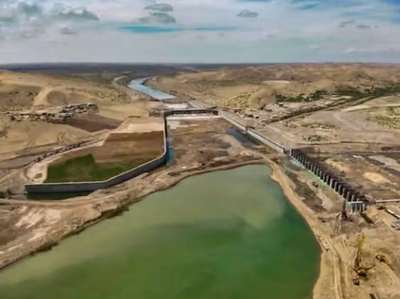
The Taliban have announced that the second phase of the Qosh Tepa Canal is 99 per cent complete and that water from the Amu Darya will “soon” flow into the canal.
Uzbekistan's water resources minister stressed several days ago that water withdrawals from the river before 2030 would not be possible without an agreement among regional countries.
Hurriyat Radio, a Taliban-affiliated media outlet, reported on Wednesday, 25 November, citing the Taliban's National Development Corporation, that construction of the canal's headworks was nearing completion. Once the remaining work is completed, water from the Amu Darya will be channelled into the canal.
The announcement comes as the use of the Amu Darya's water resources and the absence of a joint water-sharing mechanism have become points of contention between the Taliban and neighbouring countries, particularly Uzbekistan.
Shavkat Khamraev, Uzbekistan's minister of water resources, stressed several days ago that water withdrawals from the Amu Darya would only be possible once the project was fully completed and an agreement had been reached between the parties on the volume of water to be withdrawn.
He said large-scale water withdrawals could be delayed until 2050.
The Uzbek minister also warned that withdrawing more than four billion cubic metres of water annually from the river would pose a serious threat to Uzbekistan's agricultural sector. The Taliban, however, have announced plans to withdraw approximately 10 billion cubic metres in years of high water availability and six billion cubic metres in years of low water availability.
Construction of the approximately 285-kilometre Qosh Tepa Canal began under the Taliban in 2022, with the aim of irrigating agricultural land in the northern provinces of Balkh, Jowzjan and Faryab. The first 108-kilometre section of the canal was completed in October 2023.
While the Taliban have estimated the project's construction cost at approximately $680 million, researchers, citing technical studies, estimate that the total cost of completing the project, including its irrigation networks, could reach $1.5 billion.