Taliban Prepare To Divert Amu Darya Water Despite Uzbekistan's Opposition

The Taliban have announced that the second phase of the Qosh Tepa Canal is 99 per cent complete and that water from the Amu Darya will “soon” flow into the canal.
The Taliban have announced that the second phase of the Qosh Tepa Canal is 99 per cent complete and that water from the Amu Darya will “soon” flow into the canal.
Uzbekistan's water resources minister stressed several days ago that water withdrawals from the river before 2030 would not be possible without an agreement among regional countries.
Hurriyat Radio, a Taliban-affiliated media outlet, reported on Wednesday, 25 November, citing the Taliban's National Development Corporation, that construction of the canal's headworks was nearing completion. Once the remaining work is completed, water from the Amu Darya will be channelled into the canal.
The announcement comes as the use of the Amu Darya's water resources and the absence of a joint water-sharing mechanism have become points of contention between the Taliban and neighbouring countries, particularly Uzbekistan.
Shavkat Khamraev, Uzbekistan's minister of water resources, stressed several days ago that water withdrawals from the Amu Darya would only be possible once the project was fully completed and an agreement had been reached between the parties on the volume of water to be withdrawn.
He said large-scale water withdrawals could be delayed until 2050.
The Uzbek minister also warned that withdrawing more than four billion cubic metres of water annually from the river would pose a serious threat to Uzbekistan's agricultural sector. The Taliban, however, have announced plans to withdraw approximately 10 billion cubic metres in years of high water availability and six billion cubic metres in years of low water availability.
Construction of the approximately 285-kilometre Qosh Tepa Canal began under the Taliban in 2022, with the aim of irrigating agricultural land in the northern provinces of Balkh, Jowzjan and Faryab. The first 108-kilometre section of the canal was completed in October 2023.
While the Taliban have estimated the project's construction cost at approximately $680 million, researchers, citing technical studies, estimate that the total cost of completing the project, including its irrigation networks, could reach $1.5 billion.
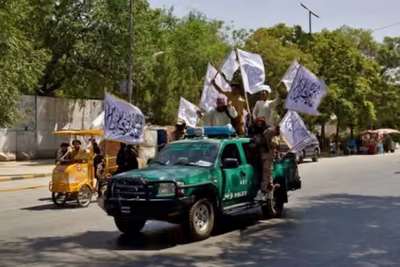
The third round of talks bringing together Afghan political figures and activists began at Spain's Ministry of Foreign Affairs on Wednesday focusing on trust and solidarity.
Participants are examining possible scenarios for Afghanistan's future and the opportunities and challenges facing the country.
The one-day meeting brings together representatives of political parties, movements, networks and civil society organisations, as well as former ministers and parliamentarians, diplomats, academics, researchers, religious scholars and independent civil society activists.
Women for Afghanistan, an organisation led by Fawzia Koofi, former deputy speaker of Afghanistan's House of Representatives, announced in a statement that the third round of talks on Afghanistan's political future would take place in Madrid on Wednesday, 25 November.
The Madrid talks build on the outcomes of two previous meetings. Participants are exploring possible trajectories for Afghanistan and assessing the opportunities and challenges associated with each scenario.
According to the organisers, one of the meeting's objectives is to strengthen trust among political and civil society groups and identify areas of common ground for cooperation.
The discussions focus on safeguarding human dignity, respecting women's rights and ensuring their meaningful participation in decision-making, inclusive governance, the rule of law, justice and respect for Afghanistan's diversity.
Women for Afghanistan said the women-led dialogue seeks to foster cooperation among diverse groups to achieve peace and establish an inclusive and democratic political system in Afghanistan.
Participants include Abbas Basir, former minister of higher education; Mustafa Mastoor, former economy minister; Hussain Yasa, political activist; Fazl Hadi Wazin, member of the International Union of Muslim Scholars; Abdullah Qarluq, spokesperson for the High Council of National Resistance for the Salvation of Afghanistan; Mohammad Asif Sediqi, former deputy speaker of the Senate; and Nazif Shahrani, university professor.
Other participants include Nasir Ahmad Andisha, Afghanistan's ambassador and permanent representative in Geneva; Barna Karimi, former Afghan ambassador to Canada; Nabila Mosleh, former deputy minister of women's affairs; Zakir Hussain Ershad, leader of the Citizens' Party of Afghanistan; Rahela Dostum, former senator and daughter of Marshal Abdul Rashid Dostum; Mujib Rahman Rahimi, former spokesperson for Abdullah Abdullah; Anwar Sadat, former minister of labour and social affairs; and Masouma Khawari, former minister of communications and information technology.
French Foreign Minister Jean-Noël Barrot has described the Taliban’s policies towards Afghan women and girls as gender apartheid, saying they are subjected to the worst form of segregation against women and girls of this century.
Speaking at the French National Assembly on Tuesday, 24 November, Barrot condemned the Taliban’s systematic exclusion of women and girls from education, employment, healthcare and public life.
France joins Spain and a number of other European countries in describing the Taliban’s treatment of women and girls as gender apartheid.
On 17 October 2023, Spanish Foreign Minister José Manuel Albares described the situation facing Afghan women and girls as gender apartheid, citing the exclusion of girls from schools and women from employment. He also warned of a severe deterioration in women’s and girls’ rights in many parts of the world.
Although the term has gained increasing international support, gender apartheid has yet to be codified as a distinct crime under international law.
Barrot described the Taliban’s treatment of women as an inhumane ordeal and reaffirmed France’s solidarity with Afghan women and girls, assuring them that they had not been forgotten.
The French foreign minister said his country would work towards the recognition of gender apartheid as a distinct crime during negotiations on the future Convention on the Prevention and Punishment of Crimes against Humanity.
Drawing on the historical experience of racial apartheid in South Africa, the term gender apartheid refers to an institutionalised system of discrimination, oppression and domination in which a ruling authority systematically deprives people of fundamental rights on the basis of gender.
In Afghanistan, the term is used to describe the Taliban’s systematic exclusion of women and girls from education, employment and public life through discriminatory laws, decrees and policies.
Human rights advocates and UN experts have called for gender apartheid to be codified as a distinct crime against humanity under the proposed convention.
They argue that such recognition would acknowledge the institutionalised nature of gender-based oppression and strengthen mechanisms for holding those responsible for establishing and maintaining such systems criminally accountable.
France To Increase Support For Afghan Women And Girls
Barrot said France had provided €187 million in humanitarian assistance over the past five years, guided by the principle of delivering aid by and for Afghan women.
He said France would increase its support in response to the deteriorating conditions facing women and girls in Afghanistan.
The foreign minister announced that France would welcome an additional 50 Afghan female students from January 2027 and that the French government would award 35 merit-based scholarships in September of the same year.
According to French parliamentary broadcaster LCP, Barrot also announced that France would welcome a further 200 Afghan women in 2027.
He said France would strengthen its diplomatic presence in the region to facilitate their admission.
France Rules Out Diplomatic Relations With Taliban
Barrot made the remarks in response to a question from Léa Balage El Mariky, a Green MP who challenged the government over the anticipated visit of two Taliban representatives to France.
The lawmaker said the representatives were expected to visit France for discussions concerning the deportation of Afghan nationals and accused the government of sacrificing the rights of Afghan women in pursuit of its deportation policy.
She called on the government to disclose the identities of the Taliban representatives and provide details of their proposed visit.
Barrot did not provide those details. However, he confirmed that the French government intended to expedite the deportation of Afghan nationals without legal residency who were deemed to pose the most serious threats to public order.
The foreign minister described France’s contacts with the Taliban as strictly technical and stressed that such engagement did not constitute approval or recognition of the Taliban government.
He ruled out establishing diplomatic relations with the Taliban.
German Foreign Minister Johann Wadephul said on Tuesday that Berlin does not maintain formal diplomatic relations with the Taliban or recognise the group as the legitimate government of Afghanistan.
Speaking at the Berlin Foreign Policy Forum on 24 November, Wadephul said the Taliban had not come to power through legitimate means and that Germany maintained only limited engagement with the group on consular matters.
The foreign minister stressed that Germany continued to work to ensure the Afghan people’s access to humanitarian assistance but did not recognise the Taliban as the country’s legitimate political authority.
Responding to a question about Germany’s relations with the Taliban, Wadephul described Afghanistan as a country with which conventional diplomatic relations could not be maintained.
He said Germany had no substantive diplomatic relations with the Taliban and maintained only minimal contact with the group’s authorities on consular matters through neighbouring countries.
His remarks come as Germany has allowed Taliban-appointed representatives to enter the country to facilitate consular services.
In a statement published on 10 March 2026, Germany’s Federal Foreign Office said Berlin had suspended its extensive development cooperation and stabilisation assistance following the Taliban’s seizure of power on 15 August 2021.
However, Germany continues to provide humanitarian assistance and support basic services for people in Afghanistan and Afghan refugees in neighbouring countries.
The ministry reaffirmed that the German government did not recognise the Taliban as Afghanistan’s legitimate government and that its priorities included protecting human rights, particularly those of women and children, strengthening civil society and promoting regional and international cooperation on Afghanistan.
The German Embassy in Kabul, which closed on 15 August 2021, remains closed until further notice.
Wadephul’s remarks came a day after Spanish Foreign Minister José Manuel Albares Bueno reaffirmed his country’s refusal to recognise the Taliban government at the fourth HearUs Summit on Afghan women in Madrid.
Speaking on Monday, 23 November, Albares said the Taliban had failed to fulfil their international obligations and stressed that Afghan women’s rights must not become a bargaining chip in political negotiations.
He also reaffirmed Spain’s support for recognising gender apartheid as a crime under international law and called for accountability for human rights violations in Afghanistan.
More than five years after returning to power in Afghanistan, the Taliban continue to exercise control across the country. However, the group faces a series of challenges that could shape the future of its rule.
The geographical expansion of armed opposition activities, the concentration of power in Kandahar, the economic crisis, the exclusion of women and the absence of meaningful political participation are among the most significant challenges.
This article examines the durability of Taliban rule, the capabilities of opposition groups and the factors that could determine Afghanistan’s political future.
Shahzaib Khan, a lecturer at the University of Sindh and an international relations researcher, has examined the geographical expansion of armed opposition to the Taliban in an article published by Eurasia Review. He argues that these developments have challenged the Taliban’s narrative of complete control over Afghanistan.
Political Significance Of The Fall Of Yaftal-e Payan
The brief capture of the district centre of Yaftal-e Payan in Badakhshan province by armed opponents of the Taliban was arguably more significant politically than militarily.
According to Khan, the incident did not alter the balance of power in Afghanistan, but it undermined the Taliban’s narrative of complete control over the country.
In recent years, armed opposition to the Taliban has largely been associated with Panjshir, the Andarab valleys of Baghlan and parts of northeastern Afghanistan.
The Taliban have portrayed their armed opponents as fragmented groups incapable of establishing a nationwide organisational structure. However, reports of opposition activity in Badakhshan, Kapisa, Parwan and Kabul have challenged that narrative.
The incident in Yaftal-e Payan also exposed potential vulnerabilities in the Taliban’s district-level administration.
Khan argues that control over provincial capitals and major highways does not necessarily mean that the Taliban have an equal capacity to maintain security across every district.
The Proliferation Of Anti-Taliban Opposition Groups
The emergence of new opposition groups presents both political opportunities and challenges.
The central question is whether these groups can overcome their differences and agree on a viable national political programme.
Opposition to the Taliban’s repressive policies alone is insufficient to earn the trust of the Afghan people. Citizens need to understand where opposition groups stand on the country’s future political system, women’s rights, the protection of ethnic and religious minorities, institutional transparency and preventing a recurrence of the corruption that plagued the former government.
Afghanistan’s experience of decades of conflict and violent transfers of power places an even greater political responsibility on the Taliban’s opponents.
The manner in which power would be transferred, the prevention of civil war, judicial independence and guarantees for citizens’ rights are among the issues on which opposition groups must offer clear answers.
Policies That Fuel Opposition
Through their own policies, the Taliban are creating conditions that could fuel growing opposition to their rule.
In reports published this year, the United Nations has highlighted continuing restrictions on women’s education and employment, arbitrary detention, corporal punishment and mounting pressure on civil and religious freedoms.
Depriving half the population of fundamental rights, suppressing dissent and preventing citizens from participating in political life restrict the peaceful avenues through which grievances can be expressed.
Repression may reduce visible public protests in the short term, but it should not be mistaken for the disappearance of public discontent.
The Economy And The Durability Of Taliban Rule
Alongside security and political challenges, Afghanistan’s economic situation is another important factor in assessing the future of Taliban rule.
Declining international aid, the large-scale return of Afghan migrants, restrictions on women’s employment and limited job opportunities have placed additional pressure on households across the country.
More than five years after the Taliban returned to power, their responsibility for the country’s economic conditions and the quality of public services has grown.
As time passes, it will become increasingly difficult for the Taliban to attribute Afghanistan’s current economic problems to the failures of the former government.
Has Afghanistan Really Achieved Stability?
Defining stability solely in terms of the absence of large-scale warfare or clearly established front lines fails to provide a complete picture of Afghanistan’s situation.
Control over government buildings and administrative centres does not necessarily translate into public acceptance of those in power.
Afghanistan continues to face restrictions on political participation, the suppression of dissent and the denial of fundamental rights to a substantial proportion of its population.
Two Potential Miscalculations
The international community must avoid two potential miscalculations when assessing the situation in Afghanistan.
The first is to exaggerate the capabilities of armed opposition groups and interpret every security incident as a sign that Taliban rule is approaching collapse.
The second is to overlook the underlying political and social grievances that threaten long-term stability.
Any international effort to resolve Afghanistan’s crisis that disregards repression, political exclusion and the need for an inclusive political system risks delaying the achievement of lasting stability.
The expansion of the Taliban’s diplomatic relations with regional countries should not be equated with growing domestic legitimacy.
Foreign governments conduct their relations on the basis of national interests and security and economic considerations. The extent to which a political system enjoys acceptance among its own population is a separate question.
The Future Of Taliban Rule
It remains unclear whether fragmented opposition groups can evolve into a cohesive national movement with an effective organisational structure and a political programme that commands public support.
The Taliban continue to control Afghanistan’s formal state institutions, but they have been unable to eliminate opposition to their rule. Growing discontent across different parts of the country could increase the cost of maintaining power.
Beyond these challenges, the concentration of authority in the hands of Taliban leader Hibatullah Akhundzada and the absence of a clear mechanism for the transfer of power raise further questions about the future of the group’s political structure.
Even if armed opposition groups remain weak, uncertainty over the succession of the Taliban’s leader, potential internal divisions, economic difficulties and social discontent could all shape the future of Taliban rule.
Pakistan’s former ambassador to Afghanistan has said military action is not the solution to disputes between Islamabad and the Taliban, urging both sides to address their security concerns through dialogue and engagement.
Mansoor Ahmad Khan called for the establishment of a joint security mechanism, the reopening of border crossings and the expansion of bilateral trade.
In an interview with a Pakistani media outlet, Khan said efforts to resolve security disputes had stalled after Pakistan reverted to a military approach.
He stressed that security concerns, including the activities of Tehreek-e-Taliban Pakistan (TTP) and the Baloch Liberation Army (BLA), should be addressed through constructive engagement with the Taliban.
Khan said the two sides had previously discussed establishing a verifiable security mechanism but had failed to reach an agreement. He added that Türkiye, Qatar, Saudi Arabia and China had also sought to bridge differences between the two sides.
The former ambassador proposed establishing a joint intelligence-sharing mechanism through which both sides could immediately exchange verified information about terrorist attacks and plots.
He stressed that Pakistan should also address the Taliban’s security concerns.
Khan said implementing such a mechanism for one to three years could help build mutual trust between the two countries.
He also called for the immediate reopening of border crossings, saying their continued closure had exacerbated hardships for ordinary people and brought bilateral trade to a standstill.
According to Khan, trade between Pakistan and Afghanistan, which has the potential to reach between $3 billion and $7 billion, has fallen to around $500 million, with some trade being redirected through Iran and other countries in the region.
Khan stressed that decades-long disputes between the two countries could not be resolved through military action, but instead required political engagement, practical solutions and economic cooperation.
His remarks come as relations between Islamabad and the Taliban remain strained following cross-border and air strikes, disputes over TTP activities and the continued closure of border crossings.