
After a 12-day visit to Kabul, the UN Special Rapporteur on Human Rights for Afghanistan, Richard Bennett, said that the country’s human rights situation is alarming. Bennett added that he will present his views and recommendations at the UN General Assembly next week.
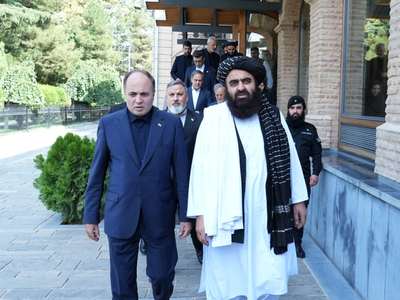
Bennett has emphasised that during his visit to Afghanistan, he had informative meetings with the people concerned and visited important regions.
The UN Special Rapporteur on Human Rights visited Panjshir province on Wednesday and met with local Taliban officials and residents of the region.
Bennett’s visit to Panjshir comes at a time when the residents of Paryan district of the province had protested against the Taliban.
Last month, following the Taliban’s killing of the members of the National Resistance Front (NRF) forces in cold blood in Panjshir, Bennett had asked the Taliban to investigate the killings. However, his stance had been met with criticisms by the NRF officials.

Human Rights Watch in a report described how three Afghan women protesters who had been detained by the Taliban had been tortured and severely mistreated. HRW, quoting the women, said that they had been wrongfully detained along with their families, including children.
It added that such accounts portray how the Taliban are trying to supress the women’s protests.
“It’s difficult to overstate the incredible bravery of these and other Afghan women who protest against Taliban abuses,” said Heather Barr, associate women’s rights director at Human Rights Watch. “These women’s stories show how deeply threatened the Taliban feel by their activities, and the brutal lengths the Taliban go to try to silence them.”
HRW urged the Taliban to immediately release everyone detained for exercising their rights to free speech and peaceful protest. It asked the group to respect the rights of all to peaceful assembly and free expression, including journalists covering protests. “They should end all arbitrary detention, ensure due process, including promptly charging suspects in custody before an independent judge, and providing immediate access to counsel,” the report sought.
The global organisation said that the women experienced threats, beatings, dangerous conditions of confinement, denial of due process, abusive conditions of release, and other abuses.
The report also claimed that the male relatives of these protesters had been assaulted and administered electric shocks. In the report, HRW has detailed the torture and mistreatment of three women who had been arrested by the Taliban during a single raid on a safe house in Kabul in February 2022.
The report added, “The three women described being held initially in a single cramped and stiflingly hot room with a total of 21 women and 7 children for five days, provided virtually no food or water or access to a toilet. The Taliban held them for several weeks, and abusively interrogated them, without allowing access to counsel or other due process rights, forcibly coerced confessions, and severely tortured the men. The Taliban compelled the three women’s families to hand over the original deeds to their property as the price for release, with the threat that the Taliban would confiscate the property if the women got into trouble again.”
It also added that anyone responsible for torture or other ill-treatment should be impartially investigated and appropriately prosecuted.
It also asked governments engaging with the Taliban to press them to comply with Afghanistan’s obligations under international law including to respect freedom of speech and assembly, to ensure due process, and to prevent torture and other ill-treatment.
After the Taliban seized control of Afghanistan on August 15, 2021, they immediately began rolling back the rights of women and girls. Women began to protest on the streets since Taliban’s first week in power, despite the grave risks they faced in doing so. The Taliban response was brutal from the beginning, beating protesters, disrupting protests, and detaining and torturing journalists covering the demonstrations.
Local sources in Kandahar province said that the Taliban and Pakistani border forces had been engaged in an intense gun battle at the Spin Boldak border. The exchange of fire that took place on Thursday has left one dead and seven wounded, including three Taliban members.
The Spin-Boldak border of Afghanistan and Pakistan has been closed after the clashes, the sources told Afghanistan International.
Sources said that Pakistani forces first fired at the Taliban post, which lasted around 30 minutes.
A source said that after this conflict, Pakistani forces fired two mortars at the border areas of Spin Boldak, and one of these mortars hit a residential neighborhood in the Nawe Qali area.
The Taliban and Pakistani authorities have not commented on the clashes so far. After the Taliban’s takeover of Afghanistan on August 15, 2021, several clashes of border forces of the group with the Pakistani soldiers have been reported.
Local sources said that after the clash, the Taliban governor in Kandahar visited the border area of Spin Boldak to discuss the matter with the Pakistani border officials.
Safiullah Ahmadi, a man whose photo was mistakenly published in a Guardian report about an afghan gay student who has been killed by the Taliban, said he would sue the newspaper. In a video posted by an Afghan journalist, Ahmadi, said that he was looking to restore his dignity.
Ahmadi also asked other media outlets to correct their reports who has based it on the Guardian story.
On Tuesday, a report had been published by the Guardian newspaper that a gay university student had been tortured and killed by the Taliban in Kabul.
Afghanistan International was able to contact Ahmadi, whose picture was used in the Guardian report portraying him as the dead student.
Ahmadi had learned about the news of the killing of the gay student from media outlets, but he did not know why his photo was published in the news by the Guardian.
The main source of the Guardian newspaper's report, which has been reflected in various media outlets inside and outside Afghanistan, was Pinknews, a website that covers LGBTQ stories. The website is considered a reliable source of news related to the LGBTQ community.
Pinknews published the news of the killing of a young gay Afghan, quoting his close friend, and in the description of the photo of this news, the credits stated that it was "supplied", which meant that the photo was sent to the newspaper.
The UN Special Envoy to Kabul, Roza Otunbayeva, has met with several Afghan women and discussed issues that affect them. According to United Nations Assistance Mission in Afghanistan (UNAMA), the meeting was focused on education and the right to work of women in the country.
The Taliban has imposed severe restrictions on Afghan women and girls in the past year in Afghanistan.
Women have been denied the right to work, and social and political activities and secondary and high schools for Afghan girls have been shut down by the Taliban.
The United Nations and human rights organisations have repeatedly accused the Taliban of widespread violations of human rights and have asked this group to respect the basic rights of Afghan citizens.
However, despite global efforts and criticisms, the group has not been flexible with their anti-women policies.
Taliban leader Mullah Hibatullah Akhundzada has summoned disgruntled Uzbek commander Salahuddin Ayubi to Kandahar, local sources said. Leading a delegation, Ayubi arrived in Kandahar and is going to meet the Taliban leader, sources told Afghanistan International.
Salahuddin Ayubi, a powerful Uzbek commander of the Taliban in northern Afghanistan, had left Kabul for his hometown in Faryab province in recent weeks due to reports of dissatisfaction with the Taliban’s policies.
Last week, sources in Faryab said that a delegation of the Taliban had met Ayubi in Maimana city, but an agreement had not been reached between the two sides.
It has been reported that Ayubi has been dissatisfied with the Taliban due to the neglect of Uzbeks' participation in the group’s governance structures.
Many believe that Ayubi has played a prominent role in the war against the former Afghan government and the fall of the northern provinces in the past years, but has been ignored by the Taliban leadership after the group took control of power in Afghanistan.