• العربية
  • پښتو
  • فارسی
Brand
  • Afghanistan
  • Sport
  • Markets
  • Afghanistan
  • Sport
  • Markets
  • Theme
  • Language
    • العربية
    • پښتو
    • فارسی
  • Afghanistan
  • Sport
  • Markets
All rights reserved for Volant Media UK Limited
volant media logo

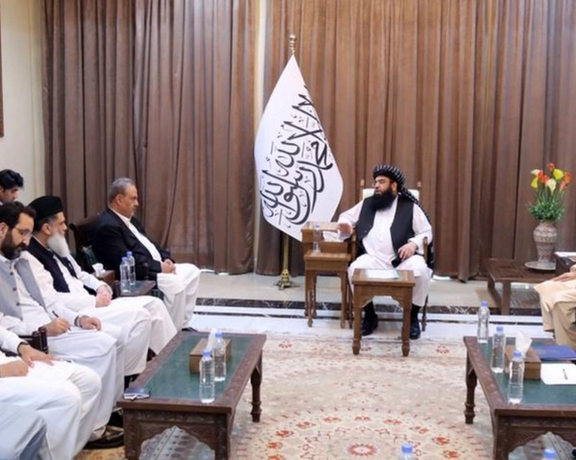
We Don’t Interfere In Your Internal Affairs, Taliban’s Deputy PM to Pak Envoy

Jul 21, 2023, 13:41 GMT+1

During a meeting with Asif Durrani, Pakistan’s Special Envoy for Afghanistan, Mawlawi Abdul Kabir, the Taliban’s deputy prime minister, said that the group does not interfere in Pakistan's internal affairs.

Mawlawi Abdul Kabir told Durrani that the Taliban will not allow anyone to use Afghanistan's soil against neighbouring countries.

After a recent rise in attacks on Pakistani security forces, Durrani visited Kabul to hold talks with Taliban officials.

Mawlawi Abdul Kabir has emphasised that the Taliban considers Pakistan's stability in the interest of the group and added that as a Muslim neighbour, the Taliban does not want “war and instability in Pakistan".

Durrani has also said that the world should accept achievements in stabilisation and counter-narcotics in Afghanistan, the Taliban deputy prime minister’s press office stated.

Durrani has also emphasised that Pakistan has good relations with Afghanistan and Islamabad is trying to strengthen these relations.

Most Viewed

Female Ismaili Entrepreneur Shot Dead In Badakhshan
1

Female Ismaili Entrepreneur Shot Dead In Badakhshan

2

Afghanistan May Not Remain Intact In Future, Says Pakistani Analyst

3

French Parliament Hosts Two-Day Meeting On Afghanistan

4

Pakistan Welcomes Local Ceasefire Agreement In Kunar & Nuristan Border Areas

5

Taliban, Iran Working On Surveillance App For Afghan Users, Say Sources

•
•
•

More Stories

Pak Defence Minister Questions Taliban’s Denial of TTP Presence in Afghanistan

Jul 21, 2023, 12:14 GMT+1

Khawaja Asif, Pakistan's defence minister, questioned the Taliban's claims that foreign terrorists are not present in Afghanistan.

Addressing the Taliban in Afghanistan, Khawaja Asif said that Pakistani Taliban members have been killed on a daily basis in Afghanistan. “Then, how can one say that TTP members are not present there,” he asked.

Asif called the Tehreek-e-Taliban Pakistan as the "Tehreek-e-Taliban Afghanistan" (TTA) while speaking to the media on Thursday in the Pakistani Parliament.

He said that Pakistan is ready to provide all documents regarding the activities of the Pakistani Taliban to the Taliban.

Earlier, Pakistani media quoted the country’s security officials and reported that Tehreek-e-Taliban Pakistan (TTP) use advanced American weapons and night vision cameras left over by the security forces of the previous government of Afghanistan, in their attacks on Pakistani targets.

Pakistani officials claimed that the TTP, which has spiritual and operational ties to the Afghan Taliban, has been able to arm itself with the same weapons used by the Taliban fighters.

In recent days, senior Pakistani officials have sharply criticised the Taliban in Afghanistan for providing safe haven to TTP members.

Pakistan's defence minister had previously accused the Afghan Taliban of not fulfilling their obligations in the Doha Agreement and allowing Afghan soil to be used against others.

In response to these statements, Zabihullah Mujahid, the Taliban spokesperson, had said that instead of pointing their fingers at others, Pakistan should address their internal problems.

Mujahid had also rejected the statements of the Pakistani officials and said, "We do not allow TTP to live and operate in Afghanistan. We have faced the consequences of war and we don't want others to suffer like Afghanistan."

Resistance Against Taliban Grows Due To Brutal, Oppressive Policies, Says NRF Leader

Jul 21, 2023, 11:23 GMT+1

Ahmad Massoud, the leader of the National Resistance Front (NRF) said that the resistance against the Taliban has now expanded to Takhar and Badakhshan provinces.

On Thursday, Massoud praised the recent protests of Afghan women and said that despite brutal violence, the Taliban has not been able to defeat the spirit and will of the people in Afghanistan.

The NRF leader participated in the three-day Aspen Security Forum virtually on Thursday.

Two years after the fall of Afghanistan to the Taliban, during the Aspen Forum, the NRF leader didn’t talk widely about his operations against the Taliban, and most of his speech was focused on criticising the US negotiations with the Taliban in Doha and Washington’s mistakes in Afghanistan.

Massoud also didn’t discuss his military strategy in Afghanistan and instead emphasised that he believes in a political solution to end the conflict in the country.

Ahmad Massoud criticised the Taliban for ignoring the peace talks with the National Resistance Front.

In response to the question of why Afghans didn’t fight against the Taliban like the Ukrainians do against the Russian forces, Ahmad Masoud said that the Afghan military forces fought against the Taliban with "incomparable" bravery and the people still resist the Taliban "with empty hands".

He repeatedly mentioned women's demonstrations against the Taliban, which, according to him, have been severely suppressed by the group.

The leader of the National Resistance Front criticised the United States and said that the Afghans did not receive the support that Ukraine is receiving now.

Massoud explained that his father, Ahmad Shah Masoud, fought against the Taliban in the 1990s and prevented the Taliban’s control of Afghanistan. He added that the Americans never paid attention to his father regarding the worsening situation in Afghanistan and the solution he offered.

Panjshir was one of the important bastions of resistance against the former Soviet forces and later under the Taliban in the late 1990s. However, in 2021 after the Afghan government fell to the Taliban, Panjshir was easily captured by the group.

Ahmad Massoud emphasised that the Taliban will never be able to win the "hearts and minds" of the people of Panjshir and that the resistance has spread to other provinces of Afghanistan.

He asked the international community to support the "efforts of the people for freedom".

Ahmad Massoud said, "We feel that we have been betrayed and we feel alone in this situation. But after all, we have each other.”
Putting Pressure on Group Not Productive, Says Taliban Spokesperson On EU Sanctions

Jul 21, 2023, 10:04 GMT+1

Zabihullah Mujahid, the Taliban spokesperson, reacted to the latest European Union’s sanctions against members of the group and said that sanctions are not "not useful" for any party.

Mujahid added that the policy of imposing and exerting pressure against the Taliban will not be productive.

On Friday, Mujahid stressed that instead of “failed experiences” of pressure and sanctions, the EU should choose to “engage and dialogue” with the Taliban.

The European Union (EU) imposed sanctions on three Taliban officials for committing gender-based violence against Afghan women on Thursday.

The Union announced that the Taliban’s chief justice and ministers of justice and education have been sanctioned for their role in depriving Afghan girls and women of the right to education.

EU Sanctions 3 Taliban Officials For Gender-Based Violence Against Afghan Women

Jul 21, 2023, 09:06 GMT+1

The European Union (EU) imposed sanctions on three Taliban officials for committing gender-based violence against Afghan women on Thursday.

The Union announced that the Taliban’s chief justice and ministers of justice and education have been sanctioned for their role in depriving Afghan girls and women of the right to education.

In a statement, the EU stated that under its global human rights sanctions regime, 18 individuals and five entities in Afghanistan, South Sudan, the Central African Republic, and Russia have been sanctioned due to their role in committing serious human rights violations and abuses.

The European Union has also imposed restrictive measures against 12 other individuals and five entities responsible for serious human rights violations in Russia.

It has been nearly 670 days since the Taliban prevented the reopening of secondary and high schools for girls in Afghanistan. In addition to preventing the right to education, the Taliban has imposed extensive restrictions on the right to work, travel, sports, and many other fundamental rights of women in Afghanistan.

Afghan rights groups and women have repeatedly asked the international community to recognise the gender apartheid against women in Afghanistan imposed by the Taliban.

However, except for the latest move of the EU to sanction the Taliban leaders, there have not been any tangible restrictive measures taken against the group in the past two years since they have taken control of Afghanistan.

Don’t Need International Recognition, Says Taliban’s Interior Minister

Jul 20, 2023, 17:04 GMT+1

Sirajuddin Haqqani, the Taliban's interior minister, in a meeting with the elders of the Ahmadzai tribe, claimed that the group has public support. In the meeting, Haqqani said that the Taliban does not need to be recognised.

The Taliban's Ministry of Interior in a statement on Thursday wrote that the purpose of Haqqani's meeting with the elders of the Ahmadzai tribe was supporting the survival of the Taliban regime.

According to the statement, Haqqani told the elders of the Ahmadzai tribe, "Nations which are successful in the world are those who have unity and successful governments are those that have the support of the people.”

The Taliban's interior minister said, "When the government has your [public] support, there is no need for recognition."

Recently, in a meeting with some residents of Paktia province, Haqqani had said that failure to accept the orders of foreigners is the reason that the world doesn’t recognise the group’s government.

During his trip to Khost province last year, he asked the international community to establish official relations with the Taliban in order to respond to the legitimate needs of both parties.

The international community has repeatedly announced that it will not recognise the Taliban regime until they fulfil their commitments.

Increasing restrictions on women, violation of human rights, lack of inclusive government, and the presence of terrorist groups in Afghanistan are some of the reasons why the international community doesn’t recognise the Taliban.

The Taliban, however, claims that they have fulfilled their commitments, including fighting against terrorist groups.

In March, Amir Khan Muttaqi, the Taliban’s foreign minister, had said that the Taliban doesn’t understand what other steps should take to receive international recognition.