Former Afghan Police Commander Killed in Sar-e Pol Province
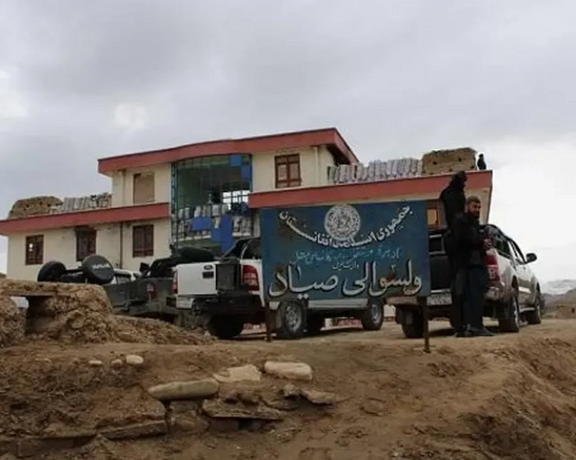
Local sources confirmed to Afghanistan International that Yama Khalidi, a former local police commander, has been killed by "unknown armed men" in Sar-e Pol province.

Local sources confirmed to Afghanistan International that Yama Khalidi, a former local police commander, has been killed by "unknown armed men" in Sar-e Pol province.
The armed men attacked the former police commander on Monday in front of his house in Sayyad district.
According to sources, the attackers fled the scene after shooting the former police commander.
After the fall of the previous Afghan government, Khalidi had left Afghanistan for Iran and later returned to Afghanistan in coordination with the Taliban’s commission in charge of facilitating the return of former Afghan government officials.
There is still no information about the motive behind the killing of this former police officer, but earlier, reports had indicated revenge killings of former Afghan armed forces by the Taliban.
The Taliban have also said that the former Afghan security forces have been killed due to personal enmity and revenge killing.


Nasser Kanaani, the spokesperson of Iran's foreign ministry, announced that an Iranian delegation is on a visit to Kabul to hold talks with the Taliban officials on various issues.
During a press conference on Monday, Kanaani added that the water rights issue from Helmand River is a major topic among the Iranian delegation’s discussions with the Taliban.
The spokesman of Iran's Foreign Ministry did not provide more details about the visit of this delegation to Afghanistan. However, Kanaani added, "As two neighbouring countries, there are visits at different levels between us, and these visits are not necessarily revealed to the media."
The visit of the Iranian delegation to Afghanistan takes place even as earlier Kanaani had announced that initial agreements had been reached with the Taliban regarding the water rights issues.
The tension between Iran and Afghanistan over water rights from the Helmand River have increased after Tehran’s criticisms of the Taliban not being committed to the water rights of the country based on the 1973 water treaty between Kabul and Tehran.
Officials of the Islamic Republic, including its president, have repeatedly warned the Taliban about respecting Iran's water rights. Following the escalation of tensions between the two sides, the Taliban despatched military troops to the border of the two countries.

Pakistan’s Chief of Army Staff (COAS) General Syed Asim Munir expressed his country’s concerns over the presence of sanctuaries available to banned terror outfits and liberty of action they enjoy on Afghan soil.
However, COAS warned that Pakistan will spare no effort to dismantle terrorist networks and protect its citizens at all costs.
“Terrorism has no place in Pakistan and the involvement of Afghan nationals in terrorist incidents in Pakistan is detrimental to regional peace, stability and deviation from the Doha Peace Agreement by the interim Afghan Government” COAS reiterated on Monday.
The Pakistan army chief’s statement comes close on the heels of the statements by its deputy foreign minister and even his country’s prime minister of the involvement of Afghans in terrorist activities on its soil.
Pakistan’s Deputy Foreign Minister Hina Rabbani Kahar recently claimed that some Afghans were involved in a number of bloody attacks in the country’s cities, while Pakistan Prime Minister Shehbaz Sharif has expressed concerns over the “liberty of action available” to terrorists in Afghanistan, urging the Taliban-led interim government to take action to stop “transnational terrorism”.
Pakistan COAS was in Peshawar to meet tribal elders from Newly Merged Districts (NMDs) of Khyber Pakhtunkhwa and thanked them for their help in defeating menace of terrorism.
Since the Taliban surged back to power in Afghanistan two years ago, Pakistan has witnessed a dramatic uptick in militant attacks focused on its western border regions, claimed by Tehreek-e-Taliban Pakistan (TTP), Daesh and other terror outfits.

The Taliban announced that they have entrusted four blocks of iron mines in Ghurian district of Herat province and one block of a lead mine in Tolak district of Ghor province to Iranian, Turkish, British, and Afghan companies.
On Friday, in a statement, the Taliban’s Deputy Prime Minister for Economics, announced that awarded companies have started the extraction process of iron and lead mines.
The statement stressed that the work of the first block of the iron mine in Ghurian district has been entrusted to "Watan Derakhshan", an Iranian company.
The second block of iron mine in Ghurian district has been awarded to “Sahil Sharq Miana, Afghani Dare Noor Company” and to a Turkish company.
The third block of this mine has been awarded to "Shemesh-e-Melli" whose shareholders are “GBM” and “AD Resources”, two British companies.
The fourth block of this mine has been awarded to Bakhtar Steel Company, which is in a joint venture with two Iranian companies.
According to the Taliban’s statement, a block of a lead mine in Ghor Province has also been given to the Afghan Investment Company.

Tehreek-e-Taliban Pakistan (TTP) accused Pakistani officials of misusing the tribal jirga to blame the Afghan Taliban for instability in the country and to justify their failed policies.
TTP issued the statement in response to a tribal jirga organised by the Jamiat Ulema-e-Islam party in Peshawar city.
On Friday, Jamiat Ulema-e-Islam, led by Maulana Fazal-ur-Rehman, held a tribal jirga in the city of Peshawar and announced that "the extremists enter Pakistan from Afghanistan”.
The jirga was held after a bloody explosion in Bajaur district of Khyber Pakhtunkhwa province, which targeted a gathering of Jamiat Ulema-e-Islam and left 63 dead and 200 injured. ISIS Khorasan had taken responsibility for the attack.
In response to Maulana Fazal-ur-Rahman's statement about how "terrorists use Afghan soil", Mohammad Khorasani, the spokesperson of TTP, said that Pakistani authorities blame others for their failures in the security sphere of Pakistan.
After the takeover of Afghanistan by the Taliban in August 2021, attacks against Pakistani security forces have increased. The government of Pakistan has claimed that Tehreek-e-Taliban Pakistan (TTP) has safe havens in Afghanistan. Both the Afghan Taliban and TTP have denied Islamabad’s claims.

Reliable sources confirmed to Afghanistan International that Mullah Hibatullah Akhundzada, the Taliban leader, has issued a decree which announced Jihad in Pakistan as forbidden (Haram).
Sources said that the Taliban group is worried about domestic reactions and does not want to publicise the decree.
Islamabad asked the Taliban to publicise the decree in order to prevent the attacks of Tehreek-e-Taliban Pakistan (TTP) and its Afghan supporters.
According to the sources, Asif Durrani, Pakistan's special representative for Afghanistan affairs, last month had met with Taliban’s foreign minister Amir Khan Muttaqi and interior minister Sirajuddin Haqqani and discussed the decree.
Sources said that the order of the leader of the Taliban has been communicated to the Pakistani authorities to show the group’s determination that Afghan soil is not a threat to Islamabad.
Currently, the decree of Akhundzada has been delivered to Taliban officials and individuals, including Mullah Yaqoob, the Taliban's Minister of Defence.
Mullah Yaqoob was the first to have implied the presence of a decree to ban Jihad in Pakistan.
The Taliban's defence minister announced last week that if someone goes outside of Afghanistan with the intention of jihad, his work is not called jihad.
He said, "If the Emir [leader] stops the Mujahideen from fighting and they still go to fight, this war is not called Jihad."
The Taliban-controlled Afghanistan National Television had broadcast the Taliban’s defence minister’s statement on Saturday.