Taliban Detained 5 Afghan Journalists Over Past Week, Says Media Support Group
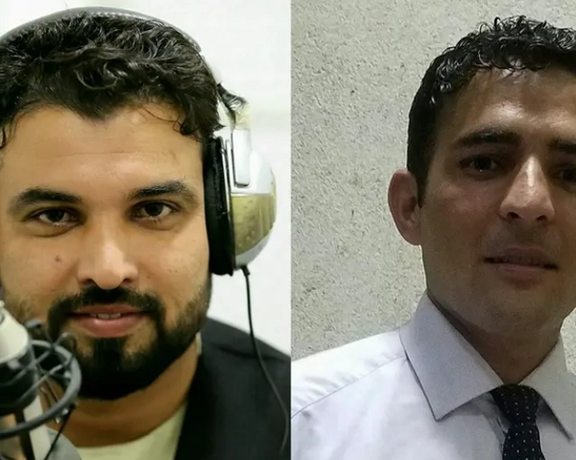
Nai, supporting open media in Afghanistan, announced on Friday that the Taliban have detained five journalists in Afghanistan over the past week.

Nai, supporting open media in Afghanistan, announced on Friday that the Taliban have detained five journalists in Afghanistan over the past week.
Nai called the Taliban’s detention of journalists "illegal" and urged the group to stop the arbitrary detention of Afghan journalists.
According to Nai’s statement, the Taliban detained Haseeb Hassas, a local reporter of Salam Watandar, in Kunduz province on Thursday.
Afghanistan Journalists Center also announced that the Taliban intelligence had arrested Faqir Mohammad Faqirzai and Jan Agha Saleh, journalists of Killid Radio, in Jalalabad city on Thursday.
It has been said that the Taliban members arrested and imprisoned Seyed Vahdatullah Abdali, a Bakhtar reporter, in Ghazni city on Sunday.
The Taliban have not reacted to the reports of the detention of Afghan journalists.
Nai had previously reported that more than 65 percent of journalists and media workers have lost their jobs in the past two years in Afghanistan.


Iraj Kakavand, the head of the Anti-Narcotics Police of Iran, said that drug production has increased in Afghanistan and that the country has become the main source of methamphetamine production.
Kakavand stressed that the increase in drug production has caused irreparable social damage at the international level.
According to Iranian Student News Agency (ISNA), the senior official of the Islamic Republic, while expressing concerns about the increase in the production of drugs, especially psychotropic drugs in Afghanistan, has emphasised on the need for more serious countering of drug tracking.
Kakavand had previously asked for Russia's support in counter-narcotics efforts in Afghanistan.
ISNA reported on Wednesday that Kakavand had asked Russia to cooperate in the exchange of information to fight drug trafficking from Afghanistan.

Mohsen Rohisefat, a former Iranian diplomat in Afghanistan, said that the dry lands along the course of the Helmand River near the borders of Iran have turned into green fields, and "drugs have even been cultivated in these lands”.
Rohisefat claimed that the Taliban use Iran’s share of water from the Helmand River to irrigate these dry lands.
This former Iranian official said that these farms have been seen through aerial images taken from the area.
According to Rohisefat, "This shows that [the Taliban] use all the water of Helmand River in these fields."
He explained that the Taliban have built a new diversion channel so that no more water will flow to Iran.
On Thursday, the Jomhouri-e-Islami daily quoted this former Iranian diplomat as saying that "begging will not make the Taliban provide water rights” from the Helmand River to Iran.
Earlier, Ali Salajegheh, head of Iran's Environment Organisation, said that the Taliban have released 15 million cubic meters of water instead of 850 million cubic meters of water that the group is obliged to release based on the water treaty between the two countries.
Meanwhile, in response to the question that was it a mistake to accept the Taliban embassy before Iran's water rights from Helmand River were received, Rohisefat claimed that "it was definitely a mistake”.
He said, "The people of Afghanistan are unhappy with the Taliban and do not want the group. Why should we accept the embassy of a minority group in Afghanistan that does not give any rights to its people and considers them as subjects? We should not have accepted the Taliban embassy so easily.”

Bilawal Bhutto Zardari, Pakistan’s foreign minister, announced that after the fall of Kabul to the Taliban, terrorist incidents have increased in Pakistan.
He also stressed that cooperation and engagement between Pakistan and the Taliban is necessary and asked the group to fulfil their commitments.
On Thursday, Pakistani media quoted Pakistan's foreign minister as saying that if the Taliban want diplomatic recognition, they should pay attention to international concerns.
After the Taliban took control of Afghanistan, Tehreek-e-Taliban Pakistan (TTP) increased its attacks in Pakistan.
Pakistan’s army has repeatedly emphasised that TTP has a safe haven in Afghanistan and organises its attacks against the Pakistani government from there.
Afghan and Pakistani Taliban have enjoyed close relations. In the past months, the Afghan Taliban hosted peace talks between the Pakistan army and the TTP. However, these talks have not yielded any results.
However, reliable sources confirmed to Afghanistan International recently that a decree was issued by Mullah Hibatullah Akhundzada, Taliban’s leader, that war in Pakistan is prohibited and "haram".
Mufti Abdul Rauf, a member of the Supreme Court of the Taliban, also announced that "Afghanistan’s people jihad against other countries is absolutely not permissible".

Mufti Abdul Rauf, a member of the Taliban's Supreme Court and head of the group’s Dar Al-Ifta, issued a fatwa against the war in Pakistan and said that the Taliban had pledged in the Doha Agreement not to wage jihad outside of Afghanistan.
Afghanistan International's sources said that Mufti Abdul Rauf's fatwa had been issued under pressure from Pakistan.
It had been previously reported that Mullah Hibatullah Akhundzada, the leader of the Taliban, called the war in Pakistan illegitimate in a fatwa that high-ranking officials of the group do not want to make public.
Pakistani authorities asked Akhundzada to issue a public fatwa and declare war in Pakistan as haram (forbidden).
Reliable sources have told Afghanistan International that the video clip of Mufti Abdul Rauf, a member of the Taliban Supreme Court, has been published in line with Islamabad's demands.
In this video clip, this member of the Taliban’s Supreme Court, implicitly confirms that Mullah Hibatullah has issued a fatwa against the war in Pakistan.
Mufti Abdul Rauf said that he has received messages from many members of the Taliban who have declared their readiness for jihad in Pakistan.
In the video, he said, “We don't care whether Jihad is ongoing somewhere or not. Our people are not responsible for Jihad abroad [Afghanistan].”
Earlier, Pakistani media reports had also stated that at the request of Islamabad, the leader of the Taliban has declared war and attacks abroad, including in Pakistan, as "forbidden".
According to these reports, Pakistan's special representative for Afghanistan, during his recent trip to Kabul, asked the Taliban that Mullah Hibatullah Akhundzada declare war in their country as forbidden.

Zalmay Khalilzad, former US special envoy for reconciliation in Afghanistan, said that it is still too early to draw conclusions about the performance of the Taliban.
Khalilzad told Afghanistan International that from his point of view, the current situation in Afghanistan under the rule of the Taliban has both positive and negative aspects.
According to Khalilzad, one of the positive aspects is that "fewer Afghans are killed now as compared to the past, people were tired of war and the US was also tired of killing Afghans”.
Khalilzad said that the situation of Afghanistan's economy is not good under the rule of the Taliban, but he immediately emphasised that the economy of Afghanistan was not good during the American-backed government either.
He rejected the opinion that the people inside Afghanistan are not witnessing improvement in the situation. Khalilzad said, “I do not agree that the opinion of the Afghan people is like this. There are different opinions -if all Afghans had the same opinion, these controversies would not have happened.”
In this interview, which will be published by Afghanistan International on August 15, the second anniversary of the fall of Kabul, Khalilzad stressed that depriving Afghan women and girls of the right to education and work is one of the negative points of the Taliban's government and said that if the group goes ahead with such approaches, it can not win the international community’s support.