3 Taliban Members Killed in Kapisa Province, Claims NRF
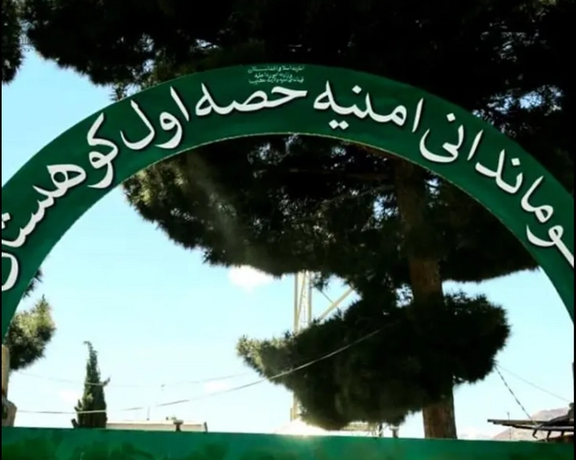
The National Resistance Front (NRF) attacked a Taliban base in Hesa-e Awal district of Kohistan in northern Kapisa province.
The National Resistance Front (NRF) attacked a Taliban base in Hesa-e Awal district of Kohistan in northern Kapisa province.
In a statement, NRF added that in the attack "three Taliban terrorists" had been killed and two other Taliban members had been wounded.
According NRF, the attack was carried out at around 2am in the Bazar-e-Shirkat area at the center of Hesa-e Awal Kohistan District of Kapisa Province.
The National Resistance Front led by Ahmad Massoud added that the attack lasted for half an hour and rocket launchers were used in it.
NRF stressed that during the attack, the front’s forces have not been harmed.
During the last month, the National Resistance Front and Afghanistan Freedom Front have announced that they have carried out attacks on Taliban outposts in Kabul, Badakhshan, Takhar, Baghlan, Parwan, Kapisa, and Nuristan provinces.
The Taliban has not yet reacted to the NRF statements.
Mawlawi Mohammad Hossein Gergich, an Iranian Sunni cleric, asked the Taliban to return "two thousand acres lands of the people of Sistan" on the Afghan border.
Gergich said, “Those lands are ours. They belong to the Iranian nation and the Baloch people. If you don't give us water, [at least] don't take our lands."
The Iranian Sunni cleric said that years ago, Iranian authorities had built a border wall with Afghanistan, and "a major part of our territories had been left out on the other side of the wall".
In recent days, following an Iranian expert’s statement on Afghanistan, the issue of the border wall between Afghanistan and Iran has become controversial.
Entekhab news website recently quoted an expert on Afghan affairs and reported that there was a mistake while drawing the border wall in Zabul and part of Iran's land was placed on the other side of the wall. The expert claimed that now the Taliban insists that the official border is the wall built by Iran and "they [ Taliban] have taken over the lands”.
However, Gergich warned the Taliban to return the lands of "Sistan and the Baluchistan people".
During his Friday prayer sermons, he said that when the Iranian authorities wanted to build this wall, he had voiced his concerns that "this [building wall] is stupidity and useless”.
He accused the Iranian officials of misusing the funds for this wall and said, "We lost two thousand hectares of quality land in Sistan due to the stupidity of a few people."
Gergich said that after the construction of this wall, the farmers of Sistan got a "green card" to cross the other side of the wall, but now this card has been invalidated and they are not allowed to work on their lands on the Afghan side of the border.
Following the reactions about the Afghanistan-Iran border wall, on Monday, Nasser Kanaani, the spokesman of the Iranian Foreign Ministry, said in a press conference in response to journalists' questions that he did not have updated information on this issue and also did not confirm media speculations about the wall.
In response to a question about whether Iran will take action to take back these lands, he said, "No land was given, so there is nothing for us to take back."
Kanaani emphasised that "the Islamic Republic of Iran has exercised its full sovereignty over the defined borders”.
The Taliban has not reacted to the wall and land issue.
The National Resistance Council for Salvation of Afghanistan announced that the country's freedom has been called into question due to the reign of “the extremist Taliban group”.
In a statement released on the occasion of the 104th anniversary of Afghanistan's independence, the council stated that Afghanistan’s affairs have been mainly managed by foreigners.
According to the council, "After the fall of the first Taliban government and the establishment of the republic order in 2001, freedom and democracy prevailed. Although there were challenges during this period, progress had also been made in various fields.”
The National Resistance Council for Salvation of Afghanistan, which comprises many well-known leaders and former officials of Afghanistan stressed that Afghanistan was once again occupied by the triangle of terrorism "Taliban, Tareek-e-Taliban Pakistan and Al-Qaeda”.
The council added that they are obliged to protect freedom and provide justice in Afghanistan.
At the same time, the Taliban leaders held a ceremony to commemorate the 104th anniversary of Afghanistan's independence in Kabul on Saturday.
In a statement published by the Taliban on this occasion, it had been stated that the group wants good relations with the countries of the region and the world.
In a statement on August 19, the Independence Day of Afghanistan, former president Hami Karzai, once again asked the Taliban to reopen schools and universities for girls.
Karzai said that with the reopening of the schools Afghanistan "will gain independence”.
The former Afghan president also said that the intra-Afghan negotiations for achieving lasting peace in Afghanistan need to be immediately resumed.
Karzai asked the Taliban to reopen the doors of schools and universities to girls as soon as possible.
Karzai had previously called for a dialogue between the Taliban and other Afghan parties.
The international community has also repeatedly asked the Taliban to hold talks with various political and civil groups in Afghanistan to form an inclusive government, but the Taliban has not yet responded to these demands.
Jalil Rahimi Jahanabadi, a member of the National Security and Foreign Policy Commission of the Iranian Parliament, said that the activity of terrorists in Afghanistan is a challenge for the region.
Jahanabadi stressed that due to the activity of terrorist groups in Afghanistan, Iran is witnessing instability on the joint borders with Afghanistan.
In an interview with the Islamic Consultative Assembly News Agency, he said that the formation of an inclusive government with the presence of all political groups and ethnicities is one of the solutions that can lead to the stability of Afghanistan.
The member of the National Security and Foreign Policy Commission of the Iranian Parliament accused the United States of preventing the formation of an inclusive government in Afghanistan so that the country continues to face crisis.
Jahanabadi expressed his hope that the Taliban will form an inclusive government soon.
Taliban have always asked countries not to interfere in their internal affairs by declaring that their government is inclusive.
Former Defence Minister of Pakistan Khawaja Mohammad Asif said that Islamabad will resort to force to defend its territory if there is evidence that the attacks against the country are being coordinated in Afghanistan.
In an exclusive interview with Afghanistan International, Asif emphasised that Pakistan would use force if the Taliban does not fulfil its commitments.
The former defence minister of Pakistan had previously accused the Afghan Taliban of not fulfilling their commitments based on the Doha Agreement and allowing the use of Afghan soil against other countries.
Khawaja Mohammad Asif told Afghanistan International on Friday that after his recent trip to Kabul on February 22 and despite requests from the Afghan Taliban, the attacks of the Tareek-e-Taliban Pakistan (TTP) have increased across Pakistan.
He added that most of these attacks had been carried out from inside the territory of Afghanistan and the Taliban must accept the responsibility and fulfil their commitments. He warned that otherwise, Pakistan will have the right to defend its territory.
Asif also mentioned the recent fatwa attributed to Mullah Hibatullah Akhundzada in which the Taliban leader has called the war in Pakistan forbidden and said that this fatwa could be "influential".
A member of the Taliban's Supreme Court and head of the group's Dar al-Ifta issued a fatwa on Thursday against the war in Pakistan, saying that the Taliban had pledged in the Doha Agreement not to wage "jihad" abroad. He implied that the leader of the Taliban, too, considered the war in Pakistan illegitimate.
Asif related the reason for the effectiveness of this fatwa to the "several decades of relations" between both the groups and their "joint leadership in the past" and said that "Afghan and Pakistani Taliban have fought many joint wars over several decades”.
