Afghan Taliban Detains TTP Members, Pakistani Media Reports
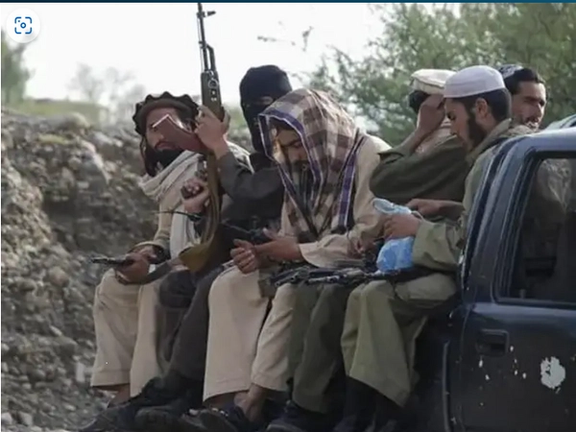
Pakistani media outlets have reported the detention of several Tehreek-e-Taliban Pakistan (TTP) members by the Afghan Taliban.
Pakistani media outlets have reported the detention of several Tehreek-e-Taliban Pakistan (TTP) members by the Afghan Taliban.
These TTP affiliates, originating from the Malakand division, have reportedly been incarcerated, as stated by The Khorasan Diary citing unnamed sources.
Details regarding the exact location and identities of the detained TTP members remain undisclosed by the Pakistani media, which tracks militancy trends within Pakistan. As of now, there has been no official response from Taliban representatives regarding these reports.
Pakistan has consistently accused the Afghan Taliban of providing refuge to members of the Pakistani Taliban. Pakistani authorities have demanded that the Afghan Taliban take decisive actions against the TTP, asserting that the group receives training in Afghanistan and executes terrorist operations in Pakistan.
Three senior officials from the US State Department are scheduled to visit Islamabad this week amidst the extensive deportation of Afghan immigrants from Pakistan.
These visits aim to address the situation of Afghan immigrants and the dynamics between Pakistan and the Taliban. Mumtaz Zahra Baloch, spokesperson for Pakistan's Foreign Ministry, indicated that the discussions are part of continuous dialogues with the US on various issues, including Afghanistan's situation.
The Express Tribune reported that Julieta Valls Noyes, the US Assistant Secretary of State for Population, Refugees, and Migration, is due to arrive in Islamabad on Monday to deliberate on Afghan refugee matters. Tom West, the US Special Representative for Afghanistan, is expected on 7 December, while Elizabeth Horst, the US Principal Deputy Assistant Secretary for Pakistan Affairs, will visit on 9 December. The focus of Tom West's visit will particularly be on Afghanistan's overall situation and the Pakistan-Taliban relationship.
Following the Taliban's refusal to counter the Pakistani Taliban, tensions have risen between Pakistan and the Taliban. The US is reportedly concerned about potential escalations in these tensions, which could destabilise Afghanistan. Additionally, the meetings will address the plight of Afghan immigrants.
The US State Department stated that Noyes will discuss protecting vulnerable immigrants and speeding up the relocation and safe resettlement of Afghan refugees. In the wake of Pakistan's decision to expel over 1.7 million undocumented immigrants, predominantly Afghans, more than 400,000 have already been deported. The US is seeking solutions to prevent the deportation of Afghan refugees who previously worked with the US government in Afghanistan, aiming to resettle them in the US.
The "Vienna Meeting for a Democratic Afghanistan" progressed into its second day on Monday in Austria's capital, drawing a diverse group of attendees.
Notably, the meeting saw the presence of representatives from Western nations, including the United States, Great Britain, Austria, Germany, Spain, and Norway, alongside Taliban opponents.
A key session of the day, titled "The Ways Ahead - Expanding and Strengthening Understanding and Cooperation among Democratic Forces," was scheduled for the morning. This panel invited all Vienna meeting participants to engage in critical discussions.
A significant agenda item was the subsequent panel set for 11:15 am, focusing on completing the development of a "roadmap."
Fawzia Kofi, a former Afghan Parliament member in attendance, conveyed to Afghanistan International their commitment to formulating a roadmap aimed at uniting political and civil groups against the Taliban.
The day was set to conclude with a final panel dedicated to the completion of the Vienna meeting's concluding declaration. Topics of discussion included envisioning the future, rallying democratic forces, and finalising the roadmap.
The meeting's first day was marked by critical evaluations of Taliban policies and calls for increased solidarity among anti-Taliban political groups. The Vienna meeting is slated to conclude on Tuesday.
In a recent report by Hengaw, a human rights organisation, it was disclosed that three Afghan nationals were among those executed in Iranian prisons in November.
The organisation's findings reveal that a total of 122 prisoners of various ethnic groups faced execution in Iran during the last month. The report detailed that the executed included 23 Baloch, 19 Kurds, 8 Turks, 5 Lors and Bakhtiaris, 5 Gilaks, in addition to the aforementioned Afghans.
Hengaw did not provide specific charges for the executed Afghan prisoners but noted that a significant number of the executions were linked to drug-related offences.
The report further highlighted the alarming frequency of these executions, averaging to about 9 every two days in the past month in Iran.
In a profound act of protest against the ongoing systematic violence towards Hazaras and Shias in Afghanistan, residents of Jebrael town in Herat city have initially refused to bury the bodies of those killed in a recent attack.
This decision reflects the community's deep-seated frustration and grief.
On Saturday, following the attack, Noor Ahmad Islamjar, the Taliban-appointed governor of Herat, met with local representatives, urging them to proceed with the burials. During this meeting, the representatives voiced strong demands for the security of Hazaras and Shias in the city and called for the arrest and punishment of those responsible for the recent spate of assassinations of Hazara and Shia clerics in Herat.
Governor Islamjar attributed Friday's attack to what he termed "enemies" of Afghanistan, suggesting their intent to sow discord amongst Afghan communities. Despite these assertions, the grief and unrest within the Hazara community continue to resonate strongly.
Local sources from Herat disclosed that, following discussions with the Taliban governor, representatives from Jebrael town decided to bury the deceased. A funeral for the victims has been scheduled for Sunday in Herat city.
The attack, which claimed the lives of at least six individuals, including two Shia clerics, occurred on Friday afternoon in an area between Shuhada town and Kore Melli towns of Jebrael. The incident has not only caused mourning but also sparked significant reactions from political leaders across Afghanistan, many of whom view it as part of a broader, ongoing genocide against the Hazara community in the country.
Mohammad Karim Khalili, leader of the Islamic Unity Party of Afghanistan and former vice president, has publicly accused the Taliban of systematically hiding the killings of Hazaras and Shias in Afghanistan.
Khalili’s statement comes in the wake of a recent attack in Herat that targeted the Hazara community.
In his statement addressing the Herat incident, Khalili highlighted the Taliban's efforts to mask the ongoing violence against Hazaras to maintain their narrative of stability in the country. He strongly condemned these targeted attacks and urged the Taliban not to remain indifferent to such "brutal and targeted killings."
Khalili, with his experience as the former head of the High Peace Council in the previous Afghan government, called upon the Taliban to take decisive and effective actions to safeguard the security of all Afghan people, particularly the Hazaras. He warned of serious consequences if these killings continue to be ignored.
Khalili appealed to the United Nations to form an impartial international team to investigate the massacres targeting the Hazaras. He stressed the urgency for the UN to intervene, urging them to implement measures to halt these attacks and ensure the perpetrators are brought to justice.
The context of Khalili's statement is a recent tragic incident in Jebrael township of Herat city, where unknown assailants killed at least six individuals, including two Shia clerics. This event marks another in a series of violent acts against the Hazara community in Afghanistan.
