
Mohammad Mohaqiq, leader of the People’s Islamic Unity Party and member of the National Resistance Council for Salvation of Afghanistan, has accused the Taliban regime of supporting the serial killings of Hazaras and Shias in Herat.
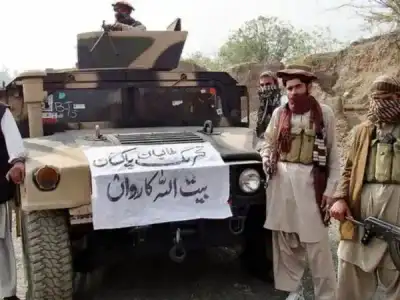
In an interview with Iranian Jamaran Media, Mohaqiq criticised the Taliban for failing to provide security to these communities and suggested their possible involvement in the violence.
Mohaqiq highlighted a book by Noor Mohammad Islamjar, Taliban’s governor for Herat, which labels Shias as a "takfiri sect" and associates them with infidels, exacerbating sectarian tensions. He questioned the Taliban's claim of protecting Shias and Hazaras, pointing out the systematic assassinations of Shia religious scholars without any consequent prosecutions.
The recent attack in the Jebrael area of Herat, which resulted in the death of six individuals including two Shia clerics, was cited as an example of the ongoing violence. The incident sparked protests in Herat, with residents demanding justice for the targeted killings of Hazaras and Shias.
Mohaqiq dismissed the likelihood of other terrorist groups like ISIS, TTP, and Jamaat Ansarullah of Tajikistan, being behind these attacks. He asserted that the current climate in Afghanistan is marked by ethnic and religious discrimination, leaving Shias and Hazaras vulnerable and defenceless.

Joe Biden, the United States president, has said that the country’s military personnel are strategically positioned outside Afghanistan to address threats from Afghanistan in the region.
In a letter to the US Congress, Biden said that US forces in the region are ready to respond to "possible threats" from Afghanistan.
He also informed the House of Representatives about the deployment of US forces in the region through the letter.
The first country mentioned in Joe Biden's letter is Afghanistan. “United States military personnel remain postured outside Afghanistan to address threats to the United States homeland and United States interests that may arise from inside Afghanistan,” he said.
The US president has stated that anti-terrorism operations conducted by the United States in Syria and Iraq have weakened the capabilities of ISIS in these countries.
The letter states that it is currently not possible to determine the scope and duration of the deployment of US forces in the region. However, he emphasised that, if necessary, he will take additional measures “to protect the people and interests of the United States”.
Biden also mentioned about the deployment of the US Army in the Arabian Peninsula, Jordan, Lebanon, Turkey, South Africa, Cuba and the Philippines.
Over two years following the withdrawal of US forces from Afghanistan, concerns persist regarding the activities of terrorist groups in the region.
Several countries, particularly in Central Asia, have consistently warned about the escalation of terrorist group activities in Afghanistan.
US State Department, in its annual report for 2022 which was published this month, said that Afghanistan's neighbours are concerned about possible terrorist threats from Afghanistan.
It also added that despite the Taliban's commitment not to permit Afghanistan's soil to be used against other countries, the group continued to provide shelter to terrorist organisations.
However, Taliban officials claim that Afghanistan is not a security threat to other countries and that the group has suppressed groups such as ISIS.
Amnesty International has called on the Taliban for the immediate release of four detained women protestors, citing violations of human rights in the group’s custody.
The organisation highlighted the cases of Zholia Parsi, Neda Parwani, Manizha Seddiqi, and Parisa Azada, who are currently being held without legal representation and are denied regular contact with their families.
In a recent statement, Amnesty International detailed the lack of access to lawyers and medical care for these women, raising concerns about the potential for torture and other forms of mistreatment. The statement, addressed to Abdul Haq Wasiq, the head of Taliban's intelligence agency, emphasised the need for improved detention conditions in line with international standards, including access to legal counsel and family visitation rights.
This plea from Amnesty International comes in the wake of a report by the United Nations Assistance Mission in Afghanistan (UNAMA), which documented around 800 instances of human rights abuses, including torture, in Taliban prisons from January 2022 to July 2023, out of a total of 1,600 recorded cases.
Furthermore, Amnesty International reported that women participating in protests have faced verbal abuse, harassment, and threats from Taliban forces. The organisation also noted the arbitrary detention of journalists covering these protests and the targeting of protestors' family members, further underscoring the widespread human rights violations under the current regime.
Amnesty International stressed that these detentions are in direct violation of international human rights laws, including the International Covenant on Civil and Political Rights, to which Afghanistan is a signatory. The organisation continues to advocate for the protection of human rights in Afghanistan, especially for women and those standing up for these rights.
Reliable sources have reported to Afghanistan International that the Taliban set fire to the house of Shakila Hashemi, a former member of the Lower House of the Afghan Parliament, located in Kabul.
The property, situated on Street 17 of the Wazir Muhammad Akbar Khan area, lies in close proximity to the location where Ayman al-Zawahiri, the al-Qaeda leader, was killed in July 2022. The Pentagon previously confirmed the killing of the al-Qaeda leader in a guest house owned by Sirajuddin Haqqani, the Taliban's interior minister, in the same area.
Sources revealed that since the Taliban's takeover of Kabul in August 2021, Shakila Hashemi faced persistent pressure from the Taliban to sell this house. Despite these demands, Hashemi has remained steadfast in her refusal.
Over the past two years, the Taliban have reportedly imposed severe restrictions on the occupants of Hashemi's house, including prohibiting access to the roof and upper floors of the building. Following Hashemi's continued resistance to selling the property, it is reported that the Taliban resorted to setting the house on fire on Thursday.
Video footage obtained by Afghanistan International shows the building after the fire had been extinguished. It was also mentioned that Shakila Hashemi owns another house in Kabul, which has allegedly been seized by the Taliban.
As of now, the Taliban have not issued any statement regarding this incident.
Shakila Hashemi is a political figure, having served as a representative for Logar Province in the 15th and 16th terms of the Afghan House of Representatives. In her last term, she was a member of the National Economy Commission.
Richard Bennett, UN Special Rapporteur on Human Rights in Afghanistan, has announced that the International Criminal Court (ICC) is investigating the human rights situation in Afghanistan, with a particular emphasis on the treatment of women.
Bennett highlighted that the ICC is paying close attention to violations of international treaties relating to Afghan women. In a discussion with Conservative Friends of Afghanistan, he referenced ongoing efforts to acknowledge gender apartheid in Afghanistan, noting that numerous Afghan citizens and human rights activists are collaborating with the International Court of Justice (ICJ) to include this issue under the umbrella of crimes against humanity.
The UN Special Rapporteur mentioned that the UN is currently developing a new treaty on crimes against humanity. He underscored the significance of campaigns advocating for the recognition of gender apartheid as a crime against humanity, pointing out that many Afghans believe this term accurately encapsulates the current state of women's rights in the country.
Bennett clarified that the process of amending these treaties requires extensive negotiations. If gender apartheid is officially classified as a crime against humanity in international law, it would mean that individuals or entities associated with such regimes could also be deemed violators of these treaties.
Additionally, Bennett suggested that the Security Council could impose sanctions against the Taliban in Afghanistan as a form of pressure. He also referenced the role of the UN Human Rights Council in potentially advancing this initiative.
Bennett concluded by stating that he has been tasked by the UN Human Rights Council to compile a report, in collaboration with other UN entities, focusing specifically on discrimination, segregation, and the systematic violation of women's human rights in Afghanistan.
The United Nations in Kabul has expressed serious concerns regarding the deteriorating health of Afghan women's rights activists currently imprisoned by the Taliban.
These detentions have been characterised as "arbitrary and prolonged" by the United Nations.
The United Nations Assistance Mission in Afghanistan (UNAMA) has reported that the Taliban have been holding four women's rights activists in Kabul since September. In response, UNAMA has called on the Taliban to ensure that these women receive proper health care, are allowed family visits, and have access to legal representation.
UNAMA has also stressed the importance of protecting freedom of opinion and expression in accordance with the Taliban's international human rights commitments.
Recent reports from Afghanistan International confirm that Julia Parsi, a prominent figure among Afghan women staging protests in Kabul, was moved to a hospital from a Taliban detention facility. Human rights advocates have reported that Parsi's transfer was necessitated by a significant decline in her physical and mental health, a deterioration attributed to the harsh conditions and alleged torture within the Taliban's prison.