Taliban May Try to Convert Public Schools Into Religious Schools, Sources Allege

Sources told Afghanistan International that the Taliban is now discussing how to transform schools into religious seminaries in Afghanistan.

Sources told Afghanistan International that the Taliban is now discussing how to transform schools into religious seminaries in Afghanistan.
According to these sources, the Taliban members have told some foreign officials that girls can be educated in religious schools and the Taliban leader has no problem with this.
These sources said that Taliban officials have argued that there is no difference between a school and a religious seminary and that this group teaches professional and religious issues at these seminaries.
According to sources, the Taliban officials have asked the international community to financially support their religious seminaries.
This is while the representative of the Secretary-General of the United Nations in Afghanistan, said in a recent Security Council meeting that evidence shows that more girls are studying in religious schools.
After the Security Council’s meeting, Otunbayeva told Afghanistan International during a press conference quoting the Taliban's Minister of Education that ten million children are studying in Taliban schools. She added that about five million other children are deprived of education.
Otunbayeva said on Thursday after the UN Security Council meeting that the Taliban are trying to bring more children into the religious education system because they believe that religious seminaries are more native to Afghanistan.
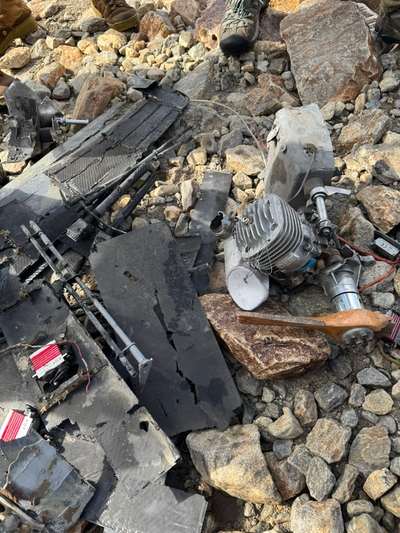

The National Resistance Front (NRF) of Afghanistan announced that two Taliban members were killed, and five others were wounded in the front’s attack on the governor’s headquarters building in the Sayed Khel district of Parwan province.
In a statement on Saturday, the front stated that its forces were not harmed in this attack.
The Taliban has not yet commented in this regard.
Following the takeover of power by the Taliban in August 2021, the National Resistance Front of Afghanistan, led by Ahmad Massoud, has started an armed struggle against the group.

In response to reports regarding girls' education in madrassas, Heather Barr, Associate Director of the Women’s Division at Human Rights Watch (HRW), stated that madrassas are not an acceptable replacement for schools.
She stated that Roza Otunbayeva, head of the United Nations Assistance Mission in Afghanistan (UNAMA), seems to be "ready to make compromises on behalf of Afghan girls”.
This Human Rights Watch official on the social media platform X added that there is no future for a country whose children only learn "extremist indoctrination".
Earlier, Otunbayeva had said that the UN had received “evidence" that more girls were attending schools.
On Wednesday, in the UN Security Council meeting, Otunbayeva said that the organisation is investigating the reports about the education of girls in religious schools under the control of the Taliban.
She added that the Taliban do not allow any supervision over the schools and they do not know what they teach there.
Barr, however, criticised Roza Otunbayeva, suggesting that it appears that she is prepared to make compromises with the Taliban.
She has described this “compromise”, which she says is carried out in the absence of Afghan girls, as "impossible and deeply harmful".
The director of the women's division of Human Rights Watch said that Afghan experts frequently talk about schools being replaced by madrassas for the education of boys and girls. "Is the United Nations listening?" asked Barr.
Otunbayeva's statement in the Security Council
On Thursday, at the UN Security Council meeting, Otunbayeva said that the Taliban are trying to get more children into the religious education system.
Acknowledging the challenge to supervise over what is being taught in the Taliban madrassas, she noted that the UN is trying to investigate in this regard.
According to her, reports indicate that girls are allowed to study in madrassas across Afghanistan, but it is not clear if a standard curriculum is being taught or how many girls’ are able to study.
Earlier in a report, Human Rights Watch stated that the Taliban's abusive educational policies harm boys and girls.
According to the report, the Taliban's dismissal of female teachers, increased use of corporal punishment, and regressive changes to the curriculum are failing boys’ schools.
Meanwhile, since the Taliban have dismissed all female teachers from boys' schools, many boys are taught by unqualified people or participate in classes with no teachers at all.

Mumtaz Zahra Baloch, spokesperson of Pakistan’s Ministry of Foreign Affairs, has said that her country cannot verify the claim by the Afghan Taliban of arresting Pakistani Taliban members.
Earlier, the spokesperson of the Taliban’s Interior Ministry had announced the arrest of 40 members of the Tehreek-e-Taliban of Pakistan in Afghanistan.
During a press conference on Thursday, in response to a question in this regard, Baloch stated, "At this stage, we are unable to confirm the existence, scale or effectiveness of any action along those lines."
However, she urged the Taliban to take action against extremist groups, especially Tehreek-e-Taliban Pakistan.
Earlier, Abdul Mateen Qane, Taliban’s spokesman for the Ministry of Interior, had told local media outlets that the group had arrested several ISIS members and 40 members of Tehreek-e-Taliban Pakistan.
Following the takeover of power in August 2021, Pakistan has witnessed a significant surge in insecurity and explosions within its territory. Over the last two years, Tehreek-e-Taliban Pakistan has claimed responsibility for most attacks targeting Pakistani forces.
Pakistani officials say that the leaders and members of the Pakistani Taliban have a safe haven in Afghanistan and plan their attacks from there.
In addition, the Pakistani government has claimed that some members of the Afghan Taliban are also involved in bloody attacks in Pakistan.
Nevertheless, the Afghan Taliban consistently refutes these allegations, saying that Pakistan holds them responsible for the security failures on its part.
Invitation for Maulana Fazal-ur-Rehman to Kabul
During the press conference, Pakistan’s foreign ministry spokesperson also stated that she is unaware of the Taliban's invitation for Maulana Fazal-ur-Rehman, the country’s famous cleric, to visit Kabul.
Baloch said that the Ministry of Foreign Affairs is not aware of the issue and does not want to comment on the private visit of individuals.
On December 17, Zabihullah Mujahid, Taliban’s spokesperson said that Fazal-ur-Rehman was invited to Kabul to prevent propaganda against the Taliban in Pakistan.
Mujahid emphasised on the group's intention to share certain facts with the people of Pakistan, highlighting that this Pakistani cleric could play a constructive role in facilitating this communication.
It has been said that Fazal-ur-Rehman accepted the Taliban’s invitation.

The Central Criminal Court of England has handed down a three-a-and-half-year prison sentence to Magomed-Husejn Dovtaev, who has been found guilty of planning a terror attack against Iran International.
Dovtaev, a Chechen-origin Austrian citizen, faced charges of gathering sensitive information for terrorist purposes.
This Wednesday, a unanimous jury verdict at the Central Criminal Court of England confirmed Dovtaev's involvement in the terror conspiracy targeting the Iran International network. His arrest occurred at Chiswick Business Park by the Metropolitan Police Counter-Terrorism Command of London in February.
Accusations against Dovtaev include the collection of information intended for a third party to facilitate a terrorist attack on Iran International.
Reacting to the sentencing, a representative of Iran International reiterated the network's resilience against intimidation, asserting that its journalists will persist in delivering independent and uncensored news, honouring the expectations of the Iranian people.

The Afghanistan Freedom Front (AFF) has called the UN Secretary-General's suggestion to appoint a special representative for peace in Afghanistan an "effective and timely action”.
However, the front stated that it will continue its "liberation efforts" until the environment is conducive for complete disarmament of the Taliban and the transfer of power to a third party, followed by the holding of free and fair elections in Afghanistan.
In a letter to the office of the United Nations Assistance Mission in Afghanistan (UNAMA) on Thursday, this anti-Taliban military front wrote that it considers the report of the UN Secretary-General to the Security Council as "a positive step towards reflecting the current realities in Afghanistan" and welcomes it.
The letter stated that this front expects the United Nations to take practical actions in this regard.
However, the letter emphasised that "consolidating the illegitimate rule of the Taliban is not in the interest of peace and stability in Afghanistan, the region, and the world”.
In a detailed seven-page letter, the Freedom Front wrote its perspective on the situation in Afghanistan, including issues such as political development, security, human rights, economic development, humanitarian aid, and narcotics.
It seems that this letter is in response to a report of António Guterres on Wednesday, presented to the members of the United Nations Security Council.
In his report to the Security Council, the UN Secretary-General said that commitment to international obligations and the start of a process leading to the establishment of an inclusive constitution will lead to the normalisation of global relations with the Taliban.
The report also suggests appointing a new representative for peace in Afghanistan to facilitate intra-Afghan dialogue; the Taliban have previously stated that they do not agree with the appointment of this representative.
The UNAMA office in Kabul, in its quarterly, semi-annual, and annual reports on the situation in Afghanistan, usually quotes from the Taliban's administrations and authorities.
However, the Freedom Front in its letter wrote that the information provided by the Taliban-controlled administration is worthless because there is no ground for verification and validation of such information. Therefore, it has been suggested that the United Nations prepare its reports "in light of information obtained from all parties involved in the Afghan affairs”.
This front, opposing the Taliban, said that the United Nations should put all grounds for a peaceful transition of Afghanistan "from the illegitimate rule of the Taliban to a system based on law and the will of the people" on its agenda.
The letter warned that the situation in Afghanistan is moving towards "becoming Rwanda-like”. The front, referring to the widespread human rights violations and war crimes of the Taliban, has asked the United Nations to prevent the complete collapse of Afghanistan.
The letter also emphasised that the Freedom Front is committed to fully observing the provisions of the Geneva Conventions and the accepted values of human rights during its liberation efforts against the Taliban, and while it has the capability to conduct widespread and major attacks, it has focused its attacks on targeting the Taliban's centres, posts, patrols, and garrisons to prevent civilian casualties.