British MP Expresses Concerns Regarding Hazara Refugees’ Safety If Transferred To Rwanda
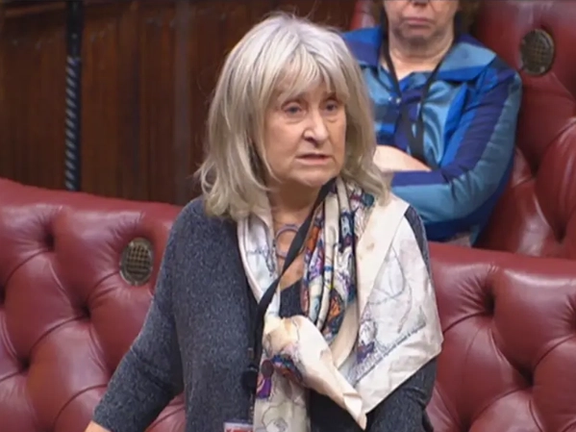
British MP Baroness Kennedy said that Hazara refugees would face persecution due to their religious beliefs if they were transferred to Rwanda.

British MP Baroness Kennedy said that Hazara refugees would face persecution due to their religious beliefs if they were transferred to Rwanda.
She added that the Hazara community in Afghanistan and Pakistan is persecuted by the Taliban and other extremist groups.
According to her, many of the refugees who fled Afghanistan and came to Britain following the Taliban’s takeover of power are Hazaras.
Kennedy added that she conducted an inquiry last year which showcased how Hazaras face severe threats from the Taliban and "other extremist groups”.
According to Kennedy, Hazara refugees will not be safe in Rwanda due to their religious beliefs.
The British government plans to send asylum seekers who enter the UK in small boats via the sea route to Rwanda for processing. This plan faces widespread opposition within the UK.
Earlier last year, the British Supreme Court declared this plan illegal.


Just a day following the end of the Doha conference, Mawlawi Abdul Kabir, the Deputy Prime Minister of the Taliban, clarified that their non-participation should not be interpreted as a rift with the global community.
Mawlawi Abdul Kabir underscored the Taliban's commitment to ensuring a "positive and meaningful" involvement in the forthcoming United Nations gatherings.
As reported by Radio Television Afghanistan (RTA), under Taliban control, Abdul Kabir, during his discussion with the Japanese Ambassador in Afghanistan, pointed out that the Taliban were primed for involvement in the Doha conference under specific prerequisites they had established. However, he lamented that the organisers of the meeting failed to seize this opportunity.
Furthermore, the Deputy Prime Minister of the Taliban expressed his optimism towards the remarks made by the UN Secretary-General about future conferences on Afghanistan, indicating the Taliban's optimistic outlook toward these engagements.

Suhail Shaheen, the head of the Taliban's political office in Doha, has voiced opposition against the naming of a United Nations special representative for Afghanistan.
Shaheen, in an interview with NHK, a Japanese broadcaster, emphasised that such a representative would meddle in Afghan affairs. He firmly declared the Taliban's refusal to acknowledge any special envoy from the UN.
Shaheen expressed concerns that the new envoy could enforce unwelcome decisions upon Afghanistan.
This stance is consistent with the Taliban's continued resistance to the appointment of a UN special representative to the country over the past few months.
Nonetheless, after the Doha conference, António Guterres, the UN Secretary-General, conveyed in a press briefing, the immediate initiation of discussions for appointing a new UN special representative for Afghanistan.
Guterres noted the consideration of a plan for the UN special representative to devise a "sustainable framework" addressing Afghan-related issues.
Shaheen appealed to the global community for the recognition of the Taliban, asserting the faction's desire for normalised international relations.
Furthermore, the UN Secretary-General committed to organising a third meeting in Doha about Afghanistan's future, expressing optimism for the Taliban's involvement in the forthcoming dialogue.

Diplomatic sources revealed to Afghanistan International that Hassan Kazemi Qomi, Iran's special envoy, abstained from meeting with Afghan civil society and women representatives at the Doha meeting, adhering to the Taliban's demand.
Similarly, the Russian delegation also opted out of participating in a session with Afghan attendees in Doha.
Till now, the Islamic Republic's officials have not yet issued an official statement regarding their representative's non-engagement with Afghan participants during the Doha discussions.
Sources present in Doha disclosed that on the conference's second day, special envoys from various nations engaged in a collective meeting with figures from Afghan civil society and women's groups.
It was also reported that delegates from certain countries held separate dialogues with Afghan participants of the Doha meeting.
Nonetheless, envoys from Russia and Iran decided against joining any meeting that included Afghan representatives in Doha.
The Russian Foreign Ministry shed light on this decision, alleging that the selection of these representatives occurred "in a non-transparent way" without the Taliban's approval.
Representatives for Afghan civil society and women at the Doha conference included Shahgul Rezaie, Mahbouba Seraj, Metra Mehran, Faiz Zaland, and Lotfullah Najafizada.
The Taliban's stipulations for attending the Doha event were rebuffed, leading to the absence of the group's representatives from Qatar. A notable demand from the Taliban was their insistence on being the exclusive representatives of the Afghan populace at the meeting.

António Guterres, the Secretary-General of the United Nations, has declared that the "outrageous ban" obstructing girls' access to education and employment in Afghanistan must be overturned.
Guterres stressed that women and girls in Afghanistan should have a meaningful presence across all life's facets.
In a statement made via his X social media platform on Tuesday, the United Nations Secretary-General advocated for the inclusion of women across the spectrum, from educational environments to the highest echelons of decision-making.
Guterres pointed out the necessity for the international community to ensure that addressing the needs and rights of all Afghan citizens remains a foremost concern for the country's current leadership.
He drew attention to Afghanistan's dire economic predicament, underscoring that the UN's humanitarian aid initiative has garnered less than three percent of its essential funding.
During a United Nations-sponsored meet in Qatar, which spanned two days, Guterres engaged with special envoys from various nations to scrutinise Afghanistan's situation. He remarked that the Taliban's non-participation in the Doha discussions had no detrimental effect, asserting on the substantial utility of these meetings.
Following the Taliban's reassumption of power in August 2021, they instituted extensive prohibitions on women, including shutting down schools for girls beyond the sixth grade and forbidding their attendance at universities and places of employment. Furthermore, the regime restricted women's freedom to travel and access to public spaces like parks and restaurants.
In the ensuing period of over two years, the Taliban have indiscriminately detained and incarcerated numerous women activists and protesters, in addition to many women accused of "improper hijab.”

In a letter, the Taliban's Ministry of Public Health has instructed public health directorates within provinces to initiate the recruitment process for female 12th grade graduates to government health institutes.
Bakhtar news agency has reported that the recruitment of 12th-grade graduates will commence in 11 provinces.
According to the report, the Taliban’s Ministry of Public Health has sent this letter to the public health directorates of Kapisa, Parwan, Panjshir, Maidan Wardak, Ghazni, Paktika, Logar, Khost, Badakhshan, Bamiyan and Paktia provinces.
This comes even though the Taliban has closed girls' schools beyond the sixth grade and prohibited girls from going to universities.
On the other hand, over the last two years, the Taliban’s National Examination Authority did not allow female medical students to participate in the Medical Council Exam.
Medical graduates are unable to open clinics or pursue careers in the medical field without successfully completing this exam.