• العربية
  • پښتو
  • فارسی
Brand
  • Afghanistan
  • Sport
  • Markets
  • Afghanistan
  • Sport
  • Markets
  • Theme
  • Language
    • العربية
    • پښتو
    • فارسی
  • Afghanistan
  • Sport
  • Markets
All rights reserved for Volant Media UK Limited
volant media logo

Taliban Leader Prohibits Human Appearances On TV Broadcasts In Kandahar

Feb 26, 2024, 09:58 GMT+0

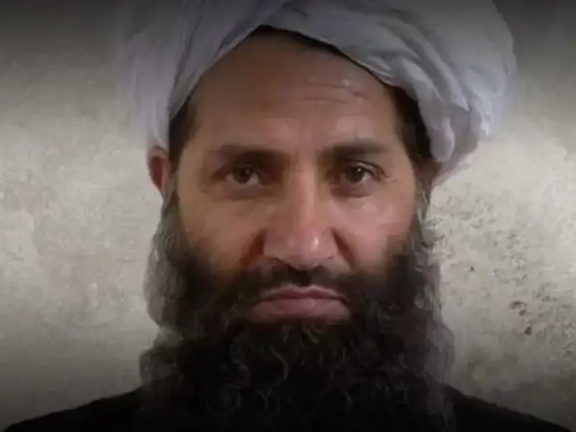
Hibatullah Akhundzada, the Taliban's supreme leader, has issued a verbal directive to officials in Kandahar Province, instructing them to abstain from participating in video interviews, as confirmed by sources to Afghanistan International.

Kandahar National Television revealed a new policy which prohibits any human appearances on television broadcasts.

This directive comes close on the heels of a similar order issued by Mullah Shirin, the Taliban-appointed governor of Kandahar. He mandated that all government entities and local residents should avoid capturing and disseminating images or videos featuring living beings.

Further discussions with the Pashto section of Afghanistan International revealed that the Taliban's top leader has extended this ban to include video interviews with media outlets, indicating a significant shift in the group's media engagement strategy.

A reliable source disclosed, "Sheikh Sahib (Hibatullah Akhundzada) expresses frustration over the unnecessary media exposure and video interviews conducted by some ministers."

In response to these developments, it was noted that future media reports in Kandahar would exclude images and videos of living creatures.

Anonymous informants hinted at Akhundzada's intentions to implement these restrictions across additional provinces, signalling a broader enforcement of media control.

Afghanistan National Television in Kabul has reported unverified claims regarding the potential expansion of these image and video publication bans.

An impending meeting scheduled for next Tuesday between Taliban officials and media representatives is expected to clarify the scope of these new prohibitions.

Recent practices include publishing interviews with Taliban officials, such as Khalid Hanafi, the Minister of Vice and Virtue, in an audio format only, avoiding any visual content.

The group has also resorted to using archival images for publicising events, such as the Taliban foreign minister Amir Khan Muttaqi's visit to Turkmenistan, avoiding the release of current photos or videos.

Recalling their initial reign from 1996 to 2001, the Taliban had imposed a strict ban on photography, filming, and television viewing, categorising these activities, along with music and the depiction of living beings, as un-Islamic.

Despite these historical restrictions, since reclaiming power in August 2021, the Taliban has not reinstated a complete ban on visual media, utilising it instead for widespread propaganda dissemination.

Most Viewed

Female Ismaili Entrepreneur Shot Dead In Badakhshan
1

Female Ismaili Entrepreneur Shot Dead In Badakhshan

2

Afghanistan May Not Remain Intact In Future, Says Pakistani Analyst

3

Taliban, Iran Working On Surveillance App For Afghan Users, Say Sources

4

Pakistan Welcomes Local Ceasefire Agreement In Kunar & Nuristan Border Areas

5

Ties Will Not Normalise While Taliban Shelter Militants, Says Pakistan

•
•
•

More Stories

Pity Doha Meeting Failed to Organise Dialogue With Taliban, Says Chinese Envoy

Feb 24, 2024, 14:21 GMT+0

Yue Xiaoyong, China's Special Envoy for Afghanistan, said that Beijing and regional countries sought dialogue with the Taliban during the Doha meeting, expressing regret that the meeting "failed" in achieving this objective.

Xiaoyong said that the United States should take responsibility for the reconstruction of Afghanistan, unfreeze Afghanistan’s assets and lift sanctions.

He also called for more humanitarian aid and moderate governance, along with providing educational opportunities for women and girls.

The Chinese envoy emphasised that his country is ready to work with the United Nations and regional partners, especially during the meeting of foreign ministers of Afghanistan's neighbouring countries, and other regional platforms to enhance engagement with the Taliban.

Xiaoyong said that the Doha meeting provides a platform to reflect all concerns about Afghanistan to ensure that the country does not become a hotbed of terrorist activities and that "it has inclusive institutions.”

The Doha meeting on Afghanistan was hosted by Antonio Guterres, the Secretary General of the United Nations, on February 18 and 19 with the participation of at least 25 countries and international organisations.

The representatives of the Taliban were not present in this meeting. However, five members of the civil society, including three women, were present on behalf of Afghanistan.

Global Community Committed To Address Women’s Rights Issue In Afghanistan, Says US Envoy

Feb 24, 2024, 11:56 GMT+0

Referring to the Doha meeting, US Special Envoy, Rina Amiri, said that the international community is committed to supporting the Afghan people, women's rights issues, and addressing their other problems.

Amiri added that the representatives of the Afghan civil society also asked the world to consider the deteriorating situation of women in the country.

On her X social media platform, she wrote, "The meeting reinforced that the international community remains largely united and committed to supporting the Afghan people and their struggle for economic stability, security, and respect for their rights, particularly addressing the plight of Afghan women and girls.”

The Doha meeting on Afghanistan was hosted by Antonio Guterres, the Secretary General of the United Nations, on February 18 and 19.

Following this meeting, the Secretary-General of the United Nations said in a press conference that the condition of women in Afghanistan has deteriorated. Additionally, he highlighted that the matter of addressing terrorist sanctuaries remains unresolved, and there has been no establishment of an inclusive government in the country.

Thomas West, the US Special Representative for Afghanistan, was one of the other members of the US delegation at the Doha meeting.

After the meeting, he said that the United States called on the United Nations to provide a road map for Afghanistan's full integration into the international system.

Officials From China & Turkmenistan Discuss Afghanistan

Feb 24, 2024, 10:36 GMT+0

Yue Xiaoyong, China's special envoy for Afghanistan, announced that he met Turkmenistan's Deputy Foreign Minister, Ahmet Gurbanov, and discussed the situation in Afghanistan.

He said that China backs Turkmenistan’s claim to hold the fifth meeting of the foreign ministers of Afghanistan’s neighbouring countries in 2024.

The Chinese special envoy wrote on X social media platform on Friday that they are enhancing their joint effort to help the reconstruction of Afghanistan.

The fourth meeting of the foreign ministers of Afghanistan's neighbouring countries had been held in Uzbekistan. Foreign ministers and representatives from Iran, China, Russia, Pakistan, Uzbekistan, Tajikistan, and Turkmenistan attended the meeting.

One of the objectives of these meetings is to address and find solutions to Afghanistan's political challenges through diplomatic discussions among the neighbouring nations.

No Communication From Taliban Regarding Group’s Stance On Durand Line, Says Pak Official

Feb 24, 2024, 09:50 GMT+0

Jan Achakzai, the Information Minister of Balochistan, in an interview with Afghanistan International, pointed out that the Taliban is yet to convey its official viewpoint on the Durand Line to Pakistan.

Achakzai criticised the description of the Afghanistan-Pakistan border as an "imaginary line" as nonsensical.

During a discussion on Friday, he labeled the boundary between Afghanistan and Pakistan as a formally recognised and official international border.

He further clarified that Pakistan harbours no disputes with the Taliban on this issue, remarking, "If anyone harbours the foolish illusion that this border is imaginary, it remains merely a dream."

Sher Mohammad Abbas Stanikzai, the Taliban's Deputy Foreign Minister, had previously declared the absence of an official border between Afghanistan and Pakistan, instead referred to the Durand Line as an "imaginary line”.

Stanikzai firmly stated the group's refusal to acknowledge the "imaginary" Durand Line as the legitimate frontier between the two nations.

Responding to Stanikzai's comments, Achakzai dismissed them as manipulative and possibly influenced by external forces such as India.

"The Taliban has not formally presented their stance on this issue to Pakistan. If Taliban figures like Stanikzai have made such statements, I personally suspect they might be instigated by India or other entities," stated Achakzai.

The Balochistan Information Minister underscored the Taliban's attempts to deflect public attention from the challenges of unemployment, poverty, and migration.

Achakzai suggested that some government’s politicians, driven by internal necessities and aiming to shift public focus from pressing domestic issues, may seek a scapegoat, thereby straining ties with neighbours. Thus, he interpreted a senior Taliban official's populist claims as an effort to shift public scrutiny toward Pakistan and rally support.

The designation of the border as "imaginary" gained traction during Hamid Karzai's presidency when he instructed government bodies to refer to the Durand Line as such.

Exclusive: Afghan Worker Killed in Tehran, Iran, Buried in Herat

Feb 23, 2024, 17:38 GMT+0

Afghanistan International's sources confirm that Elias Mohammadi, a young Afghan worker who was killed by being thrown from a bridge in Tehran, Iran, has been buried in Herat, Afghanistan, last Saturday.

A "supporter of the Islamic Republic" had thrown him off the bridge thinking he had insulted the Iranian flag.

Mohammadi's family members report that in the early hours of February 9, a member of the Basij threw Elias Mohammadi, who was cleaning the street, off the Niayesh bridge in Tehran. He lost his life due to the fall and vehicles crossing over him.

In the two weeks following the incident, the Iranian government has been silent about the killing of Mohammadi. However, Iranian social media users have launched a campaign for Mohammadi.

One of Mohammadi's relatives, who did not want to be named, told Afghanistan International that it took a week for the victim’s family to receive the body and transfer it to Herat.

According to the source, Mohammadi's body was buried on Saturday in his hometown in Obe district of Herat province.

Having arrived in Iran six years ago, Mohammadi was working at a fruit shop in Tehran's 5th district during the day. Additionally, he worked with a municipal contractor company, cleaning the streets of the Iranian capital during the night.

A colleague of Mohammadi told the Iranian media, "We were working with the municipal contractor, cleaning the walls of the overpass on the night of the accident. Unexpectedly, a car pulled up in front of us. He abruptly exited the vehicle and approached us. Without any warning, he engaged in a confrontation with our colleague (Elias) and subsequently threw him off the bridge. We rushed towards him to prevent his escape, but the assailant threatened us, warning that he would do the same to us if we followed him. He, then, fled in a car with his accomplices."

Witnesses have said that several cars passed over the body of victim, who was lying on the highway.

Iranian media said that the arrested killer is a 25-year-old young man with a bachelor's degree. According to some sources, he is a member of Basij, supporting the Islamic Republic of Iran.

He told the media, "I was passing that road when suddenly I saw the victim and his friends. I imagined that they were going to steal the flags that were raised on the side of the highway. The flags were raised on the occasion of Anniversary of the Iranian Revolution, and I thought that the victim intended to insult the flags and wanted to destroy them."

He confirmed that he had reported to the police before attacking Elias Mohammadi, however, he said, "I could not sit still, got out of the car, and after fighting with the victim, I pushed him, and he fell down and died.”

Despite announcing the identity and nationality of the victim, the Taliban and the Afghan embassy in Tehran, which is under the control of the group, have not reacted to the news.