Iranian Law Enforcement Officer Killed In Hirmand County Near Afghan Border
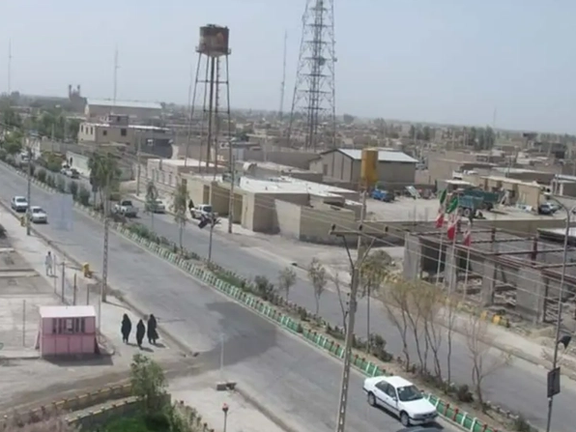
The Islamic Republic News Agency (IRNA) reported that an Iranian law enforcement officer was killed on Saturday, in Hirmand county near the border with Afghanistan.
The Islamic Republic News Agency (IRNA) reported that an Iranian law enforcement officer was killed on Saturday, in Hirmand county near the border with Afghanistan.
According to IRNA, this officer was killed in a clash with drug traffickers.
Further details have not yet been released.
Hirmand county in Sistan and Baluchestan Province of Iran, shares about 110 kilometres of border with the Afghan provinces of Nimroz and Farah.

Sirojiddin Muhriddin, Tajikistan's Foreign Minister, remarked during a gathering of the Council of Foreign Ministers of the Commonwealth of Independent States in Minsk that these nations face unprecedented security challenges.
Muhriddin also warned about the situation in Afghanistan.
According to the RIA Novosti news agency, he said that the situation in Afghanistan can affect all the member states and lead to a change in the geopolitical balance across Eurasia.
The Tajik Foreign Ministry also stated that regional cooperation and security issues have been discussed in this meeting.
Foreign ministers from Uzbekistan, Turkmenistan, Tajikistan, Russia, Kazakhstan, Kyrgyzstan, Belarus, Armenia, and Azerbaijan attended the meeting.
Muhriddin called on the member states to take more effective actions to improve the security situation in the region.
The Tajik Foreign Minister also emphasised on the need to increase the efficiency of the counter-terrorism center of the Commonwealth of Independent States.
As his country shares a border with Afghanistan, he stated that Tajikistan has been grappling with unprecedented security challenges for three decades.
French authorities announced that a 25-year-old Afghan refugee stabbed one person to death and injured another in Bordeaux, France, on the day of Eid al-Fitr. The assailant was subsequently shot dead by the police.
The incident, which occurred on Wednesday, the first day of Eid al-Fitr, saw an attacker targeting two men near the Garonne River in Bordeaux.
Frédérique Porterie, the public prosecutor of Bordeaux, identified the perpetrator as an Afghan refugee. Porterie informed reporters that the attacker confronted the men over consuming alcohol during Eid and then assaulted them with a knife.
Following the assault, law enforcement officers intervened, resulting in the death of the attacker.
According to French authorities, the victims of the attack were two Algerian men aged 26 and 37.
The Bordeaux public prosecutor disclosed that the Afghan refugee had been granted French asylum in September 2021. However, there is currently no evidence indicating that the attack was motivated by terrorism.
The Afghanistan Freedom Front (AFF) has announced the resumption of its operations against the Taliban.
According to the group, an attack was carried out on Friday at approximately 8PM in the Pul-e-Artal area of Kabul, resulting in the death of one Taliban member and injuries to three others.
Previously, during the month of Ramadan, the AFF had declared a temporary suspension of its attacks against the Taliban, which lasted for one month.
In this recent operation, the AFF targeted two patrol vehicles associated with the intelligence division of the Taliban's Ministry of Defence. A video released by the group captured the sound of the explosion.
As of now, Taliban officials have not issued any statements regarding the incident.
Led by former Afghan Vice-President Amrullah Saleh, Afghanistan's Green Trend (AGT), has reported that the Taliban's Ministry of Defence has requested a budget for 2024 that is double in value than that of the one sanctioned for 2023.
Taliban’s last year's defence budget was nearly 40 billion Afghanis, while this year's request exceeds 80 billion Afghanis.
On Friday, Afghanistan's Green Trend disclosed that it has accessed confidential documents from the Taliban’s Defence Ministry. They highlighted that although the Taliban keeps their security sector's budget highly confidential, they lack the expertise necessary to adequately safeguard their confidential documents.
The detailed data provided by Afghanistan's Green Trend shows that in 2023, the Ministry of Defence’s budget was over 39 billion Afghanis. For 2024, the requested budget is over 80 billion Afghanis.
This increase reflects a doubling from the previous year, attributed to escalating threats and internal rivalries within the Taliban. According to AGT, internal conflicts among Taliban leaders have so far prevented the approval of this year's proposed budget.
The breakdown of the Taliban’s defence ministry budget reveals that the majority of the budget is allocated to the directorates of weapons and tactics, strategic supplies, and administrative sectors. Notably, the budget for the weapons and tactics directorate has surged from 625 million Afghanis last year to 21 billion Afghanis this year.
Furthermore, while the strategic supplies directorate received over 12 billion Afghanis last year, it has requested more than 22 billion Afghanis for this year. The Ministry of Defence has also sought increased funding for the human resources sector in 2024.
Joseph Votel, former US Central Command Commander, said that with the Taliban's takeover of power, ISIS-Khorasan has found space for development.
Votel stated that the absence of US military forces and the Taliban's inability to provide security have allowed ISIS to become a significant threat.
According to Business Insider, prior to the Taliban's takeover of Kabul, ISIS’ activities were limited to Afghanistan. However, thereafter, it found more opportunities for expansion and took responsibility for attacks beyond Afghan soil, including a suicide attack on Qasem Soleimani's death anniversary ceremony in Iran and an attack on a concert hall in Moscow.
Votel, who oversaw military operations in the Middle East in 2010, told Business Insider, "It doesn't take very long for these organisations to rise up and become more capable."
Michael Kugelman, director of the South Asia Institute at the Wilson Center, also considered the US withdrawal and the Taliban's control over Afghanistan as key factors contributing to the strengthening of ISIS-Khorasan.
Business Insider reported that without US military presence in Afghanistan, options for combating ISIS are fairly limited. The report added that while the White House has previously emphasised a strategy for targeting terrorists with drones, there seems to be little evidence of the effectiveness of such a strategy.
This media outlet wrote that before the collapse of the previous Afghan government, the US had significant intelligence capabilities in Afghanistan and could conduct military strikes against terrorist groups, as well as provide advice and assistance to Afghan forces in key operations.
According to Business Insider, Votel stated that this "mowing-the-grass" approach to counterterrorism ultimately led to further strengthening and flexibility of ISIS, and the group is now focusing on expanding its influence in other regions.