Kandahar Governor Calls For Support For Taliban Leader’s Security Details
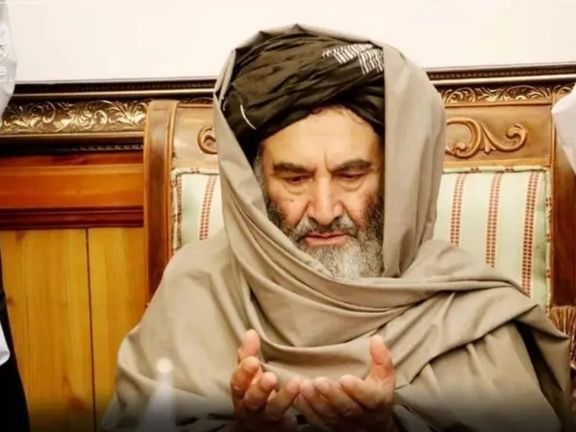
Mullah Shirin, the Taliban’s governor of Kandahar, has urged the group's Interior Ministry to prioritise the needs of the "special units" safeguarding Hibatullah Akhundzada.

Mullah Shirin, the Taliban’s governor of Kandahar, has urged the group's Interior Ministry to prioritise the needs of the "special units" safeguarding Hibatullah Akhundzada.
These units are tasked with carrying out special operations to ensure the Taliban leader’s security in Kandahar.
Mohammad Ali Hanafi, known as "Mullah Shirin Akhund," a close and trusted associate of Akhundzada, made the request.
On Sunday, the governor's office in Kandahar announced that a delegation led by Hamidullah Akhundzada from the Interior Ministry assessed the special units.
The delegation spent a week reviewing the units' military training, weapons, and equipment.
Previously, sources indicated that nearly seven thousand personnel are part of these special units in Kandahar, tasked with protecting Akhundzada, the Taliban leader.
These units are also responsible for ensuring the security of Kandahar during sensitive times.


Abdullah Mobini, the head of Iran's National Migration Organisation, announced the implementation of over 40 plans to "organise migrants" in Iran.
These initiatives include the registration and deportation of undocumented migrants, tightening border controls, reforming visa issuance, and regulating the employment of foreign nationals.
On Saturday, the Islamic Republic News Agency (IRNA) reported that these plans would be implemented concurrently. Mobini stated, "With optimal integrated management, we can organise foreign nationals in accordance with the policies of the Council for Policy and Coordination of Foreign Nationals and Migrants."
Following the Taliban's seizure of power on 15 August 2021, a surge of Afghan migrants crossed into Iran. Nearly three years later, the Islamic Republic of Iran has repatriated thousands of Afghan migrants back to Afghanistan.
According to Iranian authorities, 1.3 million undocumented migrants were deported from the country last year. Human rights activists have raised consistent concerns about the mistreatment of Afghan migrants by Iranian security forces, systemic discrimination against them, and their lack of access to essential services.

Alam Majidi, the Taliban spokesperson for Baghlan, has declared that the residential area of Shia Ismailis in Pul-e-Khumri city is state-owned, with plans underway to construct a "bus station" on the site.
Majidi dismissed reports of the forced relocation of approximately 70 Ismaili families as "baseless."
According to the Taliban-controlled Bakhtar News Agency, the Ismailis of Baghlan have agreed to relinquish their residential area to the Taliban.
Majidi did not disclose where these families would be relocated or whether they would receive compensation for the demolition of their homes.
Earlier, the Afghan Embassy in Italy issued a statement on Wednesday indicating that the Taliban intend to forcibly relocate about 70 Ismaili families from Pul-e-Khumri. The embassy's statement noted that the Taliban had set a deadline for these families to vacate their homes by the "third day of Eid al-Adha."
The statement further mentioned that the Taliban is exerting pressure to coerce the followers of the Shia Ismaili sect to convert to Sunni Islam.
According to information from the Afghan Embassy in Italy, these Ismaili families "have been residing in the outskirts of Pul-e-Khumri for the past 30 years." Khalid Zakaria, the Afghan Ambassador to Italy, noted that "these families are in a poor economic condition and lack the means to relocate elsewhere."

The "Polio Free Afghanistan" organisation has announced that a polio vaccination campaign will commence across Afghanistan on Monday, June 3.
The organisation has urged the Afghan populace to vaccinate their children to protect them against this disease.
On Sunday, this organisation revealed the new polio campaign in Afghanistan on the X social platform but did not specify the campaign's duration.
According to official reports, six positive cases of polio were recorded in Afghanistan last year. Polio is a viral infection that spreads through contact with the faeces of an infected person or through sneezing, primarily affecting children under five.
Most infected individuals show no symptoms; however, common signs include high fever, sore throat, headache, stomach pain, body aches, and vomiting.

Mohammad Qasim Amiri, the Taliban's head of mining in Panjshir, has announced that illegal mining and smuggling of minerals and precious stones in the province have been eliminated.
He stated that the Taliban has issued more than 560 licences to miners for the "legal extraction" of Panjshir emeralds.
The Taliban's Ministry of Mines and Petroleum announced in a statement on Saturday that the distribution of mining licences in Panjshir has created employment opportunities for more than 10,000 people.
Amiri has asked that the Taliban's Ministry of Mines send a technical team to survey all mineral areas in Panjshir and issue licences for the extraction of ruby mines.
The Taliban's Minister of Mines stated that the people of Panjshir should be prioritised in the issuance of licences for rubies and emeralds, as well as in the provision of job opportunities.
Over the past two years, the Taliban has repeatedly auctioned Panjshir emeralds.
Due to the economic crisis, the group has focused on extracting Afghanistan's mines, a practice that Taliban opponents consider illegal due to the Taliban's lack of legitimacy.

Amir Khan Muttaqi, the Taliban's Foreign Minister, during a meeting with the European Union's Special Representative for Afghanistan, stated that the group would announce its stance after reviewing the third Doha meeting.
Muttaqi called for "meaningful participation" by the Taliban in this meeting.
Previously, Taliban officials had said they had designated their representatives for this meeting and were awaiting the agenda.
On Saturday, the Taliban's Foreign Ministry reported that Tomas Niklasson discussed the "importance" of the Taliban's presence at the third Doha meeting with Amir Khan Muttaqi in Kabul, highlighting that significant issues would be discussed.
The Taliban have not provided details on the key issues to be discussed at the third Doha meeting.
According to the statement from the Taliban's Foreign Ministry, Muttaqi mentioned that the Taliban's policy is "based on a balanced and positive engagement" with all countries worldwide.
Earlier, Zaker Jalali, an official from the Taliban's Foreign Ministry, said that after receiving the Doha meeting agenda, their representatives would participate in the main discussions of the third Doha meeting.
The third Doha meeting, hosted by the United Nations, is scheduled for June 30 and July 1.
The Taliban did not participate in the previous two Doha meetings attended by special representatives for Afghanistan from various countries.
The UN Secretary-General had stated that the Taliban's absence from the second Doha meeting did not affect the meeting.
Sources told Afghanistan International that the Taliban have set several conditions for their participation in this meeting. One of these conditions is the transfer of Afghanistan's seat at the United Nations to the group.