AFF Claims to Have Killed Three Taliban Members in Panjshir

The Afghanistan Freedom Front (AFF) claims to have killed three Taliban members in an attack on a Taliban military outpost in Panjshir province.

The Afghanistan Freedom Front (AFF) claims to have killed three Taliban members in an attack on a Taliban military outpost in Panjshir province.
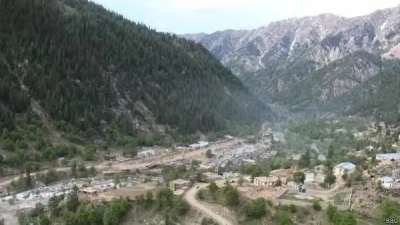
In a statement on Friday, the AFF reported targeting a Taliban military outpost in the Peshgur area of Panjshir, injuring two additional Taliban members.
Local sources in Panjshir confirmed the attack to Afghanistan International, stating that it resulted from an explosion.
This attack by the AFF on Taliban forces in Panjshir coincides with the UN Secretary-General's announcement on Friday that the group has carried out 14 attacks on Taliban forces in the past three months.

Agnès Callamard, Secretary-General of Amnesty International, stated that the Doha meeting lacks credibility without the participation of human rights defenders, women, and a focus on human rights issues.
Ahead of the Doha meeting, Callamard emphasised that the rights of Afghan women and girls are non-negotiable and must be central to the UN meeting in Doha. The meeting, hosted by the United Nations, will be held in Qatar on June 30 and July 1.
Callamard stressed that if the human rights crisis in Afghanistan is not properly addressed and if women's rights defenders and other relevant stakeholders from Afghan civil society are not included, the credibility of the meeting will be at risk. She stated that sidelining fundamental human rights discussions is unacceptable.
She pointed out that yielding to the Taliban's conditions to ensure their participation in the Doha meeting risks legitimising a repressive system that, she said, has brutally excluded women from society and stripped them of their fundamental rights.
The Taliban expressed readiness to participate in the Doha meeting after lengthy negotiations with UN representatives. The UN Secretary-General's representative noted that the new format is the only way forward and that this is not the last Doha meeting; the dialogue process will continue.
These remarks come as representatives from several Western countries at the UN Security Council meeting on Afghanistan emphasised on the participation of women and civil society activists in the third Doha meeting.

Pakistan’s Peshawar High Court has ordered the police not to deport Afghan artists from Pakistan until their immigration cases are resolved.
Previously, some Afghan artists in Pakistan had approached the Peshawar High Court to seek political asylum.
These artists, who are residing in Pakistan without legal residency documents, had requested the court to prevent their deportation from the country.
The lawyer of the Afghan artists requested political asylum, and asked the court to allow them to stay in Pakistan until their fate is determined.
Judges Ijaz Anwar and Wiqar Ahmad listened to the issues faced by these artists in Pakistan and reviewed their asylum applications.
The petitioners’ lawyer also mentioned during the hearing that these artists had applied for asylum with the UN Refugee Agency, but were being harassed due to their lack of legal residency documents in Pakistan.
The Peshawar High Court postponed the hearing to the next session, but instructed the authorities not to deport them until their case is addressed.
This situation arises as some Afghan artists fled to Pakistan and Iran following the Taliban's takeover in August 2021.
Upon seizing control of Afghanistan, the Taliban banned playing of musical instruments, singing, and listening to music.
Additionally, the Taliban has arrested and tortured several musicians during their nearly three-year rule over Afghanistan. They have also destroyed musical instruments during house inspections. The Taliban consider playing and listening to music against “Islamic Sharia”.
Consequently, many Afghan artists fled to neighboring countries out of fear of persecution and torture by the Taliban.
Some of these artists do not have legal residency documents in these countries and are subject to deportation. However, these artists are determined not to return to Afghanistan under a regime that criminalises their profession.

UN Secretary-General António Guterres announced that the National Resistance Front (NRF) has carried out a total of 29 attacks on Taliban forces in the past three months.
Among these, 20 attacks were in Kabul, six in Takhar, two in Baghlan, and one in Parwan.
According to the report, the NRF managed to attack the military facilities at Kabul Airport during this period. The UN revealed that "three rockets were fired at a helicopter upon entry, but there were no casualties or damage”.
Guterres also confirmed that the Afghanistan Freedom Front launched 14 attacks on the Taliban in Kabul over the past three months.
He noted that the attacks by the Afghanistan Freedom Front have decreased compared to the previous three months, during which 24 attacks were carried out.
The UN report indicates that both military fronts opposing the Taliban have used "hit-and-run" tactics against Taliban forces. They employed grenades in 22 instances and improvised explosive devices in seven cases to target the Taliban.

Homayoun Afghan, spokesperson for the Taliban's Ministry of Mines and Petroleum, stated that over the past three years, the ministry has signed contracts worth 10 billion Afghanis with various local companies for the extraction of small mines.
On Thursday, Afghan mentioned that these contracts were signed with Afghan investors across different sectors.
In an interview with Taliban-controlled National TV, he said that the ministry has also signed contracts for about 30 large mines worth at least $7 billion with domestic and foreign companies.
According to him, in 2023, contracts for 14 large mines extracting gold, ruby, coal, cement, lead, and zinc were signed. These mines are located in the provinces of Herat, Ghor, Baghlan, Takhar, Kabul, and several other provinces.
In April, the spokesperson for the Taliban's Ministry of Mines and Petroleum noted that since the group’s takeover of Afghanistan, countries such as China, Turkey, Qatar, Iran, and the United Kingdom have invested over $7 billion in the country.
The Taliban have not yet provided comprehensive information to the public about these contracts and the extracting companies. Critics have repeatedly criticised the Taliban for their lack of transparency in the collection and expenditure of Afghanistan's mining revenues.
The UN Secretary-General, António Guterres, reported a significant rise in instability in Afghanistan, with over 2,500 security incidents recorded in the past three months.
Guterres highlighted that insecurity in February, March, and April of this year increased by 55% compared to the previous three months.
Notably, drug-related incidents surged by 97%, from 212 to 418 cases. The majority of these incidents occurred in the central, northeastern, southeastern, and southern regions of Afghanistan.
According to the UN report, the primary cause of this instability is the "ruling authorities' decision" to enforce a ban on poppy cultivation.
Additionally, land disputes have risen from 20 to 51 cases in the past three months, predominantly in the southern and eastern parts of Afghanistan. During this period, armed clashes increased from 75 to 106 cases, although the number of explosions has decreased.
The report underscores the growing challenges faced by Afghanistan as it continues to grapple with security issues amidst ongoing efforts to enforce new policies.