• العربية
  • پښتو
  • فارسی
Brand
  • Afghanistan
  • Sport
  • Markets
  • Afghanistan
  • Sport
  • Markets
  • Theme
  • Language
    • العربية
    • پښتو
    • فارسی
  • Afghanistan
  • Sport
  • Markets
All rights reserved for Volant Media UK Limited
volant media logo

Trump Claims Doha Agreement Was Terminated Due to Taliban's Non-Compliance
Sep 11, 2024, 10:29 GMT+1

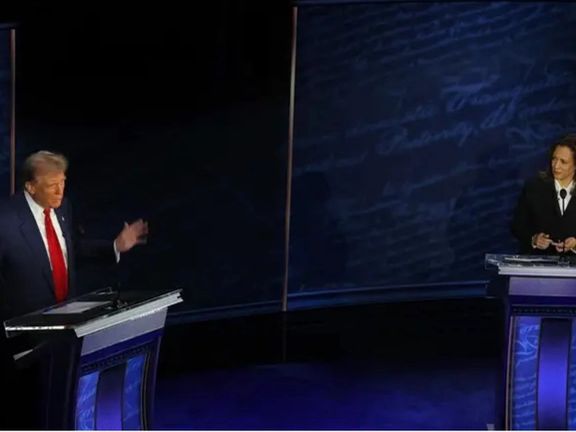
During a debate with Kamala Harris, Donald Trump stated that the Doha Agreement was terminated during his presidency because the Taliban did not adhere to its terms.

Trump said, "We terminated the agreement because they didn’t do what they were supposed to." He also criticised the Biden administration, claiming, "These people executed the worst and, in my opinion, the most shameful withdrawal in the history of our country."

Defending his stance, Trump explained, "We had an agreement, but we didn’t lose soldiers, we didn’t leave many Americans behind, and we didn’t leave $85 billion worth of equipment."

The debate between Kamala Harris and Donald Trump, the leading candidates in the US presidential election, took place on Tuesday, September 10, at 9:00 PM Washington time. In addition to domestic issues, the debate also covered topics such as the Ukraine-Russia war, Israel and Hamas, and Afghanistan.

Trump stated that following the agreement with the Taliban, no US soldiers were killed over a span of 18 months. He added, "I told Abdul Ghani Baradar to stop killing our soldiers, or it would cause trouble for you, and after that, for 18 months, no soldiers were killed."

The Doha Agreement was signed in 2020 during Trump’s presidency. Trump criticised the Biden administration for not adhering to the terms of the agreement, saying, "It was a conditional, phased agreement, but it wasn’t upheld."

Kamala Harris strongly criticised Trump’s handling of Afghanistan. She accused Trump of bypassing the Afghan government and "negotiating directly with a terrorist organisation called the Taliban”.

In response, Trump defended his actions, stating, "I negotiated with the Taliban because they were killing Americans."

Harris avoided directly addressing the question of whether she was responsible for the chaotic withdrawal from Afghanistan, instead stating, "I agreed with Biden’s decision to withdraw from Afghanistan." She continued, saying that four presidents had promised to do it, and Biden finally made it happen. As a result, "American taxpayers are no longer paying $300 million a day for that endless war."

Harris described the US-Taliban agreement made during Trump’s presidency as one of the weakest agreements ever. She added, "Trump calls himself a dealmaker, but even his own advisors said this was a weak and terrible deal."

She further criticised Trump for negotiating with the Taliban and inviting them to Camp David, a place symbolic of American democratic values.
The Doha Agreement was signed in 2020 between the US and the Taliban in Qatar, where both sides agreed on the withdrawal of US troops from Afghanistan.

Michael McCaul, Chairman of the US House Foreign Affairs Committee, and other critics argue that the US left Afghanistan unconditionally, without a settlement between the Taliban and the Ashraf Ghani government, paving the way for the collapse of the Afghan government.

On Sunday, September 8, in an interview with CBS, McCaul called the Doha Agreement a mistake by Zalmay Khalilzad and said it had a negative impact on the morale of the previous Afghan government.

In response, Zalmay Khalilzad called McCaul’s statements a "false accusation" and said that the Doha Agreement provided the basis for "historic negotiations" between the Ashraf Ghani government and the Taliban.

Most Viewed

Taliban Besieged TOLOnews Offices After Journalist Detentions, Say Sources
1

Taliban Besieged TOLOnews Offices After Journalist Detentions, Say Sources

2

Pakistani Envoy Urges Taliban to Take Practical Action Against Militants

3

Taliban Urges Turkmenistan To Implement 24-Hour Operations At Torghundi Port

4

Exiled Media Watchdog Urges UN, EU To Seek Release Of Journalists Held By Taliban

5

Taliban Leader Adviser Arrested In Kandahar Over Alleged Bribery

•
•
•

More Stories

No Leniency in Enforcing Group’s Version of Sharia Law, Says Taliban Leader

Sep 11, 2024, 09:15 GMT+1

The Taliban has announced that its leader, Hibatullah Akhundzada, recently visited the provinces of Sar-e-Pul, Baghlan, and Samangan.

During his visit to Sar-e-Pul, Akhundzada stated that there would be "no leniency" in fully enforcing the group’s interpretation of Sharia law.

He emphasised that any law that contradicts "Islamic beliefs" would not be accepted. While the exact date of his visit is unclear, the Taliban reported on Tuesday that their reclusive leader had travelled to several northern provinces of Afghanistan.

According to Taliban-controlled Bakhtar News Agency, Salam Hanafi, the Uzbek deputy prime minister, accompanied Akhundzada on the visit to Sar-e-Pul. In remarks attributed to Hibatullah, he reiterated that the Taliban's war was aimed at enforcing their interpretation of Sharia, establishing justice, and eradicating corruption.

"In implementing Sharia and ensuring justice, I will not show tolerance or compromise with anyone, so that the divine law is implemented one hundred percent in this land," Hibatullah reportedly said.

During a previous visit to Faryab, the Taliban leader also stressed on the importance of enforcing Sharia punishments. Over the past three years, the group has implemented strict laws, including public floggings, and justified the ban on women’s education and work on religious grounds.

Western countries, as well as some Islamic and regional nations, have urged the Taliban to revise their policies, particularly those related to women's rights. Hibatullah's latest comments appear to be a response to these requests.
Previously, other senior Taliban officials, particularly the Minister for the Propagation of Virtue and Prevention of Vice, stated that adhering to their version of Sharia law was a red line for the Taliban government.

Western governments, human rights organisations, and international bodies have called for an end to the Taliban's harsh Islamic punishments, such as stoning, amputation, and flogging, stating that these practices violate international human rights standards and Afghanistan's global commitments.

These organisations argue that such severe punishments not only contradict human principles but also have the potential to negatively impact Afghan society.

Afghans in Norway Criticise Country's Decision to Close Afghan Embassy

Sep 10, 2024, 17:01 GMT+1

Afghans residing in Norway have issued a statement criticising the Norwegian Ministry of Foreign Affairs' decision to close the Afghan Embassy in Oslo.

These citizens called on Norway to stop "concealing and legally and socially justifying the Taliban" in order to engage with the group and recognise the "terrorist administration" in Afghanistan.

The Afghan Embassy in Norway announced that it would close its doors on Thursday, September 12, following the host nation's directive.
Afghan citizens in Norway, in a joint statement, expressed concerns that this decision would create numerous challenges for Afghans, Norwegian citizens, and other individuals.

Afghan citizens further demanded that diplomatic, consular, and administrative work at the embassy continue until a national inclusive government is formed to address the needs of those seeking assistance.

The statement added, "We do not expect Norway, with its distinguished record of human rights, democracy, and value-based politics, to become complicit in the hidden games of international terrorism, and we call for the preservation of its international reputation."

The Afghan community reiterated their recognition of the Taliban as "a terrorist group”.
This marks the second Afghan embassy in Europe to be closed by the host nation. Earlier this week, the Afghan Embassy in London also announced its closure on orders from the UK government.

The decision comes after the Taliban administration announced that it no longer recognised diplomatic missions set up by the former government and that documents issued by embassies in Norway and 13 other mostly European countries were invalid.

Exclusive: Tajikistan's Security Chief Meets Taliban Members in Kabul

Sep 10, 2024, 14:45 GMT+1

Saimumin Sattorovich Yatimov, the head of Tajikistan's State Committee for National Security, visited Kabul and met Taliban’s intelligence officials.

Diplomatic sources have confirmed that Yatimov travelled to Kabul in August, where he held discussions with Taliban officials about strengthening relations between Tajikistan and the Taliban.

Diplomatic sources told Afghanistan International that Yatimov is Tajikistan's highest-ranking intelligence official and visited Kabul on the orders of President Emomali Rahmon.
Upon his return to Dushanbe, Yatimov reportedly described his trip as "productive."

Since the Taliban regained control of Afghanistan, several former Afghan military personnel and political opponents of the group have sought refuge in Tajikistan. Many leaders of the Afghan National Resistance Front currently reside in Tajikistan.

Tajikistan has been critical of the Taliban over the past three years. President Rahmon has expressed concerns that despite their promises, the Taliban remain opposed to forming an inclusive government in Afghanistan. In 2022, Rahmon stated that the Taliban pursues an aggressive, discriminatory policy against various ethnic groups in Afghanistan.

President Rahmon also warned that Afghanistan, particularly its northern provinces, has become a breeding ground for international terrorism.

Additionally, Tajikistan's Interior Minister has accused the Taliban of issuing Afghan passports to more than 3,000 "members of terrorist groups”.

As the activities of ISIS-Khorasan in Afghanistan have increased, Taliban officials have accused neighbouring countries, including Tajikistan, of supporting ISIS.

Taliban’s Minister of Information and Culture Travels to Russia

Sep 10, 2024, 13:05 GMT+1

Khairullah Khairkhwa, the Taliban's Minister of Information and Culture, travelled to Russia on Tuesday.

According to the Ministry of Information and Culture, Khairkhwa is attending the X St. Petersburg International United Cultures Forum, which is being held there.

The ministry stated that the Taliban minister's participation in the event is at the invitation of Russia.

The conference will be held over four days in St. Petersburg, with representatives from regional countries participating.

The United Cultures Forum has announced that the conference will focus on ten key cultural topics, including artificial intelligence in culture and national sovereignty, cultural heritage, tradition and modernity, work culture, media culture, cinema, theatre, and music.

The organisation added that the forum aims to bring together nations and diverse cultures to discuss important cultural issues in a rapidly changing world.

Afghans Should Return to Their Own Country & Rebuild It, Says Iranian Minister

Sep 10, 2024, 10:34 GMT+1

Eskandar Momeni, Iran's Interior Minister, has called on Afghan migrants residing in Iran to "return to their own country and work to rebuild it”.

Speaking during a televised programme about the "Regulation of Foreign Nationals" plan, Momeni stated, "Iran cannot handle this volume of migration”.

He added, "The priority is to remove those who have entered illegally and without permission. This is the case worldwide, and migrants must respect the regulations of the host country."

On Monday evening, Momeni blamed Afghan migrants for increasing unemployment in Iran, saying, "Many job opportunities are being snatched”. He expressed hope that Afghan migrants would return to Afghanistan.

Earlier, Momeni had announced that a comprehensive plan to regulate Afghans in Iran would soon be formulated and implemented. He stated, "This complete plan will be implemented with an appropriate strategy, taking regional and neighbourly considerations into account."

The Mehr News Agency reported that last Thursday, during a visit to the Sang Siah neighbourhood in Shiraz, the Iranian Interior Minister emphasised on the need to regulate Afghan migrants in the country.

Momeni, who was recently appointed as the Interior Minister of Iran, had previously announced during a parliamentary session that his first priority would be to expel illegal and undocumented migrants. He has not provided further details about the comprehensive plan for Afghans in Iran.

However, in July, before becoming Interior Minister, Momeni had stated during a session of Iran's National Security and Foreign Policy Committee of the parliament that the solution to preventing the influx of migrants was to close the borders. At the time, he announced that plans would be made to implement this strategy.

In his televised interview, Momeni reiterated the need for a unified closure of the borders, stating that the armed forces had already begun work on sealing the entirety of Iran's borders.

Earlier, Iranian President Massoud Pezeshkian also stressed on the importance of closing the border with Afghanistan during his election campaign.

Since the fall of the previous Afghan government, hundreds of thousands of Afghan citizens have migrated to neighbouring countries, particularly Iran and Pakistan. Over the past three years, both countries have deported hundreds of thousands of Afghan migrants.

In July, the Sharq newspaper reported the arrest of several Afghan teenagers between the ages of 10 and 17, despite them possessing legal documents. The report highlighted the increasingly complex situation regarding the treatment of migrants in Iran.

Quoting social activists, the report noted that while deporting unaccompanied children under 18 and women is illegal, such incidents are still occurring.
A video showing the rough treatment of an Afghan migrant teenager named "Seyed Mehdi" by an Iranian police officer in Damavand was published by Afghanistan International recently too.

The video clip sparked reactions on social media, with users comparing the officer's knee on the teenager's neck to the case of George Floyd, whose death in the United States in 2020 led to widespread protests.