Our Country's Policies in Afghanistan Have Failed, Says Former Pakistani Senator
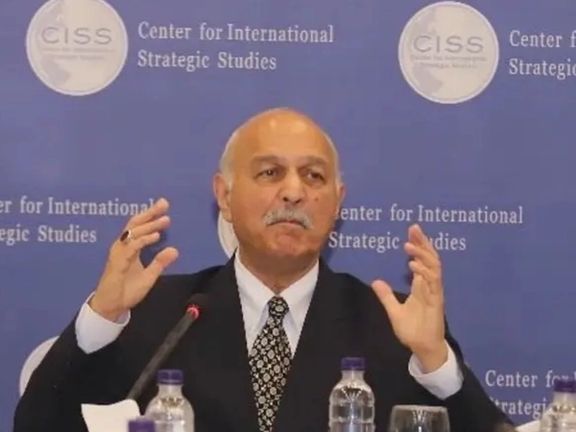
Former Pakistani Senator Mushahid Hussain Syed called on Islamabad to engage in high-level political and strategic dialogue with the Afghan Taliban.
Former Pakistani Senator Mushahid Hussain Syed called on Islamabad to engage in high-level political and strategic dialogue with the Afghan Taliban.
Pakistan's policy in Afghanistan has failed, he said.
In an interview with Aaj News on Sunday, Mushahid Hussain Sayed clarified, "We could not understand Afghanistan."
Referring to the country's claim that the TTP is using Afghan soil to carry out attacks in Pakistan, the former Pakistani senator said that the Afghan Taliban have rejected this claim and said that "evidence" should be provided.
He stressed that Pakistan does not have a clear strategy towards the TTP.

The Afghanistan Freedom Front claims to have killed two Taliban members and wounded another on Saturday afternoon in the Sarai Shamali area of Kabul.
The group stated that it targeted a vehicle carrying Taliban members in Kabul's 11th district.
Taliban officials have not yet commented on the incident.
Meanwhile, a local resident told Afghanistan International on Saturday that an explosion was heard in the Sarai Shamali area.
Kabul's Taliban-run municipality announced on Sunday, 22 September, that several roundabouts in the capital have been removed to improve traffic conditions.
This announcement came just hours after the destruction of a statue of Abdul Ali Mazari, the founder of the Islamic Unity Party of Afghanistan, in western Kabul.
While the municipality’s statement did not specifically mention Abdul Ali Mazari, it noted that, in accordance with established rules and regulations, a roundabout in the Dasht-e-Barchi area of Kabul was removed the previous night.
The municipality further stated that several other roundabouts in Kabul, including the Baraki, Traffic, and Karte Mamoreen roundabouts, have been removed and redesigned as intersections. The statement added that due to congestion and the high volume of vehicles in the Dasht-e-Barchi area, the roundabout there was also removed and will be rebuilt as an intersection.
The destruction of the Abdul Ali Mazari roundabout in western Kabul by the Taliban has sparked widespread reactions from political and cultural figures on social media. Some social media users have accused the Taliban of deliberately destroying symbols representing ethnic groups.
Dawood Naji, head of the political committee of the Freedom Front, stated that the Taliban are intent on dismantling the fabric of national unity and peaceful coexistence. He added that this act is reminiscent of "a criminal returning to the scene of the crime."
Abdul Ali Mazari, a prominent Mujahideen leader and the founder of the Islamic Unity Party of Afghanistan, was captured and killed by the Taliban in 1995. The previous Afghan government had given him the title "Martyr of National Unity."
Ahmad Zia Saraj, former head of Afghanistan's NDS, revealed that in early 2021, he warned his Pakistani counterpart that if the Taliban took power in Afghanistan, the relationship between Islamabad and the group would not last more than a year.
Commenting on the recent strains between the Taliban and Pakistan, Saraj remarked that several factors point to the deterioration of ties between the two sides.
Since the Taliban's takeover of Afghanistan in 2021, Pakistan has witnessed an unprecedented rise in insecurity, and its relations with the Taliban have become increasingly tense. Over the past three years, the Taliban have frequently clashed with Pakistani border forces. Pakistan accuses the Taliban of providing refuge to opposition groups, including Tehreek-e-Taliban Pakistan (TTP), and aiding their attacks on Pakistani interests.
In a recent claim, a former Pakistani envoy to Afghanistan alleged that the Taliban had requested financial assistance from Islamabad to manage the TTP.
General Faiz Hameed, the former ISI chief, was the first foreign official to visit Kabul after the Taliban’s return to power. His public appearance at the Serena Hotel in Kabul has been widely discussed in recent years. However, current Pakistani officials contend that Islamabad is now suffering the consequences of the errors made by former Prime Minister Imran Khan and former military officials, including Hameed.
Saraj, who was the last head of Afghanistan's NDS before the fall of the previous government, stated in a post on X (formerly Twitter): “In my final official meeting with ISI Chief General Faiz Hameed in early 2021 in Islamabad, I acknowledged that despite all of Pakistan’s investments in the Taliban, their friendship would not last more than a year once the Taliban took power.”
Saraj also highlighted the historical reasons for the collapse of Afghan governments, pointing to economic dependency, reliance on foreign aid, supply routes often used against Afghanistan, border disputes, territorial conflicts, and the clash of internal and external interests as factors that have repeatedly led to political breakdowns in the country.
He concluded by noting that international developments will continue to play a crucial role, predicting that “in the not-too-distant future, we will witness further failures and collapses.”
Asif Durrani, a former Pakistani envoy for Afghan affairs, has criticised the Taliban for allowing Tehreek-e-Taliban Pakistan (TTP) militants to operate in Afghanistan.
Durrani claimed that the TTP is receiving local support in Khost province, with its leaders residing in Kabul.
In a pointed statement to the Taliban, Durrani asked, "Do you want us to harbour your opponents in Pakistan so they can organise attacks against Afghanistan from here?"
In an interview with Radio Mashaal, Durrani urged the Taliban to take action against the Pakistani Taliban and hand them over to Islamabad. He emphasised that the TTP remains a serious point of contention in relations between Pakistan and the Taliban, calling for decisive action against the group.
Durrani, who was recently removed from his position as Pakistan's representative for Afghan affairs, said that TTP members are living freely in Afghanistan, moving with their weapons, and even collecting financial support. "TTP members are openly collecting funds on Fridays in Khost and other areas," he noted.
The Afghan Taliban, however, have repeatedly stated that the TTP issue is a domestic problem for Pakistan and unrelated to them. Durrani countered this claim, saying, "The TTP is operating out of Afghanistan, planning attacks against Pakistan." He also revealed that Afghan nationals have been found among TTP fighters, with some of their bodies recovered from battlefields.
Addressing the Taliban's previous request for evidence of the TTP’s presence in Afghanistan, Durrani remarked, "They didn’t ask for proof. Instead, they suggested we pay them to relocate the TTP elsewhere."
Durrani also rejected allegations of Pakistan's involvement in the collapse of previous Afghan governments, pointing out that Afghanistan's main problem is internal disunity. "Since the fall of the monarchy, Afghanistan has lacked a stable system. The root cause of their troubles is a lack of unity," he stated, adding, "We cannot bring unity to Afghanistan."
He also referenced a 70% increase in terrorist attacks in Pakistan since the Taliban regained power in Afghanistan, expressing his scepticism about their return to power. This stands in contrast to the celebratory response from many Pakistani officials when the Taliban took control of Afghanistan.
On the subject of recent border clashes between the Taliban and Pakistani forces, Durrani highlighted the difficulty in distinguishing Afghan Taliban members from TTP militants. He explained that some Afghan Taliban fighters are present at the border without uniforms, making it hard to identify them. In response to this challenge, he said the Taliban had been asked to ensure their fighters wear distinct uniforms to avoid confusion with TTP militants.
Sources have informed Afghanistan International that the Taliban, in a meeting with media executives, has ordered that political programs can no longer be broadcast live.
According to this new directive, political programs must be pre-recorded and aired only after receiving Taliban approval.
Insiders from Kabul confirmed to Afghanistan International that the Taliban has imposed strict new restrictions on the media. During a meeting on Saturday, September 21, the group instructed domestic media outlets to record their political programs, removing or censoring any content deemed "sensitive" or contrary to the group's policies before broadcasting.
During the meeting between Taliban officials and media representatives, it was announced that no media outlet is allowed to air content critical of the group's policies and laws.
Under the new Taliban directive, the topics for daily political discussions must be approved by the group, and domestic media are no longer permitted to hold political programs without prior Taliban approval.
The Taliban has provided a list of 68 "approved experts" to the media, specifying that only these individuals may be invited to political programs. The group has warned media outlets that no guests outside this list are allowed to be featured in their programs.
Afghanistan International has obtained a copy of this list, which includes several Taliban supporters. The list contains the names of two women, Maryam Ahmadi and Farah Mujahid, along with 66 men.
Prominent names on the list include Saeed Khosti, former spokesperson for the Taliban's Ministry of Interior, and Jafar Mahdavi, a Hazara political activist who supports the Taliban.
Other notable figures include Sayed Zikrullah Hashimi, Abdul Haq Hemad, Mohammad Naser Haqqani, Zalmai Afghanyar, Sayed Akbar Agha, Aziz Stanikzai, Salim Paigir, Zakir Jalali, Shafi Azam, Nazar Mohammad Mutmaeen, Abdul Wahed Taqat, Bilal Fatemi, Abdul Samad Samadi, and several others.
These individuals have supported Taliban policies in the media over the past three years.
The Taliban has warned media outlets that failure to comply with these directives will result in action being taken against the executive editors, broadcasting managers, program hosts, and head of political desks.