Two Dead, Hundreds Infected As Mystery Illness Grips Parwan

Sources in Parwan confirmed to Afghanistan International that hundreds of people in Shinwari district of the province have been infected with an "unknown disease".

Sources in Parwan confirmed to Afghanistan International that hundreds of people in Shinwari district of the province have been infected with an "unknown disease".
Hospital sources said on Wednesday that two weeks have passed since the outbreak of the mystery illness and two people have died so far due to it.
According to the details given to Afghanistan International by hospital sources, diarrhoea, fever, vomiting, and lethargy are among the symptoms of the disease.
Hekmat Shamim, the spokesman for the Taliban’s governor in Parwan, confirmed the outbreak of the disease and the death of two people.
The Taliban's Ministry of Public Health has not yet commented on the matter.
According to sources, about 500 residents of Dara-e-Kafshan in Shinwari district have been infected with the disease and the health condition of some of them is critical. Some of the patients have been transferred to Kabul's Antani Hospital.
Afghanistan's health system relies mainly on foreign aid, and with the return of the Taliban and the subsequent developments, it has suffered from a lack of financial and human resources.
The United Nations Children's Fund (UNICEF) in May expressed concern over the shortage of professional health workers in Afghanistan, saying the lack of health facilities in remote areas of Afghanistan has put many lives at risk.
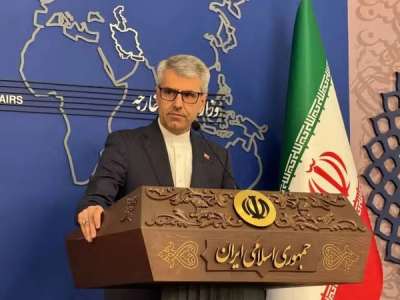
Taliban spokesman Zabihullah Mujahid confirmed that the group wants to participate in the BRICS meeting in Russia to discuss economic issues.
The Taliban has asked Russia to invite the group to the BRICS meeting, but Moscow has not responded to this request so far.
Russia's state-run RIA Novosti news agency reported last week that the Taliban had sent a letter to Russian President Vladimir Putin's aide Yuri Ushakov requesting him that they want to attend the BRICS leaders' meeting.
The letter stated that Abdul Ghani Baradar, the Taliban's deputy prime minister, is interested in attending the BRICS summit in Kazan.
The letter was sent by the Taliban's Minister of Industry and Trade Nooruddin Azizi. The BRICS summit is scheduled to be held from October 22 to 24 in the Russian city of Kazan.
Zabihullah Mujahid told the Taliban-controlled National Radio and Television on Wednesday, that powerful countries in the economic arena are members of the BRICS, and that is why Taliban representatives want to participate in the upcoming meeting. The move could provide more economic opportunities for Afghanistan, he said.
So far, no country has recognised the Taliban. Despite its diplomatic relations with the Taliban, Russia has not yet responded to the Taliban's request.
The main members of the BRICS group are Brazil, Russia, India, China, and South Africa. The group expanded with the membership of Egypt, Saudi Arabia, the United Arab Emirates, Iran and Ethiopia at the beginning of this year.
Russia has announced that the upcoming meeting will focus on developing cooperation in three key areas: political and security, economic and financial, and cultural.

Taliban leader Hibatullah Akhundzada said that he had received a report about the killing of prisoners in the group's prisons.
The Taliban's prime minister office on Tuesday released an audio file of Hibatullah's speech during a visit to Kunduz province.
According to the audio file, Mullah Hibatullah said that he had been told that prisoners had been killed in one of the prisons.
After learning about this, he called the prison official and asked whether the killings were carried out with or without a court order. The prison official replied that he was not aware of these events and that his colleagues killed the prisoners, as per the audio recording.
The Taliban leader said that the negligence of the prison official was unjustifiable, and he was permanently expelled from the ranks of the Taliban and retired. Akhundzada said that they will lose their system due to the negligence of Taliban officials.
Earlier, sources confirmed to Afghanistan International that over the past three years, 87 people have died as a result of torture in the Taliban's intelligence prisons. The sources said that the individuals were killed by methods such as electric shocks, suffocation, drowning and torture of sexual organs.
Most of these prisoners were former military personnel, members of the National Resistance Front, and anti-Taliban activists.
The United Nations Assistance Mission in Afghanistan (UNAMA) also published a report on the conditions of Taliban prisons last year. In a report on September 20 last year, UNAMA reported on widespread human rights violations in Taliban prisons, stressing that nearly 50% of these violations include torture and other treatment or "cruel, inhuman and degrading punishment”.
On September 10, the Taliban announced that Hibatullah Akhundzada had travelled to several northern provinces, including Kunduz.
In another part of his speech, Mullah Hibatullah addressed the difficulty in taking responsibility for the Taliban forces and said that their success is in danger.
He warned his forces that "many heroes have failed in this field”. He prayed that God would not fail or embarrass them.
The Taliban leader also referred to the mujahideen's war against the former Soviet Union, saying that the mujahideen had made many sacrifices, but the leaders had been sold.
Mullah Hibatullah also expressed concern over the increase in the number of Taliban members not praying. He said that he has received reports that lack of observing prayer among the Taliban and the public has increased.
He emphasised that the duty of the Islamic system is to educate people to pray. He also emphasised on the preservation and care of mosques.
Referring to the protests over the Law of Promotion of Virtue and the Prevention of Vice, the Taliban leader said that the Taliban will not fail to implement this law and will not give concessions to anyone.
He stressed that "the promotion of virtue is the main duty of the Islamic system," accusing the West of "promoting democracy and corruption and prostitution in Afghanistan for 20 years”.
The debate over the hijab and the implementation of religious rulings has become a sensitive issue, he said, adding that today, people, especially young people, are attracted to issues such as obscenity and watching television.
When a young Muslim woman's hijab is discussed, it is quickly criticised on social media, he said.
Mullah Hibatullah stressed that the Taliban is determined to fight vice and reform laws, and that "Sharia must be realised by any means, whether by force or forgiveness”.

During a meeting with the Taliban's Minister of Mines, the Iranian delegation announced the willingness of Iranian investors to extract iron, coal, and oil mines.
According to the Taliban, the Iranian delegation also committed to holding training courses on standard mining for engineers from the group's Ministry of Mines.
Mullah Hidayatullah Badri, the Taliban's Minister of Mines and Petroleum, met with Ahmad Mohseni, a representative of the Iranian government, and representatives of six mining companies on Tuesday, to discuss investment in Afghanistan's mineral resources.
According to the Taliban, representatives of Iranian companies are interested in investing in Afghanistan's iron, coal and oil mines.
Earlier, the Taliban's Ministry of Industry and Commerce announced the visit of a delegation from the Islamic Republic of Iran to Kabul and said that the delegation had proposed investment for "the establishment of a special economic and mineral zone between Iran and Afghanistan" and the extraction of Afghanistan's iron mines.

An investigative report by Afghanistan International Pashto reveals that around 50 high-ranking Taliban officials have purchased or "seized" luxury homes worth millions of dollars in the affluent Aino Maina neighbourhood of Kandahar.
Sources have confirmed to Afghanistan International that the value of these homes range from $90,000 to $1 million.
Some Taliban officials have reportedly begun constructing modern homes in Aino Maina, with costs estimated to reach as high as $8 million.
Afghanistan International conducted interviews with at least 50 sources, including four real estate agents in Kandahar, for this report.
Aino Maina, a posh neighbourhood in Kandahar, was previously home to government officials, businessmen, and some "smugglers" during the previous regime. Since the Taliban's rise to power, it has become a favoured and secure location for Taliban officials, with many of these homes now serving as residences and investment properties for the group's leaders.
Many of these properties are opulent palaces and luxurious guesthouses.
Sources indicate that approximately 90% of high-ranking Kandahari Taliban officials have either purchased or seized homes in Aino Maina. Some Taliban officials from other provinces have also bought homes or started constructing new ones in the area.
According to Afghanistan International's investigation, several Taliban officials who have acquired these expensive homes in Aino Maina did not possess such wealth or assets when the group first came to power.
Sources estimate the total value of the homes owned by Taliban members in Aino Maina to exceed $13 million.
The Taliban are reportedly keen to buy or build homes in Aino Maina due to its safety and ease of control.
Here are details on some of the Taliban officials who have acquired new homes and palaces in Aino Maina:
Mullah Hibatullah Akhundzada, Taliban Leader
Sources report that Mullah Hibatullah Akhundzada, the reclusive leader of the Taliban, has seized the guest house of General Abdul Raziq, the former police commander of Kandahar, located in the western part of Aino Maina.
The source added that Akhundzada frequently resides in this luxurious guesthouse and meets Taliban ministers there. In addition to the guest house, the Taliban leader has also seized General Raziq's home.
It is also reported that Mullah Hibatullah has taken over the house of Tadin Khan, General Raziq's brother, located opposite the guesthouse, and turned it into his residence.
The total cost of the guesthouse and two homes is estimated to be around $1.5 million.
To secure Akhundzada's guesthouse, the Taliban have blocked four roads in the neighbourhood, preventing any free movement in the area.
Fathullah Mansoor, Son of Former Taliban Leader Akhtar Mohammad Mansoor
Fathullah Mansoor, the son of the former Taliban leader and current Deputy Minister of Transportation and Civil Aviation, has reportedly purchased a home in Aino Maina's western parts for $350,000.
Before his current position, Mansoor was in charge of Kandahar airport, which was previously one of the largest US military bases after the Bagram airfield in Afghanistan.
Mansoor has been repeatedly accused of selling US-supplied equipment and vehicles in the "black market”.
Abdul Manan Omari, Brother of Taliban founder
Abdul Manan Omari, the brother of Taliban founder Mullah Mohammad Omar and the current Minister of Labour and Social Affairs, has purchased a $400,000 home in Aino Maina for his second wife.
Two credible sources told Afghanistan International that during Omari's tenure as Minister of Public Works, he withheld six months' worth of revenue from the Aqina port, approximately $1 million, from the government's treasury.
Mullah Abdul Ghani Baradar, Taliban's Deputy
Prime Minister for Economic Affairs
Sources revealed that Mullah Baradar, the Deputy Prime Minister for Economic Affairs, owns several homes in Aino Maina's 31st to 33rd streets. These properties house his sons, family members, and relatives, with values ranging from $100,000 to $600,000.
Hidayatullah Badri, Minister of Mines and Petroleum
Hidayatullah Badri, the current Minister of Mines and Petroleum and former Minister of Finance and head of the Taliban-controlled central bank, has built a home and guesthouse in Aino Maina worth $600,000.
Sources claim Badri is the wealthiest Taliban official, with his primary source of income being the drug trade.
Mullah Abdul Haq, Deputy Minister for Counter-Narcotics
Mullah Abdul Haq, the Deputy Minister for Counter-Narcotics at the Ministry of Interior, has purchased a $285,000 home in Aino Maina, where his family currently resides.
Abdul Ahad Talib, Commander of Mullah Hibatullah's Special Forces
Abdul Ahad Talib, the commander of Mullah Hibatullah's special forces, has seized the home of a former National Security employee, as well as another house in Aino Maina.
The total value of both homes is estimated at over $300,000.
Yusouf Wafa, Taliban Governor of Balkh
Yusouf Wafa, the former Taliban governor of Kandahar and current governor of Balkh province, has purchased a large hotel and two adjacent houses in Aino Maina's second district, each valued at $400,000.
Two roads leading to Wafa's home have been blocked, restricting access. His brother has also purchased a home in Aino Maina where his family resides.
These are just a few examples of the Taliban officials who have purchased or seized homes in Aino Maina. The total value of properties owned by these individuals is estimated at over $4.2 million.
In addition to these properties, Taliban officials are building new homes, schools, and guest houses in the second and third districts of Aino Maina and in the Bagh area, although exact costs are not yet available.
When the Taliban first regained control of Afghanistan, they seized many homes in this neighbourhood that belonged to officials of the previous government, including military commanders, provincial council members, and security personnel. Many of these homes remain under Taliban control today.
One former Afghan security commander, whose home was seized by the Taliban and returned after two years, told Afghanistan International, "Some former commanders' homes are still occupied by the Taliban. When they gave me back my home, nothing was left intact, and many belongings were taken."
Security in Aino Maina
The Taliban have made significant efforts to prevent photography and video recording in Aino Maina.
Taliban’s security forces have set up checkpoints throughout the area, and during visits by Mullah Hibatullah Akhundzada or Taliban ministers, mobile phone networks are often disabled, and movement is restricted.
AFCO Construction Company
AFCO Construction Company is responsible for building, buying, selling, and managing homes, shops, and apartments in Aino Maina.
The company's operations are led by Mahmood Karzai, the brother of former Afghan President Hamid Karzai.
A source told Afghanistan International that the Taliban have largely taken control of property transactions from AFCO, with Taliban members no longer registering many of their homes with the company.
Currently, the company only handles cleaning, electrical services, and related maintenance tasks.
Aino Maina's construction began in 2002, initiated by Mahmood Karzai, and it now comprises five sections. The area offers comprehensive amenities, including educational and healthcare facilities, playgrounds, parks, and guesthouses.

Tajik media reported that the country has exported more than $82.3 million worth of electricity to Afghanistan and Uzbekistan over the past eight months.
According to reports, electricity exports to Afghanistan consist of 80% of this number.
According to Tajik media, the country's electricity exports to neighbouring countries decreased by $2.8 million in 2024 compared to the same time last year.
Tajikistan produced about 15.4 billion kilowatt hours of electricity in the first eight months of 2024, of which it exported 6.5%.
The country has signed an electricity export agreement for 2024 with Afghanistan and Uzbekistan. Electricity exports to Uzbekistan are carried out only in the summer, but continue to Afghanistan in the autumn and winter seasons.
The contract for the transmission of electricity to Afghanistan was signed in January 2023 between the Taliban-controlled Breshna Electric Company and the head of the Tajikistan Electricity Company in Türkiye.
Afghanistan imports about 75 percent of its electricity needs from neighbouring countries, especially Central Asia.
