Taliban Publicly Flogs Woman, Three Men In Nangarhar
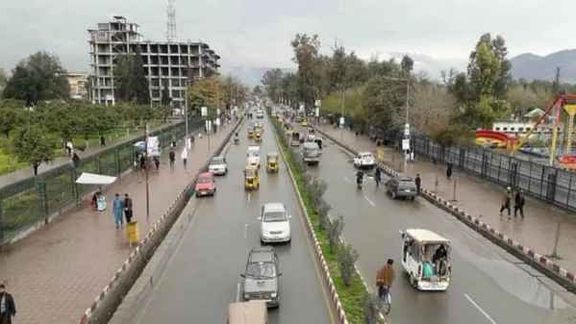
The Taliban's Supreme Court announced that it had sentenced four people, including a woman, to 39 lashes in public in the Kuz Kunar district of Nangarhar province.
The Taliban's Supreme Court announced that it had sentenced four people, including a woman, to 39 lashes in public in the Kuz Kunar district of Nangarhar province.
The court said in a statement that the men had been convicted of running away from home and having extra-marital relations.
According to a statement issued by the Taliban's Supreme Court, the flogging sentence of a woman and three men was carried out on Monday, October 28, in the presence of the group's officials and residents of Kuz Kunar district.
On Monday, the Taliban also punished four other people, including a woman, with 39 lashes in public in Sayed Khel district of Parwan province.
In the past two weeks, the group has publicly flogged about 25 men and women on various charges in Khost, Kabul, Takhar, Parwan, Faryab and Nangarhar provinces.
After taking control of Afghanistan, the Taliban announced the abolition of all laws in force in the country, and the group's courts tried the defendants based on what they call "Islamic law”.

The Committee to Protect Journalists (CPJ) announced that the Taliban's ban on the broadcast of images of living beings in the media is a matter of concern.
An official of the New York-based committee called on the international community to end "passively watching Afghanistan's rapid retreat”.
"The Taliban's recent ban on television, filming and photography in Takhar should worry anyone who cares about media freedom around the world," said Carlos Martínez de la Serna, programme director of the Committee to Protect Journalists.
Recently, the Taliban's Ministry of Promotion of Virtue and Prevention of Vice announced that the group is implementing a law prohibiting the broadcast of images of living beings in the media, calling it "un-Islamic".
Earlier, Saiful Islam Khyber, a spokesman for the Taliban's Ministry of Promotion of Virtue and Prevention of Vice, confirmed to the Associated Press that the media group in Takhar, Maidan Wardak and Kandahar had advised them to refrain from broadcasting images of living creatures.
Khyber said that the directive is a part of the group's recently signed law on the promotion of virtue, the Associated Press reported.
Earlier, Afghanistan International had reported that Yousuf Ahmadi, the head of the Taliban-controlled National Television, said during a meeting with the directors of the channel that the group intends to stop the broadcast of the channel.
Previously, the Taliban had stopped broadcasting on national television in Kandahar and Takhar.
Earlier, the spokesman for the Taliban's Ministry of Promotion of Virtue and Prevention of Vice announced that the group would gradually implement this law on all media outlets. Saif Khyber told AFP that the ban had initially started in some provinces and would gradually be implemented across Afghanistan.
Since the Taliban's return to power in August 2021, the group has made extensive efforts to suppress and censor Afghan media.
The Taliban's restrictions on the media have included banning music and TV series, imposing masks on female presenters, banning live broadcasts of political programmes, shutting down some media outlets, and jamming the broadcasts of the Afghanistan International Network.
Former Afghan President Hamid Karzai expressed his support for the recent stance of BRICS on Afghanistan, during a meeting with the Russian ambassador in Kabul on Monday.
Karzai praised the BRICS declaration, which highlighted the restoration of fundamental rights for all Afghans, describing it as "commendable”.
In the concluding statement of their 16th summit, released on Wednesday (October 23) BRICS leaders underscored the importance of protecting the basic rights of Afghan citizens, specifically the rights of women, girls, and various ethnic groups.
The statement also urged the Taliban to reopen schools and universities for girls, calling for an immediate and peaceful resolution to Afghanistan’s challenges.
On Monday, Karzai met with Dmitry Zhirnov, the Russian ambassador to Kabul. Following the meeting, Karzai's office released a statement in which the former president welcomed the Russian Federation's position on Afghanistan as presented within the framework of both the "Moscow Format" and BRICS summits.
Karzai stated, "The BRICS declaration, which supports an independent, unified, and peaceful Afghanistan and stresses on the restoration of fundamental Afghan rights, is worthy of appreciation."
The former president further emphasised that “achieving enduring peace and stability in Afghanistan requires a national consensus”.
The 16th BRICS summit, which saw attendance from representatives of 36 countries and six international organisations, took place on Tuesday (October 22) in Kazan, Republic of Tatarstan, Russian Federation.
Richard Bennett, the United Nations (UN) Special Rapporteur on Human Rights, in his new report said that some "credible sources" testified about sexual harassment and rape of women inside Taliban prisons.
Bennett added that he was deeply concerned by the numerous reports of sexual violence against women inside the Taliban's prison.
The United Nations on Monday released a detailed report by Bennett, which he will present to the UN General Assembly on November 2.
The report mentions instances of sexual violence committed against women during the Taliban crackdown in January 2024 on women wearing “inappropriate” or “incorrect” hijabs.
Survivors described being taken to police stations where they were beaten and verbally abused and, in some cases, sexually assaulted.
One of the victims told the UN Special Rapporteur, "During interrogation, I was beaten, my head was banged against the wall… One of them tore my hijab and touched my private parts of my body."
Regarding the assault and rape of detained women, the report said, "Information from reliable sources indicates that women have been raped or sexually harassed during this crackdown."
The report noted the negative impact of prison on women activists. A number of women prisoners told the Special Rapporteur that although they had not experienced sexual violence in prison, they had been ostracised by society and their families.
The Special Rapporteur expressed concern over the high rate of violence against women and girls in Afghanistan, adding that gender-based violence in Afghanistan has worsened under the Taliban's rule due to repressive laws.
The report said that the Taliban's laws and policies have deprived women of their basic rights.
"While women and girls have been most affected by these repressive policies, all Afghans, regardless of gender, have been deprived of their rights, and this will cause devastating and lasting damage," the report said.
In his report, Bennett said that the Taliban's Law on the Promotion of Virtue and Prevention of Vice "further institutionalised harassment of women and girls”.
The Special Rapporteur has reported an increase in cases of depression, anxiety, isolation and even suicide among women, and warned that "the institutionalisation of gender oppression by the Taliban and the dehumanisation of women and girls is likely to create a dangerous ideology in the next generations in Afghanistan, especially among young boys and men”.
Bennett also stressed that "the Taliban's system of gender oppression can amount to crimes against humanity, including gender abuse”.
He described the current situation in Afghanistan as a clear example of gender apartheid.
The UN Special Rapporteur on Human Rights further referred to the Taliban's claim to represent the entire Afghan people, "The Taliban regime is neither inclusive nor representative of Afghan society."
The Special Rapporteur added that the Taliban, especially at the highest levels of leadership, are mainly Sunni Pashtun men. According to the report, the Taliban claims unity in the country, but has discriminated, excluded, and rejected ethnic, religious, and linguistic groups outside the Taliban.
The Taliban's Supreme Court announced that it had sentenced four people, including a woman, to 39 lashes in public in Sayed Khel district of Parwan province.
The court said in a statement on Monday that the men were convicted of running away from home and having same-sex relations.
A statement from the Taliban's Supreme Court said that a woman and a man were sentenced to 39 lashes for running away from home and two other men for same-sex relations.
According to the court's statement, two of the defendants were sentenced to six months in prison and the other two were sentenced to one year in prison.
Also on Sunday, the Taliban flogged a man in Faryab province for allegedly having extra-marital affairs.
Despite the objections of international human rights organisations, the Taliban continues to punish and torture defendants in public.
A group of retirees gathered in front of the UNAMA office in Kabul on Monday, October 28, to protest against the Taliban's non-payment of their salaries since the last three years.
The Taliban leader has dissolved the pension system in Afghanistan and cut the salaries of retirees.
A number of retired officers who gathered in front of the United Nations Assistance Mission in Afghanistan (UNAMA) office in Kabul on Monday, October 28, said that after several protests, they were forced to protest in front of the UN office to solve their problems.
In a video obtained by Afghanistan International, a number of these protesters can be seen gathering and talking.
In the past three years, retired employees of the former government have repeatedly protested against the non-payment of their pensions.
Recently, some of them also blocked the street leading to the Taliban's Ministry of Finance in Kabul.
Retired employees said that they have not received their pensions since the Taliban took control of Afghanistan in August 2021.
Taliban leader Hibatullah Akhundzada has dissolved the pension system in Afghanistan and cut the salaries of retirees.