Taliban Inaugurates “Shah wa Arous” Dam Completed Under the Previous Government

Taliban officials have inaugurated the “Shah wa Arous” dam in the Shakardara district of Kabul.

Taliban officials have inaugurated the “Shah wa Arous” dam in the Shakardara district of Kabul.
This dam’s construction was finalised during the tenure of the previous government, with water storage operations commencing prior to the Taliban’s takeover in 2021. The project was completed at a cost of $52 million, funded by the national budget of the former Afghan administration.
According to the Taliban’s Ministry of Water and Energy, the dam stands 77 metres tall and has an annual capacity to regulate 30 million cubic metres of water. The “Shah wa Arous” dam is expected to irrigate between 2,700 and 3,500 hectares of agricultural land while also supplying 5 million cubic metres of drinking water.
The dam is equipped with the capacity to generate 1.2 megawatts of electricity. Construction initially began in 2012 but experienced significant delays due to a variety of challenges.
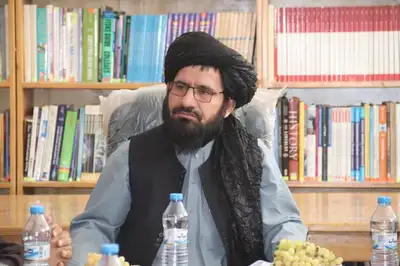
During the inauguration ceremony, Abdul Kabir, the Taliban’s Deputy Prime Minister for Political Affairs, hailed the dam’s completion as a testament to the group’s commitment to Afghanistan’s development.
Mullah Baradar, Deputy Prime Minister for Economic Affairs, underscored water management and energy development as key priorities for the Taliban administration. Furthermore, Abdul Salam Hanafi, the Deputy Prime Minister for Administrative Affairs, praised the project’s completion as a meaningful advancement in Afghanistan’s efforts to manage its water resources.

The United Nations Children's Fund (UNICEF) announced that it has provided 475,000 children in Afghanistan with therapeutic food rich in protein, vitamins and minerals this year with the aim of combating malnutrition.
UNICEF said that the therapeutic food was provided through 3,300 service centres.
"Prepared therapeutic food, which is rich in protein, fat, vitamins and minerals, is a powerful solution in the fight against severe acute malnutrition," UNICEF wrote in a note on social media platform X on Monday, January 30.
According to a recent report by the United Nations Children's Fund (UNICEF), 343,000 children with acute malnutrition have been admitted to Afghan hospitals for treatment this year.
Earlier, the World Health Organisation (WHO) had announced that food insecurity has become a growing crisis in Afghanistan, and that 2.9 million children under the age of five are currently facing malnutrition.
International organisations said that due to the spread of poverty and hunger, an increasing number of Afghan children are at risk of malnutrition.

Issa Bozorgzadeh, the spokesman for the Islamic Republic's water industry, said that Afghanistan's "unilateral" exploitation of the Harirud River is a violation of Iran's customary rights.
Bozorgzadeh said that the construction of the Pashdan Dam will affect the supply of drinking water to several million people.
Bozorgzadeh said that the construction and impoundment of Pashdan dam in the Harirud border basin causes the reduction of the natural flow of the Harirud border river and the occurrence of social and environmental damages in the downstream areas, especially the problem of serious damage to the drinking water supply of the holy city of Mashhad.
"The residents of the Harirud basin in Iran and Afghanistan have benefited from the natural flow of this transboundary river over the years, and customary and historical rights have been created for both sides," said Bozorgzadeh.
Bozorgzadeh said that the Islamic Republic of Iran has repeatedly expressed its official objection through diplomatic channels to the negative cross-border effects of the unilateral dam construction measures by the Afghan side in the Harirud basin and has called for joint cooperation to assess and mitigate these effects and choose sustainable development instead of destructive development.
Tehran expects the Taliban "to put on its agenda the necessary cooperation and measures regarding the rational and fair use of the water of the Harirud border river upstream in a way that does not harm the historical and customary rights of the downstream areas", the official said.
He said that the Ministry of Energy, along with the Iranian Foreign Ministry, calls for immediate negotiations in this regard and declares its readiness to cooperate with the Taliban in finding joint and acceptable solutions to reduce the cross-border effects of the Pashdan and Salma dams.
The Pashdan Dam is located in Karkh district, 25 kilometres from the city of Herat province, and its construction began in 2011 and was supposed to be completed in three years.
The Taliban's Ministry of Water and Energy recently announced that 80% of the construction work of the Pashdan Dam in Herat has been completed and the dam will be put into operation soon.
According to the ministry, with the completion of this dam, it has the capacity to store 54 million cubic metres of water and produce two megawatts of electricity.

Friedrich Merz, leader of the Christian Democratic Union of Germany (CDU) and candidate for German chancellor, called for fundamental changes in Germany's immigration and asylum policies.
He stressed that the deportation of Syrian and Afghan criminals should be a priority, even despite the instability in these countries.
In an interview with the German news agency, Merz said, "We know that Syria and Afghanistan are still very unstable. However, we, in the party, have long believed that deportation to Afghanistan and Syria is possible and necessary, in principle. We will do it."
Emphasising on the need for reforms in Germany's immigration and asylum policies, Merz promised to make significant changes in this area if he wins the elections.
Regarding Syrian refugees, he said bluntly, "I don't want to see members of the Assad militia who have committed heinous crimes in Syria in Germany. These people are collaborators of the Assad regime who may now face trial in Syria, but instead prefer to flee. The clear message should be: We will take you back from our borders immediately."
According to the German Interior Ministry, there are currently about 975,000 Syrians living in the country. Most of them arrived in Germany after the outbreak of the Syrian civil war in 2015. Of those, more than 300,000 have received "subsidiary protection" status, due to the country's civil war.
Merz is in favour of labour migration and opposes the asylum policy. He stressed on the need to distinguish between asylum and labour migration, saying, "Germany has already helped and sheltered many asylum seekers, but the number of asylum seekers living in Germany is now very high and the capacity of cities and communities to accept them has run out. This process can no longer continue."
The German politician has suggested that work immigration and asylum should be examined from the beginning in two separate processes. "Someone who wants to enter Germany or Europe for asylum reasons has to use a different method than someone who wants to work in Germany," he said.
To address labour migration, his party has proposed the creation of a digital agency called Work and Residency.

Abolfazl Zohrevand, a member of Iran's parliament, criticised the supporters of a "full relationship with the Taliban", saying that the group acts as a threat to Iran.
The Taliban is plagued by internal divisions, he added, and that the group's officials in Kabul have "little commitment to agreements".
Abolfazl Zohrevand, a member of the Security and Foreign Policy Committee of the Islamic Consultative Assembly of Iran, said, "Water is a special strategic component in Iran's relations with Afghanistan". He emphasised that the Taliban has continued to build dams with the help of some countries to pressure Iran.
The member of the Islamic Consultative Assembly acknowledged that Iran's milestone in drawing the main components in relations with any country should be strategic components. He noted that Iran has not considered the issue of water as the main strategic component in its relations with the Taliban.
Turkey, Azerbaijan and Qatar are Iran's "contentious" rivals and have helped the Taliban put pressure on Iran on the issue of water management and dam construction in Afghanistan, Abolfazl Zohrevand said. Regarding the need for new agreements on water with the Taliban, the Iranian official said, "The Taliban has not yet been recognised by the international community, and they do not have a proper identity and do not have commitment and adherence to the agreements due to internal differences."
The member of the Islamic Parliament of Iran emphasised that Afghan refugees in Iran can be carefully and consciously examined as an important component in relations with the Taliban. He did not elaborate on how the review would take place, but he is believed to have suggested that the Islamic Republic use Afghan refugees as leverage on the Taliban.
The Iranian parliamentarian called the Taliban a threat to Iran, while the Islamic Republic has always tried to maintain relations with the group during the Taliban's more than three years of control over Afghanistan. The Islamic Republic has handed over Afghanistan's embassies and consulates to Taliban representatives and has had close relations with some Taliban officials during this period.

French MP Maud Petit strongly criticised the Taliban's restrictions on Afghan women.
In a post on social media platform X on Monday, December 30, Petit called these restrictions "the elimination of women" and said, "How is this possible in the world of the 21st century?"
The French parliamentarian's remarks are in response to the new decree attributed to Taliban leader Hibatullah Akhundzada. He issued the decree on Saturday, December 28, regarding windows through which neighbouring women can be seen.
According to the decree, it is forbidden to make windows through which women can be seen in a neighbour's kitchen or yard.
The decree states that "because women are usually cooking in the kitchen, or there is a well of water there, or women sit there because of custom and habit," they should not be seen from a window facing the neighbour's house.
Afghan women protesters have called the Taliban's decree a clear example of the continued "oppression and humiliation of Afghan women".