Taliban Publicly Flogged Nearly 590 Individuals in 2024
Statistics from the Taliban’s Supreme Court and statements from officials across Afghanistan indicate that the group publicly flogged 583 people and executed six individuals during 2024.
The Taliban have repurposed Afghanistan’s sports stadiums—once venues for cricket, football, and cultural events—into spaces for public punishments. Nearly every day, men and women accused of various crimes face public floggings or beatings before onlookers in different provinces. Many of these punishments are carried out collectively.
One victim, Zarghona Zendagi, a resident of Behsud District in Nangarhar, shared her harrowing experience of being publicly flogged about 18 months ago for an alleged “illicit relationship,” an accusation she vehemently denies. The emotional scars of the event continue to affect her profoundly.
Zarghona stated: “What hurts the most is being arrested, flogged, and humiliated in front of my family and community without any crime or wrongdoing.”
She described how her ordeal began: “My mother was seriously ill and hospitalised. With no male family member to help, I had to manage everything myself. A hospital staff member assisted me in caring for her, and that’s how we became acquainted.”
She recounted being arrested by the Taliban after running into the same hospital staff member in the city, where he inquired about her mother’s health. Accused of an “illicit relationship,” she faced a swift trial, resulting in public flogging and a forced marriage to the man with whom she had only exchanged greetings. Zarghona revealed that this forced marriage brought no solace; instead, she continues to endure disdain and humiliation from her husband’s family and her community.
Zarghona is among many Afghans who have faced such punishments, which are widely condemned as torture under international conventions. Over three years into the Taliban’s rule, public floggings and executions remain a near-daily occurrence across Afghanistan.
A Year of Brutal Punishments
According to data from the Taliban’s Supreme Court and media reports, 583 individuals were publicly flogged and six were executed in 2024 alone. A voice recording attributed to Taliban leader Hibatullah Akhundzada, released on 24 March 2024, ordered the enforcement of public punishments to uphold Sharia law.
In the first half of 2024, the Taliban publicly flogged approximately 250 individuals. The first recorded punishment occurred on 22 December 2022 at the central football stadium in Tirin Kot, Uruzgan, where 22 people, including two women, were whipped for various alleged crimes.
Reports from the United Nations and the Taliban governor’s media office in Sar-e-Pul show that 39 individuals were flogged in January and February 2024. A further 210 were flogged between March and June. The remaining 334 floggings took place in the latter half of the year.
Taliban court documents reveal that in July 2024, 44 people were publicly flogged. Between August and October, 161 individuals faced similar punishments, followed by 81 in November and 46 in December. The charges ranged from extramarital relationships, theft, and fraud to “immorality” and running away from home.
Floggings occurred across multiple provinces:
January and February 2024: One person in Paktika, four in Helmand, 11 in Maidan Wardak, eight in Herat, four in Laghman, two in Sar-e-Pul, and 13 in Bamiyan.
June 2024: A total of 147 individuals were flogged, including 63 (14 women) in Sar-e-Pul’s central stadium for charges of immorality, theft, and illicit relationships.
July 2024: Floggings continued in provinces such as Ghazni, Bamiyan, Kandahar, Paktika, Uruzgan, Badghis, Panjshir, Parwan, and Kunar.
August–October 2024: 161 individuals were publicly punished in various regions, including 42 in Khost, 19 in Kabul, and others in Faryab, Takhar, and Herat.
November–December 2024: Public floggings continued in provinces like Paktia, Khost, Balkh, Samangan, and Kabul.
Taliban Justifications and Global Condemnation
The Taliban assert that public punishments are mandated by Sharia law and serve as a deterrent to prevent crime. Taliban leader Hibatullah Akhundzada has ordered their implementation as part of the group’s governance strategy.
However, human rights organisations and the international community widely condemn these actions as gross violations of human rights. The United Nations, Amnesty International, and other groups have repeatedly called on the Taliban to cease public punishments and respect human rights principles.
On 21 May 2024, Richard Bennett, the UN Special Rapporteur for Afghanistan, condemned the Taliban’s use of corporal punishment, urging its immediate cessation.
Nazifa Jalali, a member of the Committee for Documenting Human Rights Violations, criticised the silence of international organisations and Islamic countries over the Taliban’s abuses. She accused these nations of prioritising their political and economic interests, citing China’s silence as an example of trade-driven indifference.
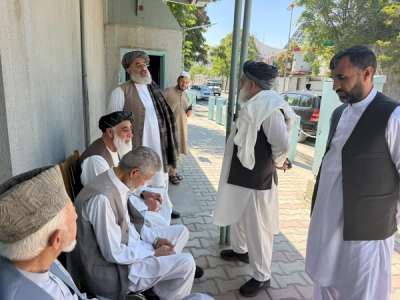
Anwar Zeb Khan, a representative of Bajaur in the Khyber Pakhtunkhwa Provincial Assembly of Pakistan, has revealed that hundreds of insurgents from Afghanistan have entered the Bajaur region and seized control of five checkpoints.
According to Khan, the insurgents have raised the flag of the Afghan Taliban in the area.
The Pakistani newspaper Dawn reported on Wednesday, 1 January, that Khan made these remarks during a session in which the provincial assembly summoned the Khyber Pakhtunkhwa police commander.
Khan, a member of the Pakistan Tehreek-e-Insaf (PTI) party, stated: “The terrorists entered the [Bajaur] region in broad daylight last Sunday, seized the checkpoints, and raised the Islamic Emirate of Afghanistan flags while chanting slogans in its favour.”
He further noted that approximately 400 insurgents captured checkpoints located in the “Mulla Saeed Banda” area, which lies far from the Afghan border.
Criticising the effectiveness of the fenced border between Pakistan and Afghanistan, Khan remarked: “I am simply astonished at how such a large number of terrorists managed to cross the fenced border.”
The Pakistani politician disclosed that the insurgents have fortified their positions by digging new trenches and building strongholds in the region. He added that the Pakistan Army has asked residents of the Mulla Saeed Banda area to evacuate, allowing for a clearance operation to be conducted.
In recent weeks, insurgent attacks have escalated in various parts of Khyber Pakhtunkhwa province. The Pakistani military has consistently alleged that insurgents carry out these attacks from Afghan territory. However, the Taliban have rejected these accusations, asserting that Pakistan is shifting the blame for its security failures onto others.
The International Committee of the Red Cross (ICRC) has revealed that 455 civilians were killed or injured in 234 explosion-related incidents across Afghanistan in 2024.
Alarmingly, 359 of the victims were children, according to the organisation.
In a statement released on Tuesday, the ICRC highlighted its collaboration with the Afghan Red Crescent Society in delivering awareness programmes to over 240,000 individuals this year, more than half of whom were children.
The organisation underscored the dire humanitarian situation in Afghanistan, describing 2024 as a year fraught with significant crises. It cited economic hardships, natural disasters, and the lingering impacts of armed conflict as the primary challenges facing the nation.
The ICRC voiced particular concern for vulnerable groups, including women, children, and individuals with disabilities, emphasising the urgent need for sustained international attention and long-term support to address these issues.
Access to clean drinking water was also identified as a critical challenge. The ICRC reported that it had rehabilitated 1,247 water pumps in nine provinces throughout 2024, aiming to improve access to this essential resource.
The report further revealed that floods impacted more than 119 people across 32 provinces, resulting in the destruction of 6,800 homes.
The ICRC called for continued efforts to deliver vital assistance to those most in need, urging the international community to remain focused on Afghanistan’s humanitarian plight.
The National Resistance Front (NRF) announced on Tuesday that it had targeted the convoy of Abdul Latif Mansour, the Taliban’s Minister of Energy and Water, in the Khair Khana area of northern Kabul.
According to an NRF statement, the attack resulted in the death of one of the minister’s guards and injuries to two others.
The NRF reported that the incident occurred at approximately 3:30 PM local time near the northern entrance to Kabul, in the Khair Khana area within Police District 17.
The Taliban have yet to issue a statement regarding the incident.
The NRF stressed that no civilians or members of their forces were harmed during the operation.
Several senior Taliban officials, including the Minister of Energy and Water, were reportedly in the area on Tuesday to inaugurate the “Shah wa Arous” dam in the Shakardara district of Kabul.
The United Nations High Commissioner for Human Rights, Volker Türk, has condemned the Taliban’s recent directive threatening to revoke the licences of non-governmental organisations (NGOs) that employ women.
Türk described the move as a profound error and called on the Taliban to reverse all policies targeting Afghan women with discrimination.
In a statement issued on Tuesday, Türk voiced deep concern over the Taliban’s Ministry of Economy warning NGOs to cease hiring women, labelling the directive as “entirely wrong.” He urged the Taliban to adopt a different path to ensure Afghanistan’s future prosperity.
Highlighting the dire situation in Afghanistan, Türk noted that more than half the population now lives in poverty. He underlined the vital role played by NGOs in providing life-saving aid to Afghan women, men, and children, warning that the Taliban’s decree would jeopardise access to humanitarian assistance across the country.
Türk called on the Taliban to revoke this “deeply discriminatory decree” and other measures that deny women and girls their fundamental rights, including access to education, employment, healthcare, and freedom of movement.
He further stressed that no nation could achieve sustainable political, economic, or social development while marginalising half its population. Türk urged the Taliban to reconsider their policies for the sake of Afghanistan’s stability and progress.
The directive follows a letter issued by the Taliban’s Ministry of Labour last week, instructing NGOs to comply with a two-year-old decree banning women from employment. Organisations failing to adhere to the ban risk losing their operating licences.
Emomali Rahmon, the President of Tajikistan, met with General Asim Munir, the Director-General of Pakistan’s Inter-Services Intelligence (ISI), in Dushanbe.
The Tajik Presidential Office announced on Monday that their discussions centred on “ensuring peace, stability, and regional security.”
In the statement, President Rahmon expressed satisfaction with the bilateral relations between the two countries, highlighting that, alongside security cooperation, ongoing engagement between Tajik and Pakistani officials is mutually beneficial.
The two leaders emphasised the importance of strengthening collaboration in combating terrorism, extremism, and drug trafficking.
This meeting comes amidst escalating tensions between Pakistan and the Taliban in Afghanistan. In recent days, armed clashes along the shared border have resulted in casualties on both sides.
Tajikistan serves as a host to leaders of the Afghan National Resistance Front and remains one of the few regional countries without formal diplomatic ties with the Taliban. Over the past three years since the Taliban’s return to power, Tajikistan has consistently raised concerns about the presence of terrorist groups in Afghanistan and has been a staunch supporter of the National Resistance Front against the Taliban.
It is not yet clear whether the ISI chief met with the leaders of the National Resistance Front during his visit. Previously, some Pakistani diplomats had warned that if the Taliban failed to curb attacks by the Tehrik-i-Taliban Pakistan (TTP), Pakistan might consider forging ties with groups opposed to the Taliban.
General Asim Munir was recently appointed as the head of Pakistan’s ISI.