Pakistan To Award 4,500 Scholarships To Afghan Students
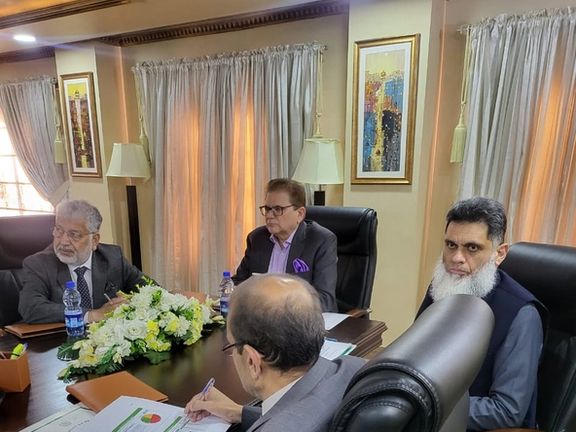
Mohammad Sadiq, Pakistan's special representative for Afghanistan, announced that the second phase of the Allama Iqbal Scholarships programme for Afghan students has begun.

Mohammad Sadiq, Pakistan's special representative for Afghanistan, announced that the second phase of the Allama Iqbal Scholarships programme for Afghan students has begun.
On Friday, January 10, he said that 4,500 full scholarships will be awarded to Afghan students in the fields of medicine, engineering, agriculture and other fields.
The programme will offer 4,500 full scholarships at the undergraduate, masters, and doctoral levels over the next three years.
The special representative of Pakistan added that 33% of these scholarships will be allocated to female students.
The Pakistani official wrote in a note on his account on social media platform X that the programme is the largest and most popular foreign scholarship for Afghan students.
Mohammad Sadiq emphasised that the registration and exam process for this scholarship is online and will be completed within 45 days.
This month, he said, more than 22,000 applicants will take an online exam, followed by interviews for final selection. He said that the entire process would be completed within 45 days.
The decision has been announced by Pakistan at a time when girls and women in Afghanistan are facing severe restrictions from the Taliban.
Since coming to power, the Taliban has banned girls' education at secondary and university levels and banned women from working in many institutions, including non-governmental and international organisations.


Abbas Stanekzai, the Taliban's deputy foreign minister, said that the group has evidence that ISIS has training centres in Pakistan.
He has claimed that the Pakistani army is training ISIS fighters at these shelters.
Abbas Stanekzai wrote on the social media platform X on Friday, January 10, that the Pakistani army is supplying weapons to ISIS and then sending them to Afghanistan to carry out attacks. He added that the Taliban had warned Pakistan several times in this regard.
The Taliban official stated that ISIS members who are present in Taliban prisons have confessed that they were trained in Pakistan, and this claim has been proven by the obtained videos.
Earlier, Amir Khan Muttaqi, the Taliban's foreign minister, had made similar accusations against a number of neighbouring countries, especially against Pakistan, but Pakistani officials denied such accusations.
ISIS and the Taliban have been fiercely hostile to each other in the past. This enmity, especially in eastern Afghanistan, has been accompanied by bloody conflicts.
ISIS accuses the Taliban of "making a deal with the West", while the Taliban calls ISIS "Khawarij" and considers them a threat against itself. ISIS has now become one of the Taliban's biggest challenges.
In the latest attack, ISIS killed Khalil-ur-Rahman Haqqani, the Taliban's minister for refugees, in his office in Kabul.

Julia Parsi, a women's rights activist, has claimed that she lost hearing in one of her ears as a result of the Taliban's torture in the group's prison.
Julia Parsi, who had been in Taliban custody for more than three months, said that she underwent surgery for a deep wound in her right ear.
On Friday, January 10, Julia Parsi posted a picture which showed her in the hospital, and wrote, "The torture in prison has turned into incurable pain." She said that her ears were deeply scarred by the Taliban officials’ slaps in prison.
Julia Parsi added that the pain left by the Taliban's torture in prison has made her more mature and strengthened her will to continue the path of struggle. She stressed that women's abilities should be believed in because they are very strong.
The Taliban arrested women's rights activist Julia Parsi from her home in Kabul on September 27. During her detention, she was hospitalised due to the torture. After spending about three months in a Taliban prison, Julia was released from a Taliban prison on December 18.
"I'm fine, but four months later I have to have my other ear operated on," she wrote.
With the fall of Kabul to the Taliban in August 2021, Julia lost her job as a teacher, and her daughters were forced to drop out of school due to a ban on the education of women and girls.
In September 2021, Julia founded the spontaneous Afghan Women's Movement, which aims to promote education, employment, and freedom for women and girls. The movement spread rapidly and was able to organise numerous gatherings and protests in Kabul and other provinces.

Local sources told Afghanistan International that Pakistani forces targeted parts of Sarkani district of Kunar province with "artillery attacks" on Thursday night, January 9.
According to sources, the attacks took place around 2 am last night in the Nava Pass area near Durand line.
According to sources, local residents have left their homes around Durand line following the attacks.
One resident of the area said that they left their homes to save their lives and that of his family, and that some other residents were forced to do so in the cold of winter.
"On this cold winter night, many villagers abandoned their homes and belongings to reach safe areas on foot," he said.
So far, there has been no detailed information about the possible casualties caused by these attacks.
The Taliban has not yet commented on the matter.
Pakistani officials have not yet commented on the new attacks on Afghan soil.
This comes as the Pakistani army also attacked TTP centres in Barmal Paktika in December last year. The attack left dozens dead and wounded.
Islamabad accuses the Taliban of harboring the TTP in Afghanistan, but the Taliban denies the claim
In response to the Pakistani attacks, the Taliban said that its forces had carried out retaliatory attacks on Pakistani soil.

Tim Burchett, a US congressman and supporter of the National Resistance Front, said that he has submitted a draft bill to the House of Representatives that would ensure that US money does not reach the Taliban.
Burchett had previously warned of a terrorist attack on the United States using financial aid to the Taliban.
"Today, I introduced the 'No Tax Dollars for Terrorists Act' to ensure US tax dollars are not funding the Taliban," the lawmaker wrote on social media platform X on Thursday.
If the bill passes, Burchett said, the US State Department would be required to create and implement a policy to counter any foreign aid to the Taliban.
Second, the bill would require the US government to report on the cash assistance programme in Afghanistan and how Washington is preventing the Taliban from accessing the aid.
In the third step, the bill calls for reporting from the Afghanistan Trust Fund and the Taliban-controlled Central Bank.
The congressman said that it was strange that "bills like this" should be introduced in the House to prevent aid to terrorists.
Burchett had previously warned against the use of US financial aid to Afghanistan by terrorist groups, saying that "the next terrorist attack will be funded by the American people".
He made the remarks on Tuesday in response to a question from Trump adviser Elon Musk about whether American taxpayer money would end up in the hands of the Taliban.
Burchett wrote on X, "Yes, we do. The next terrorist attack (in the United States) will be 100 percent funded by the American taxpayer."
Earlier, he had sent a letter to Donald Trump, who will officially begin his term as president of the United States in 10 days, calling for an immediate halt to the transfer of cash to the Taliban.
Burchett had said that the United States should not fund its enemies abroad. "Paying $40 million a week to our enemies is an insult to those who have served in the military," he said.
The United States has provided more than $2 billion in aid to organisations in Afghanistan over the past three years. The US State Department says that the aid is only for relief and charity programmes and for ordinary Afghans who are struggling with famine, hunger and food shortages.
Critics say that the aid is turning the wheel of the Taliban government's machine and are calling for it to stop. However, the United Nations and other humanitarian organisations consider the suspension of aid in Afghanistan catastrophic and call for increased financial assistance from donor countries.

The joint findings of the German newspaper Der Spiegel and the American publication Insider show that two Afghan asylum seekers in Germany are suspected of spying for the Russian intelligence agency.
Based on these findings, the two asylum seekers were likely members of the GRU, Russia's military intelligence service.
The findings of Der Spiegel and Insider have shown that several people have been in contact with the GRU and are living in Germany as Afghan refugees.
One of the suspects, a 27-year-old Afghan who came to Germany from Russia last spring, is now living as an asylum seeker awaiting deportation in the German state of Brandenburg.
The second suspect, an Afghan, has been living in Lower Saxony, Germany, as an asylum seeker awaiting deportation since the summer of 2023. They have not yet been deported from Germany because of the situation in Afghanistan.
According to the findings of these two media outlets, Russian intelligence agents have been recruiting people in Afghanistan since 2015 and then providing them with Russian visas and other required documents.
In addition to the two Afghan suspects, a third Afghan asylum seeker, believed to be a member of the Russian intelligence network, was arrested in April by the German Federal Police near the Polish border.
The suspects are believed to have been part of a Russian military intelligence programme aimed at weakening the former Afghan government and supporting armed groups.
Earlier, Insider magazine revealed in an exclusive report that the Russian military intelligence provided financial support to the Taliban during the presence of foreign forces in Afghanistan.
The publication's findings show that Russia paid the Taliban an average of $200,000 to kill each US or coalition soldier.