Afghanistan Witnesses Over 20 Security Incidents In January
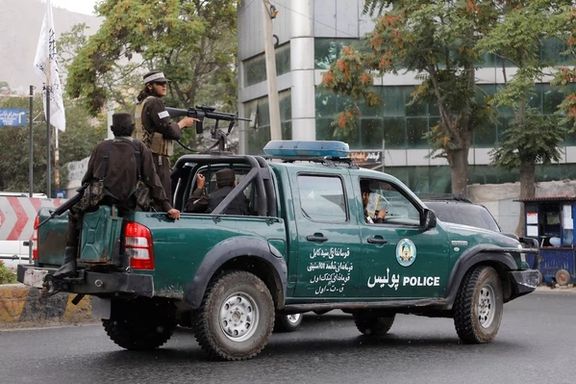
The Afghanistan Security Watch has recorded 22 security incidents across the country in January, with anti-Taliban fronts responsible for nine and ISIS carrying out three attacks.
The Afghanistan Security Watch has recorded 22 security incidents across the country in January, with anti-Taliban fronts responsible for nine and ISIS carrying out three attacks.
On Monday, the organisation published its findings on security developments in Afghanistan over the past month. According to the report, the number of incidents attributed to anti-Taliban groups declined significantly compared to December, dropping by 17 cases. In its previous report, the organisation had documented 39 security incidents in December, primarily linked to opposition groups such as the National Resistance Front and the Afghanistan Freedom Front.
The latest report detailed that ISIS conducted three attacks in January—two in Baghlan province and one in Takhar province. Additionally, at least three attacks in Kabul, Takhar, and Herat were classified as “unknown,” with no confirmed perpetrators.
The report also noted that security incidents were concentrated in Herat, Kabul, Baghlan, Kunduz, Parwan, Takhar, Kapisa, and Khost.
Furthermore, Afghanistan Security Watch reported over 500 various incidents occurring within Taliban-controlled executive institutions across the country. However, the organisation did not disclose further details regarding the nature of these incidents.

Rangin Dadfar Spanta, former Afghan National Security Advisor and Foreign Minister, has called for the creation of an Afghan National People’s Assembly to unite political and social forces working towards Afghanistan’s independence and freedom.
Speaking at the 12th Herat Security Dialogue in Madrid on Monday, Spanta stressed the need for both peaceful and resistant approaches, stating, “At times, people have no choice but armed resistance.”
He emphasised that the proposed assembly should include all segments of Afghan society—women, men, and various political and social movements that share a vision of a free, independent, and united Afghanistan.
Spanta urged the formation of a strong and inclusive political coalition, arguing that such an alliance could pave the way for a transitional government that enjoys both domestic and international support.
He highlighted that while the pursuit of peace is essential, resistance becomes unavoidable when conflicts are imposed on the people.
“A united front can work towards building an Afghanistan free from terrorism, extremism, discrimination, illiteracy, and hostility to progress. It is time for concrete steps to be taken in this direction,” he asserted.
Addressing the rise of multiple political factions following the Taliban’s return to power, Spanta pointed out that their disunity and lack of a cohesive national agenda have hindered meaningful progress.
He also noted that the international community and regional powers have yet to adopt a unified policy on Afghanistan. Geopolitical rivalries and ideological differences, he said, have resulted in conflicting approaches towards the country, further complicating the path to peace.
“Global and regional power struggles have made securing Afghanistan’s future even more challenging,” Spanta remarked.
The Herat Security Dialogue is an annual conference that gathers representatives from various nations to discuss Afghanistan’s security and political challenges. Last year, the event was held in Tajikistan.
This year’s conference, titled “Afghanistan: Reviving Hope; Synergetic Efforts,” commenced on Monday and will continue for two days, bringing together key political figures, analysts, and policymakers focused on Afghanistan’s future.
Gulbuddin Hekmatyar, leader of Hezb-e Islami, has voiced deep concerns over Afghanistan’s current situation under Taliban rule, warning of growing instability. He stated that the country’s precarious state has put many on high alert.
In a video message released on Monday by media outlets affiliated with Hezb-e Islami, Hekmatyar did not specify any particular individuals or groups but noted that “attacks occur daily in different parts of the country, and people are fleeing their homeland.”
The Hezb-e Islami leader criticised the Taliban administration’s failure to facilitate the return of Afghan refugees from neighbouring countries.
“Instead of bringing back a significant portion of the eight million refugees over the past three years and providing them with resettlement opportunities, we continue to witness a mass exodus,” he said.
Hekmatyar pointed out that despite deportations from multiple countries, including Iran, Pakistan, Türkiye, Arab states, Western nations, and even the United States, the number of Afghan refugees remains high.
He expressed hope that “those committed to Islam and the well-being of the nation and homeland” would find practical solutions to the country’s numerous challenges.
He also stressed the importance of preventing Afghanistan from slipping back into war, whether through internal conflict or hostilities with foreign nations.
Hekmatyar underscored the need for a “legitimate government with clearly defined responsibilities,” warning that the absence of such governance has left Afghanistan vulnerable.
“Unfortunately, at present, there is no national agreement or constitution, and this gap must be addressed,” he said.
The veteran politician warned that the country is “not moving in the right direction,” and that citizens are increasingly anxious about their future.
“We are facing serious threats, both from the United States and from armed groups operating outside the country against the regime,” he stated.
Hekmatyar further highlighted that Afghanistan is experiencing “significant gaps” in governance and called for the establishment of a “dignified council” to address these shortcomings.
Mohsin Dawar, leader of Pakistan’s National Democratic Movement, asserted that the Taliban do not represent the Afghan people and that Afghanistan has its own independent history.
Speaking at the 12th Herat Security Dialogue in Madrid on Monday, he also criticised regional countries, particularly Pakistan, for failing to be true allies of Afghanistan.
In an interview with Afghanistan International, Dawar emphasised that the world must acknowledge that the Taliban’s rule does not reflect the will of the Afghan people. He highlighted the importance of forums like the Herat Security Dialogue, noting that such gatherings provide a platform for exchanging perspectives and fostering opportunities to find practical solutions to Afghanistan’s ongoing crises.
Dawar stressed that Afghanistan is facing significant challenges and urged the international community to reassess its approach to the country. When asked about external support for conferences like the Herat Security Dialogue, he stated that, in his opinion, no country in the region has been a true friend of Afghanistan. He added that the destruction of Afghanistan has been facilitated by multiple actors, including the United States, Iran, and neighbouring Pakistan, which he described as a “great tragedy.”
Despite these adversities, Dawar expressed confidence that Afghans will persevere, as they have throughout history, and that the current situation will eventually change.
Dawar has previously participated in Herat Security Dialogue sessions and has been a vocal critic of the Taliban. He has consistently argued that the Taliban do not represent the Afghan people, referring to them as a “project of Rawalpindi” and asserting that their identity is rooted in terrorism.
Documents obtained by Afghanistan International reveal that Mohammad Yousuf Wafa, the Taliban governor of Balkh, has filed a formal complaint with the Taliban Supreme Court, calling for a military trial of Abbas Stanekzai, the group’s deputy foreign minister.
Wafa accused Stanekzai of “disrespecting” Taliban leader Hibatullah Akhundzada and opposing his decrees.
According to an official letter from the Office of the Governor of Balkh, dated 20 January, Wafa urged the court to prosecute Stanekzai for his criticism of Akhundzada’s policies. The letter alleges that Stanekzai’s remarks, made during a religious ceremony in Khost province, amount to “opposition to the orders of the Taliban leader” and should be met with judicial action.
The complaint outlines seven instances of what Wafa describes as “indirect disrespect” and defiance of the Taliban leader. He argued that, under Islamic law, obedience to the leader is obligatory and that disobedience carries divine consequences.
In his letter, Wafa requested that the Supreme Court conduct a military trial against Stanekzai, asserting: “I demand the trial of the aforementioned [Stanekzai] and seek nothing but a Sharia-based judicial process in defence of the Islamic system. The military court can be in Balkh or any other province as deemed appropriate.”
On 27 January, Afghanistan International reported that Abbas Stanekzai fled Afghanistan to the United Arab Emirates after Akhundzada ordered his arrest. Sources confirmed that Taliban Defence Minister Mullah Yaqub Mujahid assisted in his immediate departure to Dubai.
According to sources, after Stanekzai bluntly talked against the Taliban’s ban on girls’ education, Akhundzada ordered Abdul Haq Wasiq, the group’s intelligence chief, to arrest and impose a travel ban on Stanekzai. Upon learning of the order, Wasiq allegedly contacted Defence Minister Mujahid, a key ally of Stanekzai within the Taliban’s ranks. Mujahid then urged Stanekzai to leave Afghanistan immediately.
During a speech on 19 January at a graduation ceremony for religious students in Khost, Stanekzai criticised the Taliban’s policies towards women, stating: “The Taliban are acting against Sharia and are committing injustice against 20 million Afghan women and girls.” He urged the group’s leadership to reopen schools and universities for girls, asserting that no religious justification exists for their continued closure.
Mohammad Yousuf Wafa is a close confidant of Hibatullah Akhundzada. He was appointed governor of Balkh following the assassination of his predecessor, Mullah Mohammad Daud Muzamil, on 9 March 2024. Previously, he served as the governor of Kandahar and was considered a high-profile target of ISIS following the killing of Khalil-ur-Rahman Haqqani, the former Taliban Minister for Refugees.
The official complaint against Abbas Stanekzai—one of the Taliban’s senior figures—signals growing internal divisions within the group’s leadership. His escape, coupled with Wafa’s demand for his trial, highlights rising tensions within the Taliban’s upper ranks.
Mahmoud Ghodrati, Director General of the Security and Law Enforcement Office in Iran’s Semnan province, has announced the deportation of 14,000 Afghan migrants since the beginning of the current Solar Hijri year.
Speaking on Sunday, Ghodrati stated that the Islamic Republic’s policy is to arrest and expel Afghan migrants who lack valid residency documents. He described the presence of Afghan migrants in Iran as a “problem,” adding, “A 40-year-old problem cannot be solved overnight. The issue of undocumented foreign nationals in the province must be addressed gradually, and this process is currently underway.”
He also confirmed that a number of Afghan migrants in Semnan have been detained and transferred to a deportation camp.
The crackdown on Afghan migrants in Semnan has intensified following allegations that a “foreign national” was involved in the murder of an Iranian youth.
On Monday, 17 February, the Chief Justice of Semnan announced the arrest of individuals responsible for the killing of a 28-year-old man in Mehdishahr County. The provincial police commander stated that one of the suspects is a foreign national and that the motive for the crime was a personal dispute.
Local authorities in Semnan have not disclosed the identity of the foreign national involved. However, some Iranian social media users have linked the incident to Afghan migrants and called for their expulsion.
Although the Islamic Republic has significantly increased the arrest and deportation of Afghan migrants in recent months, experts warn that attributing crimes to migrants without evidence risks fuelling negative public sentiment against Afghan refugees in Iran.