Taliban Publicly Flogs Individual For Theft In Sar-e Pol
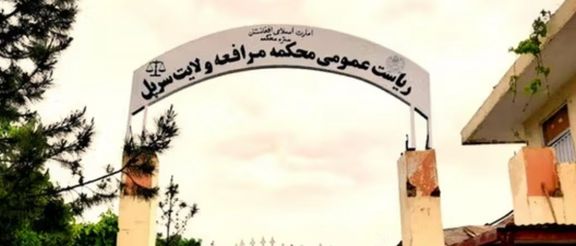
The Taliban’s Supreme Court has announced that an individual in Sar-e Pol province was publicly flogged on charges of theft. However, the identity of the accused has not been disclosed.

The Taliban’s Supreme Court has announced that an individual in Sar-e Pol province was publicly flogged on charges of theft. However, the identity of the accused has not been disclosed.
In a statement issued on Monday, 3 March, the Taliban’s Supreme Court confirmed that the convicted individual received 39 lashes and was sentenced to six months in prison.
The Taliban has continued to enforce public corporal punishment, with reports emerging almost daily of individuals being flogged across various provinces. The group has officially acknowledged these punishments through public statements, reaffirming its commitment to their continuation.
Meanwhile, human rights organisations have condemned the practice, urging the Taliban to cease such punishments. They argue that, under international law, public floggings constitute torture and violate human dignity.


Tehran police have detained an Afghan female blogger on charges of “insulting Iranian women,” authorities announced on Monday. The police also confirmed that her Instagram accounts had been blocked and urged citizens to report similar cases.
According to Iranian media, Davood Moazami Goudarzi, Tehran’s Cyber Police Chief, stated that the blogger had recently shared content deemed offensive to Iranian women. Following an investigation, authorities discovered that she had been working in a beauty salon in Tehran without proper documentation.
Goudarzi accused the blogger of “engaging in criminal activity in cyberspace without regard for the country’s laws.” He added that after being summoned, she apologised to Iranian women and claimed her posts were the result of a personal dispute with certain clients.
The Iranian Students’ News Agency (ISNA) reported that all of her social media accounts had been blocked and that her case had been referred to judicial authorities for further legal proceedings.
Goudarzi stated that the blogger’s Instagram posts had caused distress among Iranian women and that Tehran’s law enforcement prioritised the matter.
It remains unclear whether she has been released following interrogation, and authorities have not disclosed further details about the content that led to her arrest.

Abdul Mateen Qani, the Taliban’s Interior Ministry spokesperson, has confirmed that one Taliban member was killed and two others were injured in a clash with Pakistani forces at the Torkham border crossing.
Sources in Pakistan also reported that one civilian was killed, and three Pakistani soldiers were wounded during the confrontation.
Local media, quoting Qani, stated that Pakistani forces initiated the clash, prompting the Taliban to retaliate. According to him, the fighting lasted until 11 a.m. on Monday. He further claimed that Pakistani forces suffered casualties and that some of their military posts were destroyed.
Pakistani sources told Afghanistan International that at least three Pakistani soldiers were injured, and one civilian was killed in the exchange of fire. A Pakistani security official, speaking anonymously to Türkiye’s Anadolu News Agency, stated that the injured individual had been shot, while another civilian died amid the chaos at the border.
Torkham, one of the two main trade crossings between Afghanistan and Pakistan, has remained closed for over a week due to a dispute over the Taliban’s construction of a new checkpoint.
A Pakistani official revealed that the border closure, which affects trade between Khyber Pakhtunkhwa province in northwestern Pakistan and Nangarhar province in eastern Afghanistan, is causing an estimated daily loss of $3 million.
Pakistan’s Foreign Ministry spokesperson, Shafqat Ali Khan, previously stated that the closure was due to the Taliban’s attempt to build a checkpoint on Pakistani territory. Calling the move a violation of existing protocols, Khan emphasised that Pakistan aims to resolve the issue through dialogue.
Pakistani media have reported that multiple rounds of negotiations between Taliban and Pakistani border forces have been held in an effort to reopen the crossing, but no agreement has yet been reached.

The Taliban embassy in Tehran has announced that Fazl Mohammad Haqqani, the group’s representative in Iran, met with Rudra Gaurav, India’s ambassador to Tehran, to discuss expanding bilateral cooperation and enhancing trade through Chabahar port.
On Monday, the Taliban embassy stated on the social media platform X that the meeting focused on increasing cooperation in exports and imports via Chabahar, a strategic port in Iran’s Sistan and Baluchestan province that serves as a vital trade corridor between India and Afghanistan, bypassing Pakistan.
India has been actively working to utilise Chabahar port to reduce Afghanistan’s dependence on Pakistan and strengthen its economic ties with the Taliban. According to Al Jazeera, this trade route could enhance India’s influence in the region, providing an alternative to the Strait of Hormuz and maritime corridors where Pakistan holds significant control.
Amid escalating tensions between Islamabad and the Taliban, the group appears to be forging closer relations with Pakistan’s long-time rival, India. Earlier in January, Taliban Foreign Minister Amir Khan Muttaqi met with Vikram Misri, India’s Deputy Foreign Minister, in Dubai to discuss regional developments and economic cooperation.

Pakistani media have reported the death of an Afghan citizen during a confrontation between Pakistani security forces and armed groups in North Waziristan.
According to Geo News, the individual, identified as Mujeeb-ur-Rahman Mansoor, was reportedly a commander in the third battalion of Afghanistan’s National Military Academy. Sources claim he was killed on February 28, along with 14 others described as “terrorists” in the Ghulum Khan area of Khyber Pakhtunkhwa.
The report does not specify whether Rahman held his position under the Taliban administration or the previous Afghan government.
Earlier, Pakistani authorities reported that Badruddin, the son of Mullah Ghulam Mohammad, the Taliban’s deputy governor in Badghis, was killed in a clash with Pakistani military forces alongside several Tehreek-e-Taliban Pakistan (TTP) fighters.
Pakistani officials have frequently claimed that Afghan nationals are fighting alongside the TTP against Pakistan’s security forces, further straining relations between Islamabad and the Taliban government.

Iranian Foreign Ministry spokesperson Ismail Baghaei has confirmed the visit of Afghan jihadi leader Abdul Rab Rasul Sayyaf to Tehran, stating that Afghan society is diverse and the visit of one of its figures to Iran is “not an unusual matter.”
Baghaei explained that Sayyaf traveled to Iran for “medical treatment.” During a press conference on Monday, in response to a question about the visit of an Afghan jihadi leader, he said, “Afghan society is diverse, with many different personalities and parties, and it is not unusual for someone to travel to Iran.”
Without directly naming Sayyaf, Baghaei added, “As far as I know, the individual you are referring to has come to Iran for medical treatment.”
However, a former Afghan government official and close associate of Sayyaf told Afghanistan International that the jihadi leader traveled to Iran at the invitation of the Iranian government.
Reports of Sayyaf’s trip to Iran emerged last week. He is a well-known opponent of the Taliban and has consistently criticised the group’s policies.
Earlier, sources close to Sayyaf told Afghanistan International that he was engaged in discussions with Iranian officials regarding the situation in Afghanistan and potential solutions to the ongoing conflict. He also reportedly held meetings with Afghan factions residing in Iran.