Trump’s New U.S. Travel Ban May Include Citizens Of Afghanistan & Pakistan
A new executive order on travel restrictions, expected to be signed next week by U.S. President Donald Trump, may include citizens of Afghanistan and Pakistan, potentially barring their entry into the United States, Reuters reported, citing three informed sources.
According to the report, released early Thursday, tens of thousands of Afghan citizens could be affected by the proposed ban. The sources, who requested anonymity, said the decision stems from government assessments of security risks and deficiencies in the screening processes for travellers from these countries.
The sources indicated that Afghanistan is expected to be placed on the list of countries facing a full travel ban, while Pakistan is also under consideration. Other countries may also be included, though details remain unclear.
If implemented, the order would resemble Trump’s first-term travel ban, which targeted several Muslim-majority nations. That policy, initially introduced in 2017, was revised multiple times before being upheld by the U.S. Supreme Court in 2018. Trump’s successor, Joe Biden, reversed the ban in 2021.
Impact on Afghan SIV Holders and Refugees
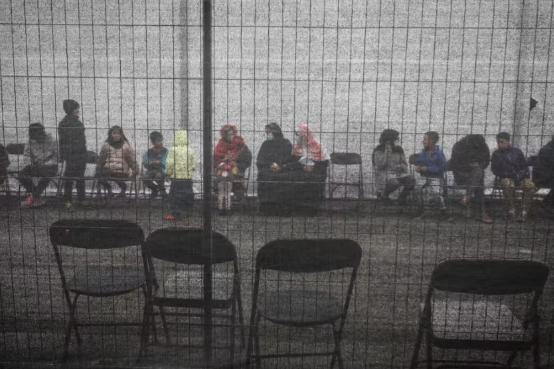
The new restrictions could significantly impact Afghan citizens who had been approved for resettlement in the U.S. under refugee and Special Immigrant Visa (SIV) programmes but have not yet entered the country. Many of these individuals remain at risk of Taliban retaliation due to their cooperation with the U.S. during its 20-year military presence in Afghanistan.
One Reuters source said that these individuals are undergoing extensive security screening to ensure they are fully vetted. The U.S. State Department office responsible for overseeing Afghan resettlements is reportedly working to exempt SIV holders from the ban, though a source cautioned that such an exemption is “unlikely to be granted.”
Trump’s Executive Order and Its Broader Implications
Trump issued an executive order on 20 January calling for heightened security vetting for all foreign nationals seeking to enter the U.S. The order mandates that several government agencies— including the State Department, the Department of Justice, the Department of Homeland Security, and the Office of the Director of National Intelligence— submit a list of countries facing potential travel restrictions by 12 March.
The departments involved have not yet responded to requests for comment.
The travel ban is part of a broader immigration strategy that Trump has pursued since returning to office. In an October 2023 speech, he pledged to restrict entry from Gaza, Libya, Somalia, Syria, Yemen, and “anywhere else that threatens our security.”
Concerns Over Afghan Evacuations
Shawn VanDiver, president of a coalition involved in Afghan evacuations and resettlements in coordination with the U.S. government, has urged visa holders to travel to the U.S. as soon as possible.
AfghanEvac, an organisation advocating for Afghan refugees and military partners of the U.S., warned that the Trump administration is likely to reinstate a travel ban affecting Afghan nationals. On Wednesday, the organisation posted on X:
“If you have a valid U.S. visa in your passport/travel document, travel as soon as possible. We are hearing from within State that a travel ban is likely coming in the next week for Afghan nationals (and others).”
AfghanEvac stated that while details on the potential travel ban remain uncertain, the organisation will oppose any such directive if confirmed.
During his first term, Trump’s travel ban did not initially include Afghanistan, but in 2017, The New York Times reported that the U.S. Embassy in Kabul had refused to issue visas to Afghans who had worked with the U.S. government, instructing them to withdraw their applications.
AfghanEvac, founded in August 2021 during the U.S. military’s withdrawal from Afghanistan, works to resettle at-risk Afghans, particularly former U.S. military partners. The organisation, comprising a coalition of 250 groups, has helped relocate over 195,000 eligible Afghans to the U.S. since 2021.
If enacted, the proposed travel ban would represent a significant setback for Afghan evacuees still awaiting resettlement, further complicating efforts to protect those who assisted U.S. forces during the war in Afghanistan.
The Pakistani military has talked of Afghan nationals involvement in a deadly attack on a military cantonment in Bannu, Khyber Pakhtunkhwa, claiming the assault was orchestrated by the Tehreek-e-Taliban Pakistan (TTP) from Afghan soil.
In a statement released on Wednesday, the Inter-Services Public Relations (ISPR) confirmed that the TTP militants launched the attack on Tuesday using two explosive-laden vehicles. The assault resulted in 34 fatalities, including five Pakistani soldiers, 13 civilians, and 16 TTP militants, four of whom were suicide bombers. At least 32 others sustained injuries.
The powerful explosions partially destroyed the cantonment’s perimeter wall and several nearby houses. Videos circulating on social media captured the moment of the blasts, showing thick plumes of smoke rising into the sky amid sustained gunfire.
The Pakistani military has called on the Taliban government to prevent its territory from being used for terrorist activities against Pakistan. It warned that Islamabad reserves the right to take necessary measures in response to cross-border threats.
This incident marks the latest in a series of attacks where Pakistan has accused Afghan nationals of involvement in the ongoing conflict between the Pakistani military and the TTP. Islamabad has repeatedly claimed that the Taliban government provides sanctuary to TTP militants, an allegation Kabul denies, asserting that Pakistan’s security challenges are rooted within its own borders.
The Bannu attack comes amid ongoing clashes between Pakistani border forces and the Taliban at the Torkham border, which have been escalating over the past several days.
Pakistani Prime Minister Shehbaz Sharif has confirmed that the mastermind behind the attack on Kabul Airport is an Afghan national who was apprehended during an operation at the Afghanistan-Pakistan border.
Expressing gratitude to Donald Trump, Sharif emphasised Islamabad’s continued cooperation with Washington in combating terrorism and maintaining regional security.
On Wednesday, 5 March, in his first address at a joint session of the U.S. Congress, former President Donald Trump announced that, in collaboration with Pakistan, the mastermind of the deadly Kabul Airport attack had been captured. The incident, which claimed the lives of 13 American soldiers and over 170 Afghan citizens, has now led to the suspect’s extradition to the United States for trial.
In a note posted on X, Sharif stated: “We thank US President Donald Trump for acknowledging and appreciating Pakistan’s role and support in counter-terrorism efforts across the region, in the context of Pakistan Security Forces’ recent apprehension of ISKP’s top-tier operational commander Shareefullah, an Afghan national.”
Sharif also reaffirmed Pakistan’s unwavering commitment to eradicating the threat of terrorism, adding, “We will continue to partner closely with the United States in securing regional peace and stability.”
The Associated Press, citing the White House, has identified the senior ISIS-K member as Mohammad Sharifullah. Similarly, Axios, quoting U.S. sources, reported that the individual, also known as “Jafar”, was responsible for planning and coordinating the attack at Abbey Gate – the entrance to Kabul Airport. Axios further noted that Sharifullah is expected to arrive in the United States on Wednesday, where his court hearing will be held publicly.
On the eve of 8 March, International Women’s Day, UN-Habitat has reaffirmed its commitment to empowering women and girls in Afghanistan.
The organisation’s representative in Afghanistan emphasised that the UN stands in solidarity with Afghan women, continually supporting their rights and inclusion.
In a video message, Stephanie Loose, UN-Habitat’s representative, stated: “We stand in solidarity with Afghan women and girls, reaffirming our commitment to their rights, inclusion, and empowerment.”
Loose highlighted the UN’s efforts to improve living conditions across both urban and rural areas in Afghanistan. She pointed to several programmes implemented by UN-Habitat, noting that a better home, a safer neighbourhood, and improved access to essential services—such as water, education, and health—have a profound impact on the lives of Afghan women and girls.
This commitment comes amid growing concerns over the deteriorating situation for women and girls in Afghanistan, who continue to face systemic discrimination that has worsened over time. Earlier, a group of Afghan women protesters in Pakistan criticised the ongoing conditions and demanded that the voices of women and girls be heard.
Sources have confirmed to Afghanistan International that Taliban forces and Pakistani border guards clashed once again on Wednesday, 5 March, at Torkham. Neither Pakistani nor Taliban officials have yet commented on the incident.
Images from the clash show both sides targeting one another’s positions. Reports indicate that Taliban forces have destroyed a Pakistani military outpost, further escalating tensions in the region. Videos circulating on social media reveal Taliban forces employing heavy artillery to attack Pakistani military posts.
Following the closure of the Torkham border crossing on 22 February, clashes between Taliban forces and Pakistani soldiers have recurred, with both sides utilising heavy weaponry. A spokesperson for the Taliban Ministry of Interior confirmed that one of their fighters was killed and two others injured during the recent clashes.
The Torkham crossing has now been closed for 13 consecutive days, with reports stating that thousands of trucks carrying goods and fresh produce are stranded on both sides of the border. Despite several rounds of talks between officials from both sides aimed at ending the fighting and reopening Torkham, negotiations have so far been unsuccessful.
The United Nations Regional Centre for Sustainable Development Goals (SDGs) for Afghanistan and Central Asia will be established in Almaty, Kazakhstan’s Presidential Office announced in a statement.
Kazakh President Kassym-Jomart Tokayev stated that the centre would serve as a key platform for coordinating international efforts in the region.
According to the statement released on Tuesday, 5 March, the UN General Assembly has adopted a resolution approving the establishment of the centre, with the consensus of 152 countries.
The Kazakh presidency described the resolution’s adoption as a major achievement in the country’s foreign policy.
President Tokayev also expressed gratitude to all the nations that supported the resolution’s approval.