• العربية
  • پښتو
  • فارسی
Brand
  • Afghanistan
  • Sport
  • Markets
  • Afghanistan
  • Sport
  • Markets
  • Theme
  • Language
    • العربية
    • پښتو
    • فارسی
  • Afghanistan
  • Sport
  • Markets
All rights reserved for Volant Media UK Limited
volant media logo

US Removes Three Haqqani Leaders From Rewards For Justice List

Mar 23, 2025, 09:42 GMT+0

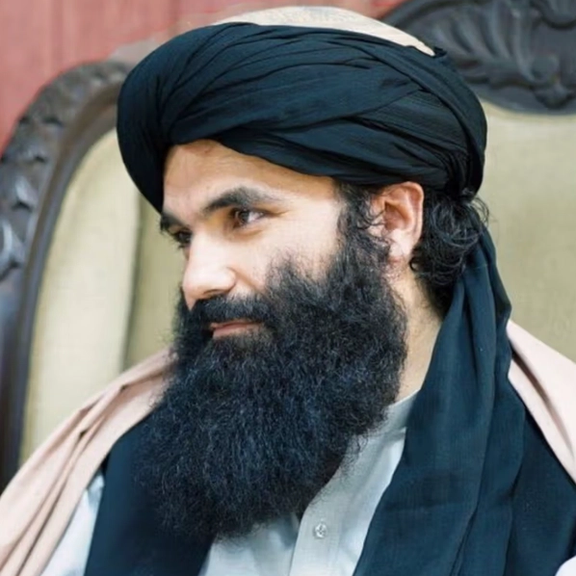
The US State Department has removed Sirajuddin Haqqani, the Taliban’s Interior Minister, and two other senior Haqqani Network leaders from its Rewards for Justice programme, sources close to Haqqani told Afghanistan International.

Previously, the State Department had offered between $5 million and $10 million for information leading to the capture of Sirajuddin Haqqani, Yahya Haqqani, and Aziz Haqqani. These names have now reportedly been removed from the rewards list.

Despite this, Sirajuddin Haqqani still appears on the FBI’s website and former State Department listings as a “Global Terrorist.” Khalil-ur-Rahman Haqqani, his uncle and former Taliban minister for refugees who was killed in a recent ISIS attack in Kabul, remains on the list with a $5 million reward.

The State Department had earlier described Yahya Haqqani as a key link between the Haqqani Network and al-Qaeda. It also said Yahya had acted in place of Sirajuddin Haqqani and Khalil Haqqani when they were unavailable.

The US Department of Justice has not commented on the removal of the Haqqani leaders. Taliban officials have also not responded. US authorities have yet to answer questions from Afghanistan International about the changes.

Sirajuddin Haqqani, as leader of the Haqqani Network, is blamed for deadly attacks in major cities and large-scale civilian casualties. The network was designated a foreign terrorist organisation by the US in 2012. All assets tied to it remain frozen, and US citizens are prohibited from engaging in any transactions with it.

Despite the reported removal of some individuals from the reward list, both the FBI and the State Department have reiterated that the $10 million reward for information leading to Sirajuddin Haqqani’s capture is still active.

The Haqqani Network remains officially listed as a terrorist organisation by the US Department of Justice. Public support or financial collaboration with the group remains a criminal offence under US law.

US Delegation Visits Kabul

The removal of the names from the US reward list comes shortly after a US delegation visited Kabul. The delegation included Adam Boehler, the US Special Presidential Envoy for Hostage Affairs, and Zalmay Khalilzad, former US envoy for Afghan peace talks.

This marked the first visit by American officials to Kabul since the Taliban regained power in 2021. The US delegation met with Taliban Foreign Minister Amir Khan Muttaqi. It is unclear whether they met with other Taliban officials.

Before the visit, the Taliban removed anti-American slogans from the walls of the US Embassy in Kabul.

US State Department spokesperson Tammy Bruce told Afghanistan International that the primary goal of the trip was to secure the return of American hostages. She also noted that broader, long-term issues were discussed during the meetings.

Most Viewed

Taliban Ignore Afghanistan’s Interests By Backing Militants, Says Pakistan Army Chief
1

Taliban Ignore Afghanistan’s Interests By Backing Militants, Says Pakistan Army Chief

2

Afghanistan May Not Remain Intact In Future, Says Pakistani Analyst

3

United Nations Delivers Education Kits To Four Million Afghan Children

4

Taliban Renews Call For China To Launch Aynak Copper Mine

5

Female Ismaili Entrepreneur Shot Dead In Badakhshan

•
•
•

More Stories

Suicide Bomber Trained In Afghanistan Arrested In Lahore, Says Pakistan

Mar 22, 2025, 16:23 GMT+0

Pakistan’s Counter-Terrorism Department (CTD) has arrested Shamsullah, a suicide bomber trained in Afghanistan, in Lahore’s Burki area.

Initial investigations reveal he was trained under the supervision of Jamaat-ul-Ahrar commanders and entered Pakistan via a border crossing near Chaman.

The CTD also reported apprehending 11 suspected terrorists across 166 intelligence-based operations in cities including Sargodha, Rawalpindi, Pakpattan, Gujrat, Chakwal, Bahawalpur, Bahawalnagar, and Faisalabad.

Authorities seized significant quantities of explosives, detonators, and cash from the suspects.
According to Geo News, Shamsullah confessed to being trained in Afghanistan by Jamaat-ul-Ahrar commanders Suleman and Qasim Khorasani, who tasked him with carrying out suicide attacks in Pakistan.

Qasim Khorasani, a senior figure in the group, is accused of orchestrating targeted killings of police officers in Lahore and Peshawar. Pakistani officials claim that Shamsullah and other recruits were forcibly administered drugs during training to enhance their compliance.

Lahore Police hailed the arrests as a crucial step in thwarting major security threats. The CTD vowed to continue operations relentlessly to identify and dismantle terrorist networks across the region.

Torkham Border Reopens for Passengers, Sources Confirm

Mar 22, 2025, 15:33 GMT+0

Sources at Torkham confirmed to the Pashto section of Afghanistan International that the Torkham border crossing reopened for passenger movement on Saturday morning. The border had partially reopened on Wednesday, 19 March, permitting only patients and freight vehicles to pass.

According to sources, full access for all travellers resumed at 8:00 AM local time on Saturday. Only those with valid visas may cross, based on available information.

Sayed Tayeb Hamad, spokesperson for the Taliban’s Nangarhar police command, confirmed the reopening for passengers. In a video message, he advised travellers to avoid the route for the next two days. He specified that only patients would be allowed to cross on Saturday and Sunday.

The border had been closed since 21 February due to clashes between Pakistani and Taliban border forces. The conflict arose over the Taliban’s construction of a checkpoint and Pakistan’s installation of a signboard. To enable the reopening, two separate jirgas—tribal councils—with representatives from both Pakistan and the Taliban convened at the border.

Khalilzad’s Kabul Visit: Afghanistan In The "Great Game" – Tool Or Player?

Mar 22, 2025, 14:02 GMT+0

Zalmay Khalilzad’s recent visit to Kabul, accompanied by President Donald Trump’s special envoy for hostage affairs and coinciding with the Taliban’s release of a US citizen, marks the gradual resurgence of the United States’ informal bargaining diplomacy with Kabul.

In this article, former Afghan spy chief, Rahmatullah Nabil, explores Afghanistan’s prospective position within global geopolitical equations.

More than a century after the 1916 Sykes-Picot Agreement, which defined the modern structure of the Middle East, the notion of a "New Middle East" emerged in 2006, articulated by Condoleezza Rice, then US National Security Advisor. This ambitious vision encountered substantial obstacles due to the region’s persistent political and security turmoil. Following the events of 7 October 2023, the Israeli Prime Minister revisited the concept of a "New Middle East." With Donald Trump’s return to power, this idea has regained prominence in geopolitical discussions.

Within this framework, US foreign policy, centred on countering China, necessitates reliable regional allies such as Russia, India, and Israel. These developments raise two pivotal questions:

  1. Will Afghanistan once again be relegated to a geopolitical pawn in the global power struggle?
  2. Or can it carve out a role as an independent actor?

Historically, Afghanistan has occupied a critical juncture in geopolitical conflicts. Today, amidst the redefinition of global strategies and the realignment of regional and transregional actors, Afghanistan has assumed renewed significance. Where does contemporary Afghanistan stand in the global power game? No longer merely a battleground, it has evolved into a vital instrument for countering China, curbing Iran’s influence, balancing Central Asia (either in cooperation or competition with Russia), and mitigating potential crises in Pakistan.

Afghanistan once again finds itself at the epicentre of the "Great Game"—no longer confined to an East-West rivalry but embedded within a more intricate equation involving emerging powers (China, India, and Iran), established powers (the US and Russia), and a web of regional players with conflicting interests. Khalilzad’s visit to Kabul, alongside the Taliban’s release of an American citizen, underscores the re-emergence of informal US diplomacy with Kabul. This approach prioritises maintaining open communication channels for potential contingencies rather than pursuing formal recognition.

Amidst this dynamic, several developments—including the return of figures like Haqqani, Pakistan’s allegations against the Taliban and India, the prospect of a US-Russia rapprochement, possible concessions to Russia in Ukraine, escalating tensions with Iran, and an increasingly assertive foreign policy—point to emerging regional consultations and potential behind-the-scenes recalibrations of Afghanistan’s future role.

Afghanistan’s Role in the Strategy to Contain China

As the world’s second-largest economy, China relies heavily on stable energy supplies and trade routes. Key statistics underscore this dependence:

  • 70 percent of its oil consumption is imported.
  • 80 percent of these imports traverse the Strait of Malacca.
  • 45 percent of its natural gas consumption is also imported.

The Strait of Malacca, a critical geopolitical chokepoint for China, remains highly vulnerable. The US and its allies, under the QUAD alliance, seek to dominate this route and restrict China’s energy access as part of their containment strategy. In this context, Afghanistan assumes dual significance:

  • As an alternative corridor for energy and trade transit, serving not only China but also India, Pakistan, and even Europe.
  • As a destabilised zone capable of disrupting initiatives such as the Belt and Road Initiative (BRI), the China-Pakistan Economic Corridor (CPEC), and Gwadar Port.

The Taliban’s Internal Power Struggle: The Kandahar-Kabul Divide

Afghanistan is not solely a theatre for external competition; within the Taliban, a profound schism has emerged between the Kandahar and Kabul factions. The Kandahar faction, led by Hibatullah Akhundzada, maintains ideological ties with Iran’s religious institutions and staunchly opposes engagement with the West. In contrast, the Kabul faction exhibits pragmatic tendencies, favouring cooperation with select regional stakeholders and Western allies while pursuing reforms to alleviate economic pressures.

Iran aligns more closely with the Kandahar faction, whereas certain regional and international actors interested in engaging the Taliban maintain broader ties with Kabul. This tension not only exacerbates the Taliban’s internal divide but also creates a potential platform for future proxy rivalries.

China and Iran: Expanding Influences

Over the past three and a half years, China and Iran have bolstered their influence in Afghanistan—not through formal recognition of the Taliban, but via economic, security, and cultural cooperation.

  • Iran, particularly in western and southwestern Afghanistan, has cultivated soft power by establishing direct communication with the Kandahar faction through trusted intermediaries, leveraging media, religious institutions, and support for local groups.
  • China, prioritising the security of mining projects and addressing concerns over the East Turkistan Islamic Movement, has forged both direct and indirect partnerships with the Taliban.

This growing influence has disrupted Afghanistan’s internal equilibrium, raising concerns among the US and its allies.

Future Scenarios for Iran and Their Impact on Afghanistan

Iran faces a critical juncture with three potential pathways:

A) Normalisation with the West:
By distancing itself from the China-Russia axis, reducing support for proxy forces, and abandoning its nuclear and missile programmes, Tehran could enter a new diplomatic phase. This shift might result in:

  • A potential decline in Iran’s support for the Taliban or affiliated groups.
  • Opportunities for other powers and internal Afghan forces to assume greater roles.
  • Prospects for regional cooperation and investment if Afghan leaders capitalise on this opening—though failure to act could allow other actors to fill the void.

B) Military Conflict with the US/Israel:
Should Iran engage in direct conflict with the West, Afghanistan could become inadvertently entangled. In this scenario:

  • Iran might exploit Afghan territory as strategic depth for its proxy groups.
  • Tehran could mobilise allied religious and political factions or local commanders against Western interests or rivals, potentially intensifying activities by groups like ISIS and Jish al-Adl in proxy conflicts.
  • Afghanistan’s security and international relations would face heightened complexity.
  • The West might escalate pressure on Afghanistan to prevent Iran from leveraging its territory.

C) Collapse or Internal Instability in Iran:
Ethnic, religious, and economic unrest—particularly in Sistan and Baluchestan—could significantly affect Afghanistan’s western borders, triggering migration crises, insecurity, and religious tensions. Should such crises escalate:

  • Spillover effects could destabilise Afghanistan’s western regions.
  • A surge in migrants, economic challenges, arms trafficking, or sectarian strife might emerge.
  • Extremist groups could exploit the disorder to gain traction.
  • Iran might intensify interference in Afghanistan to deflect domestic attention.

India: A Rising Power with Strategic Objectives in Afghanistan

As an ascendant Asian power, India plays an increasingly vital role in Afghanistan’s geopolitical landscape. Competing with China and Pakistan on security and economic fronts, New Delhi has sought to secure a stable foothold through developmental investments, soft power, and regional collaboration. Projects such as the Salma Dam, the Afghan Parliament building, the Chabahar Port (developed with Iran), and support for educational and cultural initiatives reflect India’s broader strategy to counterbalance China’s influence and mitigate threats from the China-Pakistan axis. As a key US partner in the QUAD security pact, India views Afghanistan as integral to the West’s containment strategy against China. With intensifying regional competition, India’s influence could prove decisive in shaping Afghanistan’s security and economic future.

Pakistan: From Strategic Ally to Potential Risk

Pakistan faces mounting fragility:

  • Escalating ethnic, political, security, religious, and economic crises.
  • Pressure from India and the US to distance itself from China.
  • The possibility of military collapse and nuclear disarmament amid these challenges.

Such developments directly affect Afghanistan, potentially destabilising its eastern borders and heightening tensions in border regions. Movements among Baloch and Pashtun communities, alongside other disaffected ethnic and religious groups, could reshape the region’s geopolitical dynamics.

Three Major Scenarios for Afghanistan’s Future

These developments suggest three possible trajectories for Afghanistan:

  1. Stabilisation of controlled instability: The Taliban retains power but remains under pressure, lacking internal and external legitimacy.
  2. Gradual integration into the global order: Mullah Hibatullah and his allies are sidelined, and new leadership secures relative recognition through modest reforms.
  3. Internal transformation: Widespread dissatisfaction, bolstered by external support, gives rise to a new force. If underpinned by a national, transnational, and independent discourse, this scenario could upend the current order.

Lost Opportunities and Narrowing Horizons

Over the past two decades, Afghanistan squandered multiple opportunities to emerge as an independent or influential player due to corruption, political mismanagement, regional meddling, and reliance on foreign aid. Today, under Taliban governance and without a robust opposition, these windows of opportunity are closing as the "Great Game" nears its final configuration.

Rebuilding the National Image: A Foundation for Independence

For Afghanistan to transition from a geopolitical tool to an autonomous actor, it must reconstruct a national and political identity encompassing all ethnic groups, movements, and generations. This requires:

  • Establishing an inclusive, justice-oriented national dialogue.
  • Moving beyond monopolistic policies and ideological constraints.
  • Forging a new social contract for coexistence and political participation.

Without a shared, equitable national narrative, Afghanistan cannot break free from its subordinate role in regional politics.

Conclusion: The Future Game Requires the Afghan People

Recent events—the US delegation, Haqqani’s return, the expanding influence of China and Iran, Pakistan’s accusations against the Taliban and India, and rising tensions with the West—signal Afghanistan’s entry into a new phase of the "Great Game." Yet, modern Afghan history demonstrates that neither the Taliban, the US, Iran, nor China will hold ultimate sway. The Afghan people, if they choose to act, possess the power to transform themselves from pawns into independent players. Our future need not be dictated by others; with resolve, we can author it ourselves.
Taliban Urges Pakistan To Separate Politics From Trade In Kabul Talks

Mar 22, 2025, 13:15 GMT+0

Amir Khan Muttaqi, the Taliban’s acting Foreign Minister, has told Pakistan’s Special Representative for Afghanistan, Mohammad Sadiq, that halting transit and trade between the two countries benefits no one.

He called for a clear separation between political disputes and commercial matters.

In a statement issued on Saturday, 23 March, Taliban deputy spokesperson Zia Ahmad Takal said Muttaqi requested a gradual and dignified return of Afghan migrants from Pakistan and urged Islamabad to avoid mass expulsions.

According to the statement, Sadiq acknowledged that security in Afghanistan is in Pakistan’s interest and pledged to improve visa facilitation for Afghan nationals. He also expressed support for expanding trade between the two countries.

Both sides agreed on the importance of taking practical steps to ease trade and transit and committed to resolving disputes through joint meetings.

Sadiq’s visit to Kabul follows weeks of escalating tensions between Pakistan and the Taliban. The Torkham border crossing reopened recently after nearly a month of closure due to a clash on 21 February between Taliban and Pakistani forces. The dispute arose over the Taliban’s construction of a border post and Pakistan’s installation of a road sign at the zero-point of the crossing.

As part of its ongoing crackdown on Afghan migrants, the Pakistani government has given residents of Islamabad and Rawalpindi until the end of March to leave the country. This has become a point of contention between the two sides. During the meeting, Muttaqi reiterated the Taliban’s opposition to the mass expulsion of Afghan refugees.

23 Afghan Women’s Rights Groups Urge Trump To Prosecute Khalilzad

Mar 22, 2025, 10:23 GMT+0

Twenty-three Afghan women’s protest movements have jointly written to United States President Donald Trump, demanding the prosecution of Zalmay Khalilzad, the former US Special Representative for Afghanistan Reconciliation.

They accuse Khalilzad of enabling the Taliban’s return to power and contributing to the oppression of Afghan women.

In their letter, the women’s rights groups allege that Khalilzad acted not as a neutral diplomat but as a “traitorous agent” who helped transform the Taliban from a proscribed terrorist organisation into a recognised political force. They argue that his efforts to legitimise the group laid the groundwork for the Taliban’s return to power and the current repression of women in Afghanistan.

The signatories claim that Khalilzad’s policies directly led to the systematic stripping of women’s basic rights, including access to education, work, and participation in public life. They assert that his actions are responsible for what they describe as the Taliban’s reign of oppression and humiliation against Afghan women.

The groups have also called on the US State Department to launch a full investigation into Khalilzad’s role in the fall of Afghanistan. They urge American authorities to ensure he is prosecuted in a court of law and prevented from having any future influence on US policy towards Afghanistan.

The protest groups highlight Khalilzad’s repeated assurances that the Taliban had changed and would respect human rights, which they say have proven false. They cite the Taliban’s continuing repression, the exclusion of women from public life, and the resurgence of extremist groups such as Al-Qaeda and ISIS in Afghanistan.

The women’s groups argue that these developments confirm the failure of Khalilzad’s diplomatic approach and represent a betrayal of American and Afghan values. They blame his strategy for endangering Afghan lives and undermining the freedoms once gained by Afghan women.

The letter follows Khalilzad’s recent visit to Kabul as part of a US delegation, during which he met with Taliban officials, including Foreign Minister Amir Khan Muttaqi. This marked the first official visit by a US delegation to Afghanistan since the US withdrawal in August 2021.

Shortly after this visit, American citizen George Glezmann was released from Taliban custody. The women’s rights groups argue that Khalilzad’s renewed engagement with the Taliban raises fresh concerns about US legitimisation of the group.

In the letter, the protest groups stress that Khalilzad’s decisions have had devastating consequences—not only for Afghanistan but also for the United States, citing the deaths of American soldiers and Afghan civilians during the chaotic withdrawal.

They describe Afghanistan under Taliban rule as a “prison” for millions, especially women, and insist that Khalilzad be held accountable. They call for justice through US legal channels and urge the international community to acknowledge and condemn what they describe as the destructive outcomes of Khalilzad’s policies.