Taliban Arrest 4 Chinese Nationals For Gold Smuggling At Kabul Airport
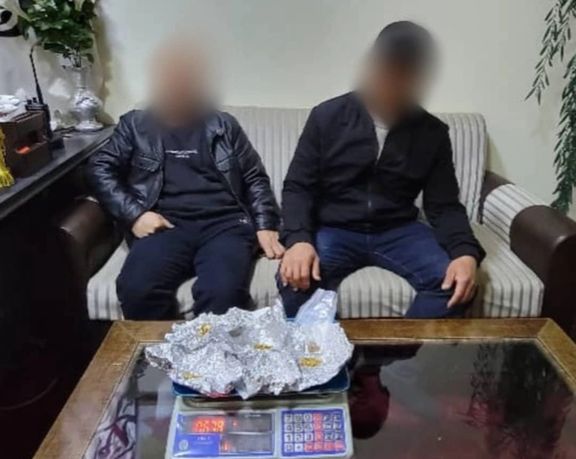
Taliban border police arrested four Chinese nationals at Kabul Airport for attempting to smuggle 678 grams of raw gold to China, spokesperson Abidullah Farooqi announced.

Taliban border police arrested four Chinese nationals at Kabul Airport for attempting to smuggle 678 grams of raw gold to China, spokesperson Abidullah Farooqi announced.
The arrests highlight growing Chinese activity in Afghanistan since the Taliban’s 2021 takeover, with increased numbers of tourists and investors drawn by the country’s resources.
France Televisions reported in January on China’s expanding economic footprint in Afghanistan, particularly in resource extraction. Afghanistan boasts reserves of copper, gold, oil, and precious stones worth over £780 billion. China has capitalised on this, restarting the Aynak copper mine and signing major oil extraction deals in the Amu Darya Basin, where production began in 2024.
Despite Taliban regulations, security remains a concern. In Takhar province’s Khwaja Bahauddin district, unidentified gunmen killed a Chinese national, though the victim’s translator and driver escaped and alerted a Taliban checkpoint, sources told Afghanistan International. In December 2022, an attack on a Kabul hotel in Shahr-e-Naw, frequented by Chinese nationals, killed 3 and injured 18.
Analysts view Afghanistan as a strategic prize for Beijing, dubbed a modern “El Dorado” for its vast untapped wealth, despite ongoing risks.


Taliban spokesman Zabihullah Mujahid said Interior Minister Sirajuddin Haqqani attended a recent security meeting in Kandahar chaired by Taliban supreme leader Mullah Hibatullah Akhundzada.
Haqqani briefed Akhundzada during the meeting, which also included Defence Minister Mohammad Yaqub Mujahid and Intelligence Chief Abdul Haq Wasiq.
Deputy Defence Minister Abdul Qayyum Zakir and Deputy Interior Minister Nabi Omari also attended.
Mujahid said the meeting reviewed proposals from security institutions and issued directives regarding their operations and strategic direction. He added that decisions were taken to improve public order, equip security forces, and enhance their capabilities.
The exact timing of the meeting was not disclosed.
This is the first public confirmation by Mujahid of Haqqani’s participation in a Taliban leadership meeting since reports surfaced of internal tensions. Haqqani had been notably absent from such meetings and from his office in Kabul for at least two months.
The announcement follows recent reports that the US removed a $10 million bounty on Haqqani, a move viewed as a diplomatic victory that may have enabled his return to active participation in Taliban leadership discussions.

The Taliban has widened its ban on broadcasting images of living beings to media in Badakhshan, Baghlan, and Nimroz, bringing the total to 10 provinces, the Afghanistan Journalists Center (AFJC) reported on Thursday.
The restriction stems from a law by the Taliban’s Ministry for the Propagation of Virtue and Prevention of Vice.
The AFJC obtained voice messages from ministry officials in Badakhshan and Baghlan, sent via WhatsApp groups with journalists and Taliban members, ordering local media to comply. Sources told the centre that officials in all three provinces summoned media executives to reinforce the ban and warn of penalties for violations.
In Badakhshan, 10 private radio stations and 2 private TV channels operate, while Baghlan has one TV station and 5 radio stations, and Nimroz has 2 TV channels and 4 radio stations. Taliban-run Radio Television Afghanistan and the Bakhtar News Agency also function in these areas.
Enacted last year, Article 17 of the ministry’s law forbids depicting or sharing images of living beings, empowering officials to enforce it. The ban already applies in 7 other provinces: Kandahar, Takhar, Badghis, Helmand, Nangarhar, Nuristan, and Farah.
The AFJC cautioned that the measure hampers TV news and further restricts radio, a key news source via social media. Press freedom groups have slammed the Taliban’s censorship as a grave attack on media independence and expression.
Over three years, the Taliban has intensified its media crackdown, imposing harsh limits that have shuttered many outlets and driven numerous journalists to flee Afghanistan for safety and work.

US President Donald Trump, speaking at a White House meeting with women on Thursday, lambasted Joe Biden for leaving billions of dollars’ worth of American military equipment in Afghanistan.
Trump claimed the Biden administration had effectively handed over vast amounts of US gear to the country during its withdrawal.
“Maybe we have to ask for that back, although it is getting a little old,” he said, hinting at retrieving the abandoned assets. He offered no specifics but has repeatedly called for the recovery of US military equipment left behind. Trump also noted that the US has rebuilt its military strength despite the loss.
The Taliban, however, has ruled out returning any equipment to Washington. Taliban officials have dubbed the abandoned weaponry “war spoils,” asserting their intent to keep and use it.
Trump earlier assigned an official named “Doug” to devise a retrieval plan, though the individual’s identity remains uncertain. Some speculate he meant Doug Manchester, a businessman and Republican backer. The US Department of Defence estimates the value of equipment left in Afghanistan exceeds $7 billion, including vehicles, advanced weapons, biometric devices, and other technologies.
From 2002 to June 2020, the US spent over $88 billion via the Afghan Security Forces Fund, managed by the Department of Defence, to equip and support Afghan security forces. Additional funds went towards training, services, capacity-building, and infrastructure projects.

Afghanistan has sent its first export shipment to Europe, valued at £950,000, via the Khaf-Herat railway, according to the Taliban governor’s office in Herat.
The cargo, consisting of 200 tonnes of dried fruits such as pistachios, raisins, almonds, and pine nuts, was dispatched to Türkiye and Europe through the Afghanistan-Iran rail corridor.
The Iranian embassy in Kabul confirmed the shipment’s transit, highlighting its role in boosting Afghanistan’s economy. The consignment was sent off in the presence of Herat’s Taliban governor, Iran’s consul general, and representatives from both public and private sectors. The Taliban governor’s office stated on Thursday that the shipment, processed in Herat, was the first collected nationwide by the Akrami Group of Companies for export to Europe.
Over the past three months, the Khaf-Herat railway has facilitated the transport of more than 35,000 tonnes of goods, the governor’s office added. The Iranian embassy underscored that this rail corridor, developed in collaboration with Iran, is set to enhance Afghanistan’s economic prospects.

Western nations are quietly aligning with United Nations efforts to reintegrate the Taliban into the global community under the guise of counterterrorism, according to a report by French newspaper Le Monde.
The report, published this week, reveals that several Western countries have been establishing discreet communication channels with the Taliban, marking a shift from their earlier positions.
Le Monde notes that since early 2025, European and Scandinavian nations have resumed diplomatic engagement with Taliban officials. These interactions, kept low-profile, are presented as efforts to bolster counterterrorism and maintain regional influence. The report suggests that political realism has overtaken human rights concerns, particularly regarding women’s rights and education access, in Western approaches to Afghanistan.
According to the paper, surveillance footage from late 2024 showed foreign diplomatic convoys departing Kabul airport, hinting at CIA meetings with Taliban intelligence and political leaders—the first such encounters on Afghan soil since the Taliban’s return to power. For the few Western diplomats in Kabul, this signals a new phase in relations with the hardline regime.
The Taliban has framed the release of American prisoners as a gesture of “goodwill,” with its Ministry of Foreign Affairs expressing a desire for genuine engagement with the United States and others based on mutual interests. In a meeting with Adam Boehler, the US Special Presidential Envoy for Hostage Affairs, Taliban Foreign Minister Amir Khan Muttaqi stressed moving beyond the 20-year war to build political and economic ties.
Following these talks, the United States lifted sanctions on three senior Taliban figures: Interior Minister Sirajuddin Haqqani, Abdul Aziz Haqqani, and Yahya Haqqani. Le Monde also reports frequent visits to Kabul by British diplomat Robert Dickson and German diplomat Rolf Dieter Reinhardt, both based in Doha, alongside Danish and Dutch counterparts. While a French diplomat from Qatar has visited Afghanistan once, French intelligence maintains a steady presence, though France and Canada resist normalising ties.
The report speculates that Western governments are unofficially supporting a more moderate Taliban faction, led by the Haqqani Network under Sirajuddin Haqqani, which favours pragmatism. This contrasts with the strict policies of Taliban leader Hibatullah Akhundzada. Despite internal divisions, Le Monde concludes that Taliban unity remains paramount, upheld even by the Haqqanis, ensuring their ongoing control.