• العربية
  • پښتو
  • فارسی
Brand
  • Afghanistan
  • Sport
  • Markets
  • Afghanistan
  • Sport
  • Markets
  • Theme
  • Language
    • العربية
    • پښتو
    • فارسی
  • Afghanistan
  • Sport
  • Markets
All rights reserved for Volant Media UK Limited
volant media logo

Pakistan’s Treatment Of Afghan Migrants Harms Bilateral Relations, Says Taliban Deputy PM

Apr 11, 2025, 13:40 GMT+1

The Taliban has accused Pakistan of damaging bilateral relations through the harassment, abuse, and forced expulsion of Afghan migrants, as voiced by Deputy Prime Minister Abdul Salam Hanafi during a visit to the Torkham border crossing on Thursday.

Hanafi urged Pakistani leaders, religious figures, and citizens to halt what he described as an “injustice” against Afghan migrants.

Accompanied by senior Taliban officials, Hanafi, who leads the Taliban’s commission on migrant issues, inspected facilities at Torkham, a key border point. The delegation announced the establishment of “Qasimabad,” a new settlement designed to house up to 4,000 returning migrant families on approximately 3,000 acres of land.

The Taliban called on international organisations and Afghan traders to support those returning from Pakistan, while pressing neighbouring countries to cease the “forced and improper expulsion” of Afghan migrants.

The statements follow Pakistan’s intensified crackdown on Afghan migrants after the expiry of a voluntary return deadline on 31 March 2025. The United Nations High Commissioner for Refugees (UNHCR) announced on Thursday that over 24,000 Afghan refugees were expelled from Pakistan in a single week.

Reports suggest heightened pressure, including detentions and police harassment, has driven many Afghans to leave Pakistan preemptively.

The Taliban’s remarks underscore growing tensions with Islamabad, as the expulsions strain diplomatic ties and exacerbate the challenges faced by returning migrants.

The group’s appeal for cooperation highlights the scale of the crisis, with thousands of Afghans displaced amid limited resources to support their reintegration.

Most Viewed

Explosions & Aircraft Activity Reported Over Kabul
1

Explosions & Aircraft Activity Reported Over Kabul

2

Nearly 23,000 Militants Operating In Afghanistan, Says Russian Security Chief

3

Taliban Promised Inquiry Into Abuse Of Cleric, Says Shia Commission

4

Afghanistan Instability Is A Direct Regional Security Threat, Says Russia

5

EU Again Calls For Lifting Restrictions On Afghan Women & Girls

•
•
•

More Stories

Russia, Tajikistan Conduct Joint Counterterrorism Drills Near Afghan Border

Apr 11, 2025, 12:56 GMT+1

Russian and Tajik military forces have completed a series of joint counterterrorism exercises near Afghanistan’s border, focusing on combating extremist groups in mountainous terrain, Russia’s Ministry of Defence announced on Friday.

The drills, which began on 7 April, took place at a training ground in Tajikistan and involved advanced military equipment, including Orlan-10 drones, tanks, artillery, and Mi-24 helicopters.

The exercises aimed to enhance the readiness of both nations’ troops to eliminate terrorist threats and conduct operations in rugged environments. According to the Russian Ministry of Defence, the drills included identifying the coordinates of a simulated enemy position, followed by targeted artillery strikes to neutralise the mock target.

Despite maintaining diplomatic and economic relations with the Taliban, who regained control of Afghanistan in August 2021, Russia and Tajikistan remain wary of potential security risks, including the infiltration of extremist groups and weapons across their borders.

The Collective Security Treaty Organisation (CSTO), a regional security alliance, has conducted multiple exercises in Tajikistan in recent years to address these concerns, citing the risk of militant spillover into member states.

In March 2025, Russian President Vladimir Putin met with Tajik President Emomali Rahmon in Moscow, where he underscored Russia’s commitment to supporting the security of Central Asian nations.

Putin emphasised that Moscow could not remain indifferent to threats emanating from Afghan territory, highlighting the strategic importance of regional cooperation.

Iranian Delegation Visits Herat To Boost Trade & Cooperation With Taliban

Apr 11, 2025, 10:01 GMT+1

A high-level Iranian delegation arrived in Herat on Thursday to explore opportunities for deepening economic and bilateral cooperation with the Taliban, Iranian media reported.

The group, comprising senior officials from Iran’s Foreign Ministry and Ministry of Roads and Urban Development, includes Abdullah Arjaei, Deputy for Planning and Resource Provision; Rasoul Mohajer, Deputy Foreign Minister for Economic Diplomacy; Mohammad Reza Bahrami, Director General for South Asia; Alireza Bikdeli, acting head of Iran’s embassy in Kabul; and Mohammad Reza Hashemi, Governor of South Khorasan Province.

The delegation’s visit focuses on bolstering trade and economic ties between the neighbouring countries. Their itinerary in Herat includes tours of the city’s industrial park, the Khaf-Herat railway project, and Rozanak railway station.

They are also scheduled to meet with the Taliban’s governor in Herat and engage with Taliban officials and private sector representatives to assess Herat’s economic potential and expand cross-border trade.

Following their engagements in Herat, the delegation will travel to Farah Province to further discuss enhancing bilateral cooperation, with an emphasis on facilitating cross-border trade and goods transportation.

Taliban Executes Four Men Publicly In Farah, Badghis, Nimroz Provinces

Apr 11, 2025, 09:21 GMT+1

The Taliban’s Supreme Court announced on Friday, 11 April 2025, that it had executed four men in public across three Afghan provinces of Farah, Badghis, and Nimroz for murder convictions, under the Islamic principle of qisas, or retribution.

The executions, approved by Taliban leader Hibatullah Akhundzada, were conducted in front of crowds, including Taliban officials, in what marks a continuation of the group’s use of capital punishment since regaining power in 2021.

In Farah province, Mohammad Sadiq was executed in a stadium in the provincial capital after being found guilty of murder. In Badghis, two men, Soleiman and Haidar, were put to death in separate incidents. Soleiman was accused of killing three people, while Haidar was also convicted of murder. In Nimroz, Abdul Qadir, a resident of the provincial capital, was executed for a similar offence.

The Taliban’s judicial process, rooted in a strict interpretation of Sharia and local customary law, has drawn widespread criticism from human rights organisations for its lack of transparency, absence of legal representation, and reports of rushed or coerced trials. Critics argue that the application of qisas, intended in Islamic jurisprudence to ensure justice and prevent tribal revenge, is undermined by opaque proceedings and inadequate evidentiary standards.

Since the Taliban’s return to power in August 2021, public executions have resumed, echoing practices from their first regime (1996–2001), when punishments like executions and amputations were common. Historical cases, such as the 1999 execution of a woman named Zarmina in Kabul’s main stadium, underscored the brutality of that era.

While comprehensive data from both periods remains scarce due to restricted media access and limited official records, at least eight public executions have been documented since 2021, with rights groups suggesting the true number may be higher.

The first confirmed public execution under the current regime occurred in Farah in December 2022, followed by three executions in Ghazni and Jowzjan provinces in February 2024, and another in Paktia province in November 2024. The Taliban’s prohibition on media coverage and filming has further obscured the scale of such punishments.

International bodies, including the United Nations and Human Rights Watch, have condemned the executions as violations of human rights, calling for an end to capital punishment and urging reforms to ensure fair trials.
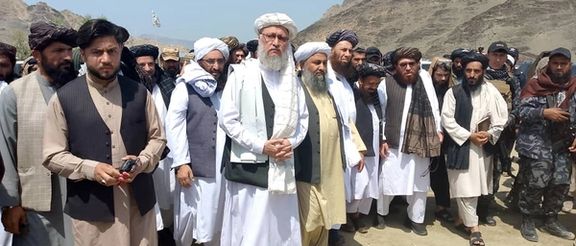
Taliban Leader Urges Unity In Paktia Amid Tensions With Haqqani Faction

Apr 11, 2025, 09:03 GMT+1

Taliban leader Hibatullah Akhundzada met with senior officials in Paktia province on Thursday, 10 April, calling for unity and obedience, the group’s spokesperson Zabihullah Mujahid announced.

The rare gathering in a Haqqani network stronghold highlights internal dynamics within the Taliban’s leadership.

The meeting, attended by Paktia’s governor Mehrullah Hamad, the provincial police chief, intelligence head, and other key figures, centred on reinforcing discipline.

Akhundzada stressed that obeying superiors, including ministers, is “obligatory” and demanded strict implementation of Sharia law across economic, political, and military domains, Mujahid said. He also underscored the promotion of “Islamic rulings” and the “propagation of virtue.”

Akhundzada addressed Afghanistan’s chronic poverty, which he has previously called “divine destiny” and a product of “intelligence agency propaganda,” without offering specific economic solutions. He urged Taliban members to eradicate “hostility, disputes, and ethnic prejudices” while focusing on national security.

The timing and location of the meeting point to underlying rivalries, particularly with acting Interior Minister Sirajuddin Haqqani, whose network holds significant sway in Paktia. Analysts see the visit as an attempt to strengthen authority amid these internal challenges.

Taliban Sets Up Security Committee For Afghan Migrants Facing Deportation In Pakistan

Apr 10, 2025, 16:04 GMT+1

The Taliban has formed a "security committee" to safeguard Afghan migrants in Pakistan amid ongoing deportations and reports of mistreatment, Shir Mohammad Sharif, head of the group's Border Police within the Ministry of Interior, announced on Thursday.

Speaking to Taliban-controlled national television during a visit to the Torkham border crossing, Sharif said the committee aims to "prevent ill-treatment by Pakistani authorities towards Afghan migrants and address their concerns in Pakistan."

Sharif’s visit to Torkham, a key transit point, was intended to evaluate recent damages, assess the security situation, and review the plight of Afghan migrants expelled from Pakistan.

The move follows accounts of alleged abuses, with several Afghan children at the border telling Afghanistan International they were detained and imprisoned by Pakistani police without cause.

Pakistan’s immigration department reported that over the past week, 11,371 Afghan migrants were detained and deported. On Tuesday alone, 3,669 were sent back through Torkham, according to official figures.

The Express Tribune noted that Pakistan’s ongoing operation targets not only undocumented migrants but also asylum seekers and families linked to criminal activities for detention and deportation.

The Pakistani government’s plan to expel approximately three million Afghan migrants in 2025 has drawn sharp criticism from international organisations. Despite the backlash, authorities continue their crackdown, intensifying efforts to identify and remove Afghan nationals across the country.