• العربية
  • پښتو
  • فارسی
Brand
  • Afghanistan
  • Sport
  • Markets
  • Afghanistan
  • Sport
  • Markets
  • Theme
  • Language
    • العربية
    • پښتو
    • فارسی
  • Afghanistan
  • Sport
  • Markets
All rights reserved for Volant Media UK Limited
volant media logo

Taliban’s Haqqani Reappears In Kabul, Meets Refugee Minister On Return Plans

Apr 12, 2025, 16:39 GMT+1

Taliban Interior Minister Sirajuddin Haqqani has resurfaced in Kabul after an extended absence, holding a meeting with Abdul Kabir, the group’s Minister of Refugees and Repatriation, to coordinate preparations for the return of Afghan refugees.
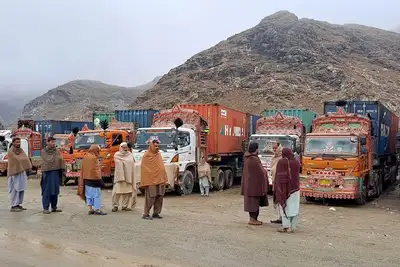
According to a statement issued by the Ministry of Refugees on Saturday, the meeting focused on logistical and security planning for the reintegration and relocation of returnees. Kabir reportedly urged Haqqani to deploy security forces in support of the process to ensure safe and orderly returns.

Haqqani’s return to public duties follows at least a two-month absence from his office, with the Taliban’s Ministry of Interior providing no official explanation for his prolonged disappearance. However, reports of internal tensions between Haqqani and Taliban supreme leader Hibatullah Akhundzada have fuelled speculation about his diminished role within the administration.

Kabir stated that preparations for the return and resettlement of refugees have now been finalised across all provinces and at major border crossings, signalling a nationwide effort to manage the influx of returning Afghans.

Most Viewed

Nearly 23,000 Militants Operating In Afghanistan, Says Russian Security Chief
1

Nearly 23,000 Militants Operating In Afghanistan, Says Russian Security Chief

2

Taliban Issue New Family Law Rules On Marriage & Divorce

3

Afghanistan Instability Is A Direct Regional Security Threat, Says Russia

4

UN Funding Should Support Trump Policy Goals, Says US

5

Pakistan Dismisses Taliban Denial Over Bannu Police Attack

•
•
•

More Stories

Retirees Urge Taliban To Pay Pensions Instead Of Funding Pakistani Madrasas

Apr 12, 2025, 14:17 GMT+1

A large group of retired government employees gathered outside the pension office in Kabul on Saturday, once again demanding that the Taliban pay their long-overdue pensions.

One protester criticised the group’s financial priorities, urging the Taliban to stop allocating millions of dollars to religious seminaries in Pakistan and instead focus on fulfilling their domestic obligations.

“For four years, we’ve been passed from one office to another with no real action,” one retiree said in an audio message sent to Afghanistan International. He claimed that a decree issued four months ago by Taliban supreme leader Hibatullah Akhundzada, intended to resolve the pension crisis, has yet to yield any results.

“The poor retirees are dying off. Those who remain have no bread to eat,” he added, highlighting the severe impact of the Taliban’s inaction amid rising living costs and economic hardship.

Retirees also complained about soaring electricity prices, contrasting their financial struggles with reports that the Taliban are donating millions to foreign religious institutions. According to sources close to the Taliban leadership, Akhundzada has directed the group’s finance minister and central bank governor to allocate $9 million to Pakistani madrasas in the new fiscal year’s budget.

The reports come as the Taliban reportedly instruct all ministries to cut staffing levels by 12 per cent due to a budget shortfall, raising further questions about the group’s financial management.

Since seizing control of Kabul in August 2021, the Taliban have suspended monthly pension payments to retired civil servants. In December 2024, Akhundzada issued a directive calling for the creation of special courts to review pension cases and ensure payments in accordance with Sharia and the law.

Four months later, however, the process remains stalled, leaving thousands of retirees in financial limbo.

Taliban Hosts Turkish Clerics In Northern Jowzjan Province

Apr 12, 2025, 13:28 GMT+1

The Taliban-appointed governor’s office in Jowzjan province has announced the arrival of a delegation of Turkish clerics in Sheberghan, aimed at fostering stronger ties between religious scholars from Afghanistan and Turkiye.

In an official statement, the Taliban said the Turkish delegation was taken to visit two prominent places in the region: Abu Sulaimani Jowzjani seminary and Dasht-e Leili. The latter holds deep symbolic significance for the Taliban, as it is believed to be the site of mass graves containing the remains of Taliban fighters killed in the 1990s.

In November 2024, the Taliban revealed plans to fence off the Dasht-e Leili grave site and build a mosque on the grounds, framing the move as a tribute to what they call “martyrs.” The group continues to accuse forces loyal to the National Islamic Movement of Afghanistan, then commanded by Abdul Rashid Dostum—now in exile in Turkiye—of responsibility for the so-called Dasht-e Leili massacre, allegations that Dostum has consistently denied.

The Turkish clerical delegation also met with Gol Haidar Shafaq, the Taliban-appointed governor of Jowzjan, to discuss avenues for enhancing religious cooperation between the two nations.

Governor Shafaq described the visit as a meaningful step toward reinforcing Islamic values and strengthening religious and diplomatic ties between Afghanistan and Turkiye.

CSTO Chief, Tajik President Discuss Strengthening Afghan Border Security

Apr 12, 2025, 11:26 GMT+1

Imangali Tasmagambetov, Secretary-General of the Collective Security Treaty Organisation (CSTO), met with Emomali Rahmon, President of Tajikistan, on Friday, 11 April, in Dushanbe to discuss measures aimed at enhancing border security with Afghanistan.

According to a statement released by the CSTO, the discussions focused in particular on the Targeted Interstate Programme — a joint initiative by CSTO member states designed to strengthen the security of Tajikistan’s southern border. The border with Afghanistan is considered a critical front in regional counterterrorism and stability efforts.

During his visit, Tasmagambetov also held separate talks with Emomali Sobirzoda, Tajikistan’s newly appointed Minister of Defence, to further address security collaboration.

The CSTO Secretary-General had earlier announced that the border reinforcement initiative would begin in 2025 and would consist of specific strategic measures aimed at safeguarding the interests and security of CSTO member countries. The programme is structured in three phases and will be implemented over a five-year period.

In parallel with these high-level talks, joint Russian-Tajik military exercises were conducted near the Afghan border in recent days. The drills, held at a military training ground in Tajikistan, focused on combat readiness and counterterrorism operations in mountainous terrain. The Russian Ministry of Defence reported that the exercise involved the deployment of Orlan-10 drones, tanks, artillery units, and Mi-24 attack helicopters.

Taliban Minister’s Remarks On Non-Muslims Spark Concern Among Afghan Sikhs & Hindus

Apr 12, 2025, 10:25 GMT+1

A representative of the Afghan Sikh and Hindu diaspora in the United Kingdom has expressed deep concern over recent remarks made by Khalid Hanafi, the Taliban’s Minister for the Propagation of Virtue and the Prevention of Vice, labelling them as offensive and inflammatory.

Harbans Singh, speaking to Afghanistan International, condemned the minister’s statements, made just days before the Sikh and Hindu festival of Vaisakhi. Hanafi reportedly claimed that non-Muslims, including Hindus and Sikhs, are “worse than animals,” a comment that has drawn sharp criticism from religious minorities.

Singh stressed that no one has the right to insult another religion and warned that such rhetoric could further endanger the small number of Sikhs and Hindus who remain in Afghanistan. He added that these comments could compel many to leave the country altogether due to fears for their safety and religious freedom.

Hanafi, known for his hardline stance, plays a central role in enforcing the Taliban’s restrictive social decrees, particularly those targeting women. In a previous speech, he asserted that God has given Muslims a special status due to their commitment to promoting virtue and preventing vice.

US Ends Temporary Protected Status For Thousands Of Afghans & Cameroonians

Apr 12, 2025, 09:31 GMT+1

The United States Department of Homeland Security (DHS) has announced the termination of Temporary Protected Status (TPS) for thousands of nationals from Afghanistan and Cameroon, placing them at risk of deportation in the coming months.

According to DHS Assistant Secretary for Public Affairs Tricia McLaughlin, Secretary of Homeland Security Kristi Noem has determined that current conditions in Afghanistan and Cameroon no longer warrant an extension of TPS.

As a result, approximately 14,600 Afghan nationals and 7,900 Cameroonian nationals—previously eligible under the programme—are expected to lose their protection from deportation by May and June respectively.

TPS is a form of humanitarian relief granted to individuals from countries facing extraordinary conditions such as armed conflict or environmental disasters. While in effect, it permits recipients to live and work legally in the United States and protects them from removal. The status is typically granted for 6 to 18 months and may be extended depending on conditions in the home country.

The decision to revoke TPS for these nationals is seen as part of a broader tightening of immigration policies under the administration of President Donald Trump. In total, more than 22,000 individuals from Afghanistan and Cameroon could be affected by the move, potentially facing deportation within the next two months.

The development has drawn concern from human rights groups and immigration advocates, who argue that returning individuals to regions still experiencing instability could place lives at risk.