New Polio Vaccination Campaign To Launch Nationwide On Monday
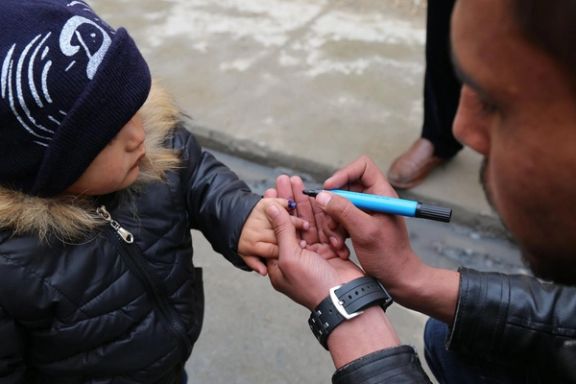
Polio Free Afghanistan has announced the launch of a new nationwide polio vaccination campaign set to begin on Monday, 21 April.
Polio Free Afghanistan has announced the launch of a new nationwide polio vaccination campaign set to begin on Monday, 21 April.
The organisation is urging all families to ensure that children under the age of five receive the vaccine in order to prevent the spread of the disease.
This will be the first nationwide campaign of the year, following a smaller drive conducted across 16 provinces in late January. While the initiative confirmed the launch, it did not specify the duration of the campaign or the number of children targeted for immunisation.
According to official data, Afghanistan recorded 25 polio cases in 2024. So far, only one case has been reported in the first four months of 2025—an encouraging sign of progress in the fight against the virus.
Nonetheless, health experts have voiced concerns over ongoing challenges facing vaccination efforts. These include the ban on female employment in health outreach, significant changes in vaccine delivery methods, and the Taliban’s prohibition of traditional house-to-house vaccination campaigns.
Reports indicate that Taliban leader Hibatullah Akhundzada has restricted vaccination efforts to mosques, eliminating the door-to-door approach that was once key to reaching children in remote areas.
A recent NPR report highlighted that, since the Taliban’s return to power, restrictions have increased on polio eradication initiatives, raising fears that these limitations could reverse the country’s hard-earned gains.
Telecommunications giant MTN has officially concluded its operations in Afghanistan, transferring its stake to the Beirut-based M1 Group. The company will now operate under the brand name “ATOMA,” marking a new chapter in the country’s telecom sector.
At a formal handover ceremony, Najibullah Haqqani, the Taliban’s Minister of Telecommunications and Technology, announced that MTN’s shares had been acquired by M1 Group for an undisclosed multi-million-dollar sum. He noted that MTN’s strategic decision aligns with its long-term goal to concentrate on African markets.
MTN, which began operations in Afghanistan in 2007, held a 40 percent share of the national telecom market and was the country’s largest mobile operator. The exit follows a series of withdrawals by MTN from Middle Eastern markets, including Syria and Yemen, in recent years.
Haqqani called on ATOMA to deliver high-quality services, honour its licence obligations, and prioritise consumer rights. “We expect ATOMA to meet international standards and contribute to the development of Afghanistan’s digital infrastructure,” he stated.
Also speaking at the ceremony, Abdul Manan Omari, the Taliban’s Minister of Labour and Social Affairs, described the acquisition as a significant foreign investment that enhances Afghanistan’s global image.
Hashim Ramazan, the newly appointed CEO of ATOMA, pledged to modernise the company’s network infrastructure, improve 4G services, and provide reliable, high-quality voice and internet connectivity across the country.
In a 2022 report, Bloomberg revealed that MTN had sold its Afghan operations to M1 Group for $35 million. The report noted that the decision was influenced by operational challenges that escalated following the withdrawal of US forces in 2021.
MTN first announced plans to exit the Middle East in August 2020. The South African-based firm ceased operations in Syria in August 2021 and sold its Yemen division in November of the same year. With the Afghanistan departure now complete, MTN’s only remaining presence in the region is a 49 percent stake in Irancell, its joint venture in Iran.
Despite the rebranding, ATOMA has assured customers that services will continue uninterrupted, with a focus on improving user experience and expanding coverage in rural areas.
The Taliban has bolstered security measures along the Pak-Afghan border, particularly at the Torkham crossing, amid growing concerns that ISIS operatives are attempting to infiltrate Afghanistan disguised as returning migrants, Taliban sources told Afghanistan International.
In response to recent intelligence reports, the Taliban has deployed a specialised security unit to Torkham, led by Sultan Mofaker, Director of Internal Security at the Ministry of Interior. According to sources, ISIS members are allegedly hiding among Afghan families deported from Pakistan, prompting a strict overhaul of screening procedures.
A joint task force, comprising personnel from the Taliban’s intelligence agency and the Ministry of Interior, has been stationed at Torkham since the onset of the latest wave of deportations. All returnees are now subject to biometric registration, and only those who pass identity verification are allowed to proceed further into Afghanistan.
“We are familiar with Pakistan’s tactics,” a Taliban security official stated. “We have imposed strict surveillance not only at Torkham but across all open routes along the Durand Line.”
Authorities have confirmed that the intensified security measures extend beyond Torkham to other key border crossings, including Spin Boldak, Ghulam Khan, Kharlachi in Khost province, and Angoor Ada in Paktika. Intelligence assessments suggest that ISIS operatives may also be attempting to exploit these alternative routes.
Adding to the alarm, former US envoy to Afghanistan Zalmay Khalilzad recently claimed that Pakistan could be using the deportation of Afghan migrants as a pretext to send armed ISIS fighters into Afghanistan. His remarks, based on information from informed sources, have heightened concerns about the broader security implications of mass deportations.
To manage the increasing number of returnees, the Taliban has established a processing facility named Camp Omari at the Torkham crossing. New arrivals are temporarily housed in the camp, where they undergo biometric screening and comprehensive background checks. Once identities are verified, individuals are assigned to a specific province or district and referred to the corresponding local intelligence office.
“After referral, our security and intelligence departments in the cities and districts are instructed to monitor them closely,” one official said.
Some returnees have complained of extended stays in the camp due to delays in the verification process.
Since the start of the second phase of deportations from Pakistan, tens of thousands of Afghan nationals have crossed back into Afghanistan via Torkham. On 27 October 2023, similar screening measures were reported, with particular scrutiny directed at former members of Afghanistan’s military under the previous government.
At the time, eyewitnesses noted heightened inspections of migrants who had fled to Pakistan following the Taliban’s takeover in August 2021.
The Taliban continues to accuse Pakistan of harbouring and training ISIS militants, alleging that fighters are being dispatched across the border to launch attacks within Afghanistan.
Afghanistan’s Ministry of Energy and Water, under the Taliban administration, issued a flood warning on Saturday, cautioning that 11 provinces are at high risk due to expected heavy rainfall and snowfall over the coming days.
The ministry stated that from 20 to 22 April, flash floods and rising river levels are likely to affect the provinces of Parwan, Panjshir, Kapisa, Paktia, Logar, Laghman, Kunar, Baghlan, Takhar, Kunduz, and Badakhshan. Residents have been urged to take the warning seriously, avoid riverbanks, and implement precautionary measures to reduce the risk of casualties and damage to property.
Afghanistan remains one of the countries most vulnerable to the impacts of climate change, having suffered a series of devastating floods, droughts, and earthquakes in recent years. These environmental disasters have compounded the country’s ongoing humanitarian crisis.
According to data from the International Organization for Migration (IOM), nearly three million people have been displaced by climate-related disasters between 2021 and 2024. In the past year alone, close to nine million Afghans have been affected by extreme weather events and climate-induced risks.
The Taliban’s Prime Minister, Mullah Mohammad Hassan Akhund, has called on Pakistan to immediately halt the mass deportation of Afghan migrants and instead work with Kabul on a coordinated and dignified repatriation process.
During a meeting on Saturday, 20 April, with Pakistani Foreign Minister Ishaq Dar in Kabul, Akhund criticised Islamabad’s unilateral approach, saying it had worsened the situation rather than contributing to a sustainable solution. He urged Pakistan, as a neighbouring Muslim country, to facilitate the return of Afghan migrants in a respectful manner, in accordance with Islamic principles and international law.
In a statement released by the Taliban-controlled Arg (Presidential Palace), Akhund assured the Pakistani delegation that Afghan soil would not be used to threaten the security of any neighbouring country.
Meanwhile, the Taliban’s Ministry of Foreign Affairs said in a separate statement that Acting Foreign Minister Amir Khan Muttaqi also expressed deep concern and dissatisfaction over the forced expulsion of Afghan nationals from Pakistan. Muttaqi reportedly pressed for an immediate end to rights violations against migrants.
The Pakistani Foreign Ministry’s official statement, however, made no mention of the migrant issue. Instead, it stated that the discussions during Dar’s meetings with Akhund and Muttaqi focused on shared interests, including security, trade, transit cooperation, and people-to-people ties. Both sides agreed to continue high-level exchanges to further strengthen bilateral relations.
Mohammad Sadiq Khan, Pakistan’s Special Representative for Afghanistan, later wrote on social media platform X that the two foreign ministers had underlined the importance of addressing security challenges and improving border management, reaffirming their commitment to ongoing engagement at the highest levels.
The omission of the deportation issue in Pakistan’s official statements is notable, particularly as Dar’s visit came amid a renewed wave of forced deportations. According to figures released by the Taliban, over 4300 Afghan migrants were expelled from Pakistan just a day before the visit.
The Taliban’s Foreign Ministry also quoted Dar as pledging that Afghan migrants would not be mistreated and that Pakistan had taken “serious measures” to protect their rights and property. “The assets and belongings of Afghan migrants belong to them, and no one has the right to confiscate them,” he was quoted as saying.
Dar reportedly extended an invitation to Amir Khan Muttaqi to visit Islamabad. The two delegations also discussed enhancing diplomatic cooperation, expediting visa issuance, facilitating agricultural exports, boosting trade and transit links, and progressing major regional infrastructure initiatives, including the Afghan Trans fibre-optic project, CASA-1000, and the TAPI gas pipeline.
Afghanistan’s Under-19 cricket team has secured qualification for the 2026 ICC U-19 Cricket World Cup after finishing top of their group in the regional qualifiers.
Afghanistan was set to face Nepal in a decisive match on Saturday; however, the fixture was cancelled due to persistent rainfall and unplayable ground conditions. As a result, Afghanistan progressed based on their superior points and net run rate.
The Afghan side had already dominated the group stage, claiming comprehensive victories over the United Arab Emirates, Hong Kong, and Oman in their previous three matches. They topped the table with six points and an impressive net run rate of +4.817. Nepal also finished with six points but had a lower net run rate of +3.576, placing them second.
The 2026 ICC U-19 Cricket World Cup is scheduled to take place in Namibia and Zimbabwe during the first two months of 2026.
