• العربية
  • پښتو
  • فارسی
Brand
  • Afghanistan
  • Sport
  • Markets
  • Afghanistan
  • Sport
  • Markets
  • Theme
  • Language
    • العربية
    • پښتو
    • فارسی
  • Afghanistan
  • Sport
  • Markets
All rights reserved for Volant Media UK Limited
volant media logo

UNAMA Chief Urges Support For Regional Efforts To Resolve Afghan Crisis

May 20, 2025, 15:23 GMT+1

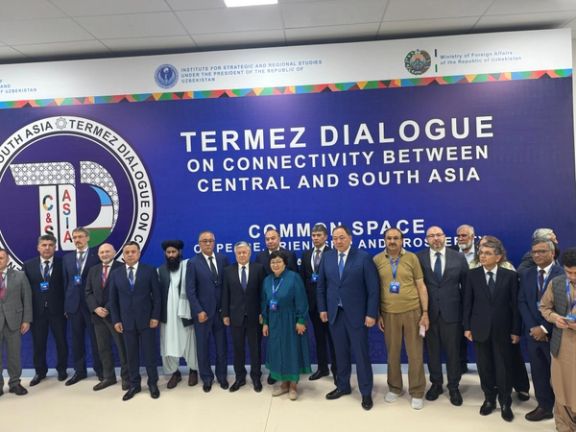
The head of the United Nations Assistance Mission in Afghanistan (UNAMA), Roza Otunbayeva, has called for international support and recognition of regional initiatives aimed at resolving Afghanistan’s ongoing crisis.

Her remarks came during the inaugural Termez Dialogue on Central and South Asia Connectivity, which began on Tuesday, 20 May.

The high-level forum gathered approximately 200 participants from Central and South Asia, Europe, the Commonwealth of Independent States, Asia, the United States, and the Middle East.

The event was organised by the Institute for Strategic and Regional Studies under the Presidency of Uzbekistan, in partnership with the country’s Ministry of Foreign Affairs and Chamber of Commerce and Industry.

Speaking at the opening session, Otunbayeva emphasised the importance of constructive regional engagement in addressing the challenges facing Afghanistan. “Efforts by neighbouring countries to resolve the Afghan crisis must be recognised and supported,” she stated.

Mohammad Naeem, Deputy Minister of Finance and Administration of the Taliban’s Foreign Ministry, also addressed the conference. He reiterated the Taliban’s commitment to regional stability, saying, “Afghan soil will not be used against any other country, and we expect the same from others. We want to utilise Afghanistan as a hub for connectivity, transit, and commercial, transit, and cultural cooperation.”

Highlighting the Taliban's growing engagement with Uzbekistan, Naeem pointed to several joint infrastructure and economic initiatives, including the Afghan-Trans railway project, a 500-kilovolt power transmission line, and a series of agreements valued at $2.5 billion in energy, agriculture, and industry.

He urged the international community to view the Taliban as “a trustworthy partner” and to invest in Afghanistan’s reconstruction and development.

The Termez Dialogue is intended to serve as a multilateral platform for advancing the goals of the 2022 United Nations General Assembly resolution, “Strengthening Connectivity between Central and South Asia.” The conference will continue over the next two days, with discussions focused on enhancing economic integration, transit, and cooperation across the region.

Although Uzbekistan has not formally recognised the Taliban government, it has maintained steady diplomatic and economic engagement with the group since their return to power in 2021.
Most Viewed

Taliban Order Cut To Residential Fibre-Optic Internet In Kabul, Say Sources
1

Taliban Order Cut To Residential Fibre-Optic Internet In Kabul, Say Sources

2

Taliban Besieged TOLOnews Offices After Journalist Detentions, Say Sources

3

Taliban Leader Adviser Arrested In Kandahar Over Alleged Bribery

4

Pakistani Envoy Urges Taliban to Take Practical Action Against Militants

5

Taliban Urges Turkmenistan To Implement 24-Hour Operations At Torghundi Port

•
•
•

More Stories

Protest In Pakistan: Torkham Highway Reopens After Hourslong Blockade

May 20, 2025, 13:33 GMT+1

The Torkham Highway, a key trade route between Pakistan and Afghanistan, has reopened following an hourslong blockade by protesters demanding the release of a tribal leader, Malik Nasir Ahmad Kokikhel.

According to local sources, the protest was dispersed by police, and the Torkham crossing resumed operations on Tuesday afternoon.

The demonstration began earlier that morning in the Jamrud area of Khyber Pakhtunkhwa, where dozens of protesters, including women from the Afridi tribe, blocked the highway. They accused the Pakistani government of the "unjust detention" of Kokikhel and called for his immediate release.

Malik Nasir Ahmad Kokikhel, a prominent tribal leader and member of the Pashtun Tahafuz Movement (PTM), was reportedly arrested last week after convening a tribal jirga (council) in the Khyber region. Authorities have charged him with "disturbing public order."

Speaking to local media, one protester said, “Our leaders are being targeted and arrested without any justification. This is part of the state’s continued oppression of tribal people.” The protesters vowed to resume their demonstrations if Kokikhel is not released promptly.

The Torkham crossing is a critical commercial artery, linking Pakistan with Afghanistan and Central Asia. Any disruption to its operation poses significant economic implications for cross-border trade and regional connectivity.

Authorities have not issued an official statement regarding the charges against Kokikhel or the status of his detention.

Ready To Establish Joint Industrial Zones In Afghanistan, Says Iranian Minister

May 20, 2025, 12:44 GMT+1

Iran’s Minister of Industry, Mine, and Trade, Mohammad Atabak, has expressed Tehran’s willingness to expand economic collaboration with the Taliban through the transfer of technical expertise and the establishment of joint industrial zones in Afghanistan.

Atabak made the remarks during a recent meeting with Hedayatullah Badri, the Taliban’s Minister of Mines and Petroleum, where both parties stressed the importance of strengthening bilateral economic and mining cooperation.

“Iran is prepared to deepen bilateral ties through the creation of joint industrial zones, investment initiatives, and the transfer of technical knowledge,” Atabak stated. He described the mineral wealth of both Iran and Afghanistan as a strategic opportunity for regional economic development and noted that specialised committees have been established to focus on the exploration, extraction, and processing of mineral resources.

The discussions took place during Badri’s visit to Iran’s Alborz province, where he participated in the Second International Mineral Processing Researchers Symposium.

In his address at the symposium, Badri also highlighted the need to expand cooperation in the economic and mining sectors, emphasising the potential for mutual benefit in resource development and technological collaboration.

Afghan Clerics Resist Taliban's Call To Support Strict Morality Enforcement

May 20, 2025, 11:23 GMT+1

Senior clerics and influential religious figures in Afghanistan appear to be withholding support from the Taliban’s Ministry for the Propagation of Virtue and Prevention of Vice, despite direct appeals from the ministry’s leadership.

During a recent visit to Herat province, Mohammad Khalid Hanafi, Minister for the Propagation of Virtue and Prevention of Vice, urged local clerics and community leaders to cooperate in the enforcement of the group's interpretation of Islamic law. He emphasised that without their assistance, the ministry would struggle to curb what it considers immoral behaviour.

Hanafi, whose ministry has implemented some of the Taliban’s most stringent measures particularly those targeting women, asserted that all regulations introduced are rooted in Islamic rulings, Hadiths, and Hanafi jurisprudence. He invited scholars and religious leaders from across the Islamic world to scrutinise these measures and offer feedback, stating the group is prepared to “respond” to any concerns raised.

Since August of last year, the ministry has introduced a series of increasingly strict regulations, drawing widespread criticism from both domestic and international observers. These include enhanced restrictions on women’s freedoms and prohibitions on the publication of images depicting living beings, which have affected media, advertising, and cultural expressions.

Hanafi’s remarks in Herat suggest a noticeable reluctance among Afghan clerics to endorse or actively support the ministry's controversial policies, highlighting potential internal divisions within the broader religious community over the Taliban’s approach to governance and moral enforcement.

More Than 800 Afghan Migrant Families Return From Pakistan, Iran, Say Taliban

May 20, 2025, 10:25 GMT+1

The Taliban-controlled Bakhtar News Agency reported on Tuesday that a total of 808 Afghan families have returned from Iran and Pakistan within the past 24 hours.

According to the report, the families entered Afghanistan from Pakistan via the Torkham, Spin Boldak, Angoor Ada, and Bahramcha border crossings.

An additional 447 families reportedly returned from Iran through the Islam Qala border crossing.

In recent months, both Iran and Pakistan have intensified efforts to arrest and deport Afghan migrants, prompting a surge in returns.

Taliban Bans Video Recording Of Friday Sermons In Balkh

May 20, 2025, 09:44 GMT+1

The Taliban has prohibited the video recording of Friday sermons in the northern province of Balkh, following a public outcry against the group and a fiery sermon by a prominent cleric condemning ethnic discrimination within the regime.

According to sources, the Taliban’s Directorate for the Propagation of Virtue and Prevention of Vice summoned mosque preachers and clerics around 3 PM on Monday to issue a new directive. The clerics were warned that the recording of sermons was strictly forbidden, under threat of consequences.

This move came after a video emerged of Maulawi Abdul Qahir, the preacher at Rawza Sharif Mosque in Balkh, openly criticising the Taliban’s tribalism and discriminatory practices. In his sermon, Qahir warned that such policies could lead to the collapse of the Taliban regime.

His remarks triggered widespread reaction and protests. Supporters of the cleric reportedly chanted “Death to the Taliban” inside the mosque, prompting a swift and forceful response from Taliban authorities.

Eyewitnesses reported that Ubaidullah, the head of the Directorate for the Propagation of Virtue in Balkh, entered the mosque during the final moments of the sermon accompanied by armed special forces and three military vehicles. They confiscated all video equipment and detained several attendees amid heightened tensions.

The Taliban reportedly intended to arrest Maulawi Abdul Qahir on the spot, but were met with resistance from worshippers. Sources say that while he avoided arrest during the incident, several of his supporters were taken into custody.

Maulawi Abdul Qahir has a history of outspoken criticism against the Taliban. During the group’s Loya Jirga (grand assembly), he condemned their governance style, stating: “You can capture geography with suicide bombers and car bombs, but not the hearts of the people.”

Since reclaiming power in 2021, the Taliban has presented its rule as inclusive and widely supported. However, political and civil institutions remain largely inactive or suppressed, and senior government roles have been monopolised by Taliban members. Clerics and commanders with little to no administrative experience have been appointed to technical and bureaucratic posts.

Independent religious voices like Qahir’s continue to face increasing pressure, with many clerics being arrested, silenced, or forced into exile for their dissent.