Iran, Pakistan Deport Over 3000 Afghans In Single Day, Says Taliban
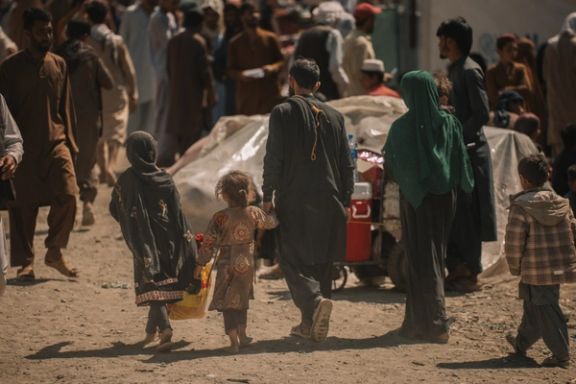
Iran and Pakistan deported more than 3000 Afghan migrants in a single day, according to the Taliban’s High Commission for Addressing Migrants’ Issues.

Iran and Pakistan deported more than 3000 Afghan migrants in a single day, according to the Taliban’s High Commission for Addressing Migrants’ Issues.
The mass deportations took place on Tuesday, 20 May, highlighting ongoing challenges faced by Afghan refugees in neighbouring countries.
The Commission reported that a total of 3094 Afghans were deported of which 1908 deported from Iran and 1186 deported from Pakistan. The returnees entered Afghanistan through multiple key border crossings, including Torkham, Spin Boldak, Bahramcha, Pul-e-Abrisham, and Islam Qala.
Of those deported, 374 individuals were transferred from Kabul to various provinces, including Paktia, Khost, Laghman, Nangarhar, Baghlan, Kunduz, Takhar, Samangan, Balkh, Badakhshan, Faryab, and Sar-e Pol.
According to the Taliban commission, the returnees collectively received over 6 million Afghanis in humanitarian assistance upon arrival.
The deportations come in the wake of diplomatic engagements by the Taliban. On Sunday, Acting Foreign Minister Amir Khan Muttaqi met with Iranian President Masoud Pezeshkian in Tehran to discuss bilateral issues, including the treatment and return of Afghan migrants. Similar discussions were also held earlier with Pakistan’s special envoy, Mohammad Sadiq.
However, ongoing daily reports from the Taliban’s migrant commission suggest that these high-level diplomatic talks have so far had little tangible impact on curbing the pace of deportations from either Iran or Pakistan.


The Taliban judiciary has announced the public flogging of nine individuals, including two women, in Kabul and Kunduz provinces. The punishments were carried out by the group’s counter-narcotics court in Kabul and its primary court in Qala-e-Zal district, Kunduz.
According to the Taliban’s Supreme Court, the individuals were sentenced on charges including “sexual relations outside of marriage,” the sale of hashish, and other drug-related offences.
On Tuesday, 20 May, a man and a woman in Kunduz were each sentenced to 39 lashes and three years’ imprisonment for alleged extramarital sexual relations. In a separate case in Kabul, another man and woman were flogged on similar charges.
Five additional men were publicly flogged in Kabul for allegedly selling hashish and other recreational drugs. These men received prison sentences ranging from eight months to three years and were subjected to between 20 and 30 lashes, according to the court’s statement.
The Taliban has not released details regarding the legal procedures or the rights afforded to the accused during trial. Over the past week, the group has flogged at least 25 people, including five women, across various provinces for a range of alleged offences.
The Taliban describes these punishments as the enforcement of Islamic Sharia. Despite strong condemnation from international human rights organisations, which regard public corporal punishment as a form of torture, the Taliban continues to carry out floggings and executions in public venues.
Since reclaiming power in August 2021, the Taliban has reinstated harsh judicial practices reminiscent of its previous rule, drawing widespread international criticism.

Türkiye’s Foreign Ministry has announced that Deputy Ambassador Berris Ekinci met with Yue Xiaoyong, China’s special envoy for Afghan affairs, to discuss ongoing engagement with Taliban-controlled Afghanistan and joint efforts to address the country’s humanitarian crisis.
In a statement released Wednesday, May 21, the ministry shared a photograph of the meeting and said, “They exchanged views on engagement with Afghanistan as well as efforts to improve the humanitarian situation in the country.”
Türkiye remains one of the few nations to have kept its embassy in Kabul operational following the Taliban’s return to power in August 2021. In recent months, Afghanistan’s embassy and consulates in Türkiye have also come under the control of Taliban-appointed representatives.
While Turkish President Recep Tayyip Erdoğan has openly criticized the Taliban’s treatment of women and girls, Ankara has maintained a cautious diplomatic approach toward the de facto rulers of Afghanistan.
China, by contrast, has pursued a more stable and pragmatic policy, sustaining close ties with the Taliban over the past four years. Beijing has accepted the Taliban-appointed ambassador and established active diplomatic relations with the regime in Kabul.
However, despite their varying approaches, neither Türkiye nor China has officially recognized the Taliban government.

The Taliban has described China as one of its most important economic partners during high-level talks held in Beijing on Wednesday, 21 May.
The meeting between Chinese Foreign Minister Wang Yi and Taliban Foreign Minister Amir Khan Muttaqi focused on strengthening economic cooperation and bilateral relations.
Muttaqi underscored the importance of ongoing collaboration between Taliban commissions and their Chinese counterparts, and reaffirmed the Taliban’s commitment to regional security. He assured Chinese officials that Afghan territory would not be used to threaten neighbouring countries.
Hafiz Zia Ahmad Takal, deputy spokesperson for the Taliban’s Ministry of Foreign Affairs, wrote on the social media platform X that Wang Yi had pledged continued political and economic support for Afghanistan. Yi also reportedly committed to addressing trade barriers, particularly in facilitating Afghan agricultural exports to China.
According to Takal, the Chinese foreign minister stated that China would not hesitate to support Afghanistan’s economic development.
In addition to the bilateral meeting, China also hosted an informal trilateral dialogue with the foreign ministers of Pakistan and the Taliban. Wang Yi, Pakistani Deputy Prime Minister and Foreign Minister Mohammad Ishaq Dar, and Amir Khan Muttaqi discussed regional security and economic integration, agreeing to extend the China–Pakistan Economic Corridor (CPEC) into Afghanistan.
A statement from Pakistan’s Ministry of Foreign Affairs said the three parties viewed trilateral cooperation as a critical platform for advancing regional security and economic connectivity.

The World Bank has formally rejected claims made by the Taliban that it has begun repaying outstanding debts owed to Afghan companies.
In an official statement, the international financial institution clarified that the debts in question were incurred under the former Afghan Republic government and are not the responsibility of the World Bank.
On Monday, 20 May, the Taliban’s Ministry of Finance released a statement asserting that the World Bank’s office in Kabul had resumed operations and had begun repaying approximately $50 million to Afghan logistics and construction firms.
The Taliban further claimed that $10.8 million would be paid directly to companies by the World Bank, while the remaining $39.11 million would be disbursed through the ministry in three instalments. The Ministry described this as a “major financial achievement,” suggesting that it would help revive development projects and generate employment opportunities.
However, the World Bank strongly refuted these claims, stating: “These contracts were concluded between the Republic government and the contractors. Hence, the responsibility to make these outstanding payments lay with the Republic government, not the World Bank.”
The Bank clarified that it is not a party to any of the contracts referenced by the Taliban and that it bears no legal obligation to settle them. It further stated that it is only facilitating payments under exceptional circumstances and strictly after a comprehensive verification process conducted by independent third parties.
The World Bank also denied having reached any agreement with the Taliban on the resumption of previous development projects in Afghanistan.
Efforts are currently underway, the Bank said, to finalise a multi-step mechanism that may allow for the resolution of some of the outstanding claims, though any such payments would remain conditional and subject to independent validation.
Since the Taliban’s return to power in August 2021, Afghanistan has been largely cut off from international funding and aid. The World Bank and other international donors have redirected most assistance through humanitarian channels, bypassing the Taliban administration.

Yousuf Wafa, the Taliban governor of Balkh province, has declared that all laws from previous Afghan governments have been fully abolished and replaced with the Taliban’s own legal framework.
Speaking at a provincial administrative meeting, Wafa instructed all government offices to strictly implement the group’s laws and to follow the directives issued by the Taliban’s supreme leader, Hibatullah Akhundzada.
In a statement released by the governor’s office on Tuesday, Wafa said, “The old law has been abolished and holds no validity.” He emphasised that all former legal frameworks must be replaced with the Taliban's regulations and that a designated committee would begin reviewing and removing former laws across government departments.
Wafa also directed the local electricity office in Balkh to collect outstanding electricity bills from the homes and properties of former government officials, allowing payment in instalments.
The announcement follows a recent statement by Hibatullah Akhundzada, who declared that he does not accept a single article of Afghanistan’s former constitution. He further stated that a revised version of the old legal code, submitted by the Ministry of Justice and the Supreme Court, was rejected as it did not align with the Taliban’s interpretation of Islamic governance.
The Taliban have said that their scholars are currently working on drafting a new legal code "free from Western influence." Taliban spokesperson Zabihullah Mujahid previously told media outlets that while elements of the former constitution could be reviewed, the new laws would reflect the group’s values and would be finalised soon.
Since regaining control of Afghanistan in August 2021, the Taliban have yet to introduce a formal constitution, making them the only ruling authority in the world operating without one. Most governance under the Taliban is conducted based on tribal customs and strict interpretations of Islamic jurisprudence.
Legal experts have noted that Afghanistan’s previous constitution was among the strongest in the region, with no contradiction to Islamic principles. Article One of the former constitution stated, “The religion of the Islamic Republic of Afghanistan is the sacred religion of Islam,” while Article Three stipulated, “No law shall contravene the beliefs and provisions of the sacred religion of Islam.”
Despite this, the Taliban continue to reject the document, claiming it was imposed under foreign influence and does not represent their vision for Afghanistan.