Taliban Publicly Flogs Woman & Two Men In Takhar For Theft, Adultery
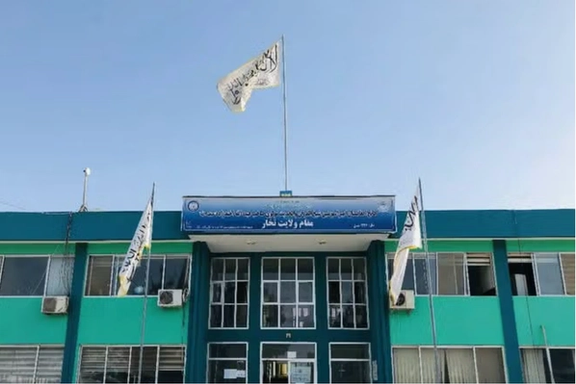
The Taliban has publicly flogged a woman and two men in Yangi Qala district of Takhar province after convicting them of theft and engaging in sexual relations outside of marriage.
The Taliban has publicly flogged a woman and two men in Yangi Qala district of Takhar province after convicting them of theft and engaging in sexual relations outside of marriage.
The Taliban’s Supreme Court announced on Thursday that each of the three individuals received 39 lashes in a public setting.
According to the court’s statement, issued on 21 May, the woman and one of the men were also sentenced to two years of imprisonment.
This incident is part of a broader pattern in recent days. Over the past week, the Taliban has flogged at least 36 individuals, including eight women, in various provinces across Afghanistan, in connection with a range of alleged offences.
The Taliban describes such corporal punishment as the implementation of “Islamic Sharia law.” Since reclaiming control of Afghanistan nearly four years ago, the group has consistently dismissed international calls to halt corporal punishment and torture. Despite widespread condemnation from human rights organisations, the Taliban continues to carry out public floggings and executions.

The Taliban has once again detained Mawlawi Abdul Qadir Qanit, a prominent religious scholar and vocal critic of the group.
Sources close to Qanit confirmed to Afghanistan International that Taliban intelligence forces detained him from his residence in Kabul.
According to the sources, Qanit is currently being held at the Taliban’s Intelligence Directorate 40. He has reportedly managed to make a brief phone call to his family since his detention.
The reason for his detention has not yet been made public by the Taliban. However, a video obtained by Afghanistan International appears to show the arrest. In the footage, plainclothes Taliban members arrive in a civilian vehicle on the street where Qanit’s home is located. The car stops outside his house, and Qanit is seen being escorted from his residence and placed into the vehicle.
Several local residents can be seen in the video standing nearby, though they do not intervene or visibly react to the arrest, which resembles a forced abduction.
The Afghanistan Green Trend, led by former Afghan vice president Amrullah Saleh, also reported the incident on X (formerly Twitter), stating that Qanit was “abducted from his home in Kabul.” The group alleged that a Taliban member named Mullah Sulaiman, affiliated with the group’s 15th District unit, led the operation.
This is not the first time Qanit has been detained by the Taliban. In February 2024, he was previously arrested alongside another cleric, Mahmood Hassan, following a public gathering in Kabul where both criticised the concentration of power within the Kandahar faction of the Taliban and called for the establishment of an inclusive government.
Neither the Taliban nor its intelligence wing has issued an official statement regarding the latest detention of Qanit.
China has announced that Pakistan and the Taliban have agreed to elevate their diplomatic relations to the level of ambassadors.
Chinese Foreign Minister Wang Yi welcomed the development, stating that Beijing supports the strengthening of ties between Afghanistan and Pakistan.
In a statement issued on Wednesday, 21 May, the Chinese Ministry of Foreign Affairs confirmed that both Pakistan and the Taliban expressed their willingness to enhance their diplomatic engagement. Currently, the relationship is maintained at the chargé d'affaires level, with Ubaid-ur-Rehman Nizamani serving as Pakistan’s envoy in Kabul and Sardar Ahmad Shakib representing the Taliban in Islamabad.
The Chinese ministry stated that Foreign Minister Wang Yi held discussions with his counterparts from the Taliban and Pakistan regarding the diplomatic interaction, bolstering communication, and taking concrete steps to foster economic development, infrastructure projects, and regional cooperation.
During the meeting, Wang Yi emphasised several key priorities: building mutual political trust, fostering good neighbourly relations, expanding diplomatic exchanges, deepening practical cooperation, rejecting all forms of terrorism, and maintaining regional peace and stability.
The Pakistani Ministry of Foreign Affairs also issued a statement, welcoming what it called “positive momentum” in bilateral relations with the Taliban. The ministry highlighted progress in diplomatic engagement, trade, and the facilitation of commercial ties.
Although neither Pakistan nor China has formally recognised the Taliban government, both countries have maintained close working relations with the group.
The announcement followed an informal trilateral meeting held in Beijing on Tuesday, hosted by Wang Yi and attended by the foreign ministers of China, Pakistan, and the Taliban.
Zabihullah Mujahid, the Taliban spokesperson, has strongly condemned the recent attack on a school bus in Balochistan and called on Pakistani officials to refrain from levelling baseless accusations against the group.
In a statement issued on Wednesday, Mujahid described the attack in Khuzdar district, which claimed the lives of several children, as unjustifiable, stating that violence against civilians, especially children, is inexcusable under any circumstances.
Responding to suggestions from some Pakistani authorities that Afghan-based groups may have been involved, Mujahid rejected the claims as unfounded and lacking evidence. “There is no proof indicating that these attacks were planned or executed from Afghan soil,” he stated.
The bombing targeted a bus carrying students from a military-run school, killing at least six children and injuring 43 others.
In the wake of the attack, Pakistani authorities initially pointed fingers at India. The Pakistani military claimed the bombing was orchestrated and directed by Indian intelligence, and executed through proxy agents operating in Balochistan.
According to the military’s statement, India is seeking to destabilise Balochistan and Khyber Pakhtunkhwa provinces following setbacks in recent confrontations. The statement also referenced previous incidents, including the attack on the Jaffar Express train and the kidnapping of Pakistani soldiers by Baloch separatists, as part of what it alleged to be a coordinated campaign involving both Indian and Afghan actors.
The Taliban has urged Pakistan to approach such incidents with restraint and to avoid inflaming tensions through unsubstantiated allegations.
Iran and Pakistan deported more than 3000 Afghan migrants in a single day, according to the Taliban’s High Commission for Addressing Migrants’ Issues.
The mass deportations took place on Tuesday, 20 May, highlighting ongoing challenges faced by Afghan refugees in neighbouring countries.
The Commission reported that a total of 3094 Afghans were deported of which 1908 deported from Iran and 1186 deported from Pakistan. The returnees entered Afghanistan through multiple key border crossings, including Torkham, Spin Boldak, Bahramcha, Pul-e-Abrisham, and Islam Qala.
Of those deported, 374 individuals were transferred from Kabul to various provinces, including Paktia, Khost, Laghman, Nangarhar, Baghlan, Kunduz, Takhar, Samangan, Balkh, Badakhshan, Faryab, and Sar-e Pol.
According to the Taliban commission, the returnees collectively received over 6 million Afghanis in humanitarian assistance upon arrival.
The deportations come in the wake of diplomatic engagements by the Taliban. On Sunday, Acting Foreign Minister Amir Khan Muttaqi met with Iranian President Masoud Pezeshkian in Tehran to discuss bilateral issues, including the treatment and return of Afghan migrants. Similar discussions were also held earlier with Pakistan’s special envoy, Mohammad Sadiq.
However, ongoing daily reports from the Taliban’s migrant commission suggest that these high-level diplomatic talks have so far had little tangible impact on curbing the pace of deportations from either Iran or Pakistan.
The Taliban judiciary has announced the public flogging of nine individuals, including two women, in Kabul and Kunduz provinces. The punishments were carried out by the group’s counter-narcotics court in Kabul and its primary court in Qala-e-Zal district, Kunduz.
According to the Taliban’s Supreme Court, the individuals were sentenced on charges including “sexual relations outside of marriage,” the sale of hashish, and other drug-related offences.
On Tuesday, 20 May, a man and a woman in Kunduz were each sentenced to 39 lashes and three years’ imprisonment for alleged extramarital sexual relations. In a separate case in Kabul, another man and woman were flogged on similar charges.
Five additional men were publicly flogged in Kabul for allegedly selling hashish and other recreational drugs. These men received prison sentences ranging from eight months to three years and were subjected to between 20 and 30 lashes, according to the court’s statement.
The Taliban has not released details regarding the legal procedures or the rights afforded to the accused during trial. Over the past week, the group has flogged at least 25 people, including five women, across various provinces for a range of alleged offences.
The Taliban describes these punishments as the enforcement of Islamic Sharia. Despite strong condemnation from international human rights organisations, which regard public corporal punishment as a form of torture, the Taliban continues to carry out floggings and executions in public venues.
Since reclaiming power in August 2021, the Taliban has reinstated harsh judicial practices reminiscent of its previous rule, drawing widespread international criticism.