WFP Seeks $555 Million To Avert Hunger Crisis In Afghanistan
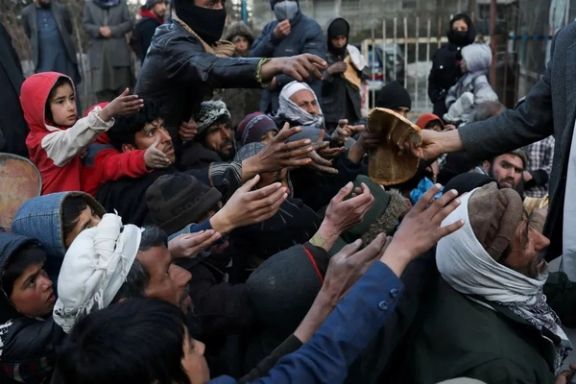
The United Nations World Food Programme (WFP) has appealed for $555 million to support Afghanistan’s most vulnerable families through August.

The United Nations World Food Programme (WFP) has appealed for $555 million to support Afghanistan’s most vulnerable families through August.
The UN agency warned that nearly four years after the Taliban’s return to power the country’s economy is collapsing and hunger now threatens one-third of the population.
In a statement issued on Sunday, 25 May, the WFP said it faces a funding shortfall that limits its ability to reach only six million people, leaving more than eight million Afghans without life-saving assistance.
The agency highlighted that two thirds of female-headed households struggle to meet basic nutritional needs, a situation exacerbated by Taliban-imposed restrictions on women’s education and public participation.
“The climate crisis has further damaged farmland and homes across many regions,” the WFP noted, stressing that sudden floods and severe droughts now put millions more livelihoods at risk.
Without the requested funds, the WFP warned, millions of Afghans will go without adequate food, deepening the humanitarian emergency in a nation already beset by conflict and economic hardship.


The Taliban has dismissed the Organisation of Turkic States’ plea for an inclusive Afghan government as an internal affair.
Spokesperson Zabihullah Mujahid said on Saturday that “the wishes and suggestions of our people will be taken into consideration,” but insisted that Afghans alone must resolve domestic issues.
In their 21 May statement, the OTS leaders representing Azerbaijan, Kazakhstan, Kyrgyzstan, Türkiye and Uzbekistan had urged Kabul to form a government reflecting Afghanistan’s ethnic diversity and to strengthen coordination against terrorism. They described the country’s Turkic communities as a “unique bridge” to the wider Turkic world.
Mujahid did not address inclusivity directly, instead calling on other nations to fulfil their responsibilities through economic support. He reaffirmed the Taliban’s desire for strong diplomatic and trade ties with Turkic-speaking states and stated that Afghan territory would not be used to threaten any country.
Despite repeated international appeals from the UN, regional powers and Western governments, the Taliban have so far appointed an all-male administration drawn exclusively from their own ranks, ignoring demands for broader representation.

India has resumed issuing visas for Afghan citizens after a four-year suspension, government sources told The Hindu.
A new online visa portal, launched in late April 2025, allows Afghans including investors, artists, athletes, students and medical patients to apply for student, business, medical, medical-attendant, entry and UN diplomat visas.
Visa categories also cover cultural figures participating in unpaid events, property owners in India and those with family members studying in the country. Applicants must upload a front-facing photograph, valid passport and national ID showing personal details, date of birth and passport expiry.
India halted visa services for Afghans following the August 2021 fall of the former government and the Taliban’s takeover. It closed its embassy and consulates in Kabul and revoked thousands of existing visas, leaving hundreds of students unable to complete their courses.
While New Delhi has yet to issue an official statement, a senior government official confirmed that the “New Afghan Visa” section is now live on the Ministry of Home Affairs immigration website.
The move follows growing diplomatic engagement between India and the Taliban regime. Last month, External Affairs Minister Subrahmanyam Jaishankar spoke by phone with Taliban Foreign Minister Amir Khan Muttaqi, thanking him for condemning a “terrorist attack” in Kashmir. In November 2024, Muttaqi met with senior Indian diplomat JP Singh in Kabul and urged New Delhi to facilitate visas, especially for businessmen.

Leaders of the Organization of Turkic States (OTS) have called for the establishment of an inclusive government in Afghanistan, highlighting the country’s ethnic diversity and the significant presence of Turkic peoples as a “unique bridge” to the Turkic world.
In a joint statement released on 21 May, the OTS emphasised the necessity of stronger coordination to combat terrorism within Afghanistan. The organisation, founded in 2009 to foster cooperation among Turkic-speaking nations, comprises Azerbaijan, Kazakhstan, Kyrgyzstan, Türkiye and Uzbekistan.
Describing Afghanistan as a “neighbour and brother” to the Turkic world, the leaders underscored the nation’s deep religious, cultural and historical ties with member states. They also urged Kabul to control the cultivation, production and trafficking of narcotics and voiced concern over ongoing human rights challenges.
The statement further called for sustained international humanitarian assistance “in a coherent, coordinated and structured manner,” aiming to achieve “an Afghanistan at peace with its people, its neighbours, its region and beyond, as a full-fledged member of the international community.”
Acknowledging the plight of refugees, the OTS leaders advocated for the voluntary return of Afghan migrants in the region. They concluded by urging the Taliban authorities to pursue sustainable peace, national reconciliation, stability and development in Afghanistan.

Mohammad Bagheri, chief of staff of Iran’s Armed Forces, announced on Friday that 100 kilometres of a new border wall along the Razavi Khorasan Province frontier with Afghanistan have been finished.
Speaking during a visit to the construction site, Bagheri said the barrier incorporates “electronic and fully smart technologies” tailored to the region’s terrain.
According to the Islamic Republic News Agency, the project includes the erection of watchtowers and border outposts at strategic intervals.
Bagheri emphasised that the wall will bolster long-term regional security and significantly curb drug trafficking, the smuggling of prohibited goods, and unauthorised crossings by Afghan nationals into Iran.
Despite Tehran’s pragmatic ties with the Taliban, Iranian officials remain wary of infiltration by extremist groups and the continued surge of undocumented Afghan migrants. The wall, Bagheri added, is a vital element in Iran’s broader strategy to manage its eastern frontier and protect national stability.

Dozens of Afghan women’s civil society organisations have demanded that international bodies launch legal proceedings against Cheryl Benard, wife of former US special representative Zalmay Khalilzad, for comments they say downplayed the Taliban’s gender-based repression.
In an open letter signed by 64 groups, they call on the International Criminal Court, the United Nations, human rights agencies, the European Union, the US government and international media to investigate and prosecute Benard for “denial of gender-based violence” and “complicity in crimes against humanity.” The letter accuses her of whitewashing the Taliban regime and normalising its systemic oppression of women and girls.
Benard, an author and researcher, recently asserted that Afghan women have not been excluded from society, continue to live and work normally, and that it is safe for refugees to return.
Activists counter that her remarks contradict verified findings by the UN Special Rapporteur on Human Rights in Afghanistan, the United Nations Assistance Mission in Afghanistan (UNAMA) and Amnesty International, as well as numerous survivor testimonies.
“By denying these crimes, discrediting internationally verified reports and promoting return to a regime of systemic violence, Cheryl Benard stands as a complicit actor,” the letter states. Signatories also argue that her close ties to Khalilzad, a principal architect of the US-Taliban peace process, underpin a political motive to soften the Taliban’s international image.