India Resumes Visa Issuance For Afghans In Six Categories
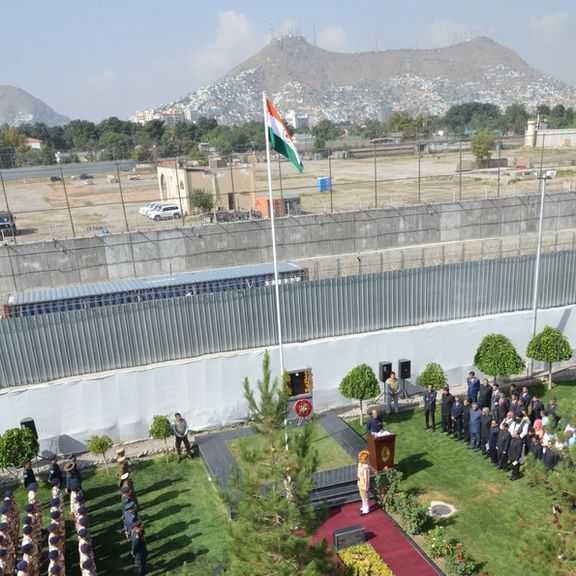
India has resumed issuing visas to Afghans in six categories, the Ministry of External Affairs announced Thursday, May 29, 2025, marking a shift in policy after a four-year suspension.

India has resumed issuing visas to Afghans in six categories, the Ministry of External Affairs announced Thursday, May 29, 2025, marking a shift in policy after a four-year suspension.
Ministry spokesperson Randhir Jaiswal said patients, patient attendants, businesspeople, students, UN diplomats, and those entering India are now eligible for visas. Speaking at a press briefing, Jaiswal noted that the emergency visa system for Afghans has been replaced with a new process effective since April 2025.
Jaiswal stated that the move was intended to strengthen ties between India and Afghanistan.
Afghans currently in India with visas issued under the previous system must update or convert them to comply with the new policy.
India halted visa issuance for Afghans and cancelled thousands of existing visas following the Taliban’s return to power in August 2021, when the former Afghan government collapsed. India was among the first countries to close its embassy in Kabul and consulates in other provinces, withdrawing entirely from Afghanistan.
Recently, Indian media, citing government officials, reported the resumption of visa issuance. In parallel, India has cautiously expanded diplomatic engagement with the Taliban. Notably, Indian Foreign Minister S. Jaishankar held a phone call with Taliban Foreign Minister Amir Khan Muttaqi, the first such contact, days after a military clash between India and Pakistan.


A Russian Security Council delegation recently visited Kabul to discuss strengthening bilateral relations and trade with Taliban officials, Security Council Secretary Sergei Shoigu said Thursday.
Speaking at a press conference in Moscow following the 13th international meeting of high representatives for security issues, Shoigu said the delegation explored “transport corridors, joint development of various minerals, expansion of trade, and agriculture” with their Afghan counterparts, according to Interfax news agency.
The visit follows Russia’s hosting of a regional security forum from May 27 to 29 at its National Defence Management Centre, where a Taliban delegation participated for the first time.
During a meeting of security council secretaries from Shanghai Cooperation Organisation (SCO) member states in Moscow, Shoigu proposed resuming the SCO–Afghanistan Contact Group. He noted that the Taliban’s removal from Russia’s list of terrorist organisations, following a Russian Supreme Court decision to suspend the ban, has opened the door for potential cooperation.
No Afghan representatives have attended SCO meetings since the Taliban regained power in 2021. Last year, Putin expressed support for reactivating the SCO–Afghanistan Contact Group, stating it could help stabilise Afghanistan.

Most websites of Taliban ministries have been restored following a cyberattack that disrupted over 20 government sites.
As of May 30, 2025, only the websites of the Taliban’s Ministry of Communications and Technology, Ministry of Economy, and Ministry of Public Works remain offline, according to Afghanistan International’s investigations.
The hacker group Afghan Dragons claimed responsibility for the attack in a statement to Afghanistan International early Friday, saying it targeted the Taliban’s ministry and agency websites. The group said the cyberattack was in solidarity with Afghan women and girls denied education rights under Taliban rule.
Afghanistan International confirmed that websites of more than 20 ministries and several other Taliban government bodies were inaccessible during the attack.
The Taliban has not issued an official statement regarding the hacking incident.
This marks the second significant cyberattack against the Taliban this year. In February, the hacker group TalibanLeaks breached thousands of emails from Taliban offices and employees, exposing numerous documents.

Documents obtained by Afghanistan International reveal that the Taliban’s Ministry of Defence has dismissed 4403 officers and staff across the country, with 1000 of those removed from Badakhshan province alone.
This mass dismissal is part of a broader restructuring effort, reportedly ordered by Taliban leader Hibatullah Akhundzada due to budget constraints.
Following Badakhshan, the highest numbers of dismissals were recorded in the provinces of Kapisa, Parwan, and Takhar. The dismissed personnel served in various roles within the Ministry of Defence and included fighters identified by both their real and alias names. Notably, the provinces of Bamiyan and Daikundi saw little to no dismissals.
Among those affected are forces affiliated with senior Taliban commanders such as Fasihuddin Fetrat the Taliban army chief as well as Abdul Qahar Mutawakkil, Samiullah Rasoul, Sayed Mir Khanjar, Mawlawi Saifuddin Azizi, and Mawlawi Amanuddin Mansour.
A letter dated 13 April and signed by Akhundzada ordered that 20 percent of staff from the Taliban’s key security ministries including the Ministry of Defence, Ministry of Interior, and the General Directorate of Intelligence be placed on “active reserve” status, citing financial limitations.
Taliban spokesperson Zabihullah Mujahid confirmed the downsizing, describing it as part of a broader effort to streamline operations, enhance efficiency, and reduce bureaucratic redundancies.
Documents from the Ministry of Defence also show that the Taliban classify their forces into two categories: those who collaborated with the group before the fall of the former republic, and those who joined after the Taliban’s return to power in August 2021.
According to another document obtained by Afghanistan International, Defence Minister Yaqub Mujahid instructed the Ministry of Interior and the Intelligence Directorate to prioritise the removal of “unpopular and undesirable individuals” during the downsizing process.
Rising Discontent in Badakhshan
The dismissals have sparked unrest, particularly in Badakhshan, where local Taliban fighters many of whom are of Uzbek and Tajik ethnicity feel increasingly marginalised. These fighters played a critical role in the collapse of northern territories but have since been sidelined by the central leadership.
Recent tensions in the Jurm district have led to armed clashes among Taliban factions. Local fighters have accused the provincial governor and other non-local officials of discriminatory treatment and have called for their removal.
One prominent figure emerging from the disgruntled ranks is Salahuddin Salar, also known as Mullah Salahuddin, a young Tajik commander gaining influence in the region.
In an effort to contain the growing crisis, senior Taliban officials, including the army chief and the head of intelligence, have travelled to Badakhshan for negotiations and damage control.

The Taliban’s Security and Purge Commission convened a meeting on Wednesday, 28 May, in Kabul, chaired by the group’s acting Defence Minister, Yaqub Mujahid.
According to an official statement, the meeting focused on the overall security landscape of Afghanistan and discussed matters concerning the country's “official borders lines.”
Commission members reportedly emphasised the importance of strengthening control over border regions, taking firm action against border violations, and enhancing coordination mechanisms across frontier areas.
The Taliban described the current security situation in Afghanistan as “reassuring,” though no further details regarding the proceedings of the meeting have been made public.
The meeting comes against a backdrop of heightened regional concern. Speaking during a session of the Council of Defence Ministers of the Collective Security Treaty Organisation (CSTO), Russian Defence Minister Andrey Belousov warned that Afghanistan is now host to more than 20 radical groups, comprising over 15,000 fighters.
Belousov cautioned his counterparts that these groups pose a tangible threat, with the potential to infiltrate neighbouring states and extend instability beyond the region.
Earlier this year, the Taliban’s Security and Purge Commission released its annual report, identifying nationals of Tajikistan and Pakistan as among the principal perpetrators of attacks within Afghanistan.

Former Afghan President Hamid Karzai met with Iranian Foreign Minister Abbas Araghchi and envoys from five Western nations during a recent trip to Rome, diplomatic sources told Afghanistan International.
According to the sources, Karzai flew to Rome on a private jet from Germany to meet Araghchi, who was in the Italian capital on Friday, 23 May, for the fifth round of indirect negotiations with the United States. The meeting reportedly took place at the Embassy of the Islamic Republic of Iran in Rome.
Among the Western diplomats Karzai met were representatives from countries including Germany and the United Kingdom, as well as an envoy linked to US president Donald Trump.
The central focus of the discussions was the launch of a national dialogue and the formation of an inclusive national government in Afghanistan, an initiative Karzai has long championed. Both Iranian and Western diplomats expressed support for the proposal, describing it as the only viable solution to Afghanistan’s protracted political and humanitarian crisis.
Sources also noted that detailed consultations took place regarding the potential mechanisms for implementing such a dialogue within Afghanistan.
Karzai’s trip to Europe, including his unofficial visit to Germany, is one of several he has undertaken since the Taliban returned to power in August 2021. Over the past four years, Karzai has consistently called for a broad-based, intra-Afghan dialogue and the establishment of a representative government, appeals that have been largely dismissed by the Taliban leadership in Kandahar.
Karzai has since returned to Kabul following his meetings in Europe.