Taliban Appoints Mawlawi Gul Hassan As Ambassador To Russia

The Taliban’s Ministry of Foreign Affairs has appointed a senior religious cleric, Mawlawi Gul Hassan, as its new ambassador to the Russian Federation.

The Taliban’s Ministry of Foreign Affairs has appointed a senior religious cleric, Mawlawi Gul Hassan, as its new ambassador to the Russian Federation.
According to the Taliban embassy in Moscow, which spoke to the TASS news agency, Gul Hassan will assume his post after securing a visa and will formally take charge of the mission.
Gul Hassan previously served as a member of the Taliban’s Quetta Shura, the group’s leadership council.
Last week, Dmitry Zhirnov, Russia’s ambassador to Kabul, officially presented the agreement for Gul Hassan’s appointment to Amir Khan Muttaqi, the Taliban’s foreign minister.
Russia recently announced its decision to accept the Taliban’s ambassador in Moscow and to elevate diplomatic relations with the group, following the removal of the Taliban from its list of banned organisations. The Afghan embassy in Moscow had already been handed over to the Taliban in an earlier move.
The deepening of ties between Moscow and the Taliban comes as Russia has repeatedly warned against any return of NATO and the United States to Afghanistan. In a recent statement, Russian Foreign Minister Sergey Lavrov said NATO was seeking ways to re-establish its presence in the country.
Moscow has also consistently voiced concerns about the presence of terrorist groups in Afghanistan, particularly the Khorasan branch of ISIS.
The Taliban hosted a gathering in Ghazni province on Sunday aimed at building support among Afghanistan’s Hazara and Shia communities.
Several Hazara politicians who served in the former government publicly expressed support for the Taliban at the event and called on opposition figures to return to the country.
The event was organised by the Taliban-backed High Shia Commission of Afghanistan, which said in a statement that a number of former generals, senior officials and civil servants from the previous administration attended.
According to Taliban-run Radio Television Afghanistan (RTA), hundreds of people participated in the event. Among the speakers were Ghulam Ali Wahdat, former governor of Bamiyan, and Mohammad Ali Akhlaqi, a former member of parliament and current head of the commission.
Speakers largely focused on urging the international community to recognise the Taliban administration and unfreeze Afghanistan’s foreign-held assets.
Addressing the audience, Akhlaqi said: “If you truly want our progress, then cooperate with this regime, engage with it, and recognise it. If you’re waiting for a government that merely follows your commands, that’s not going to happen.” He also praised the Taliban’s performance over the past four years and called on exiled political figures to return.
Wahdat said he now lives peacefully under Taliban rule and echoed the call for former military and political leaders to return to Afghanistan.
Jafar Sadeqi, head of the commission’s legal committee, added: “The Shia community has no problem with the Islamic Emirate, and we support all of its achievements.”
Mohammad Sangar, a former military officer, also encouraged ex-servicemen to return, stating that “the Islamic Emirate is based on principles that must be obeyed.”
The Taliban recently established the High Shia Commission of Afghanistan in an effort to build ties with the Shia population. The commission periodically organises gatherings in Shia-majority areas to demonstrate support for the Taliban administration.
Akhlaqi said the commission seeks to serve as a bridge between the Taliban and the Shia community, while advocating for their demands.
However, despite some expressions of support from Hazara and Shia figures inside Afghanistan, the Taliban has yet to meet key demands from these communities. The Taliban government continues to recognise only Hanafi jurisprudence in legal matters, excluding Jafari jurisprudence, which was officially used under the previous government to adjudicate personal status issues for the Shia minority.
Furthermore, aside from a few Hazara officials appointed as deputy ministers in lower-profile ministries, there are no Hazara or Shia representatives in the Taliban’s cabinet or top decision-making bodies.

The Taliban, Pakistan and Uzbekistan have finalised a roadmap for the swift implementation of the 760-kilometre “Afghan Trans” railway project.
The line will connect Central Asia to South Asia through Afghanistan’s Balkh and Logar provinces, aiming to boost regional trade and strengthen diplomatic ties among the three nations.
The planned railway line will begin in Termez, Uzbekistan, pass through the city of Mazar-e-Sharif in Balkh province and Logar province in Afghanistan, and terminate at the Kharlachi border crossing in Pakistan’s Kurram region.
In a recent phone call with Taliban Foreign Minister Amir Khan Muttaqi and Uzbek Foreign Minister Bakhtiyor Saidov, Pakistani Foreign Minister Ishaq Dar stressed the importance of finalising the agreement on the Uzbekistan-Afghanistan-Pakistan railway project.
The new route is expected to cut delivery times between Pakistan and Uzbekistan by up to five days and reduce transportation costs by at least 40 percent.
Projections suggest that by 2030, the railway could handle up to 15 million tonnes of cargo annually, transforming the route into a major economic corridor. The line is also expected to facilitate passenger travel between the participating countries.
Following high-level discussions between Uzbek and Pakistani delegations in Tashkent attended by the presidents of both countries the three parties agreed to establish a trilateral coordination committee. The committee will oversee the remaining technical studies, financing and implementation of the US$4.8 billion project, which is targeted for completion by the end of 2027.
A Pakistani source familiar with the project described the railway as more than a logistical venture, highlighting its potential to unlock Pakistan’s US$240 billion economic capacity. The source said the route would give Central Asia unprecedented access to warm-water ports and could significantly reshape regional trade dynamics.
A large portion of the project 573 kilometres will require new rail construction inside Afghanistan. Reports indicate that experts have agreed on the route and its geographical conditions, with joint surveying and preliminary feasibility studies now under way.
Beyond its economic impact, the project also symbolises deepening diplomatic relations between the participating countries. Pakistan and the Taliban recently agreed to elevate diplomatic ties to the ambassadorial level.
The initiative aligns with China’s regional ambitions under its Belt and Road Initiative. Beijing has played a behind-the-scenes role in facilitating coordination between Islamabad and the Taliban, further reinforcing its position as a regional stabiliser.
For the Taliban, the railway offers a rare economic opportunity, with potential benefits including increased international engagement, transit revenues and greater regional integration.

The first passenger train service between Mashhad, Iran, and Herat, Afghanistan, is expected to launch within the next two weeks, an Iranian official said.
Jabbar Ali Zakeri, Iran’s Deputy Minister of Roads and Urban Development, announced the plan as part of Iran’s broader strategy to expand rail transport and boost regional connectivity.
“Plans have been made for the passenger train between Mashhad and Herat, and we anticipate that the first passenger train on this route will be launched within the next two weeks,” Zakeri said.
He added that increasing rail transit remains a key priority for Iran’s railway sector.
“The railway’s approach is to increase transit, and transit trains are given special priority within the rail network. The main goal of the railway is to expand transit across the country,” Zakeri said.
He did not provide additional details regarding the new service.
Previously, Iran’s Ministry of Roads and Urban Development announced that construction of the Rozanak-to-Herat rail line was under way, and that passenger train service would begin once the project was completed.

The UN Security Council will hold a meeting on Afghanistan early next month, with the session scheduled for 23 June.
Roza Otunbayeva, the UN Secretary-General’s Special Representative for Afghanistan, is expected to brief the Council during the meeting.
Other speakers will include Sima Bahous, Executive Director of UN Women, and a senior official from the UN Office for the Coordination of Humanitarian Affairs (OCHA).
According to the Security Council’s website, humanitarian assistance to Afghanistan will be one of the key topics on the agenda.
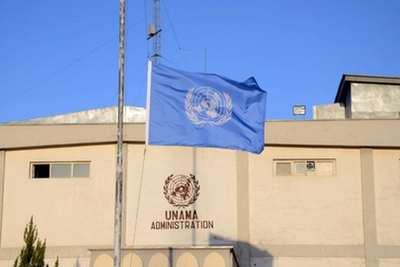
Ahead of the meeting, the UN Assistance Mission in Afghanistan (UNAMA) is expected to release its quarterly report on 13 June.
In March, the Security Council unanimously adopted a resolution extending UNAMA’s mandate for another year, through to 17 March 2026.

The Taliban has installed surveillance cameras in several areas of Panjshir province, the Ministry of Interior announced on Monday, claiming the move is intended to improve security and public safety.
In a statement issued on 2 June, the ministry said it expects the cameras to help reduce criminal activity in the province. It did not specify how many cameras had been installed.
Over the past several years, numerous reports have documented Taliban abuses and human rights violations in Panjshir. Local residents and human rights organisations have repeatedly accused Taliban fighters of violent and abusive conduct, particularly in the aftermath of military clashes in the province.
Panjshir was the only province to mount an armed resistance following the collapse of the former Afghan government in 2021, with the National Resistance Front, led by Ahmad Massoud, opposing Taliban control. The province witnessed weeks of heavy fighting before the Taliban eventually seized military control.
Since then, the Taliban has launched multiple operations aimed at eliminating remaining opposition forces in the region, including airstrikes and mass arrests.
The Taliban has previously pursued similar surveillance initiatives. In 2023, the group announced plans to install 60,000 surveillance cameras across Kabul to enhance security. At the time, Amnesty International warned that such large-scale monitoring could result in a sweeping system of surveillance and repression targeting Afghan citizens.
