UN Security Council Schedules June Session On Afghanistan
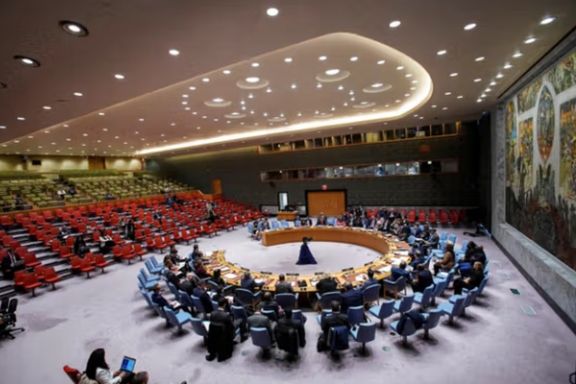
The UN Security Council will hold a meeting on Afghanistan early next month, with the session scheduled for 23 June.
The UN Security Council will hold a meeting on Afghanistan early next month, with the session scheduled for 23 June.
Roza Otunbayeva, the UN Secretary-General’s Special Representative for Afghanistan, is expected to brief the Council during the meeting.
Other speakers will include Sima Bahous, Executive Director of UN Women, and a senior official from the UN Office for the Coordination of Humanitarian Affairs (OCHA).
According to the Security Council’s website, humanitarian assistance to Afghanistan will be one of the key topics on the agenda.
Ahead of the meeting, the UN Assistance Mission in Afghanistan (UNAMA) is expected to release its quarterly report on 13 June.
In March, the Security Council unanimously adopted a resolution extending UNAMA’s mandate for another year, through to 17 March 2026.

The Taliban has installed surveillance cameras in several areas of Panjshir province, the Ministry of Interior announced on Monday, claiming the move is intended to improve security and public safety.
In a statement issued on 2 June, the ministry said it expects the cameras to help reduce criminal activity in the province. It did not specify how many cameras had been installed.
Over the past several years, numerous reports have documented Taliban abuses and human rights violations in Panjshir. Local residents and human rights organisations have repeatedly accused Taliban fighters of violent and abusive conduct, particularly in the aftermath of military clashes in the province.
Panjshir was the only province to mount an armed resistance following the collapse of the former Afghan government in 2021, with the National Resistance Front, led by Ahmad Massoud, opposing Taliban control. The province witnessed weeks of heavy fighting before the Taliban eventually seized military control.
Since then, the Taliban has launched multiple operations aimed at eliminating remaining opposition forces in the region, including airstrikes and mass arrests.
The Taliban has previously pursued similar surveillance initiatives. In 2023, the group announced plans to install 60,000 surveillance cameras across Kabul to enhance security. At the time, Amnesty International warned that such large-scale monitoring could result in a sweeping system of surveillance and repression targeting Afghan citizens.
A Taliban team deployed to destroy opium poppy fields in Badakhshan’s Jurm district has withdrawn amid growing internal tensions and local unrest, sources told Afghanistan International on Sunday.
Local sources said dissatisfaction is mounting among Taliban members from the province, with tensions further fuelled by the killing of a Taliban fighter in the provincial capital, Faizabad.
According to the sources, a Badakhshani Taliban member was shot dead by another Taliban fighter in Faizabad, inflaming divisions within the group’s local ranks.
Fasihuddin Fitrat, the Taliban’s Chief of Army Staff and himself a Badakhshani, is reportedly seeking to maintain tight control of the situation to prevent new protests in the province. However, discontent among Taliban members from Badakhshan reportedly remains high.
Meanwhile, the Taliban team assigned to eradicate poppy crops has now withdrawn from Jurm district, where intense clashes between local residents and Taliban forces had erupted over the past week.
Sources said the family of a farmer killed during the clashes was paid 400,000 Afghanis in compensation, while families of those injured received 20,000 Afghanis each.
The village of Farghamanj in Jurm district has been the focal point of the unrest, with residents resisting the Taliban’s efforts to destroy poppy fields.
Amid the growing tensions, Abdul Haq Wasiq, head of the Taliban’s intelligence agency, visited Badakhshan on 27 May and held meetings with local officials in an effort to ease the situation.
Although public protests have reportedly subsided for now, local sources say dissatisfaction remains widespread and internal divisions within the Taliban persist.
A senior Taliban official has claimed that Afghan women are the primary victims of the country’s worsening climate crisis, even as the group’s own restrictions on women continue to draw global condemnation.
Matiul Haq Khalis, head of the Taliban-run National Environmental Protection Agency, said that climate change and deteriorating environmental conditions disproportionately affect Afghan women.
“International organisations should not overlook women in their data collection and reporting,” Khalis said during a meeting in Kabul, according to Taliban-run Radio Television Afghanistan (RTA) on Monday.
He also urged aid organisations not to tie their assistance to political issues.
“The people of Afghanistan are part of the global human community. The pain of this nation is the pain of all, and their problems are everyone’s problems,” Khalis said.
His remarks come despite the Taliban’s own policies, which have severely restricted women’s rights and participation in society. Since returning to power in 2021, the Taliban has barred Afghan women from working for most domestic and international organisations, including many delivering humanitarian aid.
The United Nations has previously reported that Taliban-imposed restrictions on women’s rights have significantly reduced international financial assistance to Afghanistan.
The UN Office for the Coordination of Humanitarian Affairs (OCHA) also reported that violence against aid workers increased in April.
On 22 May, UN sources in Kabul told Afghanistan International that Taliban-affiliated individuals had followed and threatened female UN employees with death. Male relatives of the women were also warned to prevent them from going to work or face lethal consequences.
At least three UN sources in Kabul said Taliban gunmen targeted, followed, threatened and intimidated numerous female Afghan UN staff last week.
According to OCHA, there were seven incidents in April, including the detention of around 29 aid workers by Taliban authorities, as well as two additional cases of threats and verbal harassment.
Such incidents have severely undermined the ability of humanitarian workers to safely and effectively operate in the country.
Iranian authorities executed 163 people, including seven Afghan nationals, in May, according to a report released Sunday by Hengaw, a human rights organisation.
The group said the number of executions carried out this year has surged by 143 percent compared to the same period in 2024. In May of last year, 67 executions were recorded.
Hengaw reported that those executed had been convicted on charges including espionage for Israel, murder, drug-related offences, rape and armed robbery.
The group also noted that only six of the 163 executions were officially announced by the Iranian government or state-affiliated media. The remainder, it said, were conducted in secret across various prisons in the country.
Iran continues to face international criticism over its use of capital punishment, particularly in cases involving non-violent crimes and amid concerns over due process.
Nearly 4 million children in Afghanistan are currently out of school, the United Nations Children’s Fund (UNICEF) reported on Sunday.
A lack of proper school buildings, access to clean water, sanitation facilities and a shortage of qualified teachers particularly women are among the key factors keeping children out of the classroom, the agency said.
Many children are also forced to work to support their families as economic hardship continues to deepen across the country.
The ongoing ban on education for girls has drawn widespread international condemnation. Political leaders, human rights groups including Amnesty International and UN agencies have repeatedly called on the Taliban to reopen schools for girls.
The Taliban has ignored those appeals and, for the fourth consecutive year, continues to bar girls from attending school beyond sixth grade, as well as from pursuing higher education at universities.
UNICEF has previously warned that the ban will have catastrophic consequences for Afghanistan’s future. The agency stressed that the Taliban’s decision jeopardises the lives and prospects of millions of women and girls.