Iran Executed 163 People, Including Seven Afghans, in May
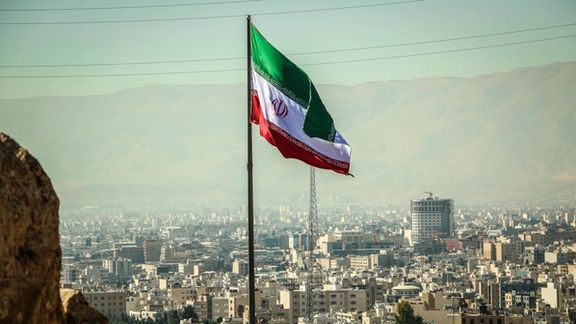
Iranian authorities executed 163 people, including seven Afghan nationals, in May, according to a report released Sunday by Hengaw, a human rights organisation.

Iranian authorities executed 163 people, including seven Afghan nationals, in May, according to a report released Sunday by Hengaw, a human rights organisation.
The group said the number of executions carried out this year has surged by 143 percent compared to the same period in 2024. In May of last year, 67 executions were recorded.
Hengaw reported that those executed had been convicted on charges including espionage for Israel, murder, drug-related offences, rape and armed robbery.
The group also noted that only six of the 163 executions were officially announced by the Iranian government or state-affiliated media. The remainder, it said, were conducted in secret across various prisons in the country.
Iran continues to face international criticism over its use of capital punishment, particularly in cases involving non-violent crimes and amid concerns over due process.


Nearly 4 million children in Afghanistan are currently out of school, the United Nations Children’s Fund (UNICEF) reported on Sunday.
A lack of proper school buildings, access to clean water, sanitation facilities and a shortage of qualified teachers particularly women are among the key factors keeping children out of the classroom, the agency said.
Many children are also forced to work to support their families as economic hardship continues to deepen across the country.
The ongoing ban on education for girls has drawn widespread international condemnation. Political leaders, human rights groups including Amnesty International and UN agencies have repeatedly called on the Taliban to reopen schools for girls.
The Taliban has ignored those appeals and, for the fourth consecutive year, continues to bar girls from attending school beyond sixth grade, as well as from pursuing higher education at universities.
UNICEF has previously warned that the ban will have catastrophic consequences for Afghanistan’s future. The agency stressed that the Taliban’s decision jeopardises the lives and prospects of millions of women and girls.

More than 600,000 Afghan migrants have returned from Iran and Pakistan so far this year, according to the United Nations High Commissioner for Refugees (UNHCR).
The UN agency said on Sunday that nearly 435,000 Afghans returned from Iran during the first four months of 2025. Of those, 252,400 were forcibly deported.
In the same period, more than 196,000 Afghan migrants returned from Pakistan. According to UNHCR, 33,000 of these were deported, while the rest returned under growing pressure.
The agency also reported that over the past 21 months, approximately 998,500 Afghan migrants have returned from Pakistan to Afghanistan. Among these, only about 131,000 people have received UN assistance. Of those who received support, 50 percent were women and 2.4 percent were persons with disabilities.
Nearly 870,000 returnees from Pakistan have yet to receive any form of aid from the UN.
Many of these migrants were forced to abandon businesses and livelihoods in Pakistan due to increasing government pressure, returning to an Afghanistan some had not seen in decades — often empty-handed and with little support.
Among those assisted this year, 72 percent said they were planning to settle in five provinces: Laghman, Nangarhar, Kunduz, Kabul and Kandahar.

Russia has formally accepted the Taliban’s appointed ambassador to Moscow, the Taliban’s Ministry of Foreign Affairs announced on Sunday, marking another step in deepening ties between the two sides.
The move signals Moscow’s growing engagement with the Taliban despite ongoing international sanctions. It remains unclear, however, whether this development signals the start of formal recognition of the Taliban regime by a major regional power.
In April, Russia suspended its designation of the Taliban as a terrorist organisation.
On Sunday, Russian Ambassador to Afghanistan Dmitry Zhirnov met with Taliban Foreign Minister Amir Khan Muttaqi in Kabul and delivered an official letter confirming Moscow’s acceptance of the Taliban’s ambassador.
Muttaqi expressed hope that this “new phase will provide an opportunity for both countries to expand cooperation in various areas,” according to the Taliban’s statement.
China was the first country to formally receive a Taliban-appointed ambassador, with several other nations following. Last week, Pakistan announced it would elevate its diplomatic relations with the Taliban to ambassadorial level.
Like other countries and in contrast to its stance during the first Taliban regime in the mid-1990s Pakistan has not granted official recognition to the Taliban government.

US Defence Secretary Pete Hegseth said on Saturday that America’s wars in Afghanistan and Iraq lacked clear and defined objectives, leading to years of costly involvement.
Speaking at the Shangri-La Dialogue in Singapore, Hegseth who served as a soldier in both countries, criticised Washington’s approach to the conflicts, which he described as “endless wars,” regime changes and misguided nation-building efforts.
“These costly deviations were not tied to the core and vital interests of the United States,” Hegseth said.
He argued that the wars diverted American focus from the Indo-Pacific, a region he called essential to the country’s future and prosperity.
“For an entire generation, we ignored the Indo-Pacific,” Hegseth said. “President Trump is changing that. We are not making the same mistakes.”
He added: “We’re focused on delivering for the American people, on safeguarding their security, on protecting their economic interests, and on using common sense to preserve peace in the Indo-Pacific.”
The Indo-Pacific region encompasses the Indian Ocean, the western and central Pacific, the seas connecting them, and surrounding lands.
Hegseth also described the US withdrawal from Afghanistan as “humiliating,” placing blame on the Biden administration, which he said had projected an image of a “weak and feckless” America to the world.
He cited several developments including the arrival of “21 million illegal” immigrants across the southern US border, Russia’s invasion of Ukraine, Hamas’s 7 October attack on Israel, an emboldened Iran, and the flight of a Chinese spy balloon over US airspace as consequences of what he called failures by the previous democratic administration.

Taliban Foreign Minister Amir Khan Muttaqi has welcomed Pakistan’s decision to restore full diplomatic relations with Taliban, calling it a “very positive development” for ties between the two neighbours.
The move, announced by Pakistan’s Foreign Ministry on Friday, will elevate Islamabad’s diplomatic representation in Kabul from chargé d’affaires to ambassador. The Taliban’s foreign ministry said it would reciprocate by appointing an ambassador to Pakistan.
The announcement follows a phone call between Muttaqi and Pakistani Foreign Minister Ishaq Dar. According to a statement from Pakistan’s Foreign Ministry on Sunday, the two sides also stressed the need for close cooperation on the Uzbekistan–Afghanistan–Pakistan railway project.
Dar and Muttaqi also reviewed progress on agreements reached during Dar’s visit to Kabul on April 19. Both ministers underscored the importance of building trust and maintaining regular diplomatic engagement.
Pakistan’s move comes after months of strained relations with Afghanistan’s Taliban rulers. Islamabad has accused the Taliban of harbouring militants from Tehreek-e-Taliban Pakistan, or TTP, a charge the Taliban denies. International reports, however, have found evidence of TTP fighters operating from Afghan soil.
Dar said Islamabad’s relations with the Taliban are now on a “positive trajectory” following his recent visit.