Pro-Taliban Social Media Figure Rahim Sekandar Confirms He Is In Custody

Rahim Sekandar, a prominent pro-Taliban figure on social media, has confirmed that he is currently being held by the group.

Rahim Sekandar, a prominent pro-Taliban figure on social media, has confirmed that he is currently being held by the group.
In a post on X, formerly known as Twitter, he wrote: “I am imprisoned by the Taliban’s Reform Commission. A few days ago, I criticised the remarks of Mawlawi Saeedullah Saeed, but now I admit I was wrong and retract my statement.”
Sources earlier told Afghanistan International that Sekandar had been detained after criticising Taliban officials over their opposition to Taliban fighters joining the conflict between Pakistani security forces and militant groups.
In his statement, posted Thursday on his official X account, Sekandar acknowledged his detention and withdrew his earlier remarks. It remains unclear whether the message was written by him personally or posted by the Taliban using his device.
Sekandar was reportedly arrested for criticising Saeedullah Saeed, the head of the Taliban’s Reform Commission in Kabul. Saeed had stated that no one is permitted to leave the country to wage jihad without direct orders from the Taliban’s supreme leader.
In an earlier Facebook post responding to Saeed’s comments, Sekandar had written: “What exactly are you trying to prove with these statements?”
The Reform Commission, established by Taliban leader Mullah Hibatullah Akhundzada, primarily monitors matters related to Tehreek-e-Taliban Pakistan (TTP).
Previously, the Taliban also imprisoned General Mobin, another high-profile supporter, sentencing him to one and a half years in prison for statements and behaviour deemed inconsistent with the group’s official policies.
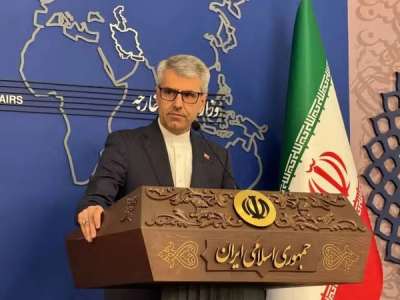
The Taliban’s Ministry of Foreign Affairs announced Friday that Nanda Avalist, Indonesia’s newly appointed chargé d’affaires to Afghanistan, has arrived in Kabul and held a meeting with the group’s foreign minister, Amir Khan Muttaqi.
In a statement released 6 June, the ministry said Avalist expressed his commitment to sharing “the realities and developments on the ground” in Afghanistan with both the Indonesian government and public during his tenure.
Muttaqi, in turn, thanked Indonesia for its continued engagement, for hosting Taliban diplomats in Jakarta, and for its broader support.
Indonesia has repeatedly urged the Taliban to reverse its ban on girls’ education. In response to the restrictions, the Indonesian Foreign Ministry has expressed hope that the Taliban will reconsider the policy, emphasising that access to education for all including women and girls remains vital to Afghanistan’s future.
While some regional nations have maintained diplomatic channels with the Taliban, no country has formally recognised the group as Afghanistan’s legitimate government since its return to power in August 2021.

Two decades after the 9/11 attacks, the Taliban remain widely regarded as a fundamentalist and repressive group. However, their legal and political status varies and is often contradictory across different countries and international institutions.
This inconsistency has created a complex web of sanctions, diplomatic engagements and humanitarian challenges, leaving the global community divided and uncertain over how to engage with the Taliban.
At the centre of this international framework is the United Nations Security Council, which imposed sanctions on the Taliban after the group provided sanctuary to al-Qaeda prior to 9/11. Under Resolution 1988, the Security Council targets individuals and entities associated with the Taliban through asset freezes, travel bans and arms embargoes. This sanctions list operates separately from that targeting al-Qaeda, ensuring that the Taliban remain subject to global financial oversight and restrictions.
Many UN member states, including the United Kingdom and European Union countries, implement these sanctions. Although they may not classify the Taliban specifically as a “terrorist organisation”, they are obligated to enforce these restrictions under international law.
The United States has taken a distinct approach. Under Executive Order 13224, issued on 23 September 2001, the Taliban were designated as “Specially Designated Global Terrorists,” targeting their financial networks and prohibiting US citizens from engaging in transactions with them. While the Taliban as an organisation are not listed as a Foreign Terrorist Organisation (FTO) by the US State Department, closely linked groups such as the Haqqani Network and Tehreek-e-Taliban Pakistan (TTP) are reflecting the deep overlap among extremist groups in the region.
Elsewhere, countries such as Australia and Canada officially designate the Taliban as a terrorist organisation, while New Zealand implements the UN sanctions without adding an independent listing.
The approach of some key states has been more nuanced. Russia designated the Taliban as a terrorist organisation in 2003 but shifted to pragmatic engagement following the group’s return to power in 2021. In recent months, Russia’s Supreme Court approved the suspension of the Taliban’s designation as a terrorist group, a move welcomed by the Taliban. Despite this delisting, Russia’s Foreign Ministry stressed that it remains bound by UN sanctions on Taliban officials.
While Moscow has established diplomatic ties with the Taliban recently accepting their proposed ambassador and handing over Afghanistan’s embassy to the group it stops short of formally recognising them as the legitimate government of Afghanistan. This reflects a broader reality: a state may classify a group as terrorist while maintaining diplomatic engagement for strategic or regional stability reasons.
Kyrgyzstan also recently removed the Taliban from its list of banned organisations. Its Foreign Ministry said the decision followed a thorough review by national authorities. The Taliban had been designated an extremist group in Kyrgyzstan in 2006.
Other Central Asian countries, including Kazakhstan, have taken similar approaches to Russia’s, periodically revisiting or removing such designations signalling a dynamic shift in regional policy.
Central Asian states appear to be following the lead of Russia and China, both of which have deepened engagement with the Taliban in recent years.
India, meanwhile, has said its decision on recognising the Taliban will align with the stance of the United Nations.
Although no country has formally recognised the Taliban as Afghanistan’s government, dozens including all six of Afghanistan’s neighbours have permitted Taliban-appointed diplomats to assume control of Afghan embassies or consulates.
The United Kingdom, while enforcing UN sanctions, also does not recognise the Taliban as the legitimate government of Afghanistan. It has adopted a limited and pragmatic approach, focused on humanitarian issues, counterterrorism and human rights, largely through its diplomatic mission in Qatar. The British government emphasises that such engagement does not confer legitimacy on the Taliban’s actions.
The Taliban remain under significant international pressure, with sanctions imposed by both the United Nations and the United States, which continue to view the group as a global threat.
But the variation in legal classifications and the shifting nature of political policies underscore the diplomatic complexity surrounding Afghanistan. The ongoing debate between formal recognition and pragmatic engagement presents a lasting challenge for the international community in dealing with the country’s current reality.

The import of coal and soapstone from Afghanistan to Pakistan has been halted, according to reports in Pakistani media.
The suspension, which began on Monday, remains in effect. One of the key reasons cited is a new requirement for importers to provide a certificate of origin.
Importers transporting goods from Afghanistan to Pakistan said the sudden halt in customs clearance has left hundreds of vehicles loaded with coal and soapstone stranded on the Afghan side of the border.
The Dawn newspaper reported Thursday, 5 June, that the sudden enforcement of the certificate of origin requirement at customs clearance had triggered “mini panic” among coal and talc importers, many of whom had planned to complete their transactions ahead of Eid al-Adha.
Mujjebullah Shinwari, head of the Customs Clearing Agents Association at Torkham, told Dawn that efforts are under way to secure at least a one-time exemption from higher authorities in Islamabad to clear shipments already at the Torkham crossing and to offer some relief to importers and transporters ahead of the holiday.
Shinwari said there had been no violations in the import of coal and talc, noting that the minerals had been sourced from various regions of Afghanistan and that importers had previously provided sufficient documentation to Torkham customs officials.
A coal importer at Torkham noted that prior to the new restrictions, around 300 to 350 vehicles were crossing daily into Pakistan.
Critics of unregulated and poorly supervised coal extraction have described the cheap export of Afghan coal as a form of plundering the country’s natural resources.
In late 2023, the Taliban administration announced that 1,000 tons of coal were being extracted daily in northern Afghanistan and sold to traders.

The Taliban Supreme Court has announced that 14 individuals, including one woman, were publicly flogged in the provinces of Kabul, Khost, Parwan and Paktika on charges including drug trafficking, running away from home and theft.
In addition to lashings, the individuals were sentenced to prison terms ranging from six months to four years.
In a statement released Thursday, 5 June, the Taliban Supreme Court said nine people in Kabul were sentenced to between 10 and 20 lashes for allegedly selling and trafficking drugs. They were also given prison terms of six to seven months.
In separate reports, the court said a woman and a man were flogged in Parwan for running away from home. Two other individuals in Khost were flogged on drug trafficking charges.
The Taliban’s primary court in Khost also sentenced one person to 36 public lashes for theft, along with a two-year prison term.
Additionally, two individuals, including a woman in Parwan, were sentenced to four years in prison and 35 lashes. Two others in Khost received prison terms of two years and eight months, along with between 35 and 39 lashes.
In the past week alone, the Taliban have publicly flogged at least 41 people across Afghanistan for various offences. The group describes these punishments as the implementation of Sharia.
Despite strong opposition from international human rights organisations to the use of corporal punishment and torture, the Taliban judicial system continues to conduct public floggings and executions.

US President Donald Trump has signed an executive order imposing a broad travel ban on citizens of Afghanistan and 11 other countries, effectively suspending their entry into the United States.
The ban also applies to travellers from Iran, Chad, the Democratic Republic of the Congo, Equatorial Guinea, Eritrea, Haiti, Myanmar, Libya, Somalia, Sudan and Yemen.
The order, issued on Wednesday, 4 June, cites the Taliban’s control of Afghanistan as justification for including Afghan citizens in the ban. The Taliban is listed as a Specially Designated Global Terrorist (SDGT) group by the US government. The SDGT list, maintained by the US Department of the Treasury, targets groups and individuals associated with terrorist activities and imposes financial sanctions, including asset freezes.
The order further states that Afghanistan lacks a capable and reliable central authority to issue passports and other civil documents. It also argues that the country does not have adequate mechanisms in place for conducting background checks or screening individuals prior to travel.
Under the new directive, the entry of Afghan citizens, both immigrants and non-immigrants, into the United States is suspended with immediate effect.
The executive order includes several exemptions. Afghan Special Immigrant Visa (SIV) holders are permitted to enter the United States, as are religious and ethnic minorities from Iran who have been granted immigrant visas. US permanent residents and dual nationals travelling on a passport from a country not subject to the ban are also exempt.
Other exemptions apply to immediate family members with immigrant visas, individuals holding special US government employee visas, and those travelling with diplomatic visas for United Nations or NATO missions. Additionally, athletes, coaches and accompanying staff participating in events such as the Olympics, World Cup or other major international sporting competitions are not subject to the ban.
