IAEA Confirms Attacks On Two Iranian Centrifuge Facilities
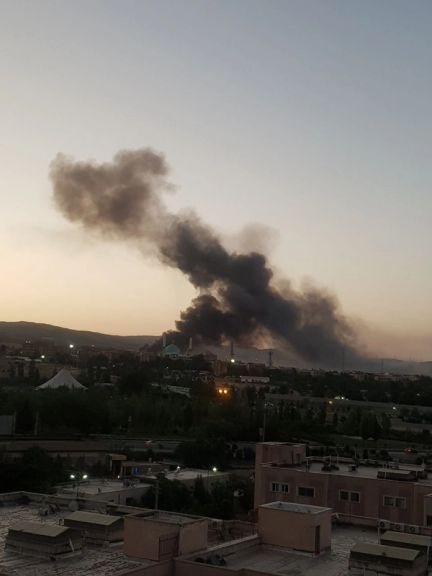
The International Atomic Energy Agency (IAEA) has confirmed that two centrifuge production facilities in Iran, located in Karaj and Tehran, have come under attack.

The International Atomic Energy Agency (IAEA) has confirmed that two centrifuge production facilities in Iran, located in Karaj and Tehran, have come under attack.
According to the agency, a building at the Tehran site, which was involved in the production and testing of advanced centrifuge rotors, was targeted in the assault. In Karaj, two buildings used for the manufacture of various centrifuge components were reported destroyed.
On Wednesday, the Israeli military claimed responsibility for an airstrike on a centrifuge production site in Tehran. The Israeli Defence Forces stated that the facility was part of an effort by the Iranian regime to increase the speed and volume of uranium enrichment with the aim of producing nuclear weapons.
Iran has not publicly responded to the IAEA report or the Israeli claims. The IAEA did not attribute responsibility for the attacks but continues to monitor developments closely as part of its nuclear safeguards mandate.


The US Embassy in Jerusalem has announced its temporary closure from Wednesday to Friday, 18–20 June, citing security concerns amid escalating tensions between Iran and Israel.
According to Israel Army Radio, Iran has launched approximately 400 ballistic missiles at Israel since the beginning of the conflict. The Israeli military reported that it had intercepted three drones launched from Iranian territory in recent days.
US Ambassador to Israel Mike Huckabee stated that a facility affiliated with the US Embassy in Tel Aviv sustained minor damage from a shockwave caused by nearby Iranian missile strikes. No American personnel were injured in the incident, he confirmed.
The embassy has not disclosed further details regarding the closure but advised American citizens to remain vigilant and follow local security guidance. The closure comes amid rising fears of regional escalation following repeated exchanges of fire between Iran and Israel.

At least 452 people have been killed and 646 others injured in Iran since the start of Israeli military strikes, according to the Human Rights Activists News Agency (HRANA), which is affiliated with the Human Rights in Iran Organisation.
In a report released on Tuesday, HRANA stated that the fatalities include 224 civilians and 109 military personnel. The identities of the remaining 119 victims have yet to be confirmed.
Iranian officials have not publicly commented on the reported figures or confirmed the casualties.
Over the past five days, Israeli strikes have reportedly targeted key military sites across Iran, resulting in the deaths of several high-ranking Iranian commanders, including the commander-in-chief of the Islamic Revolutionary Guard Corps (IRGC) and the chief of staff of the armed forces.
The reported death toll reflects a sharp escalation in hostilities between the two countries, with significant implications for regional stability. Independent verification of the figures remains unavailable due to restricted media access and the absence of official reporting from Iranian authorities.

More than 600 foreign nationals have fled Iran for Azerbaijan since Israel launched strikes on Iranian territory last Friday, according to an Azerbaijani government official quoted by Agence France-Presse (AFP).
Among those evacuated are citizens of the United States, China, Russia, Germany, Spain, Italy, and several other countries. The evacuees crossed the border at Astara, a key crossing point on the Caspian Sea coast, before being transported to Baku Airport, where they boarded international flights to their respective home countries.
Although Azerbaijan has kept its land borders closed since 2020 due to the COVID-19 pandemic, the official said an exception had been made to accommodate urgent evacuation needs.
“In light of the evacuation need, Azerbaijan has temporarily opened its border for those leaving Iran,” the official stated.
In a similar move, Turkmenistan announced that it had allowed the transit of approximately 120 citizens from various Central Asian countries who were evacuated from Iran amid rising regional tensions.

Iranian media have confirmed a major cyberattack on Bank Sepah, one of the country’s largest state-owned banks, causing widespread service disruptions and raising concerns over potential national infrastructure impacts.
According to citizen reports and messages received by Iran International, access to Bank Sepah’s online services has been completely cut off, with customers unable to access their accounts.
The hacker group Gonjeshke Darande has claimed responsibility for the attack. In a statement, the group said it had destroyed the bank’s infrastructure, declaring: “We conducted cyberattacks which destroyed the data of the Islamic Revolutionary Guard Corps’ Bank Sepah.”
As a result of the breach, cards issued by Bank Sepah and its affiliated financial institutions, including Ansar and Kosar banks, have reportedly stopped functioning and are currently unusable.
Fars News Agency, which is affiliated with the Islamic Revolutionary Guard Corps (IRGC), confirmed the cyberattack and acknowledged significant disruptions to the bank’s operations. It also warned that the attack could impact fuel station payment systems, as Bank Sepah plays a key role in processing transactions at petrol stations across the country.
Further details about the extent of the data loss or recovery plans have not yet been released by Iranian officials.

A coalition of Arab and Islamic countries has issued a joint statement condemning Israel’s attacks on Iran and calling for an immediate halt to hostilities, warning that continued conflict poses a grave threat to regional peace and stability.
The statement, released as the Israel-Iran conflict entered its fifth day, urged both sides to cease military actions and return to the negotiating table. It also called for all regional states to join the Treaty on the Non-Proliferation of Nuclear Weapons (NPT).
Signatories to the statement include Türkiye, Egypt, Qatar, Oman, the United Arab Emirates, Saudi Arabia, Bahrain, Iraq, Kuwait, Pakistan, and several other Arab and Islamic nations.
The countries underscored the urgent need to establish a Middle East free of nuclear and other weapons of mass destruction. They stressed that diplomatic engagement remains the only viable path toward a sustainable agreement on Iran’s nuclear programme.
“Military solutions cannot provide lasting answers to the region’s crises,” the statement read, urging international support for renewed negotiations and regional disarmament efforts.