Taliban Carries Out Public Flogging In Sar-e Pol Over Trespassing Case
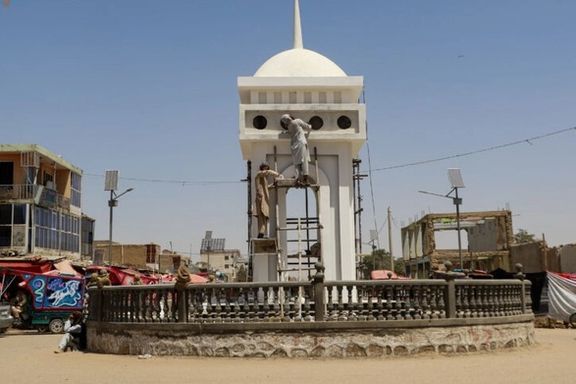
The Taliban’s Supreme Court has announced that a man was publicly flogged in Sar-e Pol province after being convicted of trespassing and causing injury.

The Taliban’s Supreme Court has announced that a man was publicly flogged in Sar-e Pol province after being convicted of trespassing and causing injury.
According to a statement issued by the court, the individual was sentenced to 20 lashes, five months’ imprisonment, and ordered to pay 5,000 Afghanis in compensation for the victim’s medical treatment. The flogging was carried out in the presence of court officials, government employees, and local residents.
Separately, the Taliban’s primary counter-narcotics court in Kabul sentenced 25 individuals to public floggings on Saturday for charges related to drug trafficking and sales.
In the past week alone, the Taliban has publicly flogged at least 53 people across Afghanistan, including five women. The group describes such punishments as the enforcement of “Islamic Sharia orders,” despite international condemnation of corporal punishment and human rights violations.
Human rights organisations continue to raise concerns about the lack of fair trial standards, legal representation, and transparency in the Taliban’s judicial system.

The Taliban’s Supreme Court has announced that a man and a woman were flogged in Badakhshan province on charges of “running away from home” and “assisting escape.”
The two individuals received 39 lashes each. The statement did not specify whether the punishment was carried out in public, as previous announcements from the Taliban have typically indicated.
The court noted that the sentence was executed following approval by the Taliban’s Supreme Court, referring to the accused as “criminals.”
Despite international condemnation from human rights organisations over the use of corporal punishment and torture, the Taliban continue to administer public floggings. The group claims such punishments are in accordance with “Islamic Sharia law.”
The Taliban’s use of public corporal punishment has drawn widespread criticism for violating international human rights norms, particularly in cases involving women.

Afghanistan now has the second-largest gender gap in the world, with eight in ten women denied access to education and employment, according to the 2024 Afghanistan Gender Index.
The UN women report released today, described as the most comprehensive assessment of women’s empowerment and gender equality in Afghanistan since the Taliban’s return to power, states that Afghan women have fallen significantly behind global human development standards.
Afghanistan faces a 76 percent gender inequality rate in key areas such as health, education, financial access, and participation in decision-making, placing it just above Yemen on the Global Gender Inequality Index.
The report finds that Afghan women are realising only 17 percent of their full potential in terms of access to opportunities and personal choice, compared to the global average of 60.7 percent.
“Afghanistan’s greatest resource is its women and girls. Their potential continues to be untapped, yet they persevere,” said Sima Bahous, Executive Director of UN Women. “Afghan women are supporting each other, running businesses, delivering humanitarian aid and speaking out against injustice.”
According to the index, 78 percent of young Afghan women are not in education, employment or training, while the secondary school completion rate for girls is expected to fall to zero due to ongoing bans on girls’ secondary and tertiary education, including medical training.
The report also highlights a deep gender disparity in the workforce. Only 24 percent of Afghan women participate in the job market, compared to 89 percent of men. The majority of women are engaged in unpaid domestic labour; 74 percent, versus only 3 percent of men.
Additionally, men are nearly three times more likely than women to have a bank account or use mobile money services.
Despite widespread restrictions, the report notes a significant rise in the number of unemployed Afghan women actively seeking work. By 2022, this figure had quadrupled compared to pre-Taliban levels.
UN Women also reported that there are currently no women in the Taliban’s cabinet or local administrative offices, underscoring the continued political exclusion of Afghan women.

Volker Türk, the United Nations High Commissioner for Human Rights, has said that women and girls in Afghanistan have effectively been erased from public life, as he raised alarm over the deteriorating human rights situation in the country.
Speaking during the 59th session of the UN Human Rights Council, Türk highlighted growing concerns over the repression of Afghan women and girls, stating that their voices have been silenced and their presence restricted to within the home.
“The rights of women and girls in Afghanistan have been systematically erased from public life,” he said. “They are excluded from education, employment, and civic participation.”
Türk also warned of serious threats facing other vulnerable groups, including persons with disabilities and LGBTQ+ individuals. “Influential figures have openly mocked people with disabilities,” he noted. “LGBTIQ+ people continue to face legal restrictions, hate speech, and even violence.”
He further expressed concern that some countries have reduced funding for aid programmes in Afghanistan, despite worsening conditions on the ground.

Iranian authorities have announced the arrest of a suspect in the murder of Kubra Rezai, a 26-year-old Afghan migrant woman whose mutilated body was discovered earlier this month in Varamin, south of Tehran.
Akbar Arabi, police commander of Pishva County in Tehran Province, confirmed the arrest on Friday, 13 June. He stated that the suspect confessed to the killing during specialised interrogations and has since been transferred to prison following initial legal procedures.
“Through intelligence and operational efforts by the criminal investigation police, the suspect was identified and immediately arrested,” Arabi told domestic media. The identity of the accused has not yet been made public.
Rezai was reportedly abducted while on her way to work in Tehran. On the evening of 3 June, local residents found parts of her dismembered body among rubbish in Varamin. Following the gruesome discovery, a case was opened by the criminal investigation unit in Pishva County.
Calls for Justice Grow
Rezai’s murder has sparked outrage among human rights organisations and Afghan migrant communities, who say the killing underscores the systemic violence faced by migrant women in Iran.
Activist groups have urged Iranian authorities to conduct a thorough and impartial investigation. The Afghanistan Women’s Light of Freedom Movement issued a statement demanding legal accountability and transparency in the judicial process. The group also called on international organisations to pressure Tehran to protect the rights and dignity of migrants.
The Taliban’s embassy in Tehran also responded, describing the murder as an “unforgivable crime” and stating that the perpetrator must be brought to justice, “regardless of nationality or affiliation.”

The Taliban have detained dozens of people in Daikundi province including clerics and local residents for holding Eid al-Adha prayers on Friday, in defiance of the group’s officially designated date.
Local sources told Afghanistan International that the arrests took place in the provincial capital of Daikundi and in the Ashtarlay district.
According to the sources, while some detainees were released after a few hours, around 50 people remain in Taliban custody.
Unlike many Islamic countries, including Saudi Arabia, the Taliban observed Eid al-Adha a day later, on Saturday. In some areas of Afghanistan, including Daikundi province, residents marked the holiday on Friday, prompting a harsh response from Taliban authorities.
In neighbouring Iran, Friday was also recognised as the first day of Eid al-Adha.
Sources told Afghanistan International on Sunday that a number of clerics and local residents who had performed Eid prayers and animal sacrifices on Friday were arrested in central Daikundi and the Ashtarlay district. Although some have since been released, approximately 50 remain detained.
Historically, Eid al-Adha in Afghanistan was celebrated in accordance with Saudi Arabia’s official calendar. In recent years, however, the Taliban have adopted different dates for Eid observance, a move that has caused growing tension among segments of the population.
